Budget
Hidden Honeymoon Costs by Country: Resort Fees, Tipping, Visas & FX Losses
The compounding layer of charges that pushes honeymoon budgets 20-30% over plan — resort fees, destination taxes, tipping norms, visa fees, and currency losses — broken down country by country for 2026.
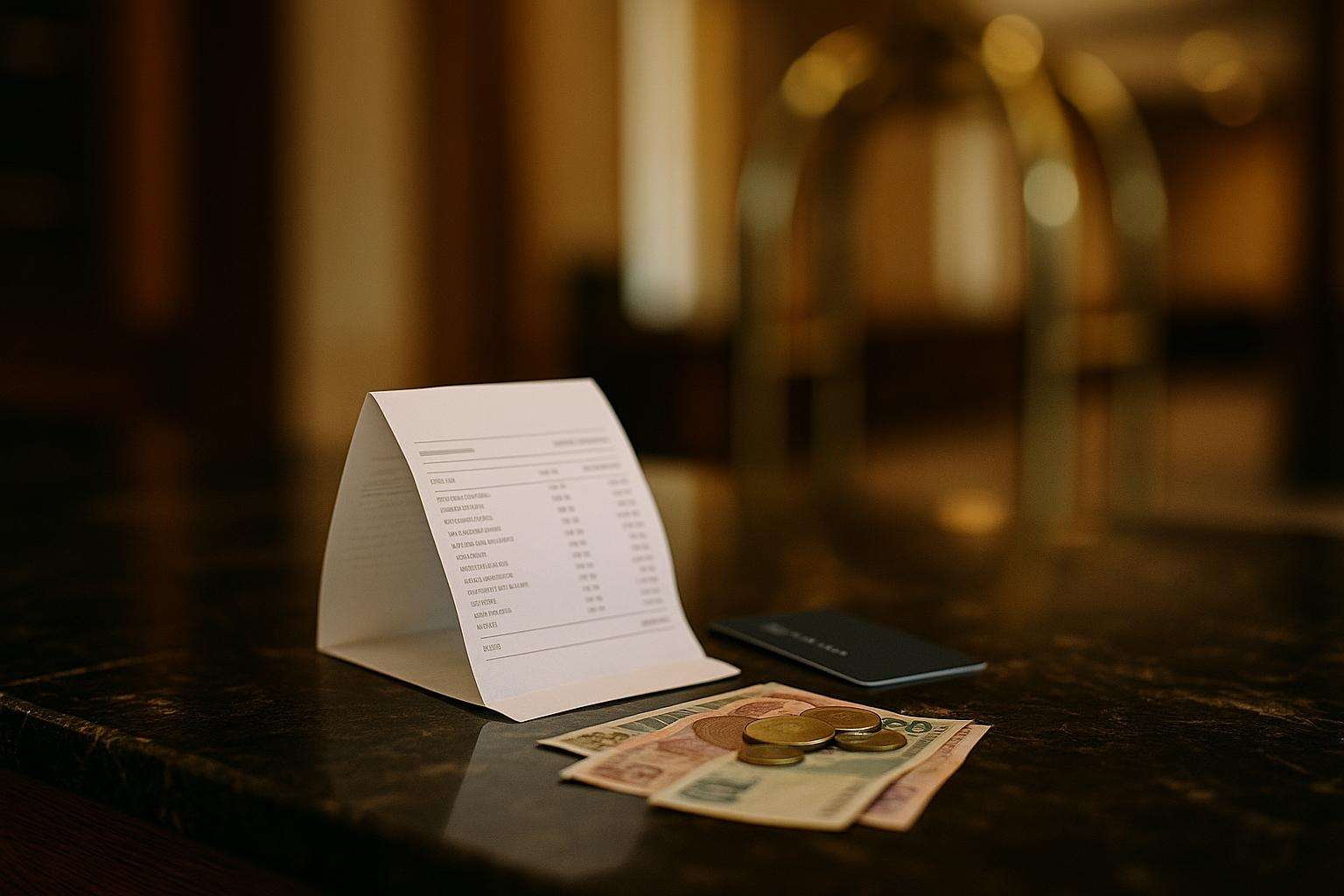
The most reliable way to blow a honeymoon budget is to build it correctly and then discover it was never the whole number. Couples price the two headline items — the flights and the nightly room rate — and skip the compounding layer of charges that appears at checkout, at the border, and on the credit-card statement. That layer is why honeymoon budgets routinely finish 20% to 30% over plan. Below is a systematic, country-by-country accounting of the five hidden-cost categories, and the buffer rule that neutralizes all of them.
Resort fees and destination taxes
The US resort fee is now near-universal at larger properties. Per Honeymoon Edit, the average US resort fee sits at about $42 per night, up 6% year over year; on the Las Vegas strip it runs $55 per night before tax, roughly $62 after. The FTC's Rule on Unfair or Deceptive Fees took effect May 12, 2025, requiring hotels to include these fees in advertised prices — but it does not abolish them. Caribbean and Mexican all-inclusives usually bundle them into the rate, though a-la-carte surcharges for premium restaurants, top-shelf liquor, or spa access exist at many properties.
International destination taxes add a separate layer that varies sharply by country:
| Destination | Hidden charge |
|---|---|
| United States | Resort fees ~$42/night avg; Vegas ~$62/night after tax |
| Maldives | 17% GST + 10% service charge + $12/pax/night Green Tax (~27% total) |
| Italy / Amalfi Coast | City tax €3.50-€5/pax/night; coperto €2-€5/pax at restaurants |
| Caribbean / Mexico (AI) | Usually bundled; watch a-la-carte premium surcharges |
| Portugal | Municipal tourist tax €2-€4/pax/night in Lisbon and Porto |
The Maldives is the extreme case: per Lets Go Maldives, a $400-per-night room becomes about $508 before Green Tax, and over 7 nights for two the Green Tax alone adds $168 on top of a $772 tax-and-service bill on $2,800 of base charges.
Airline hidden fees
Beyond the base airfare, checked-luggage fees of $30-$40 per bag each way, carry-on charges on budget carriers, and seat-selection fees can add $100-$300 per person per round-trip — $200-$600 for a couple — before anyone boards. On a honeymoon, where couples often check extra bags for formalwear or gifts, this line is larger than most people expect. Booking a fare class that includes a checked bag, or using a co-branded airline card that waives bag fees, is the simplest offset.
Travel insurance
Comprehensive travel insurance costs 4-10% of total prepaid trip cost. On a $6,000 honeymoon, expect $240-$600 for two; on a $15,000 Maldives trip, $600-$1,500. Per MoneyGeek, World Nomads scores highest on affordability (98/100) and covers 250-plus adventure activities at no surcharge, making it strong for active itineraries, while Allianz posts a perfect claims-reliability score and offers a Cancel Anytime add-on reimbursing up to 80% of non-refundable expenses. Premium travel cards (Chase Sapphire Preferred and Reserve, Capital One Venture X, Amex Platinum) include trip cancellation and interruption coverage that may partially offset standalone insurance — but adventure sports, pre-existing conditions, and cancel-for-any-reason provisions typically require supplemental coverage.
Key takeaway: The five hidden-cost categories — destination taxes, airline fees, insurance, tipping, and FX losses — compound to roughly 20-30% of a trip's headline cost. The Maldives' 27% tax stack and airport FX spreads of up to 15% are the two most punishing, and both are avoidable with planning.
Tipping norms by country
Tipping expectations swing widely and catch couples off guard:
- United States: 18-22% at sit-down restaurants; $2-$5 per bag; $5-$20 per night for housekeeping. Budget $20-$30 per day per couple.
- Mexico and Caribbean (all-inclusive): Service charges usually included, but discretionary tips of $5-$20 per interaction are expected and appreciated; $1-$5 per day for housekeeping. Budget $100-$200 per week.
- Maldives: The 10% service charge is not a tip — it is government-regulated and distributed to all staff. Direct cash tips in USD are still customary; prepare $150-$300 in small bills. Adding a tip to the room bill incurs the 17% GST plus 10% service charge on the tip, so cash avoids that.
- Italy / Amalfi Coast: Tipping is not culturally expected; rounding up or €1-€5 for exceptional service is appropriate. The coperto cover charge of €2-€5 per person is a fixed charge, not a tip.
- Portugal: Appreciated but not obligatory; rounding up or 5-10% is common.
Visa fees and currency-exchange losses
Many honeymoon destinations are visa-free or visa-on-arrival for US passport holders, but fees are climbing. Turkey charges a $50 e-visa per person; Tanzania and Kenya charge $50-$100 per person; the EU's ETIAS is expected to launch in late 2026 at roughly €7-€20 per traveler. The Maldives, Mexico, the Dominican Republic, Portugal, Italy, and Costa Rica are currently visa-free for US citizens — always verify at the official US State Department site before travel.
Currency-exchange losses are the quietest drain. Airport exchange booths apply 5-15% spreads over the interbank rate. Dynamic Currency Conversion at card terminals charges in USD at a non-competitive rate — always choose local currency. Standard foreign-transaction fees of about 3% add $100-$200 on a $5,000 trip. Per NerdWallet, the fix is a no-foreign-transaction-fee travel card plus ATM withdrawals from a fee-reimbursing account, with apps like Wise or Revolut for competitive rates. In the Maldives, Rufiyaa cannot be bought abroad or exchanged back on departure — settle resort bills in USD or by card.
The 20% buffer rule
Every category above points to one habit: add 15-25% to your headline budget before you book. On a $6,000 core plan, reserve $900-$1,500. The buffer is not padding — it is the funded, planned home for charges that the documented data shows will arrive. Couples who build it in stop being surprised at checkout and start finishing trips on budget. For destination-specific cost engineering, pair this with our tier guides: the $3,000 itineraries, the $5,000 itineraries, and the $10,000+ luxury breakdown.
Frequently asked
How much can hidden costs add to a honeymoon budget?
Honeymoon budgets regularly run 20-30% over initial estimates because couples price the headline items — flights and the nightly room rate — and overlook a compounding layer of charges. These include resort fees (averaging about $42 per night in the US), international destination taxes, checked-bag and seat-selection fees ($100-$300 per person round-trip), travel insurance (4-10% of trip cost), tipping, visa fees, and currency-exchange spreads of 5-15% at airport booths plus roughly 3% foreign-transaction fees. On a $6,000 core budget, this layer can add $900-$1,800. Advisors and financial planners consistently recommend adding a 15-25% buffer to absorb it from the start.
What are the hidden taxes in the Maldives?
The Maldives stacks roughly 27% on top of your base villa rate. There is a 17% Tourism GST (raised from 16% on July 1, 2025), a mandatory 10% resort service charge, and a Green Tax of $12 per person per night at resorts (doubled from $6 on January 1, 2025). On a $400-per-night room, that becomes about $508 before Green Tax, and over 7 nights for two the Green Tax alone is $168. One practical note: adding a cash tip to your room bill incurs the 17% GST plus 10% service charge on the tip amount, so tipping in cash USD avoids that surcharge entirely.
What are tipping norms in major honeymoon countries?
Tipping varies dramatically. In the US, expect 18-22% at restaurants, $2-$5 per bag, and $5-$20 per night for housekeeping — budget $20-$30 per day per couple. In Mexico and the Caribbean, all-inclusive service charges are usually included, but $5-$20 discretionary tips per interaction are appreciated; budget $100-$200 per week. In the Maldives, the 10% service charge is not a tip, so carry $150-$300 in small USD bills for outstanding service. In Italy and the Amalfi Coast, tipping is not culturally expected — rounding up or €1-€5 is enough, though a coperto cover charge of €2-€5 per person is standard. In Portugal, 5-10% or rounding up is common but not obligatory.
Which honeymoon destinations charge visa fees for US travelers?
Fees are rising in 2026. Turkey charges a $50 e-visa per person ($100 per couple). Safari destinations like Tanzania and Kenya charge $50-$100 per person entry. The EU's ETIAS system is expected to launch in late 2026, adding roughly €7-€20 per traveler for Schengen short stays. Note that the US ESTA (for international visitors coming to a US destination wedding) nearly doubled to $40 in September 2025, and the UK ETA rose to £16. The Maldives, Mexico, the Dominican Republic, Portugal, Italy, and Costa Rica are currently visa-free for US citizens — but always verify at the official State Department site, as policies change.
How do I avoid currency-exchange losses on my honeymoon?
Airport exchange booths apply spreads of 5-15% above the interbank rate — the worst option available. When a card terminal offers to charge in USD (Dynamic Currency Conversion), always choose local currency instead, as DCC uses a non-competitive rate. Standard foreign-transaction fees run about 3%, adding $100-$200 on a $5,000 trip, so use a no-foreign-transaction-fee travel card such as Chase Sapphire, Capital One Venture X, or Amex Platinum. Withdraw local cash from ATMs using a fee-reimbursing account, and consider apps like Wise or Revolut for competitive rates. In the Maldives specifically, Rufiyaa cannot be bought outside the country or exchanged back — use USD or card for resort settlements.
What is the 20% buffer rule for honeymoon budgets?
The 20% buffer rule is the practice of adding 15-25% to your headline honeymoon budget to absorb the hidden-cost layer, a figure travel advisors and financial planners consistently recommend. On a $6,000 core budget, that means reserving $900-$1,500 before you book. The rule exists because the documented charges — resort fees, destination taxes, bag and seat fees, insurance, tipping, visas, and FX losses — reliably compound to roughly a quarter of a trip's headline cost. Building the buffer in from the start converts an unpleasant checkout surprise into a planned, funded line item, and it is the single most useful habit for keeping a honeymoon on budget.