Destinations
Costa Rica Honeymoon Guide: Eco-Lodges, Luxury Treehouses & Real Costs
Where to stay, what it actually costs, and how to route a Costa Rica honeymoon across Arenal, Monteverde, Manuel Antonio, Guanacaste and the Osa Peninsula.
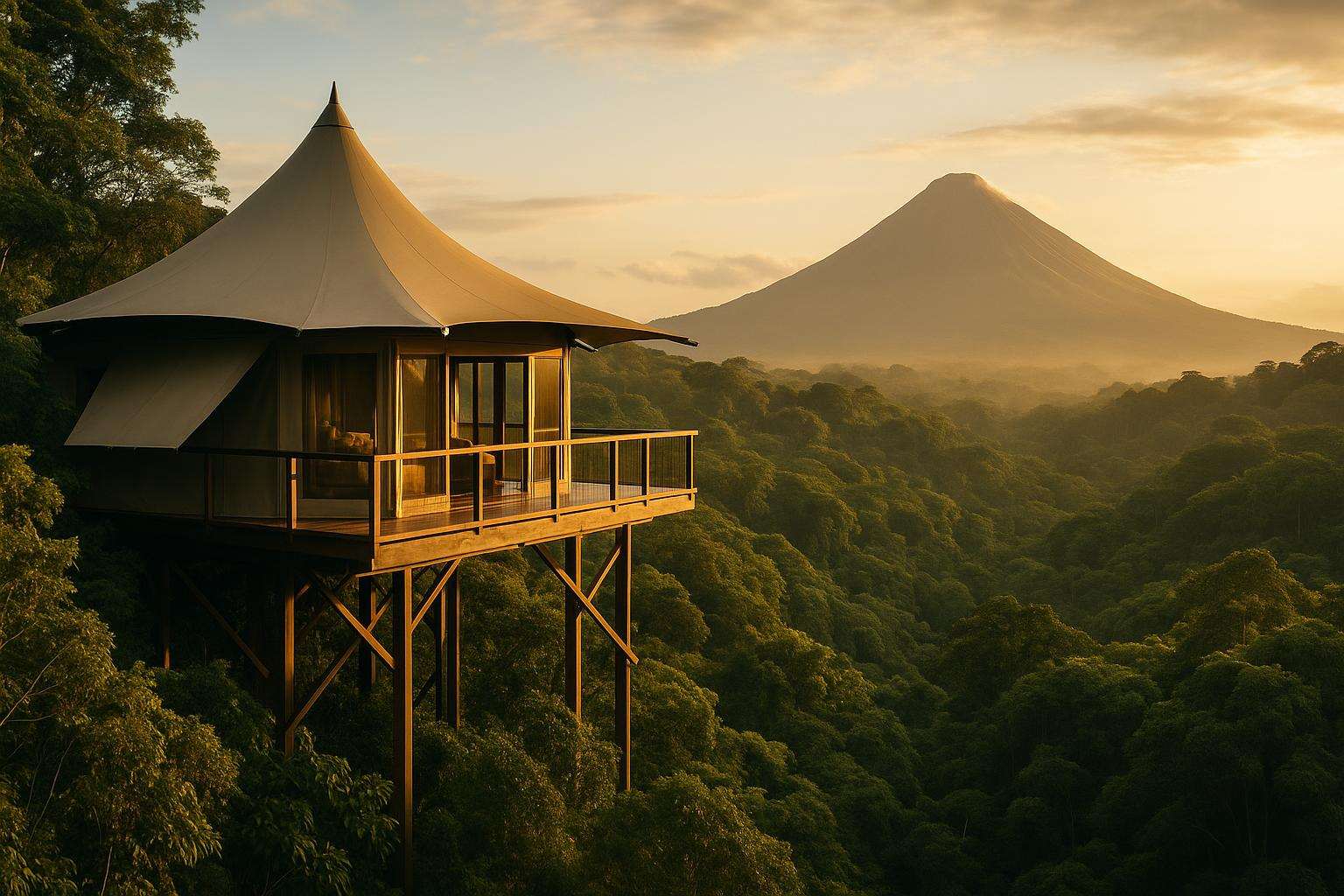
Costa Rica has quietly become one of the world's premier adventure-honeymoon destinations, and the reason is structural: a national commitment to ecotourism has produced an unmatched density of wildlife and dramatic landscapes inside a country you can cross in a day. For couples, that means you can pair rainforest, cloud forest, volcano and beach in a single trip without long-haul internal flights. The trade-off is that Costa Rica is not a lie-flat-on-a-beach destination in the classic sense; it rewards movement, and the best honeymoons here are built around two or three distinct regions rather than one resort.
This guide covers the properties worth splurging on, what a Costa Rica honeymoon actually costs, and how to route the trip so the logistics never overwhelm the romance. Prices below are ranges as of 2026 and are attributed to the sources at the foot of the page.
Where should you base a Costa Rica honeymoon?
Arenal / La Fortuna is the adventure hub, roughly 2.5 hours from San Jose's airport and centered on a still-active stratovolcano whose geothermal heat warms the region's celebrated hot-spring pools. Days fill with waterfall rappelling, canopy zip-lines, whitewater rafting and hanging-bridge parks such as Mistico (entrance around $31 per person). The flagship luxury stay is Nayara Tented Camp, a Leading Hotels of the World property whose 21 safari-inspired tents each run about 1,700 square feet on elevated stilts, with four-poster beds, outdoor rainfall showers and private plunge pools fed by natural hot springs. Nightly rates run roughly $1,100 to $3,000-plus, averaging around $2,095 in high season per KAYAK's tracked pricing.
Monteverde, about four hours from La Fortuna over 4WD road, sits at 4,600 feet and shelters more than 400 bird species including the resplendent quetzal. The cloud-forest reserves offer guided mist walks and canopy zip-lining; the standout culinary novelty is San Lucas Treetop Dining, a glass box suspended among the treetops. Guanacaste, the dry Pacific northwest, is the easiest region logistically and holds the most beach-resort infrastructure, while Manuel Antonio on the central Pacific pairs an accessible national park with beach time and is the most convenient wildlife-plus-beach combination.
For couples willing to travel farther, the Osa Peninsula and Drake Bay reward the effort. Corcovado National Park, rated by National Geographic as one of the most biologically intense places on Earth, anchors the peninsula, with guided treks, humpback whale watching in the Gulf of Dulce, and snorkeling at Cano Island. Lapa Rios is the region's benchmark eco-lodge, set in a 1,000-acre private reserve.
What does a Costa Rica honeymoon actually cost?
The honest answer is that your flagship stay dominates the budget. According to Costa Rica Rios, a curated 12-night package linking Arenal, Monteverde and Drake Bay runs roughly $4,710 to $5,770 per adult in double occupancy, with the lower figure reflecting low season and the upper end high season. That excludes international airfare.
| Property / Region | Style | Nightly rate (2026) |
|---|---|---|
| Nayara Tented Camp (Arenal) | Luxury tented villa, plunge pools | ~$1,100-$3,000+ |
| Pacuare Lodge (Pacuare River) | Remote eco-lodge, raft access | ~$673-$1,021 |
| Mid-range jungle villa | 4-star, private pool | ~$150-$400 |
| Private driver transfer | San Jose to Arenal, each way | ~$100-$140 |
Pacuare Lodge by Boena is worth singling out because it represents a different paradigm entirely. Reachable only by a 90-minute whitewater raft ride or a 30-minute jungle jeep transfer, it places 20 luxury bungalows inside a 340-hectare private reserve. Architecture draws from the indigenous Cabecar culture; dining is farm-to-table; the signature "Nest" dinner is served 60 feet up in a sacred Ceiba tree. Recent tracked rates run around $1,021 per night, with some availability listed lower, per the lodge's own materials and OTA data.
How do you route a Costa Rica honeymoon?
The most balanced structure for most couples is a two-to-three region loop. A classic version runs three or four nights in Arenal (adventure and hot springs), two or three nights in Monteverde or on the Pacific coast (cloud forest or beach), and a closing stretch in Manuel Antonio or Guanacaste for beach downtime. Couples chasing the wildest wilderness can substitute the Osa Peninsula for the beach leg, though it requires a domestic puddle-jump flight into Drake Bay or Puerto Jimenez and adds a travel day at each end.
Two logistics realities shape the plan. First, a 4WD vehicle is essential in Monteverde and on the Osa Peninsula year-round; sedans simply cannot handle the roads. Second, private driver transfers from San Jose to Arenal cost roughly $100 to $140 each way and are often worth it to avoid navigating unfamiliar mountain routes on the first jet-lagged day.
When is the best time to go?
December through April is the driest window in most regions and the most reliable for sunshine, calm trails and wildlife. It is also the peak-pricing season. May through November is the green season: lush landscapes, thinner crowds and lower rates, offset by daily afternoon rain. September and October bring the deepest discounts but the heaviest rain on the Caribbean slope and Osa Peninsula. For a value-minded honeymoon with decent weather, late April or early May is the quiet sweet spot before summer prices rebound.
The honest verdict
Costa Rica is the rare honeymoon that trades poolside stillness for genuine adventure and biodiversity, and it does so at a range of price points, from mid-range jungle villas to a Nayara or Pacuare splurge. The weaknesses are real: it involves more transit than a single-resort escape, the top lodges are expensive, and the green season carries rain risk. But for active couples who want their first trip as newlyweds to feel like a shared expedition rather than a repeat of every beach photo they have already seen, few destinations deliver more per dollar. Build the itinerary around two or three regions, book the flagship nights early, and let the transfers be part of the story rather than a source of stress.
Frequently asked
How much does a Costa Rica honeymoon cost?
It depends almost entirely on which lodges you choose. A curated 12-night package linking Arenal, Monteverde and Drake Bay runs roughly $4,710 to $5,770 per adult in double occupancy, with the lower figure reflecting May-October low season and the higher figure January-April high season. That figure excludes international airfare. The single biggest swing factor is your flagship stay: Nayara Tented Camp near Arenal averages around $2,095 per night in high season, while a mid-range jungle villa can run a fraction of that. Private driver transfers ($100-$140 each way) and a mandatory 4WD rental for Monteverde and the Osa Peninsula add up quickly, so build ground transport into the budget rather than treating it as an afterthought.
What is the best time of year for a Costa Rica honeymoon?
December through April is the dry season across most of the country and delivers the most reliable sunshine, calm trails and the best odds for wildlife viewing. It is also the busiest and priciest window. May through November is the green season: landscapes are lush, crowds thin, and rates fall, but expect daily afternoon rain in most regions. September and October offer the deepest lodge discounts, though the Caribbean slope and Osa Peninsula can see heavier rain then. For couples who want the sweet spot, late April or early May pairs decent weather with softer pricing before the summer rebound.
Is Nayara Tented Camp worth the price for a honeymoon?
For couples who want a genuine bucket-list flagship, it earns its rate. Nayara Tented Camp is a Leading Hotels of the World property with 21 safari-inspired tents of roughly 1,700 square feet each, set on stilts above the rainforest with private plunge pools fed by natural geothermal hot springs. It holds Green Globe sustainability certification and has been named Central America's top resort by Travel + Leisure. Rates run roughly $1,100 to $3,000-plus per night. The honest caveat: it is a splurge, and a four-night stay alone can consume most of a mid-tier honeymoon budget. Many couples pair one or two nights here with more affordable lodges elsewhere.
How do you get to Pacuare Lodge?
Pacuare Lodge sits inside a 340-hectare private rainforest reserve on the Caribbean slope and is deliberately hard to reach, which is much of its appeal. Access is either a 90-minute whitewater raft ride down the Pacuare River or a 30-minute jungle jeep transfer. There are no roads to the door and no cars once you arrive. The lodge is solar-powered, its architecture draws on the indigenous Cabecar culture, and dining is farm-to-table. Recent tracked rates have run around $1,021 per night, with some availability listed lower. Because arrival is river-dependent, plan a full travel day for the transfer in and out.
Do you need a rental car for a Costa Rica honeymoon?
Not always, but often. Private driver transfers between hubs like San Jose and Arenal cost roughly $100 to $140 each way and remove all the stress of unfamiliar roads. However, if your itinerary includes Monteverde or the Osa Peninsula, a 4WD vehicle is effectively essential year-round because of steep, unpaved mountain roads. Manuel Antonio and Guanacaste are more accessible by paved highway. A common hybrid approach is to use private transfers for long point-to-point legs and rent a 4WD only for the region where you genuinely need one, which controls both cost and driving fatigue on your honeymoon.
Which region of Costa Rica is best for a honeymoon?
There is no single answer because each region sells a different mood. Arenal and La Fortuna are the adventure and hot-springs hub, ideal for couples who want zip-lines, waterfalls and geothermal soaking. Monteverde delivers misty cloud forest and canopy walks at cooler elevation. Manuel Antonio pairs an accessible national park with beach time. Guanacaste is the dry-forest Pacific coast with the most beach-resort infrastructure and the easiest logistics. The Osa Peninsula and Corcovado offer the wildest, most biologically intense wilderness for couples willing to travel farther. Most strong honeymoons combine two or three regions to balance adventure, wildlife and beach.