Destinations
Dubai Honeymoon Guide: Beach Resorts, Desert Safaris & Souks
Dubai pairs Palm Jumeirah beach resorts, an Arabian desert conservation reserve, and old-city souks in one compact, winter-perfect honeymoon — and it makes an ideal stopover en route to the Maldives.
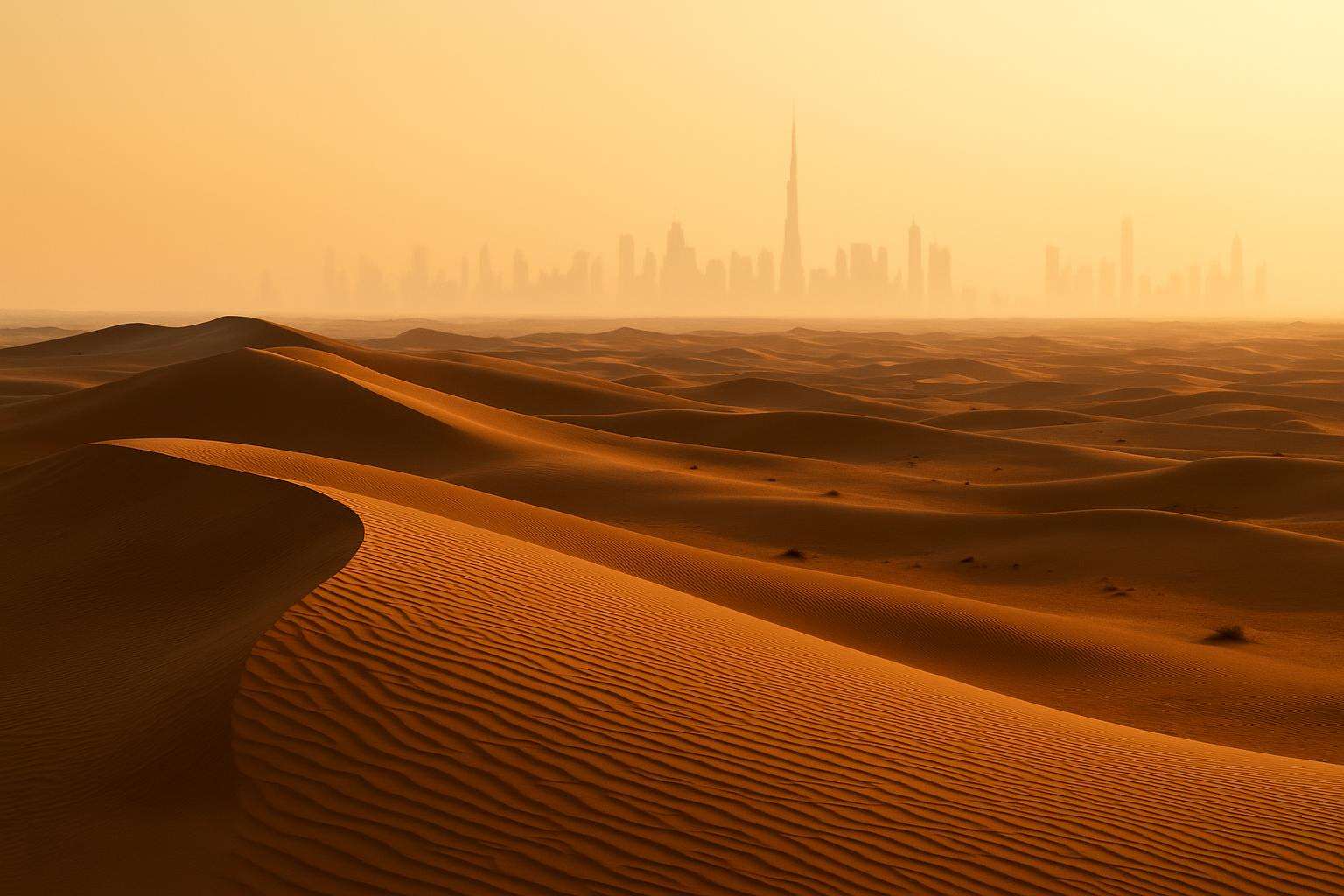
Dubai is the rare honeymoon destination that refuses to pick a lane. In a single compact trip you can wake in an overwater-adjacent beach suite on the Palm, spend an afternoon bargaining for saffron in a centuries-old souk reached by wooden water taxi, and fall asleep that night in a private-pool villa in the desert with Arabian oryx grazing outside your terrace. It is a city built to impress, and for couples who want variety — beach, culture and wilderness — inside one winter-perfect week, it delivers with unusual efficiency.
This guide covers where to stay across Dubai's tiers, the desert-conservation-reserve safari that is worth doing properly, the old-city souks that ground the trip, and — because it is one of Dubai's best uses — why the city makes an ideal stopover on the way to the Maldives. First-person from the ground: Dubai rewards couples who treat it as three destinations stitched together, not one.
Where to stay: beach resorts and desert villas
Dubai's honeymoon accommodation splits into three worlds. The first is the beach-resort corridor along Jumeirah Beach and the Palm Jumeirah — the man-made palm-shaped island that has become the city's marquee resort address. One&Only Royal Mirage is the benchmark for old-world Arabian luxury here: a 451-room, sand-hued property of domes and ornamental arches facing the Gulf, comprising three distinct houses — The Palace, Residence & Spa, and Arabian Court — with four outdoor pools and a private beach. Rates have been tracked from around $226 up to the mid-$300s per night on booking platforms in recent windows, making it a genuinely attainable landmark stay; details are on the official One&Only site.
The second world is the ultra-luxury icon: the Burj Al Arab, the sail-shaped hotel standing on its own artificial island 280 metres off Jumeirah Beach, connected by a private curving bridge. It is an all-suite property — 199 suites, each with 24-hour butler service, the smallest at 169 square metres — and its Royal Suite has been billed at around $24,000 per night, ranking among the world's most expensive hotel rooms. One important 2026 caveat: per the Burj Al Arab record, Jumeirah announced in April 2026 that the hotel began its first major restoration, expected to last around eighteen months — so confirm exactly which suites and facilities are operational for your dates.
The third world is the desert — and for a honeymoon, it may be the best of the three. More on Al Maha below.
The desert conservation reserve: a safari worth doing properly
Most visitors experience Dubai's desert as a mass-market dune-bashing convoy. Honeymooners should do it differently. The Dubai Desert Conservation Reserve is a 225-square-kilometre protected area — roughly 5 percent of Dubai's total landmass — established by Emiri decree in 2002, and it supports the largest free-roaming herd of Arabian oryx in the UAE, alongside Arabian and sand gazelles and a range of desert birds and reptiles, per the reserve's public record.
Inside it sits Al Maha, a Luxury Collection Desert Resort & Spa — 42 private-pool villas about 60 kilometres southeast of the city, surrounded by dunes and palm groves with views toward the Hajar Mountains. The stay is full-board and experience-led: guided wildlife drives, camel treks, horse rides, falconry and archery are part of the package, per the Al Maha resort page. A single night here — dunes turning copper at sunset, dinner under a star field, the particular silence of the desert — is the sharpest and most romantic contrast to the city's glass and neon, and for many couples the trip's high point.
The souks and old Dubai
To balance the modernity, cross to the old city. The Gold Souk in Deira is a dense warren of jewellery shops where the window displays alone are a spectacle and bargaining is expected; the neighbouring Spice Souk fills the lanes with saffron, frankincense, dried lime and oud. The traditional way to reach them is by abra — a small wooden water taxi that crosses Dubai Creek for a nominal fare, a short atmospheric ride linking the Bur Dubai and Deira banks. Pair the souks with the restored Al Fahidi historic district and a long coffee at a traditional tea house for a half-day that anchors the honeymoon in a Dubai older than its skyline.
Building the itinerary: a 5-night template
| Nights | Base | Focus |
|---|---|---|
| 1–3 | Palm Jumeirah / Jumeirah Beach resort | Beach, pools, spa, a dinner high above the city, souks by abra |
| 4 | Al Maha (desert reserve) | Wildlife drive, camel trek, falconry, dinner under the stars |
| 5 | Return to a city hotel | Last beach morning, shopping, departure — or onward flight to an island |
That structure captures all three of Dubai's worlds and leaves you rested for either the flight home or the next leg. Keep the desert night in the middle or as the penultimate chapter rather than the finale if you are continuing to an island, so the trip still resolves at the beach.
Dubai as a stopover to the Maldives
One of Dubai's smartest uses on a honeymoon is not as the whole trip but as its opening chapter. The city sits directly on the long-haul corridor from Europe and North America toward the Indian Ocean, so breaking the journey there rarely adds meaningful airfare — the airline home carrier actively markets a formal Dubai stopover. Two or three nights lets a couple sleep off jet lag, enjoy the beach and a desert night, then continue rested to a Maldivian atoll for the pure-decompression finale. Because city hotels are typically far cheaper per night than overwater villas, the stopover can even lower your average nightly spend while adding variety — the split-stay logic in its cleanest form.
Honest tradeoffs
Dubai is not for every couple. It is a modern, purpose-built luxury city, not a place of ancient romance in the European sense — if you want winding medieval lanes and centuries of patina, the souks give you a taste but the city as a whole trades heritage for spectacle. Summer heat is genuinely punishing, which is why the November–March window is close to mandatory for an outdoor-focused honeymoon. It can also be expensive to over-schedule; the paid experiences add up, so keep the itinerary loose. And be mindful that the UAE has conservative public-conduct norms — modest dress in traditional areas and discretion in public are simply respectful.
Weighed honestly, though, Dubai does something few destinations manage: it puts a world-class beach, a genuine desert wilderness, and an old trading city within an hour of each other, at the best time of year for all three. For couples who want range in one compact, reliable week — or a brilliant first chapter before the Maldives — it is hard to beat.
Frequently asked
When is the best time for a Dubai honeymoon?
The clear winner is November through March, Dubai's cool season, with December sitting at a comfortable peak — average highs around 25°C, essentially zero rain risk, and every world-class hotel operating at full status. That window makes beach days, desert safaris and outdoor dining genuinely pleasant. The summer months of June through August are the opposite: daytime temperatures routinely exceed 40°C with high humidity, pushing life indoors to malls and hotels. The tradeoff is that winter is peak season, so rates and demand are highest December through February. April, May and October are shoulder months — hot but manageable, and priced below the winter peak. If you want the terraces, the dunes and the beach at their best, aim for the winter window and book early.
How much does a Dubai honeymoon cost?
Dubai spans an enormous range, which is part of its appeal. Landmark beach resorts like One&Only Royal Mirage list rates that have been tracked from around $226 up to the mid-$300s per night on booking platforms in recent windows, while the iconic Burj Al Arab is a genuine ultra-luxury address — its all-suite product starts well above most city hotels and its Royal Suite has been billed at around $24,000 per night. The desert conservation resort Al Maha is a full-board, all-villa property at the top tier. A realistic luxury Dubai honeymoon week, before international flights, runs a few thousand dollars per couple at a strong beach resort to well over ten thousand at the marquee names plus a desert night. Because city hotels are often far cheaper than overwater villas, Dubai also works as a cost-effective stopover chapter before a pricier island.
What is a Dubai desert safari and is it worth it for a honeymoon?
A Dubai desert safari is a guided excursion into the dunes, and the version worth doing for a honeymoon is the low-impact, conservation-focused kind rather than the mass-market dune-bashing convoys. The Dubai Desert Conservation Reserve is a 225-square-kilometre protected area — about 5 percent of Dubai's landmass — established in 2002, and home to the largest free-roaming herd of Arabian oryx in the country, alongside gazelles and desert birds. Al Maha, a Luxury Collection resort set inside the reserve, offers 42 private-pool villas and guided wildlife drives, camel treks, horse rides, falconry and archery, all as part of a full-board stay. A night in the desert — dunes at sunset, dinner under the stars, silence you can hear — is one of the most romantic contrasts to the city, and for many couples the highlight of the trip.
Should you visit the souks in Dubai on a honeymoon?
Yes — the old-city souks are the counterweight to Dubai's gleaming modernity and a genuine cultural experience. The Gold Souk in Deira is a warren of shops with famously dense window displays of jewellery, where bargaining is expected and the sheer spectacle is worth the visit even if you buy nothing. The neighbouring Spice Souk fills the lanes with saffron, frankincense, dried fruits and oud. The traditional way to reach them is by abra, a small wooden water taxi that crosses Dubai Creek for a nominal fare — a short, atmospheric ride that connects the Bur Dubai and Deira sides. Pair the souks with the Al Fahidi historic district and a coffee at the Arabian Tea House for a half-day that grounds the trip in something older than the skyline.
Is Dubai a good honeymoon stopover before the Maldives?
Dubai is arguably the archetypal honeymoon stopover for anyone routing to the Maldives, the Seychelles or the wider Indian Ocean. It sits directly on the long-haul corridor from Europe and North America, so breaking the journey there rarely adds meaningful airfare — Emirates even markets a formal Dubai stopover program. Two or three nights lets you sleep off jet lag, enjoy beach resorts, a desert night and world-class dining, then continue rested to the island for the pure-decompression finale. Because city hotels are typically far cheaper per night than overwater villas, the stopover can even lower your average nightly spend while adding variety. The standard split-stay rule applies: keep the beach or island as the final act, and give the Dubai chapter two to three nights, not more.
Is the Burj Al Arab open in 2026 for honeymoon stays?
Travelers should verify directly before booking. In April 2026, Jumeirah announced that the Burj Al Arab began its first major restoration, a project expected to last around eighteen months. That does not necessarily mean the hotel is closed, but phased renovations can affect room availability, facilities and the guest experience, so any couple with their heart set on a Burj Al Arab stay in the 2026–2027 window should confirm exactly which suites and amenities are operational for their dates. If the restoration affects your plans, Dubai offers many alternative flagship addresses — One&Only Royal Mirage on Jumeirah Beach, the Palm Jumeirah resorts, and Al Maha in the desert reserve — that deliver a landmark honeymoon experience while the Burj Al Arab is refreshed.