Destinations
Greece Honeymoon Guide: Santorini, Mykonos & Naxos
How to split a week across three Cyclades islands — caldera glamour, beach-club energy, and the quiet island most couples miss — with real cave-hotel rates and shoulder-season timing.
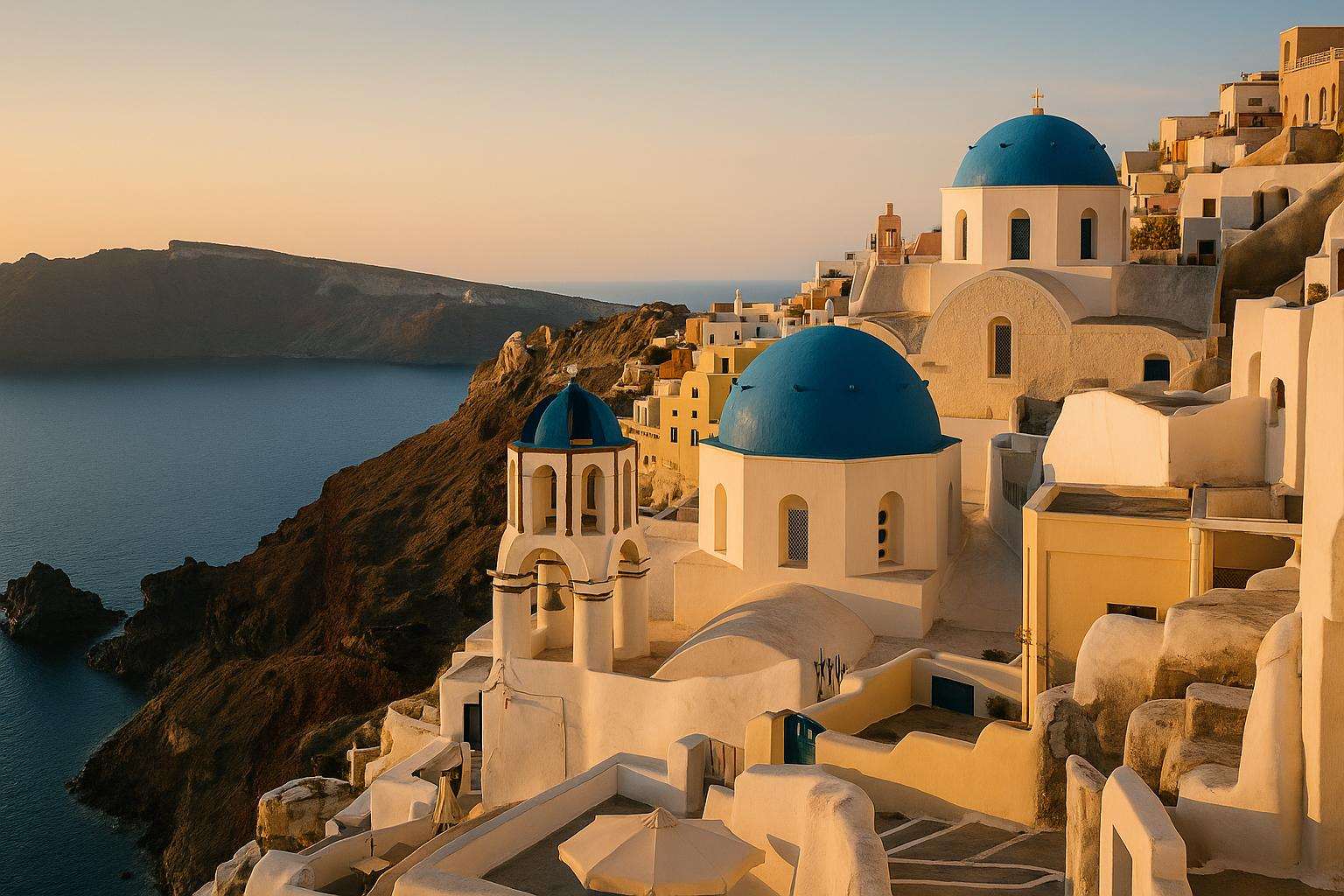
Greece is the honeymoon that runs on contrast. Three of the Cyclades islands sit within a few ferry hours of one another, and each one delivers a completely different register of romance: Santorini is the caldera-gazing, wine-sipping showpiece; Mykonos is louder, sexier and more social; and Naxos — the island most couples skip — is the quiet, green, still-affordable counterweight that keeps the whole trip from tipping into pure Instagram set-piece. Split a week across all three and you get the full range without spending it all in one key.
I plan this route the way I'd plan a tasting menu: intensity, then relief, then a final flourish. Below is how the week actually breaks down, what the famous cave suites cost in 2026, and the timing decision that matters more than any hotel choice.
How should you split the week across the three islands?
For a ten-day trip, the structure I recommend is four nights on Santorini, three on Naxos, and three on Mykonos, in that order. Santorini first, while your energy is high and the caldera views land hardest. Naxos in the middle as a decompression island — beaches, tavernas, and a Venetian old town where nobody is queuing for a photo. Mykonos last, when you're ready for beach clubs and late dinners before flying home.
On a tight seven-day trip, drop one island. Do not try to squeeze three islands into a week: two of those seven days become travel days, and you're left with a rushed five. Either do four nights Santorini and three Mykonos (the classic pairing), or — my preference for couples who want calm over glamour — four nights Naxos and three Santorini.
Santorini: what the cave hotels really cost
Santorini's honeymoon inventory concentrates in two villages carved into the caldera cliff. Oia is the postcard — the blue domes, the famous sunset, the crush of day-trippers at golden hour. Imerovigli sits higher and quieter on the rim, above both Oia and the capital Fira, and is where I send couples who want the view without the foot traffic.
The benchmark cave hotel in Oia is Canaves Oia, a member of Small Luxury Hotels of the World. Its Honeymoon Suite with Plunge Pool is purpose-built for newlyweds — open-plan king, rain shower, open-air dining terrace, and a private caldera-view plunge pool. Rates are dynamic rather than fixed, but comparable Oia cliff suites routinely run $800 to $1,200 per night from June through September. In Imerovigli, the Grace Hotel Santorini (Auberge Collection) was named the No. 1 resort in Europe and Greece by Travel + Leisure's 2025 World's Best Awards; its 23 suites average around $1,507 per night at peak but fall to roughly $531 on lower-demand shoulder dates. That gap is the entire budgeting lesson of a Greek honeymoon in one line.
Both properties are seasonal, typically closing from November through April, so there are no winter rates for these suites. Fill your days with an Assyrtiko wine tasting (the island's volcanic soil produces a crisp, high-acid white), the Bronze Age site at Akrotiri, and a private catamaran caldera cruise past the hot springs and Red Beach with a sunset dinner stop — half-day charters for two run roughly $400 to $800.
Naxos: the island most couples miss
Naxos is the largest of the Cyclades and, tellingly, the one that still runs on agriculture rather than tourism. The southwest coast strings together long sandy beaches — Agios Prokopios, Plaka, Agia Anna — that are genuinely swimmable and rarely crowded. Naxos Town (Chora) climbs to a Venetian Kastro, and the inland villages of Halki and Apeiranthos give you marble-paved lanes, kitron liqueur distilleries, and mountain tavernas where a full dinner costs a fraction of a Mykonos beach-club lunch.
This is the decompression island. You will not find purpose-built honeymoon cave suites here; you'll find well-run boutique hotels and villas with sea views at a third of the Santorini rate, and a pace that lets a honeymoon actually feel like a rest. It sits geographically between Santorini and Mykonos, which is exactly why it slots into the middle of the trip.
Mykonos: energy, beach clubs, and the sacred island next door
Mykonos rewards an evening walk through the whitewashed Cycladic lanes of Hora, past the 16th-century Panagia Paraportiani church and up the windmill ridge. For accommodation, the landmark honeymoon property is Cavo Tagoo, carved into the cliffs above town with a 40-meter infinity pool, an underwater aquarium bar, and a Honeymoon Suite with a private plunge pool and in-room jacuzzi facing the Aegean.
The beach clubs at Nammos (Psarou) and Scorpios are the reason many couples come — sun-bed pairs run anywhere from 40 to 200 euros depending on placement and season, so this is a splurge to budget deliberately, not stumble into. For a half-day away from the glamour, take the short ferry from Mykonos Town to the UNESCO-listed sacred isle of Delos, the mythological birthplace of Apollo and one of the most complete ancient sites in the Aegean.
| Island | Best for | Peak nightly range (2026) | Ideal nights |
|---|---|---|---|
| Santorini | Caldera views, sunsets, wine | $800–$1,500 (cave suites) | 3–4 |
| Naxos | Beaches, quiet, value, food | $200–$450 (boutique/villa) | 3 |
| Mykonos | Beach clubs, nightlife, dining | $500–$1,200 (landmark suites) | 3 |
Timing, logistics and the honest tradeoffs
Ferries between the three islands run frequently in summer via operators like SeaJets and Golden Star; Santorini–Mykonos is two to two-and-a-half hours, and Naxos sits under two hours from both. Book four to six weeks ahead in peak season. Budget a full luxury week to ten days at $7,000 to $15,000 per couple for lodging, excursions and dining — with the caveat that peak caldera-suite pricing can push well past that on its own.
The honest weaknesses: Santorini is genuinely overcrowded in July and August, and the Oia sunset is a scrum. Mykonos's meltemi wind can flatten beach days and small-boat crossings. And non-EU travelers should confirm the current status of the EU's ETIAS travel authorization, which applies to Schengen entry once operational — apply online ahead of your trip, not at the airport. Get the shoulder-season timing right and add Naxos, and Greece delivers a honeymoon that feels both iconic and genuinely relaxing — which is a harder combination to pull off than it looks.
Frequently asked
How many days do you need for a Greece honeymoon across Santorini, Mykonos and Naxos?
Seven to ten days is the practical range. A tight seven-day trip works as four nights on Santorini and three on Mykonos, or you can trade one of those for Naxos. Ten days lets you give each island real breathing room — four nights Santorini, three Naxos, three Mykonos — which is the version I recommend, because Naxos rewards slowness and ferry days eat into short stays. Fewer than seven nights and you are effectively taking two travel days out of a five-day trip, which leaves the islands feeling rushed. If you only have a week and want depth over breadth, pick two islands rather than three.
What does a caldera cave hotel in Santorini actually cost in 2026?
Purpose-built honeymoon cave suites in Oia and Imerovigli run high. Canaves Oia's Honeymoon Suite with a private plunge pool and comparable cliffside suites routinely exceed $800 to $1,200 per night during the June-to-September peak. The Grace Hotel Santorini in Imerovigli averages roughly $1,507 per night in peak season on booking aggregators, but drops to around $531 on lower-demand shoulder dates — a swing that makes timing the single biggest lever on your budget. Both properties are seasonal and typically close from roughly November through April, so winter rates simply do not exist for these suites.
Is Naxos worth adding to a Santorini and Mykonos honeymoon?
Yes, if you want a version of the Cyclades that still feels lived-in rather than staged for photographs. Naxos is the largest island in the group, with long sandy beaches on the southwest coast, a Venetian old town (the Kastro), inland mountain villages, and markedly lower prices for food and lodging than Santorini or Mykonos. It is the counterweight island — quieter, greener, and more agricultural. Couples who add it usually place it in the middle of the trip as a decompression stop between Santorini's intensity and Mykonos's energy. It is a short ferry from both.
How do you get between the islands, and how far ahead should you book ferries?
High-speed ferries run by operators such as SeaJets and Golden Star connect all three islands in the summer season. Santorini to Mykonos is roughly two to two-and-a-half hours; both islands connect to Naxos in under two hours, and Naxos sits conveniently between them. Economy tickets on the Santorini–Mykonos route start around 82 to 90 euros. Book at least four to six weeks ahead in summer, because popular sailings sell out and last-minute fares climb. Sit on the correct side for caldera views leaving Santorini — starboard on departure.
When is the best time to go for good weather and fewer crowds?
The shoulder seasons — May to mid-June and mid-September to October — are the sweet spot. You get warm sea, long daylight, and the same famous Cyclades light, but with room to breathe and hotel rates well below the July–August peak, sometimes by a third or more at properties like the Grace. High summer delivers maximum glamour and maximum crowds, plus the meltemi wind that can whip up on Mykonos and disrupt beach days and small-boat crossings. If a specific festival or event is not driving your dates, book the shoulder.
Do US, UK and other non-EU travelers need any new travel authorization for Greece in 2026?
Yes. Non-EU visa-exempt nationals — including US, UK, Canadian, Australian and New Zealand citizens — will need an approved ETIAS travel authorization to enter the Schengen Area, which includes Greece, once the system is operational. It is an online application tied to your passport, not a visa, and it carries a small fee and a multi-year validity. Requirements and start dates have shifted during rollout, so confirm the current status on the official EU ETIAS page before you travel and apply well ahead of departure rather than at the airport.