Destinations
Iceland Honeymoon Guide: Ring Road, Blue Lagoon & Northern Lights
How couples can plan an Iceland honeymoon around the Ring Road, the Golden Circle, geothermal soaking at the Blue Lagoon, and winter aurora — with real 2026 pricing and seasonal strategy.
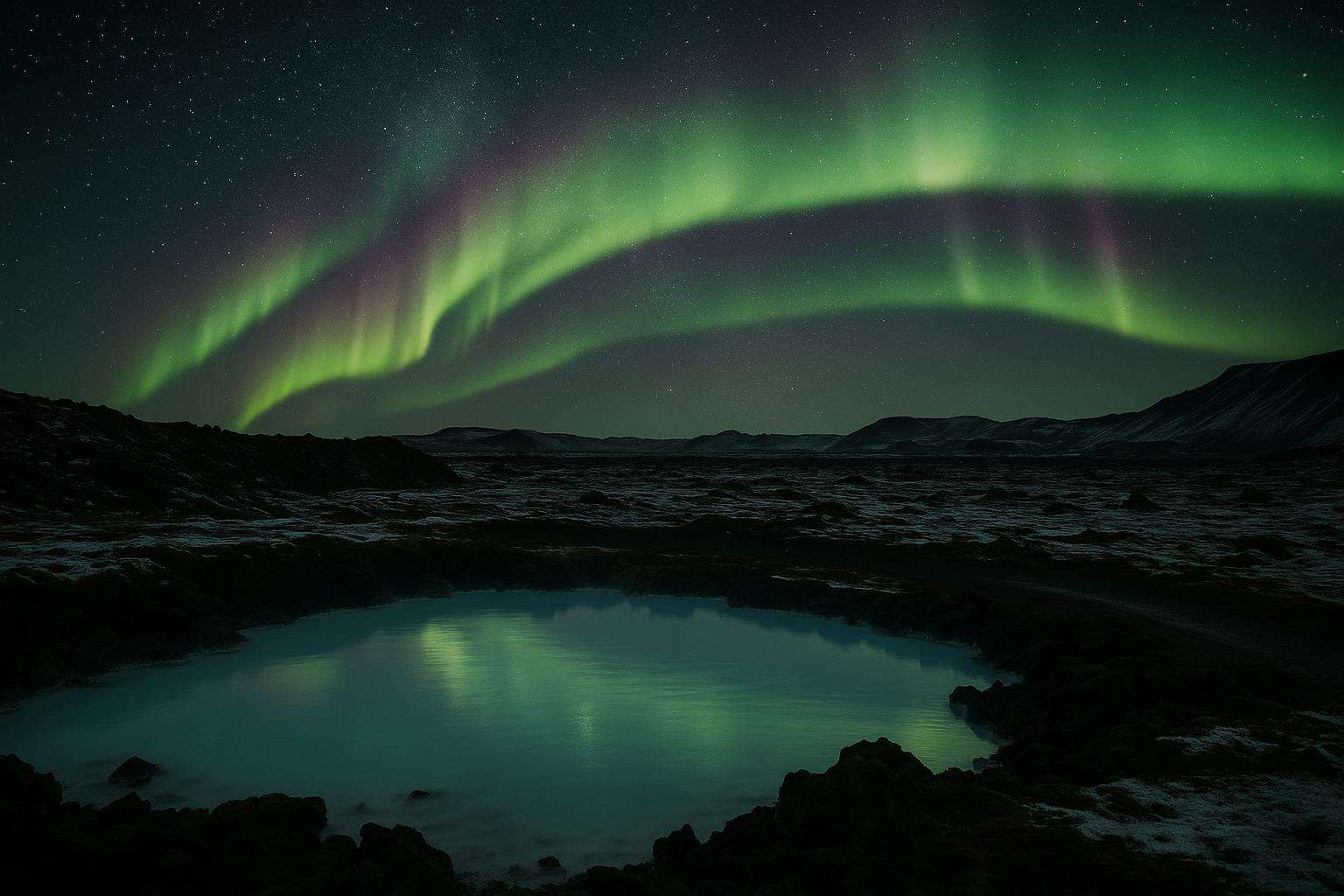
Iceland is the honeymoon for couples who want a landscape that behaves like another planet. In a single week you can soak in a mineral-blue geothermal lagoon, stand behind a thundering waterfall, walk on a black-sand beach beneath basalt columns, kayak among icebergs, and — in the right season — watch the Northern Lights pulse overhead from your hotel window. It is dramatic, compact enough to see meaningfully in a week, and unusually easy to reach: nonstop flights from the US East Coast run around five to six hours. This guide covers how to structure the trip around the Ring Road and Golden Circle, when to chase the aurora, and where geothermal luxury lives.
The Ring Road vs. the Golden Circle
Two routes define most Iceland itineraries, and they operate at very different scales. The Ring Road (Route 1) is the 1,332-kilometer highway that loops the entire island, passing every major region: the south coast's waterfalls and glacier lagoons, the fjords of the east, the volcanic north around Lake Myvatn, and the sagas of the west. Driving it fully is a summer expedition best suited to honeymoons of ten days or longer, when daylight is nearly endless and all roads are open.
The Golden Circle, by contrast, is a compact day loop just east of Reykjavik, linking three headline sights: Thingvellir National Park, where the North American and Eurasian tectonic plates visibly pull apart; the Geysir geothermal field, where the Strokkur spout erupts every few minutes; and Gullfoss, a two-tiered glacial waterfall. Visit Iceland's Golden Circle guide lays out the classic sequence. It works in any season and forms the backbone of most shorter honeymoons.
For a first Iceland honeymoon of five to seven nights, the smartest structure is not the full Ring Road but the Golden Circle plus the south coast — Seljalandsfoss and Skogafoss waterfalls, the Reynisfjara black-sand beach near Vik, and the ethereal Jokulsarlon glacier lagoon with its neighboring Diamond Beach. That corridor concentrates Iceland's most photogenic scenery within comfortable driving distance and keeps you close enough to Reykjavik and the international airport to manage winter weather.
The Blue Lagoon and geothermal luxury
No Iceland honeymoon is complete without geothermal bathing, and the Blue Lagoon is the icon — a milky, silica-rich pool set in a black lava field 15 minutes from Keflavik International Airport and about 50 minutes from Reykjavik, which makes it an ideal arrival-day or departure-day experience. Its water averages 38°C and is rich in silica, sulphur, and algae. Admission in 2026 is tiered: Comfort around ISK 11,990 (about $96 per person), Premium around ISK 14,990 (about $121), and Signature around ISK 18,490 (about $149), using dynamic pricing that shifts with demand and time slot, per published entrance-fee guidance. Advance booking is mandatory, and slots sell out weeks ahead in summer and aurora season.
For couples who want more than a soak, The Retreat at Blue Lagoon — the on-site five-star hotel — offers a dedicated Romantic Getaway package combining two nights, a tasting menu with wine pairing at Moss Restaurant, dinner at Lava, and couples spa therapy or in-water massage, bookable directly through the Blue Lagoon site. It is the most seamless way to fold luxury into the geothermal experience.
Worth knowing: the Blue Lagoon is famous but far from the only option. The Sky Lagoon on the edge of Reykjavik offers an ocean-horizon infinity edge and a seven-step ritual, and countryside geothermal pools and the Myvatn Nature Baths in the north are less crowded and, for many couples, more atmospheric. An honest caveat is that the Blue Lagoon can feel busy at peak times; a late-evening session is calmer and, in winter, may coincide with aurora overhead.
When and how to chase the Northern Lights
The Northern Lights are, for many couples, the emotional centerpiece of a winter Iceland honeymoon — but they require patience and the right season. Aurora viewing runs from late September through late March, when nights are long and dark. No sighting is guaranteed: it depends on solar activity, clear skies, and darkness aligning. The Icelandic Meteorological Office publishes a nightly aurora forecast combining cloud cover and geomagnetic activity, which you should check every evening.
To maximize your odds, stay at least four to five nights, get well away from Reykjavik's light pollution — the south coast and countryside lodges are ideal — and choose accommodations that offer aurora wake-up calls. Even on cloudy nights, the winter landscape of frozen waterfalls, ice caves in Vatnajokull, and low amber daylight is spectacular in its own right. Treat the aurora as a gift, not a guarantee.
Seasons at a glance
| Season | Best for | Tradeoffs |
|---|---|---|
| Summer (Jun–Aug) | Full Ring Road, Highlands, Midnight Sun, puffins | No aurora; peak crowds and prices |
| Autumn (Sep–Oct) | Early aurora, thinner crowds, mild weather | Shortening days; variable weather |
| Winter (Nov–Mar) | Northern Lights, ice caves, romantic atmosphere | Short daylight; road closures; 4x4 advised |
| Spring (Apr–May) | Lower prices, waterfalls at full flow | Aurora ending; some Highland roads closed |
Bottom line: For a first honeymoon, pick your season by priority — winter for the aurora and geothermal romance based near Reykjavik and the south coast, or summer for the full Ring Road and endless daylight. Do not try to combine a full island loop with aurora hunting; they belong to different seasons.
A sample 7-night self-drive route
Days 1–2: Arrive at Keflavik, unwind at the Blue Lagoon, then settle into Reykjavik for harbor dining and a walkable first evening. Day 3: Drive the Golden Circle — Thingvellir, Geysir, Gullfoss — and continue toward the south coast. Days 4–5: South coast waterfalls, Reynisfjara black-sand beach, and the Jokulsarlon glacier lagoon with a boat tour among the icebergs. Day 6: A guided glacier hike or, in winter, an ice-cave excursion, with aurora watching after dark. Day 7: Return toward Reykjavik, with a final Sky Lagoon soak or Reykjanes Peninsula geothermal detour before departure.
Iceland asks for realistic pacing and flexible plans — weather can rewrite a day's itinerary in an hour, and the country rewards couples who slow down for a single valley rather than racing the whole loop. Rent a reliable car, buy the collision waiver, check official and road-authority updates daily, and let the landscape set the tempo. Handled that way, Iceland delivers one of the most singular honeymoons on earth.
Frequently asked
When is the best time for an Iceland honeymoon?
It depends on what you want. For the Northern Lights, travel between late September and late March, when the nights are long and dark enough for aurora viewing. For the full Ring Road, warm hikes, puffins, and the Midnight Sun, travel June through August, when roads and highland routes are reliably open and daylight is nearly continuous. Shoulder months — May and September — balance milder weather, thinner crowds, and lower prices, with a real chance of aurora in September. Winter delivers the most romantic aurora atmosphere but shortens driving days and can close mountain roads, so a winter honeymoon usually stays closer to Reykjavik and the south coast rather than circling the whole island.
Should we drive the full Ring Road or focus on the Golden Circle?
The Ring Road (Route 1) is Iceland's 1,332-kilometer loop around the entire island, and driving it fully is a genuine expedition best suited to a summer honeymoon of ten days or more. The Golden Circle is a compact day loop east of Reykjavik linking three headline sights — Thingvellir National Park, the Geysir geothermal area, and Gullfoss waterfall — and it works in any season. For a first Iceland honeymoon of five to seven nights, most couples combine the Golden Circle with the south coast (Seljalandsfoss, Skogafoss, Reynisfjara black-sand beach, and Jokulsarlon glacier lagoon) rather than attempting the full Ring Road. Save the complete circuit for a longer summer trip.
How much does the Blue Lagoon cost in 2026?
The Blue Lagoon uses dynamic pricing that shifts with demand, date, and session time, and 2026 admission is structured across three tiers. Comfort starts around ISK 11,990 (roughly 96 US dollars per person), Premium around ISK 14,990 (roughly 121 dollars), and Signature around ISK 18,490 (roughly 149 dollars), according to published entrance-fee guidance. For couples, the Premium tier is the practical pick — it adds a bathrobe, extra silica and mineral masks, and a drink. Advance booking is mandatory, and tickets sell out weeks ahead in summer and aurora season. For a full stay, the on-site five-star Retreat Hotel offers a dedicated Romantic Getaway package with dining and couples spa therapy, priced directly through the resort.
Are we guaranteed to see the Northern Lights?
No honeymoon can guarantee the aurora — it depends on solar activity, darkness, and clear skies all aligning. To maximize your odds, travel between late September and March, stay at least four to five nights to allow for cloudy nights, get well away from Reykjavik's light pollution, and check the official aurora forecast from the Icelandic Meteorological Office nightly. Rural lodges and hotels with dark surroundings often offer wake-up calls when the lights appear. Even without a strong display, the winter landscape of frozen waterfalls, ice caves, and low golden light is extraordinary on its own, so treat the aurora as a bonus rather than the sole purpose of the trip.
Is Iceland expensive for a honeymoon?
Yes — Iceland is one of the pricier honeymoon destinations, driven by high costs for dining, fuel, and lodging. A comfortable seven-night self-drive honeymoon with mid-range hotels, a rental car, the Blue Lagoon, and a few guided experiences typically runs 5,000 to 9,000 US dollars per couple excluding international airfare, which is relatively cheap and short from the US East Coast. Luxury stays at The Retreat at Blue Lagoon or boutique countryside hotels push the total higher. Save by traveling in shoulder season, cooking some meals from grocery stores, choosing guesthouses over hotels, and prioritizing the many free natural attractions — most waterfalls, beaches, and hikes cost nothing to visit.
Do we need a 4x4 for an Iceland honeymoon?
For the Ring Road and Golden Circle in summer, a standard two-wheel-drive car is sufficient, as both are fully paved. A 4x4 becomes important in two situations: winter driving, when snow and ice make higher clearance and traction genuinely safer, and any travel on the interior Highland F-roads, which are legally restricted to four-wheel-drive vehicles and are only open in summer. For a winter aurora honeymoon based in the south, a 4x4 is the safer choice. Always check road and weather conditions daily, as Icelandic weather changes fast and road closures are common in winter — the national road authority and meteorological office publish live updates.