Destinations
The Maldives Honeymoon Guide 2026: Overwater Resorts, Real Costs & Best Months
A honest, numbers-first guide to planning a Maldives honeymoon — the top overwater resorts, what a week really costs including transfers, and exactly when to go.
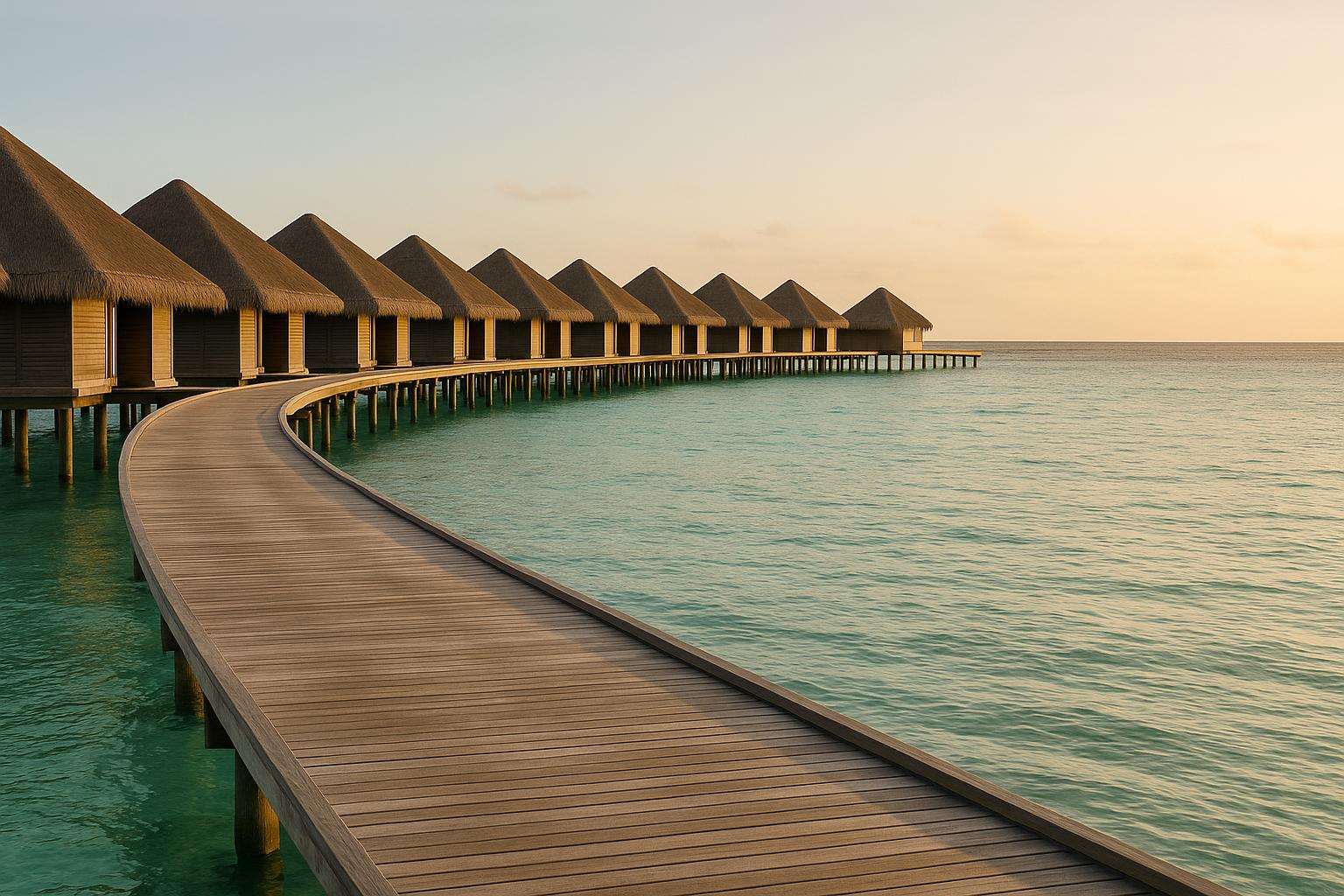
The Maldives remains the undisputed global benchmark for overwater luxury, and 2026 demand shows no sign of softening. For most honeymooners, the challenge is not deciding whether to go — it is understanding what the trip really costs, which of the archipelago's roughly 160 resort islands actually fits your temperament and budget, and when the weather delivers the version you have seen in every photograph. This guide is built to answer those three questions honestly, with real numbers and real tradeoffs.
What does a Maldives honeymoon really cost?
Prices for overwater villas span an extraordinary range. Mid-tier properties start near $500 per night; the pinnacle of the market exceeds $25,000 per night. For most couples targeting the top tier, the practical range is $1,300 to $5,000 per night before transfers, and a realistic six-night trip for two — inclusive of seaplane or speedboat transfers — runs $8,000 to $20,000 or more as of 2026.
One structural way to control cost is to lean into all-inclusive plans. At a resort with eleven dining venues, food and beverage can quietly become the largest single line on your folio. Soneva Jani's Chapter Two reserve rates include all dining, spa, and curated experiences, and COMO's Simply COMO plan bundles dining, wellness, and activities — both of which eliminate the à la carte surprise at checkout.
Which overwater resort fits which couple?
The four properties below represent distinct philosophies rather than a simple luxury ranking. Rates are 2026 figures and vary by season.
| Resort | Atoll / Transfer | Entry rate (approx.) | Best for |
|---|---|---|---|
| Soneva Jani | Noonu — 40-min seaplane | ~$2,500/night | Design innovation, water slides, stargazing |
| Gili Lankanfushi | North Malé — 20-min speedboat | ~$1,318/night | All-overwater, butler service, easy access |
| COMO Maalifushi | Thaa — 60-min seaplane | Higher tier | Diving and COMO Shambhala wellness |
| Conrad Maldives | Ari — 30-min seaplane | ~$1,500–$2,500/night | Privacy, points redemption via Hilton |
Soneva Jani (Noonu Atoll) is the market leader on innovation. Its overwater and island villas feature retractable bedroom roofs for stargazing and, in many categories, water slides descending directly into the lagoon. Entry-level Water Retreats start around $2,500 per night in low season; you can review the full villa range on the Soneva Jani official villa listing. A 40-minute seaplane from Malé is required, and because seaplanes fly only in daylight, a late international arrival means an overnight in Malé.
Gili Lankanfushi (North Malé Atoll) occupies a singular position: all 45 villas are overwater, every one includes a personal butler, and access is a 20-minute speedboat rather than a seaplane. Rates start from approximately $1,318 to $1,500 per night depending on season, placing it below Soneva Jani while delivering comparable service intensity. It also holds EarthCheck Gold certification and runs a pioneering coral-restoration program.
COMO Maalifushi (Thaa Atoll) differentiates through diving and wellness. It sits in the marine-rich Thaa Atoll — known for whale sharks, manta rays, and hammerheads — and all 65 villas include private pools and butler service. Access is a 60-minute seaplane at about $950 per adult each way, a cost worth confirming against its official resort page before booking.
Conrad Maldives Rangali Island (Ari Atoll) is widely regarded as the archetype of Maldivian overwater luxury, reached via a 30-minute seaplane. Privacy is strong, insect exposure over the water is low, and nightly rates run roughly $1,500 to $2,500 depending on season. For couples with Hilton Honors status, it also opens the door to points-based value.
When should you go?
The Maldives runs on a dual-monsoon calendar, so timing is genuinely consequential. The northeast monsoon (Iruvai) delivers the dry season from December through April: clear skies, calm seas, and underwater visibility exceeding 30 meters. February is the statistical sweet spot at roughly 50mm of rain, followed by January and March at about 60mm, according to the Maldives Nomad weather guide.
Peak pricing applies December through February, and the Christmas–New Year window carries holiday surcharges plus minimum five-to-seven-night stays at leading properties. The shoulder months of November and April offer the best balance — good weather at rates roughly 20 to 30 percent below peak. The southwest monsoon (Hulhangu) dominates May through October, bringing 30 to 50 percent rate reductions alongside choppier seas and more frequent showers.
Is the wet season a smart play?
For the right couple, yes. Rain in the wet season predominantly arrives in short afternoon bursts rather than sustained downpours, and water temperature and marine life do not meaningfully decline. Crucially, the wet season owns the archipelago's two great marine spectacles: manta aggregations at Hanifaru Bay (May–November) and whale sharks in the Ari corridor (June–September). The honest tradeoff is that seaplane transfers are more vulnerable to weather delays, and August and September can string together overcast days. If guaranteed unbroken blue skies are non-negotiable for your honeymoon, book the dry season; if meaningful savings and superior wildlife appeal, late October is the best wet-season entry point.
Booking logistics that matter
Nearly all travel routes through Velana International Airport near Malé, where you connect to your resort transfer. Two operational details deserve attention. First, generic online travel agencies frequently omit villa row position and orientation — the single most common first-timer mistake is booking an "overwater villa" and arriving to find a second-row unit facing the back of another bungalow. Book direct or through a Maldives specialist who can confirm position. Second, for Marriott, Hilton, IHG, and Hyatt properties, booking on the brand's own platform preserves elite benefits that can convert a beach villa into an overwater upgrade at check-in.
The Maldives rewards couples who plan with clear priorities. Decide first whether seclusion, diving, wellness, or value drives your choice; then match the resort, the season, and the transfer logistics to that decision — and budget the transfers honestly. Do that, and the postcard version is exactly what you will get.
Frequently asked
How much does a Maldives honeymoon cost in 2026?
A realistic six-night Maldives honeymoon for two at a genuine luxury property, inclusive of seaplane or speedboat transfers, runs roughly $8,000 to $20,000 or more as of 2026. Overwater villa rates themselves span an enormous range: mid-tier properties start near $500 per night, while the practical top-tier range most honeymooners target is $1,300 to $5,000 per night before transfers. Transfers are a real, often-overlooked line item — seaplanes run about $250 to $600 per person round trip and speedboats $100 to $300. Choosing an all-inclusive plan at a resort like COMO Maalifushi or Soneva Jani's Chapter Two can cap food and beverage exposure, which meaningfully changes the total.
What is the best month for a Maldives honeymoon?
The dry season, driven by the northeast monsoon (Iruvai), runs December through April and delivers clear skies, calm seas, eight to nine hours of daily sunshine, and water temperatures around 28 to 30 degrees Celsius. February is the statistical sweet spot at roughly 50mm of rainfall, followed by January and March at about 60mm. December through February is the peak-pricing window and requires booking six to nine months ahead. The shoulder months of November and April offer the best balance of good weather and rates about 20 to 30 percent below peak.
Do all Maldives resorts require a seaplane?
No. Transfer type depends on how far the resort island sits from Velana International Airport near Malé. Gili Lankanfushi in North Malé Atoll is reached by a 20-minute speedboat, avoiding seaplane cost and daylight-only scheduling entirely. Soneva Jani requires a 40-minute seaplane, and COMO Maalifushi a 60-minute seaplane at roughly $950 per adult each way. Seaplanes operate only in daylight, so a flight arriving after about 3:30 PM typically forces an overnight in Malé before your onward transfer the next morning — a detail worth planning around when booking international flights.
Is the Maldives worth visiting in the wet season?
For budget-motivated couples comfortable with some variability, yes. The wet season (May through October) brings 30 to 50 percent lower rates, and rain typically arrives in short afternoon bursts rather than all-day downpours. Water temperatures stay at 26 to 29 degrees year-round and marine life does not decline. In fact, the wet season is superior for wildlife: manta rays aggregate at Hanifaru Bay in Baa Atoll from May through November, and whale sharks concentrate in the Ari Atoll corridor from June through September. The tradeoff is a real risk of seaplane delays and occasional consecutive overcast days in August and September.
Which Maldives resort is best for a honeymoon?
There is no single answer — the right choice depends on budget and priorities. Soneva Jani leads on innovation with retractable villa roofs and in-villa water slides but sits at the top of the price hierarchy. Gili Lankanfushi offers an all-overwater, butler-inclusive experience with easy speedboat access at a lower entry rate. COMO Maalifushi pairs world-class diving in the marine-rich Thaa Atoll with the COMO Shambhala wellness program. Conrad Maldives Rangali Island is the archetype of Maldivian overwater luxury with strong privacy. Match the resort to whether you prioritize seclusion, diving, wellness, or value.
How far in advance should you book a Maldives honeymoon?
For peak dry-season dates, particularly December through February and the Christmas and New Year window, book six to nine months in advance — leading properties impose minimum five-to-seven-night stays over the holidays and sell out early. Overwater villa categories at the most in-demand resorts are the first to go, so if a specific villa type matters to you, lock it in as soon as your dates are firm. Shoulder-season travel in November or April is more forgiving on lead time, and wet-season bookings can often be secured a few months out with meaningful discounts.