Destinations
Mexico Honeymoon Beyond Cancun: Tulum, Los Cabos & Riviera Maya
Three Mexican honeymoons that leave the Cancun spring-break strip behind — desert-coast drama in Los Cabos, jungle-cenote romance in Tulum, and the widest all-inclusive range on the Caribbean coast in Riviera Maya.
Cancun built modern Mexican beach tourism, and for many couples it will always mean one thing: a wall of package resorts on a spring-break strip. But Mexico's most sophisticated honeymoons happen elsewhere. Three destinations, each a short domestic hop or transfer from a major airport, deliver sharply different identities — and none of them requires setting foot on the Cancun hotel zone.
Los Cabos is desert-coast drama with the most polished five-star infrastructure in the country. Tulum is jungle-and-cenote eco-romance. And the Riviera Maya sits between them in spirit — resort luxury paired with the widest range of natural and cultural excursions on the Caribbean coast. Here is how to choose, what it costs in 2026, and the two things — cenotes and sargassum — that most honeymoon guides underplay.
Los Cabos: desert coast, polished luxury, whales from the terrace
At the southern tip of the Baja California peninsula, where the Sea of Cortez meets the Pacific at Land's End, Los Cabos is Mexico's most internationally refined resort corridor. The stretch between Cabo San Lucas and San Jose del Cabo — locals call it the Corridor — holds a concentration of five-star properties unmatched anywhere else in the country. The top tier of adults-oriented luxury runs through Las Ventanas al Paraiso (a Rosewood resort), Esperanza (Auberge), and Marquis Los Cabos, where rooms typically start above $800 per night in peak season.
The signature draw is the landscape: humpback whales are commonly spotted from resort terraces December through March, and Lovers Beach (Playa del Amor) — reachable only by water taxi for about $20 round-trip — puts the swimmable Sea of Cortez and the rougher Pacific literally side by side. Sport-fishing charters leave the Cabo San Lucas marina from around $300 per person for shared boats, and seasonal whale-watching runs $80 to $120 per person. Crucially, Cabo sits on the Pacific side and is unaffected by the Caribbean's sargassum — a real advantage for couples who want guaranteed clean beach.
Tulum: eco-aesthetic romance and jungle cenotes
Tulum has traveled from backpacker village to one of Mexico's most photographed beach zones — thatched-roof villas above the Caribbean, jungle-cenote access, Mayan ruins perched directly on the coast, and the Sian Ka'an UNESCO Biosphere Reserve next door. The benchmark adults-only eco-boutique property is Azulik, a hand-crafted treehouse-style resort on South Tulum Beach with 48 air-conditioned villas, private outdoor bathtubs, hammock decks, and a Maya Spa. Its rates are unusually elastic — tracked lows around $143 per night rise to peak-April highs near $448 — while quality beach-zone villas generally run $200 to $400 per night.
Tulum is the atmosphere pick. What it trades away is resort amenity depth and, frankly, beach reliability: this is a sargassum-exposed coast, and infrastructure (power, water, traffic on the single beach road) can be less predictable than a purpose-built resort corridor. Couples who love Tulum love it for the aesthetic and the cenotes, not for the swim-up bar.
Riviera Maya: the widest all-inclusive range and the cenotes
The Riviera Maya — the coast from Playa del Carmen south toward Tulum — leads Mexican honeymoon destinations in sheer resort variety and in access to the world's largest freshwater cave system. Adults-only benchmarks include Grand Velas Riviera Maya (ultra-luxury all-inclusive), El Dorado Maroma on Maroma Beach, Excellence Playa Mujeres, and the Secrets Resorts collection, whose adults-only, all-suite properties are a reliable mid-to-upper all-inclusive option for couples who want everything bundled.
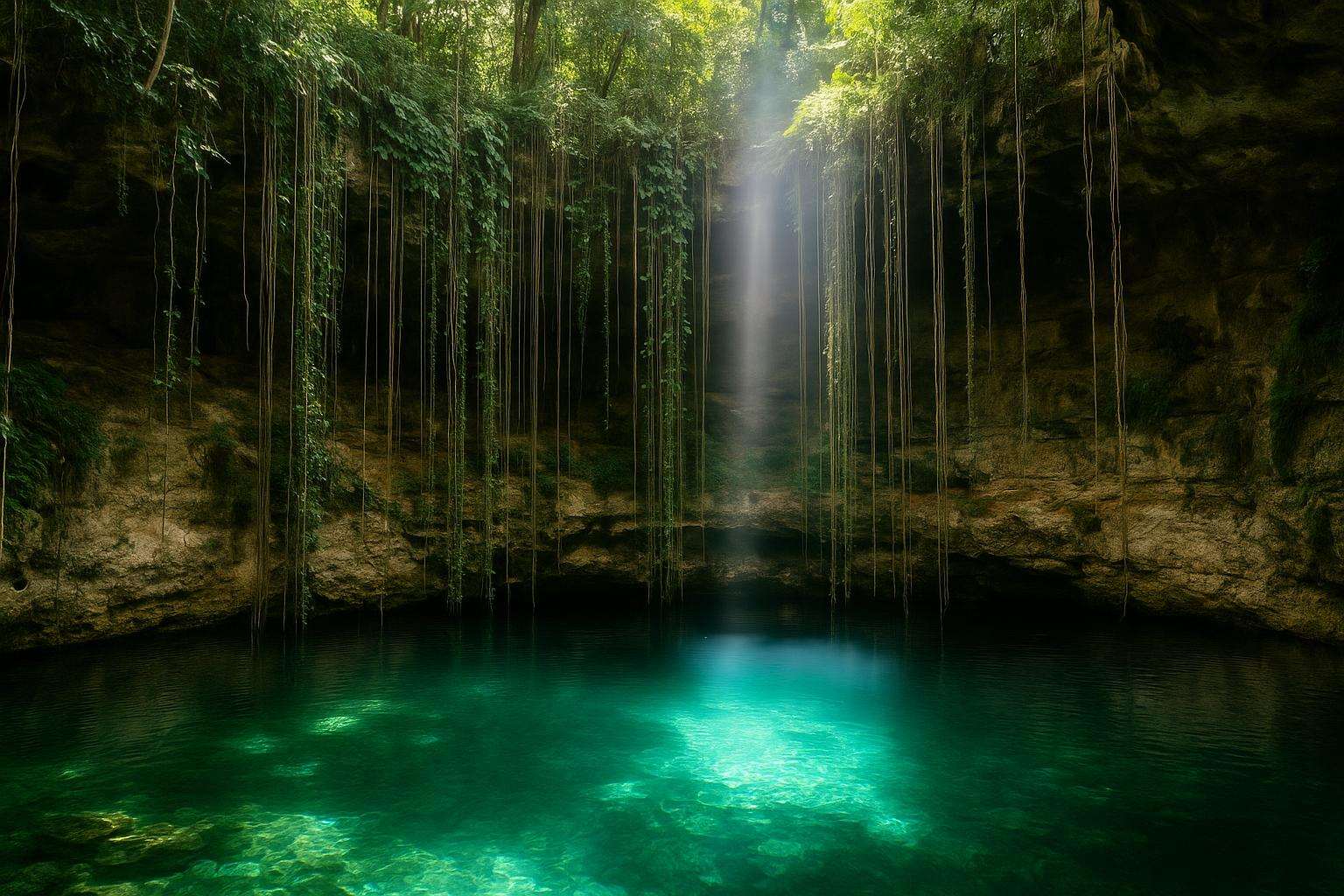
The natural showpiece is the cenotes. Dos Ojos, Gran Cenote and Cenote Azul — all within about 30 minutes of Playa del Carmen — offer crystal-blue, cave-lit freshwater swimming that has no equivalent on any other honeymoon coast. Entry runs $18 to $30 per person. Add a jungle zip-line circuit ($60 to $90 per person) or a Coba pyramid-and-cenote day trip ($75 to $130), and the Riviera Maya gives you a fuller itinerary than a pure fly-and-flop beach resort.
| Destination | Identity | Beach reliability | 7-night couple range (2026) |
|---|---|---|---|
| Los Cabos | Desert-coast luxury, whales | High (Pacific — no sargassum) | $5,500–$8,000+ (ultra-luxury) |
| Tulum | Eco-aesthetic, cenotes, ruins | Variable (sargassum season) | $2,800–$4,200 (boutique) |
| Riviera Maya | All-inclusive range, excursions | Managed (resort barriers) | $5,500–$8,000+ / $1,500–$2,200 budget |
Logistics, cost and honest tradeoffs
All three destinations reward booking 12 months ahead for preferred suites at ultra-luxury properties; boutique Tulum stays often hold availability three to six months out. Cabos flies into SJD; Tulum and the Riviera Maya use Cancun (CUN) or the newer Tulum airport (TQO), with private transfers from Cancun to Playa del Carmen running $65 to $120 round-trip and the Quintana Roo tourist tax adding about $19 per person.
The honest tradeoffs are worth stating plainly. Los Cabos is the most expensive per night and the least "tropical" in feel — desert, not jungle. Tulum delivers the strongest atmosphere but the least dependable beach and infrastructure. The Riviera Maya is the safest all-around bet but the least distinctive if you stay locked inside a mega-resort — the cenotes and ruins are what redeem it. On health, tap water is not potable anywhere; use bottled water, hydrate hard in the heat, and pack mineral reef-safe sunscreen, which many cenotes and marine parks require. Check the current CDC destination guidance for Mexico before you go. Match the coast to the honeymoon you actually want, and Mexico beyond Cancun turns out to be three genuinely distinct trips wearing one country's name.
Frequently asked
Which is better for a honeymoon: Los Cabos, Tulum or Riviera Maya?
It depends on the mood you want. Los Cabos is desert-meets-sea drama on the Baja peninsula, with the most polished five-star infrastructure in Mexico and reliably sunny, non-humid weather — best for couples who want refined luxury and whale-watching. Tulum is eco-aesthetic romance: thatched treehouse villas, jungle cenotes, and clifftop Mayan ruins, best for design-forward couples who prioritize atmosphere over resort amenities. Riviera Maya offers the widest range of all-inclusive resorts and the deepest bench of excursions — cenotes, ruins, reefs — making it the most flexible choice, especially for couples who want everything bundled into one property. There is no single winner; match the destination to the honeymoon you actually want.
What does a luxury all-inclusive honeymoon in Mexico cost in 2026?
For a seven-night trip per couple, ultra-luxury all-inclusive properties — think Grand Velas, Las Ventanas al Paraiso, or El Dorado Maroma — run roughly $5,500 to $8,000 and up, with top suites at the Cabos properties often starting above $800 per night alone in peak season. Boutique mid-luxury stays such as Azulik or a strong Tulum eco-villa land around $2,800 to $4,200 for the week, and budget-boutique options in Playa del Carmen come in near $1,500 to $2,200. Peak season is December through April, when rates rise 40 to 60 percent over summer. All figures are indicative 2026 ranges and vary with dates, suite category and included perks.
What are cenotes and are they worth building into a Riviera Maya honeymoon?
Cenotes are natural freshwater sinkholes carved into the Yucatan limestone — part of the world's largest underground river and cave system — filled with startlingly clear, cave-lit blue water. They were sacred to the Maya, and swimming in one is among the most surreal experiences in the Americas. Standouts near Playa del Carmen and Tulum include Dos Ojos, Gran Cenote and Cenote Azul, most within 30 minutes of the resort corridor. Entry runs roughly $18 to $30 per person, sometimes with snorkel gear. Yes, they are worth it — they are the single most distinctive natural feature of a Caribbean-coast Mexican honeymoon and a genuine reason to choose this coast over another.
Is sargassum seaweed a real problem on the Riviera Maya, and when?
It can be. Sargassum is a floating brown seaweed that washes onto the Caribbean coast — Cancun, Playa del Carmen, Tulum — mainly from roughly April through November, with volume varying year to year. On heavy days it piles on the sand and can smell as it decomposes. High-end resorts deploy floating offshore barriers and clear beaches daily, which greatly reduces the impact, but it is not eliminated. If pristine beach is your top priority, either travel in the winter dry season, choose Los Cabos on the Pacific/Sea of Cortez side (which is unaffected), or lean into cenotes and pools. Ask any resort directly about current conditions before booking.
When is the best time to visit, and what health precautions apply?
The dry season, December through April, is the reliable weather window across all three destinations, though it is also the most expensive and crowded. Summer brings lower prices, more humidity on the Caribbean side, and the higher end of hurricane season (June to November). On health, consult the current CDC destination page for Mexico for routine vaccine and food-and-water guidance; tap water is not potable, so stick to bottled or filtered water. From a functional-health angle, the practical wins are simple: hydrate aggressively in the heat, use mineral (zinc-oxide) reef-safe sunscreen — required at many cenotes and marine parks to protect the ecosystem — and give yourself a buffer day to adjust rather than diving into activities on arrival.