Destinations
New Zealand Honeymoon Guide: North vs. South Island for Couples
How to choose between New Zealand's two islands for your honeymoon — from Queenstown's adrenaline and Milford Sound's fiords to Rotorua's geothermal north and the lodges that define each.
New Zealand is the honeymoon for couples who define romance through landscape and shared adventure rather than beachfront ease. It is two islands of sharply different character joined by short flights and long, beautiful drives — and choosing where to spend your days is the single most important planning decision you will make. This guide breaks down the North and South Islands as honeymoon destinations, names the places that anchor each, and shows how to combine them without turning your trip into a road-rally.
A note on orientation for first-timers: the seasons are flipped. New Zealand's summer runs December through February, so a Northern-Hemisphere winter wedding can flow straight into a New Zealand summer honeymoon. The whole country sits within an area smaller than Japan, yet its spine of mountains makes travel slower than the map implies. Distances are measured in hours, not kilometers.
South Island: the adventure honeymoon
The South Island holds New Zealand's most cinematic scenery and its densest concentration of once-in-a-lifetime experiences. Queenstown, set on the sapphire arm of Lake Wakatipu beneath the jagged Remarkables range, is the natural base. It invented commercial bungy jumping and remains the adventure capital of the country — jet-boating, heli-skiing, canyon swings, and paragliding are all within minutes — but it is equally a place of vineyards, lakeside fine dining, and slow gondola sunsets. For couples, the appeal is that adrenaline and indulgence sit side by side.
Queenstown's luxury lodge tier is exceptional. Rosewood Matakauri sits on Lake Wakatipu with views to the Remarkables and, since a 2024 wellness repositioning, a lakefront bathhouse with a hot-cold plunge sequence; nightly rates run roughly NZ$1,950–NZ$3,400 (about US$1,200–US$2,100) for two, per Scott Dunn's property listing. Blanket Bay, near Glenorchy, is the most architecturally dramatic of the region's lodges and the most exclusive.
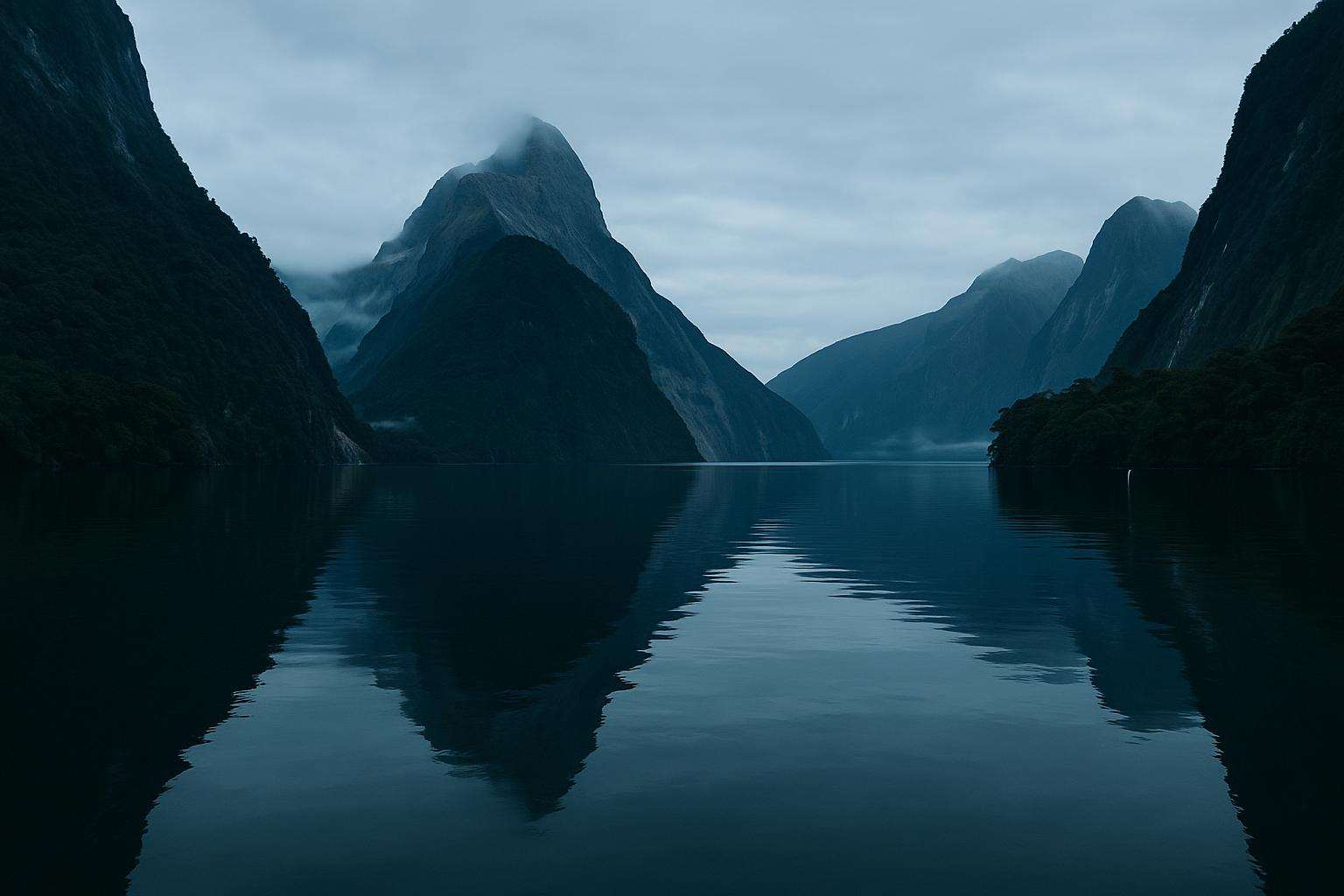
From Queenstown the essential day is Milford Sound (Piopiotahi), the fiord that put Fiordland on the world map. Sheer cliffs rise more than a kilometer straight from near-black water, and waterfalls multiply after rain — which, in Fiordland, is most days. The New Zealand Department of Conservation notes that Milford Sound sits within Fiordland National Park, part of the Te Wahipounamu UNESCO World Heritage Area, and receives some of the highest rainfall in the country; see the DOC Milford Sound page. Because it is roughly a four-hour drive each way from Queenstown, treat it as a full day, an overnight cruise, or a scenic flight rather than a casual outing. Staying in Te Anau the night before is the calmest way to experience it.
Beyond Queenstown and Fiordland, the South Island offers the glaciers of the West Coast (Franz Josef and Fox), the star-clear alpine amphitheater of Aoraki/Mount Cook, and the Central Otago wine country around Bannockburn, home to some of the world's finest Pinot Noir. A South-Island-only honeymoon of seven to nine nights is a complete, unhurried trip in itself.
North Island: geothermal wonder and culture
The North Island trades alpine drama for volcanic energy, Maori cultural depth, subtropical warmth, and wine. Rotorua is its romantic and cultural anchor: a geothermal landscape of geysers, silica terraces, and bubbling mud pools, layered with living Maori tradition. Couples soak in private geothermal spas, watch the Pohutu geyser erupt at Te Puia, and share an earth-cooked hangi feast at an evening cultural performance. Nearby lie the Waitomo glowworm caves and Lake Taupo, where the storied Huka Lodge — operating since 1924 — includes breakfast, pre-dinner drinks and canapes, and a wine-matched dinner, with rates starting around NZ$2,100 for two in a junior lodge suite including airport transfers, per Huka Lodge's packages page.
Farther north, the Bay of Islands delivers the North Island's warm-water romance: 144 subtropical islands scattered across a turquoise bay, sailing charters, dolphin encounters, and the birthplace of modern New Zealand at Waitangi. Tourism New Zealand's Bay of Islands guide highlights its history and marine life. It is a gentler, more languid counterpoint to the South Island's peaks — the closest New Zealand comes to a classic beach honeymoon.
Auckland, the country's largest city, is the North Island's main international gateway and a worthwhile day or two for harbor dining and the nearby Waiheke Island vineyards.
Where wellness fits: Aro Ha
For couples who want stillness alongside adventure, the South Island's Aro Ha Wellness Retreat, high above Lake Wakatipu near Glenorchy, is New Zealand's most immersive wellness stay. Its structured multi-day programs combine guided sub-alpine hiking, yoga, plant-based cuisine, spa therapies, and digital detox in a setting engineered for reconnection; details are on the Aro Ha site. It is a deliberate, all-inclusive experience rather than a flexible base, so it suits couples who want to bookend their honeymoon with a reset rather than pass through.
How the two islands compare
| Factor | South Island | North Island |
|---|---|---|
| Signature draw | Alpine wilderness, fiords, adventure | Geothermal wonder, Maori culture, warm beaches |
| Anchor destinations | Queenstown, Milford Sound, Mount Cook | Rotorua, Bay of Islands, Lake Taupo |
| Climate | Cooler, alpine, four distinct seasons | Warmer, subtropical in the far north |
| Best for | Adventure and scenery-first couples | Culture, wine, and gentle-warmth couples |
| Signature lodges | Matakauri, Blanket Bay, Aro Ha | Huka Lodge, Bay of Islands retreats |
Bottom line: If you must pick one island, choose the South for a scenery-and-adventure honeymoon or the North for culture, geothermal soaking, and warmer beaches. With ten to fourteen days, do both — three North Island nights, then the South Island for the balance.
A combined 12-day route
A well-paced two-island honeymoon might run: Days 1–3, Rotorua for geothermal spas, a hangi evening, and a Waitomo glowworm day. Day 4, fly south to Queenstown. Days 5–7, Queenstown itself — vineyards, the gondola, a lake cruise, and one adrenaline activity. Day 8, a Milford Sound day or overnight cruise via Te Anau. Days 9–10, Central Otago wine country and a lodge night at Matakauri. Days 11–12, an Aro Ha reset or a West Coast glacier extension before flying home from Queenstown or Christchurch.
Honest tradeoffs to plan around: internal flights and long drives consume real time, so resist cramming both glaciers and Milford Sound into a single week. Fiordland's rain is a feature, not a bug — the waterfalls depend on it. And book signature lodges months ahead for the December-to-February peak, when the best suites sell out early. Handled with realistic pacing, New Zealand delivers the rare honeymoon that is equal parts thrilling and restorative.
Frequently asked
Should we choose the North Island or South Island for a New Zealand honeymoon?
If your idea of romance is dramatic wilderness, adrenaline, and alpine scenery, the South Island is the stronger choice — Queenstown, Milford Sound, and the glaciers concentrate the country's most cinematic landscapes there. The North Island suits couples who prefer geothermal wonder, Maori culture, wine country, and warmer subtropical beaches, anchored by Rotorua and the Bay of Islands. For a first honeymoon of ten days or more, most couples combine both: a few days in the volcanic north, then the bulk of the trip on the South Island. If you only have a week, pick one island rather than rushing between them, because internal transfers eat more time than the map suggests.
When is the best time to honeymoon in New Zealand?
New Zealand's seasons are inverted from the Northern Hemisphere. The austral summer, December through February, delivers the warmest, longest days and peak conditions for the South Island's hikes and lakes, but it is also the busiest and priciest window. Shoulder seasons — late spring (November) and autumn (March to April) — offer excellent value, fewer crowds, stable weather, and vivid autumn color in Central Otago around Queenstown. Winter (June to August) transforms Queenstown into a ski town and is the season for the clearest Southern night skies, though many alpine roads and some lodges reduce operations. Fiordland, home to Milford Sound, is famously wet year-round, so pack for rain regardless of season.
How many days do we need for a New Zealand honeymoon?
Plan a minimum of ten days, and ideally twelve to fourteen, to see both islands without exhaustion. New Zealand looks compact on a map, but its mountainous terrain means driving times are long — Queenstown to Milford Sound is a full day round-trip, and the country runs the length of Italy. A tight one-island trip of seven nights works well if you commit fully to the South Island. For a two-island honeymoon, a common structure is three nights on the North Island (Rotorua or the Bay of Islands), then seven to nine nights on the South Island across Queenstown, Fiordland, and one additional region such as the West Coast glaciers or Aoraki/Mount Cook.
Is Milford Sound worth the trip from Queenstown?
For most couples, yes. Milford Sound (Piopiotahi) is New Zealand's most celebrated fiord — sheer cliffs rising over a kilometer straight from dark water, with waterfalls that multiply after rain. The catch is logistics: it is roughly a four-hour drive each way from Queenstown along the spectacular but slow Milford Road, making a self-drive day trip up to twelve hours. Consider staying overnight in Te Anau to break the journey, or booking an overnight cruise on the fiord itself. Scenic flights from Queenstown compress the trip and add an aerial view of the Southern Alps, weather permitting. Rain, counterintuitively, makes the fiord more dramatic, so do not cancel over a gray forecast.
What makes Rotorua special for a honeymoon?
Rotorua is the heart of North Island geothermal country and Maori cultural life. Couples come for steaming geysers and bubbling mud pools at Te Puia and Wai-O-Tapu, private geothermal spa soaks, and evening cultural experiences that include a traditional hangi feast cooked in the earth. It pairs naturally with the nearby Waitomo glowworm caves and Lake Taupo, where Huka Lodge — open since 1924 — offers one of the country's most storied luxury lodge stays. The famous sulphur scent is real but fades from awareness within a day. Rotorua works best as a two- or three-night immersion rather than a rushed stopover.
How much does a New Zealand honeymoon cost?
New Zealand spans a wide range. A comfortable mid-range two-island honeymoon of twelve days, using quality boutique hotels, a rental car, and a mix of guided and self-drive experiences, typically runs 8,000 to 14,000 US dollars per couple excluding international flights. The luxury tier climbs quickly: signature lodges such as Huka Lodge or Matakauri Lodge in Queenstown run roughly NZ 2,000 to NZ 3,400 per night for two including meals, so a lodge-anchored trip can reach 20,000 dollars or more. Long-haul airfare from North America adds meaningfully. Autumn and spring travel, plus mixing one or two lodge nights with well-chosen boutique hotels, is the most effective way to manage the budget.