Destinations
Rome + Tuscany 10-Day Wine-Country Honeymoon Itinerary
From the cathedrals and trattorias of Rome to cypress-lined roads, Chianti Classico cellars and agriturismo dinners in the Val d'Orcia — a day-by-day plan with real 2026 costs and hard-won logistics.
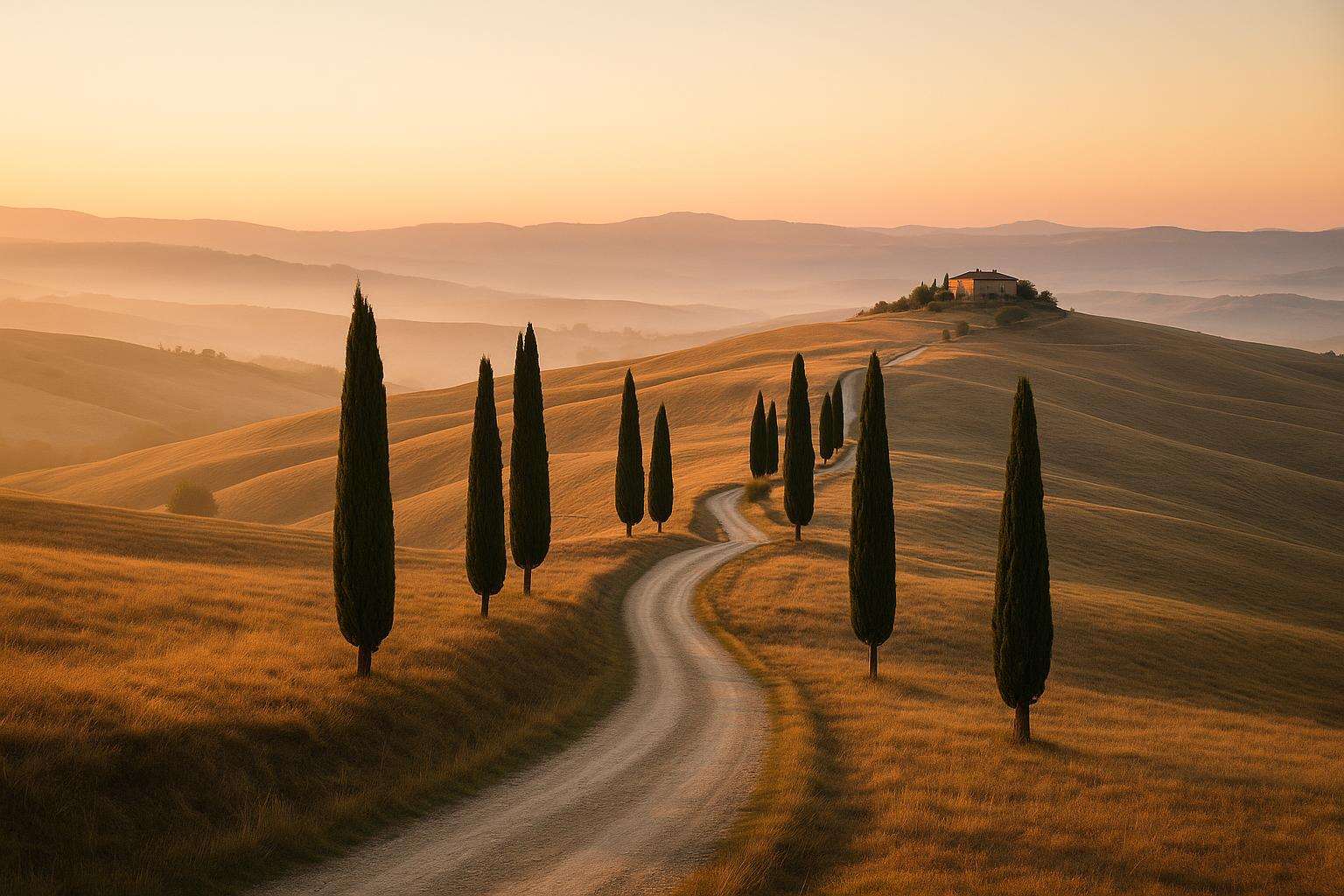
Rome and Tuscany are the two halves of Italy that complete each other: the country's most historically dense city married to its most romantic rural landscape. A ten-day honeymoon here moves deliberately from the cosmopolitan to the pastoral — cathedrals and trattorias first, then cypress-lined roads, barrel-aged wines and long agriturismo dinners under the stars. I have driven these Tuscan back roads in both directions, and the itinerary below is built to minimize hotel changes, dodge the classic tourist traps, and put the wine country's best estates within easy reach.
Days 1–3: Rome, the cosmopolitan opening
Arrive into Rome Fiumicino (FCO); a private transfer into the center runs €50–€80 depending on drop-off. Rome's boutique-hotel tier serves honeymooners well. J.K. Place Roma, near Piazza Santa Maria Novella, is a design-led 30-room property with unusually warm service; the adjacent Hotel de la Ville, a Rocco Forte property above the Spanish Steps, offers larger rooms, a rooftop terrace, a full-service spa and panoramic city views. Rates in the $400–$600 per-night range are typical for five-star-equivalent experiences.
The essential couples' itinerary: pre-purchase skip-the-line tickets for the Colosseum and Roman Forum (€18 per person standard, €35+ for fast-track slots); a guided Vatican Museums session including the Sistine Chapel; the Trevi Fountain and Spanish Steps visited before 8 a.m. to beat the crowds; and an evening of outdoor dining in Trastevere, where the cobbled lanes glow after dark. A pasta-and-tiramisu cooking class with a local chef — about €80–€150 per person — is a genuinely fun shared activity that most couples remember longer than the monuments.
Day 4: The transfer through Orvieto
The most scenic way north is a private driver with a half-day stop in Orvieto, a medieval Umbrian hill town perched on a volcanic plug, with a striped Gothic Duomo and Luca Signorelli's fresco cycle. From there it is a short onward run into the Chianti heartland. If you would rather move fast, take the Trenitalia high-speed train from Roma Termini to Florence in about 90 minutes (€20–€60 by class and lead time) and collect a rental car outside the Florence center — never inside it.
Days 5–7: Chianti Classico
The Chianti Classico DOCG zone between Florence and Siena is where the wine touring begins. Base yourself in Castellina in Chianti or Radda in Chianti; a car is effectively mandatory here outside a full-service agriturismo package. A well-appointed converted farmhouse with pool, breakfast and on-site wine starts at $126–$200 per night, while a boutique honeymoon hotel with a wine estate runs $600–$1,000 at the top end.
Two estate visits anchor the region. Antinori nel Chianti Classico in San Casciano — named Best Winery in the World in 2022 by World's Best Vineyards — offers tiered visits by appointment, from the entry Tinaia Tour (a cellar walk plus three-wine tasting, from €35 per person) up to the premium CRU Tour with lunch at the rooftop Rinuccio 1180; all bookings are made directly per the estate's official visiting page. Twenty minutes east, Castello di Ama in Gaiole layers wine onto contemporary art — permanent works by Anish Kapoor and Michelangelo Pistoletto dot the grounds — and its flagship Symposium of San Lorenzo experience (about €169 per person, a guided walk plus a three-wine set lunch) is bookable directly with the estate. A Vespa rental from Castellina (roughly €60–€80 per day per scooter) is a storied couples' activity for those comfortable on two wheels.
Days 8–9: Val d'Orcia and Siena
Drop south into the Val d'Orcia, a UNESCO World Heritage cultural landscape centered on Pienza, Montalcino (home of Brunello di Montalcino DOCG) and Montepulciano (Vino Nobile). This is the postcard Tuscany — cypress-lined dirt roads, isolated stone farmhouses, and the biggest reds in the region. For lodging, Agriturismo Il Rigo is a country house with farm-to-table organic dining and a daily-changing four-course set menu; Agriturismo Humile, a restored 18th-century farmhouse with three suites, an adults-only pool and a hot tub, sits within an hour of Siena and close to both Pienza and Montepulciano, per Discover Tuscany's regional lodging guide.
Save a half-day for Siena's Piazza del Campo — the UNESCO-listed shell-shaped medieval square — and its Gothic Duomo. San Gimignano's medieval towers and Lucca's intact Renaissance walls are optional day excursions if you have the appetite for more towns.
Regional pricing at a glance
| Stay / experience | Region | Typical 2026 price |
|---|---|---|
| Boutique 5-star (J.K. Place / Hotel de la Ville) | Rome | $400–$600/night |
| Full-service agriturismo (pool, breakfast, wine) | Chianti / Val d'Orcia | $126–$200/night |
| Boutique wine-estate hotel | Chianti | $600–$1,000/night |
| Antinori Tinaia Tour (3 wines) | Chianti | From €35/person |
| Castello di Ama Symposium (guided + lunch) | Chianti | ~€169/person |
| Vespa rental | Chianti | €60–€80/day |
Day 10: Departure logistics
Florence (FLR or Amerigo Vespucci) and Pisa (PSA) airports serve the region; Rome Fiumicino is a 3–3.5 hour drive from the Val d'Orcia and feasible for a late-afternoon flight. Return the rental car outside any city center, and drive in ZTL-free corridors — historic centers enforce automatic camera fines for unauthorized vehicles, and this is the single most common expensive mistake honeymooners make in Italy.
How to sequence the whole thing
- Rome first, countryside last — end on the slow, restful register rather than the crowded one.
- Train Rome→Florence, then drive. Pick up the car outside the Florence center.
- Book estate experiences weeks ahead in May–October.
- Target May–June or September–October for weather, harvest and manageable crowds.
Done this way, a Rome-and-Tuscany honeymoon is not a checklist sprint but a deliberate slowing-down: from the noise of the Eternal City into the silence of a cypress ridge at dusk, glass of Brunello in hand. That contrast is the whole point.
Frequently asked
How many days do you need for a Rome and Tuscany honeymoon?
Ten days is the ideal balance. It gives you three full days in Rome to cover the Colosseum, Vatican and Trastevere without exhaustion, a scenic transfer day through Orvieto, three nights in the Chianti Classico wine hills, and two to three nights in the Val d'Orcia around Pienza and Montalcino before departure. Compressing this into a week forces daily hotel changes and turns a romantic trip into a logistics exercise. If you only have seven days, drop either Rome or the Val d'Orcia rather than trying to do everything at speed.
When is the best time for a Tuscany wine-country honeymoon?
May–June and September–October are the prime windows. Temperatures are comfortable, the countryside is green in spring and gold at harvest, and the wineries are fully operational. September and early October coincide with the grape harvest, which adds crush activity and festival energy to estate visits. July and August are the opposite: high heat, peak prices and heavy crowds in Rome, Siena and San Gimignano. Winter shutters many rural agriturismi and estate tasting rooms, so it is not ideal for a wine-focused trip.
Do you need a rental car in Tuscany?
In rural Tuscany, yes — a car is nearly mandatory outside full-service agriturismo packages, because public transport between the Chianti villages and Val d'Orcia towns is sparse. But collect the car outside city centers, not in Rome or Florence. Italian historic centers enforce ZTL (limited-traffic zones) with automatic camera fines for unauthorized vehicles, and tourists routinely rack up multiple citations without realizing it. The standard play is to train from Rome to Florence, pick up the car outside the Florence center, and drive the countryside from there.
What does a Castello di Ama wine experience cost?
Castello di Ama in Gaiole in Chianti layers wine onto contemporary art, with permanent site-specific works by artists including Anish Kapoor and Michelangelo Pistoletto. Its flagship shared experience, The Symposium of San Lorenzo, runs about €169 per person and combines a one-hour guided walk through the vineyards, cellars and artworks with a three-wine set lunch at the Ristoro. A standalone three-wine enoteca tasting without the guided tour begins around €15. All visits are by reservation, and peak-season slots book weeks ahead, so reserve directly with the estate before you travel.
What is the difference between Chianti and the Val d'Orcia?
They are two different Tuscan experiences. Chianti Classico is the DOCG wine zone between Florence and Siena — rolling vineyard hills, stone villages like Radda and Castellina, and the Sangiovese-based Chianti Classico reds. The Val d'Orcia, further south, is a UNESCO cultural landscape of cypress-lined roads, isolated farmhouses and Renaissance towns like Pienza, home to the powerhouse Brunello di Montalcino and Vino Nobile di Montepulciano appellations. Chianti is more about accessible wine touring; the Val d'Orcia is the postcard scenery and the biggest reds. A ten-day trip fits both comfortably.
How do you get from Rome to the Tuscan countryside?
Two good options. The scenic route is a private driver north from Rome with a half-day stop in Orvieto — a medieval Umbrian hill town with a Gothic Duomo and Signorelli frescoes — then onward to Chianti. The efficient route is the Trenitalia high-speed train from Roma Termini to Florence in about 90 minutes (roughly €20–€60 by class and booking lead time), where you collect a rental car outside the city center for the countryside portion. Either way, avoid driving into Rome or Florence historic centers, where ZTL camera fines apply.