Destinations
Why September in Santorini Beats August: Shoulder-Season Destination Angles
September delivers Santorini's warmest sea, 30–40% lower hotel rates and half the crowds of August — with full ferry service still running. Here is the shoulder-season case, and where the same logic applies across the Mediterranean.
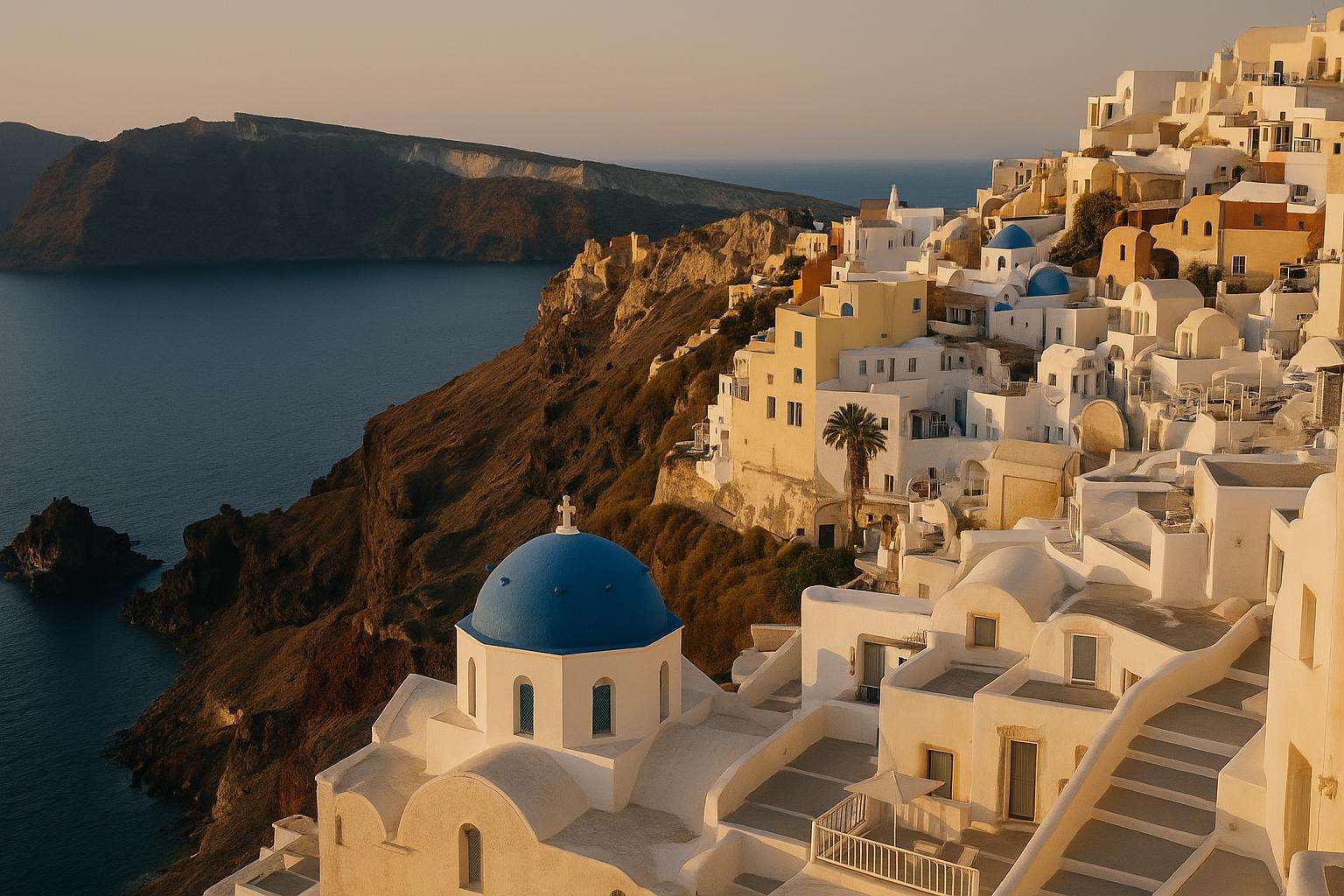
Every August, Santorini performs a strange trick: it becomes both the most desirable and the least pleasant version of itself. The caldera overlooks in Oia are shoulder-to-shoulder by mid-afternoon, the cave-hotel rates hit their annual ceiling, and the Aegean heat presses down on the whitewashed lanes. Then September arrives, the crowds thin as if someone pulled a plug, the sea reaches its warmest temperature of the entire year, and the same suite that cost €600 a week ago is suddenly €400. This is the shoulder-season paradox, and for honeymooners it is one of the highest-leverage timing decisions in all of European travel.
This explainer makes the case for September over August in Santorini with real pricing and crowd data — and then shows where the exact same logic pays off across the Mediterranean, from the Amalfi Coast to Tuscany. If you have flexibility in your dates, this is the kind of decision that quietly buys you a better honeymoon for less money.
Why September beats August in Santorini
Three forces converge in September, and they all point the same way. First, the sea is at its warmest. Water temperature lags air temperature by roughly two months, so the Aegean peaks around 24°C in September — warmer than July — making swimming, caldera cruises and Ammoudi Bay dips their most inviting of the year. Second, the crowds collapse. European school calendars reconvene in early September, abruptly removing the family tourism responsible for August's overlook queues; by mid-September popular sites are operating at roughly 30–50 percent of August volumes. Third, the prices fall — more on that below.
What makes September superior to the deeper off-season is that none of this comes at the cost of infrastructure. In September, ferries run full summer schedules, restaurants and shops are all open, and the island still hums with life — just at a livable tempo. You get the best of peak season without the friction of it.
The pricing reality
The savings are not marginal. Per shoulder-season price reporting, the caldera-view cave hotels and cliffside suites that command €400–800 per night in July and August drop roughly 30–40 percent in September and October, with some properties falling 40–60 percent in the deeper off-season — see the Greek Trip Planner shoulder-season report. A suite at €600 in August can be €360–420 in September for materially the same view and service. Airfare and ferry fares ease as demand relaxes, too.
| Factor | August (peak) | September (shoulder) |
|---|---|---|
| Caldera-view suite (per night) | €400–800 | ~30–40% lower |
| Sea temperature | ~23–24°C | ~24°C (annual peak) |
| Crowds at major sites | Peak volume | ~30–50% of August by mid-month |
| Ferry service | Full summer schedule | Full summer schedule |
| Rainfall risk | Very low | Very low (rains hold off to October) |
One anomaly worth planning around: Greece's Climate Resilience Fee — charged per person per night by hotel star rating — stays at full peak-season rates through October 31, then drops by about 70 percent on November 1. A couple doing ten nights at a four-star property across a couple of islands can save €70–100 in tax alone by shifting into November, though at the cost of thinning services and closing restaurants.
Why ferry timing makes September the safer shoulder month
If you plan to island-hop — Santorini plus Mykonos or Naxos, say — the ferry calendar makes September clearly safer than the later shoulder. Service contracts sharply in the true off-season: the Piraeus–Santorini route drops from up to ten daily crossings in summer to about two per day in winter, and the faster Rafina–Santorini route runs only April through October. Inter-island links like Mykonos-to-Santorini largely cease outside the tourist season, forcing you to reroute through Piraeus. In September none of that constrains you — the full summer ferry schedule is still running. October is the last month before Oia and Imerovigli operators begin closing, so September is the moment when warmth, value and full logistics all overlap.
Where the same logic applies across the Mediterranean
The September argument is not unique to Santorini — it holds across the Mediterranean's most popular honeymoon corridors, which all concentrate demand into July and August and then relax.
On Italy's Amalfi Coast, September–October rental rates average around $170 per day versus peaks above $400 in July, the Tyrrhenian sea is at its warmest, and ferry service still runs its 8–12 daily departures before the late-October wind-down — the seasonal detail is laid out in this Amalfi Coast month-by-month guide. In Tuscany, September may be the year's finest month: the vineyards are lush ahead of the harvest, the August heat has broken, and both city and wine-country rates ease from their summer highs. Rome, Florence and Paris city hotels all drop 20–30 percent from peak.
September or May?
The natural follow-up: is May a better shoulder month? For Santorini specifically, September usually wins. In May the Aegean is still cool at around 20–22°C, so a swimming-focused honeymoon feels warmer in September, and May in Italy carries an Easter-week price spike to dodge. Where May shines is for city-focused trips — Rome, Florence, Paris — where weather is less central and the shoulder pricing plus thin crowds are ideal. For a caldera-and-sea honeymoon, September is the safer bet: warm water, reliable ferries, and the summer surge already gone.
The broader lesson is worth internalizing: across Italy, Greece and France, September consistently emerges as the single highest-value honeymoon month in Europe — peak sea temperatures, autumn cultural programming, full logistics, and rates well below August. If your dates can flex just a few weeks past the summer peak, Santorini in September rewards you with the warmest sea of the year, half the crowds, and hundreds of euros back in your pocket. That is not a compromise. It is simply the better version of the same trip.
Frequently asked
Is September a good time to visit Santorini for a honeymoon?
September is arguably the single best month to visit Santorini, and one of the highest-value honeymoon months in all of Europe. The Aegean reaches its annual peak sea temperature — around 24°C, warmer than July — because the sea lags the air by a couple of months, so swimming and caldera cruises are at their most inviting. European school calendars reconvene in early September, which abruptly removes the family tourism responsible for August's caldera-overlook crowds, dropping popular sites to roughly 30–50 percent of August volumes by mid-month. Hotel rates fall 30–40 percent from the August peak. And critically, the logistical infrastructure is still fully operational — ferries run full summer schedules and restaurants have not begun closing. It is warmth, value and calm all at once.
How much cheaper is Santorini in September versus August?
Substantially. According to shoulder-season price reporting, the caldera-view cave hotels and cliffside suites that command €400–800 per night in July and August drop roughly 30–40 percent in September and October, and some properties fall 40–60 percent in the deeper off-season. That means a suite running €600 in August might be available for €360–420 in September for materially the same experience. Airfare and ferry fares also soften as demand eases. One nuance worth planning around: Greece's Climate Resilience Fee, charged per person per night by hotel star rating, stays at full peak-season rates through October 31 and then drops by about 70 percent on November 1 — so a very late-season or November trip saves on tax as well, though at the cost of thinning services.
Is the weather still warm enough in Santorini in September?
Yes. September in Santorini is reliably warm — daytime temperatures typically sit in the high 20s Celsius, and the sea is at its warmest of the entire year at around 24°C, because water temperature lags air temperature by roughly two months. In practice that means you get August-quality swimming and sunbathing without August-quality heat, crowds or prices. Rainfall is still very low in September; the first meaningful autumn rains generally hold off until October at the earliest. Evenings are pleasant and long, with sunset around 7:30 in the wider region, extending usable time on the caldera terraces. For a beach-and-sunset honeymoon, September delivers the warmth you paid for with none of the peak-season friction.
Do ferries still run to Santorini in September?
Yes — September is fully within the operational tourist season, so ferries run their complete summer schedules. This matters because ferry service to and around the Greek islands contracts sharply in the true off-season: the Piraeus–Santorini route drops from up to ten daily crossings in summer to about two per day in winter, and the faster Rafina–Santorini route runs only April through October. Inter-island connections such as Mykonos-to-Santorini largely cease outside tourist season and require rerouting through Piraeus. In September none of that applies — you can island-hop freely, book high-speed catamarans, and rely on the schedule. October is the last month before operators in Oia and Imerovigli begin closing, so if ferry reliability and full service matter to your itinerary, September is the safer of the two shoulder months.
Where else does the September shoulder-season logic apply?
The same September argument holds across the Mediterranean's most popular honeymoon corridors. On Italy's Amalfi Coast, September–October Airbnb rates average around $170 per day versus peaks above $400 in July, the sea is at its warmest, and ferry service still runs its 8–12 daily departures before the late-October wind-down. Tuscany in September is arguably at its best — the vineyards are lush ahead of harvest, the heat has broken, and city and wine-country rates ease from summer highs. Rome, Florence and Paris hotels drop 20–30 percent from their summer high. Across Italy, Greece and France, September consistently emerges as the highest-value honeymoon month: peak sea temperatures, autumn cultural programming, full logistics, and rates well below August.
Is May a better shoulder month than September for Santorini?
For Santorini specifically, September usually wins, though May is a strong second. In May the sea is still cool — around 20–22°C versus September's 24°C — so a beach-and-swimming honeymoon feels warmer in September. May also carries different crowd dynamics and, in Italy, an Easter-week price spike to watch. Where May shines is for city-focused trips like Rome, Florence or Paris, where weather is less central and the shoulder pricing plus thin crowds are ideal. For a caldera-and-sea honeymoon on Santorini or the Amalfi Coast, September is the safer choice: warm water, reliable ferries, and the summer crowd surge already gone. Choose May if you prioritize the lowest prices and cool comfort; choose September if you want peak warmth with off-peak calm.