Destinations
Seychelles Honeymoon Guide: Mahe, Praslin & La Digue
The Seychelles' granite-boulder beaches are the most distinctive in the Indian Ocean. Here is how couples should split time across Mahe, Praslin, and La Digue — plus the private-island splurge at North Island.
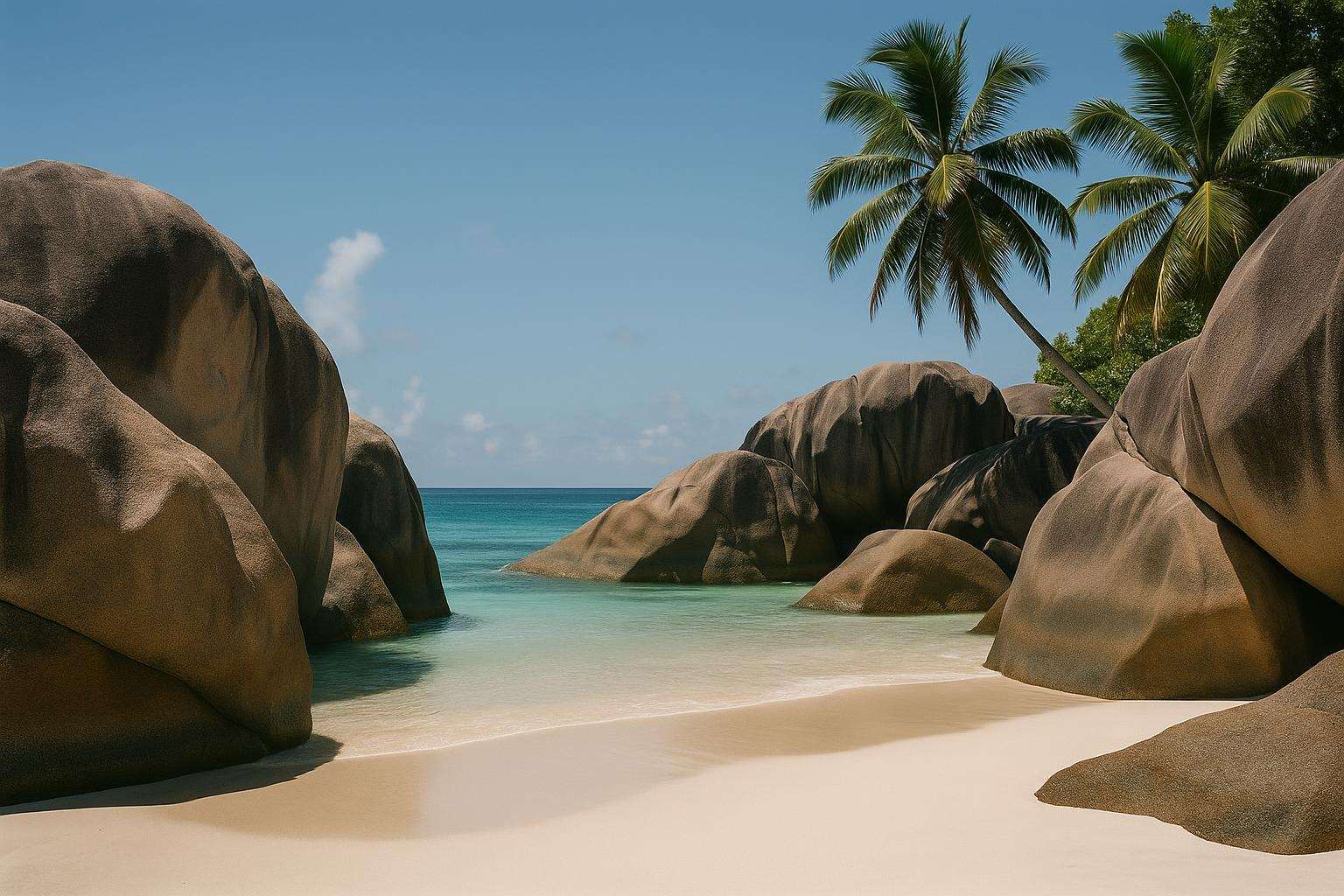
If Bora Bora is defined by its volcanic peak and the Maldives by its overwater villas, the Seychelles is defined by rock — the enormous, smooth, rose-and-grey granite boulders that frame its beaches like sculpture. These are the only granitic mid-ocean islands on earth, remnants of an ancient microcontinent, and they give the Seychelles a scenery no coral atoll can replicate. For honeymooners, the archipelago's genius is that its three most-visited inner islands — Mahe, Praslin, and La Digue — sit within short ferry hops of one another, each playing a distinct role. This guide shows how to combine them, where the private-island splurge lives, and when to go.
Mahe: the gateway island
Mahe is the largest and most developed island, home to the international airport, the capital Victoria, and roughly 90 percent of the country's population. It is the natural first stop and the one with the widest choice of hotels, restaurants, and beaches. Beau Vallon, on the northwest coast, is the main resort beach — broad, calm in season, and lined with dining. But Mahe's finest coves are quieter: Anse Intendance and Anse Takamaka on the south coast are dramatic, boulder-framed, and often near-empty. Victoria itself, one of the world's smallest capitals, is worth a morning for its Creole architecture, colorful market, and botanical gardens. The official Seychelles tourism portal is a reliable starting point for planning. Give Mahe three or four nights as your arrival buffer and your base for exploring beyond the resort strip.
Praslin: the coco de mer island
An hour by fast ferry from Mahe, Praslin is the Seychelles' second island and its natural heart. Its headline attraction is the Vallee de Mai, a UNESCO World Heritage Site preserving a near-primeval palm forest that is one of only two places on earth where the coco de mer — the largest seed in the plant kingdom — grows naturally. UNESCO's Vallee de Mai listing notes the reserve shelters six endemic palm species and the endangered black parrot found nowhere else. Praslin's beaches are equally celebrated: Anse Lazio, a wide, palm-backed crescent, is consistently ranked among the world's most beautiful and, crucially, is excellent for actual swimming, while Anse Georgette (accessed through a resort) is a quieter jewel. Praslin balances nature and comfort better than any other Seychelles island; three or four nights lets you cover the forest, the beaches, and a day trip to nearby islets.
La Digue: the postcard island
Just 15 minutes by ferry from Praslin, tiny La Digue is the Seychelles at its most timeless. With almost no cars, visitors move by bicycle or ox-cart, and the pace slows immediately. Its crown jewel is Anse Source d'Argent, reached on foot or by bike through the historic L'Union Estate — a series of intimate coves divided by towering pink granite boulders, arguably the most photographed beach on the planet, as Lonely Planet's attraction page describes. The water here is shallow and sheltered rather than ideal for swimming, so treat it as a scenery-and-photography destination; for a proper swim, cycle on to Grand Anse or Petite Anse on the wilder east coast (calmer outside the trade-wind months). Two or three nights on La Digue is the right dose of stillness to close a Seychelles honeymoon.
North Island: the private-island apex
For couples with the budget for a once-in-a-lifetime splurge, North Island is the Seychelles' most storied private-island resort — a barefoot-luxury sanctuary of a handful of enormous hand-crafted villas on a rewilded island, reached by helicopter or boat from Mahe. It gained global fame as the honeymoon choice of the Duke and Duchess of Cambridge. The all-inclusive villa rates sit far above the mainstream islands, but the experience — total privacy, personal butlers, and a genuine conservation mission restoring native flora and fauna — is unmatched in the region; details are on the North Island site. Fregate Island is a comparable private-island alternative. These properties suit couples who want to disappear entirely, with the honest caveat that the price and the single-island confinement are significant considerations.
How the islands compare
| Island | Character | Signature draw | Best for |
|---|---|---|---|
| Mahe | Largest, most developed, arrival hub | Anse Intendance, Victoria, dining | Arrival buffer, variety, beaches |
| Praslin | Nature and comfort in balance | Vallee de Mai, Anse Lazio | Coco de mer forest, swimming beaches |
| La Digue | Car-free, slow, timeless | Anse Source d'Argent | Scenery, cycling, stillness |
| North Island | Ultra-private resort island | Barefoot luxury, conservation | Total seclusion, apex splurge |
Bottom line: Combine all three inner islands — Mahe for variety and arrival, Praslin for the coco de mer forest and swimmable Anse Lazio, and La Digue for its otherworldly boulder beaches. Add a private-island night at North Island only if the budget allows a genuine splurge.
A sample 10-night route
Nights 1–4: Mahe, settling in with south-coast beaches (Anse Intendance, Anse Takamaka), a Victoria morning, and a hike in Morne Seychellois National Park. Night 5: Ferry to Praslin. Nights 5–8: Praslin, for the Vallee de Mai, Anse Lazio, and a boat day to Curieuse Island to see giant Aldabra tortoises. Night 8: Short ferry to La Digue. Nights 9–10: La Digue by bicycle — Anse Source d'Argent at golden hour, a swim at Grand Anse, and a slow Creole dinner before returning to Mahe for departure.
Practical honeymoon notes: book ferries in advance and align crossings with your flight times; carry Seychellois rupees for L'Union Estate and Vallee de Mai entry fees, which are cash-only at the gate; and travel in the April-May or October-November calm windows for the clearest seas. Respect the coco de mer's protected status — genuine nuts require a government certificate. Handled with a little planning, the Seychelles delivers a honeymoon of extraordinary, one-of-a-kind beauty that feels both wild and effortlessly romantic.
Frequently asked
How should we split time across Mahe, Praslin, and La Digue?
The classic Seychelles honeymoon combines all three inner islands, and a common split for a ten-night trip is three or four nights on Mahe, three or four on Praslin, and two or three on La Digue. Mahe is the arrival hub with the widest choice of hotels, beaches, and restaurants; Praslin is home to the coco de mer palm forest and the celebrated Anse Lazio beach; and La Digue is the smallest, quietest, and most photogenic, best known for Anse Source d'Argent. Because inter-island ferries are frequent and short, you can experience the full range without exhausting travel. Couples with less time can skip one island, but most find all three worth including.
How do you island-hop in the Seychelles?
The inner islands are connected by regular, fast catamaran ferries. Mahe to Praslin takes about an hour, and Praslin to La Digue is a short 15-minute crossing, with several daily departures. Booking ferry tickets in advance is wise in peak season. A domestic Air Seychelles flight between Mahe and Praslin takes only about 15 minutes for those who prefer to fly. La Digue has almost no cars — visitors get around by bicycle or ox-cart, which is part of its charm. Private-island resorts such as North Island and Fregate arrange their own boat or helicopter transfers from Mahe. Plan ferry timing around your arrival flight so you are not rushing across islands on day one.
When is the best time for a Seychelles honeymoon?
The Seychelles enjoys a warm tropical climate year-round, but two transitional windows are ideal: April to May and October to November, when the trade winds are calm, the sea is clear, and conditions are best for swimming, snorkeling, and diving. The northwest monsoon (November to March) brings warmer, more humid weather and occasional heavy rain, while the southeast trade winds (May to September) bring breezier, drier conditions and some seaweed and rougher seas on exposed east-facing beaches — though sheltered coves like Anse Source d'Argent stay calm. The islands sit outside the cyclone belt, so there is no true storm season. Peak demand and pricing cluster around the December and July-August holidays.
What is the coco de mer and why does it matter?
The coco de mer is the largest seed in the plant kingdom, produced by a rare palm that grows naturally in only two places on earth — both in the Seychelles. The stronghold is the Vallee de Mai on Praslin, a UNESCO World Heritage Site that preserves a near-primeval palm forest and shelters six endemic palm species along with the endangered Seychelles black parrot. Walking the reserve's shaded trails is one of the signature honeymoon experiences on Praslin. The suggestively shaped nut, sometimes nicknamed the coco-fesse, is protected; genuine specimens are sold only with a government certificate, and taking one without one is illegal, so admire rather than smuggle.
Is the Seychelles expensive for a honeymoon?
The Seychelles is a premium destination, though it offers more range than its reputation suggests. A comfortable ten-night three-island honeymoon using quality four- and five-star hotels, ferries, and independent dining typically runs 8,000 to 16,000 US dollars per couple excluding international airfare. Private-island resorts such as North Island sit far above that, with all-inclusive villa rates that can exceed several thousand dollars per night. Self-catering guesthouses and Creole restaurants on La Digue and Praslin can meaningfully lower costs for couples willing to trade resort polish for local character. Ferries are far cheaper than domestic flights. Traveling in the April-May or October-November shoulder windows also helps manage both weather and price.
Which Seychelles beach is the most beautiful?
Two beaches dominate the conversation. Anse Source d'Argent on La Digue is arguably the most photographed beach on earth — a series of intimate coves divided by rose-hued granite boulders, with shallow, sheltered water reached on foot or bicycle through the historic L'Union Estate. Anse Lazio on Praslin is the classic wide, palm-backed swimming beach, consistently ranked among the world's finest, with better water for actual swimming than the shallow Anse Source d'Argent. Beauty is subjective, but a good rule is to visit Anse Source d'Argent for its otherworldly scenery and sunset photography, and Anse Lazio for swimming and lounging. Both are essential stops on a Seychelles honeymoon.