Destinations
St. Lucia Honeymoon Guide: Jade Mountain, Ladera & Sandals Grande
St. Lucia's edge over every other Caribbean honeymoon is the Pitons. Here is how the island's three iconic resorts really compare — open-wall Piton sanctuaries versus overwater bungalows — with 2026 pricing and the split-stay most specialists recommend.
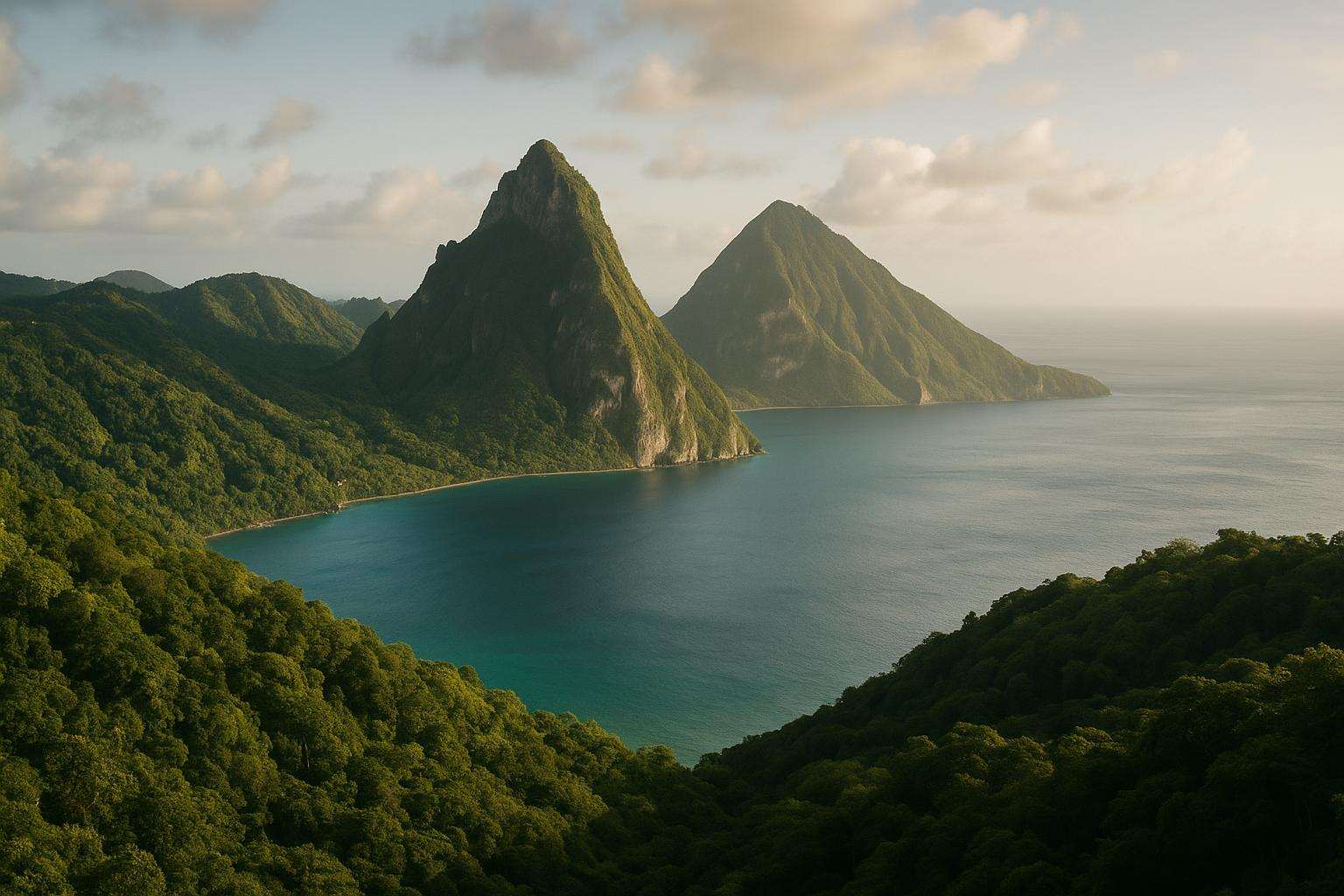
Every Caribbean island sells beaches. St. Lucia sells mountains rising out of the sea. The twin volcanic spires of Gros Piton and Petit Piton — a UNESCO World Heritage Site near the town of Soufriere — give the island a competitive advantage no flat coral destination can touch, and the resorts that built their identity around Piton proximity are a categorically different experience from the ones on the busier northern end.
Three properties define the St. Lucia honeymoon, and they sit in three different worlds: the architecturally radical Jade Mountain, the intimate Ladera perched inside the UNESCO boundary, and the all-inclusive Sandals Grande St. Lucian with the island's only overwater bungalows. Here is how they really compare — and why most specialists tell couples not to choose just one.
Jade Mountain: the resort with no fourth wall
Jade Mountain, above Soufriere, is the most architecturally singular resort in the Caribbean. Its graduated-tier suites — the property calls them sanctuaries — have no fourth wall: the entire western face of every room is open to the air, framing an unobstructed panorama of both Pitons and the Caribbean beyond. A private infinity pool is integrated into each sanctuary, so the room genuinely feels suspended between mountain and sea. Rates for 2025–2026 run from about $1,498 per night for the entry Sky Suite to $3,033 for the Sun Suite, on a modified American plan (breakfast and dinner included).
The design choices are deliberate and polarizing. There are no televisions in the sanctuaries — a philosophy of presence over entertainment — though Wi-Fi is available and there is nightly entertainment several evenings a week. Each sanctuary comes with a butler-style attendant (a Major Domo), and guests have access to two beaches, the second of which sits at the base of the Pitons with above-average shore snorkeling. The open wall is the whole point and the whole caveat: it is spectacular, and it means insects, weather and the outdoors are part of the room. Couples who want the drama love it; couples who want a sealed, climate-controlled box should look elsewhere.
Ladera: inside the UNESCO boundary
Ladera Resort sits at 1,100 feet on the volcanic ridge directly between the two Pitons — technically the only resort built inside the UNESCO World Heritage boundary — and delivers the same open-air concept as Jade Mountain in a more intimate, hand-crafted register. Each of its 37 suites keeps three walls; the fourth faces the Pitons and the sea and is left open. Private plunge pools are standard, some with cascading waterfalls, some heated, some with in-pool swings. Rates start from roughly $863 per night on platforms like KAYAK, positioning Ladera well below Jade Mountain while offering a comparable open-wall experience.
With only 6 villas and 26 suites, Ladera's scale creates genuine intimacy, and its Dasheene restaurant — using produce grown on the property — is consistently rated among the best dining in the Eastern Caribbean. The honest tradeoff is location: Ladera sits on a ridge, not a beach, so it runs a complimentary shuttle down to Sugar Beach on the west coast. If beachfront steps-from-the-water access matters more to you than a ridge-top Piton view, that shuttle is a daily reality to weigh.
Sandals Grande St. Lucian: overwater bungalows and all-inclusive ease
Sandals Grande St. Lucian occupies a different market entirely. Located on Rodney Bay on the northern coast — nowhere near the Pitons — it is a fully all-inclusive, couples-only property, and it operates the only overwater bungalows anywhere in St. Lucia. Nine of them stretch along a causeway connecting the resort peninsula toward Pigeon Island, each with a private plunge pool, glass floor panels, a soaking tub, and direct water access by private steps. Pricing for the overwater bungalows starts around $2,022 per person per night all-inclusive, roughly $2,934 per couple, covering all dining across twelve restaurants and seven bars, all drinks, scuba diving, water sports, golf at Cap Estate, and "Stay at 1, Play at 3" privileges across three Sandals properties on the island. Butler service is included with every overwater booking.
The scenery Sandals delivers is Rodney Bay — scenic and appealing, but not the volcanic-peak proximity of the south. What you get instead is effortlessness: everything is bundled, nothing is a la carte, and the overwater bungalow is a genuine novelty on this island.
The split-stay: how to get both
| Resort | Location | Signature | 2026 nightly (from) | Plan |
|---|---|---|---|---|
| Jade Mountain | Soufriere (south) | Open-wall sanctuaries, infinity pools | $1,498 | Breakfast + dinner |
| Ladera | Between the Pitons | Inside UNESCO boundary, intimate | $863 | Room / plans vary |
| Sandals Grande | Rodney Bay (north) | Overwater bungalows, all-inclusive | ~$2,934/couple | All-inclusive |
The strategy most St. Lucia specialists recommend is the split-stay: two or three nights at Jade Mountain or Ladera for UNESCO Piton immersion and south-island activities — the Sulphur Springs drive-in volcano, Diamond Falls Botanical Gardens, Piton hiking — then transfer north to Sandals Grande for beach, all-inclusive dining and entertainment. It captures the distinctive natural character of the south and the convenience of the north without forcing a choice.
The honest cost is the transfer: the drive between Soufriere and the north coast is scenic but winding, typically 60 to 90 minutes, and it is not free. Time your split so you're not doing it on a fly-out morning. Peak season runs December through April, when rates are highest and the south-island resorts book far ahead. Get the sequence right — south first for the drama, north last for the ease — and St. Lucia gives you the rare Caribbean honeymoon that is genuinely two trips in one week.
Frequently asked
What makes St. Lucia different from other Caribbean honeymoon islands?
The Pitons. Gros Piton (771 meters) and Petit Piton (743 meters) are twin volcanic spires that rise straight from the sea near the town of Soufriere and form a UNESCO World Heritage Site. No other Caribbean island has anything comparable, and the resorts that built their identity around Piton proximity offer a fundamentally different experience from typical beach hotels. Beyond the peaks, St. Lucia adds a drive-in volcano at Sulphur Springs, botanical gardens, rainforest hikes and the mineral hot springs at Diamond Falls. The island trades the flat, powder-beach template of many Caribbean destinations for dramatic volcanic scenery, which is exactly why it appeals to honeymooners who want more than a lounger.
How do Jade Mountain, Ladera and Sandals Grande differ?
They occupy three distinct markets. Jade Mountain, above Soufriere, is the most architecturally singular resort in the Caribbean — its suites (called sanctuaries) have no fourth wall, so the whole western face opens onto the Pitons and sea, each with a private infinity pool. Ladera sits at 1,100 feet on the ridge between the two Pitons — the only resort inside the UNESCO boundary — delivering the same open-wall concept in a more intimate, hand-crafted setting. Sandals Grande St. Lucian is a fully all-inclusive, couples-only resort on the northern coast at Rodney Bay, home to the island's only overwater bungalows. The south-island pair is about Piton immersion; Sandals is about all-inclusive ease and overwater novelty.
What do these St. Lucia resorts cost for a 2026 honeymoon?
Jade Mountain runs from about $1,498 per night for the entry Sky Suite to $3,033 for the Sun Suite (2025–2026), on a modified American plan that includes breakfast and dinner. Ladera starts from roughly $863 per night on booking platforms — meaningfully below Jade Mountain — with private plunge pools standard across its 6 villas and 26 suites. Sandals Grande St. Lucian's overwater bungalows start around $2,022 per person per night all-inclusive, or roughly $2,934 per couple, which bundles all dining across twelve restaurants, all drinks, scuba, water sports, golf and butler service. Rates vary with season and dates; peak winter (December–April) is highest.
Does Sandals Grande St. Lucian have Piton views like the southern resorts?
Not the same views. Sandals Grande sits on Rodney Bay on the island's northern coast — far from the Pitons — so the scenery it delivers is Rodney Bay and Pigeon Island, which is genuinely attractive but not the dramatic volcanic-peak proximity that defines Jade Mountain and Ladera. If Piton views are the reason you chose St. Lucia, you need a south-island resort near Soufriere. Sandals earns its place for a different reason: it operates the only overwater bungalows in St. Lucia — nine of them along a causeway toward Pigeon Island, each with a private plunge pool, glass floor panels and direct water access — plus the ease of a full all-inclusive.
What is the split-stay strategy, and is it worth the hassle?
The split-stay is the most common recommendation among St. Lucia travel specialists, and for most couples it is worth it. You begin with two or three nights at Jade Mountain or Ladera near Soufriere for UNESCO Piton immersion and south-island activities — the Sulphur Springs drive-in volcano, Diamond Falls Botanical Gardens, Piton hiking — then transfer north to Sandals Grande for the final nights of beach, all-inclusive dining and entertainment. It captures both the distinctive natural character of the south and the convenience of the all-inclusive format without forcing a choice. The main downside is the transfer itself: the drive between Soufriere and the north coast is scenic but winding and can take 60 to 90 minutes.