Experiences
Africa Safari Honeymoon Guide: Kenya vs. Tanzania vs. Botswana vs. South Africa
Choosing your safari country is the single highest-leverage decision of the trip — it sets your budget, your malaria exposure, your logistics, and the entire character of the honeymoon. Here is how the four leading safari nations actually compare.
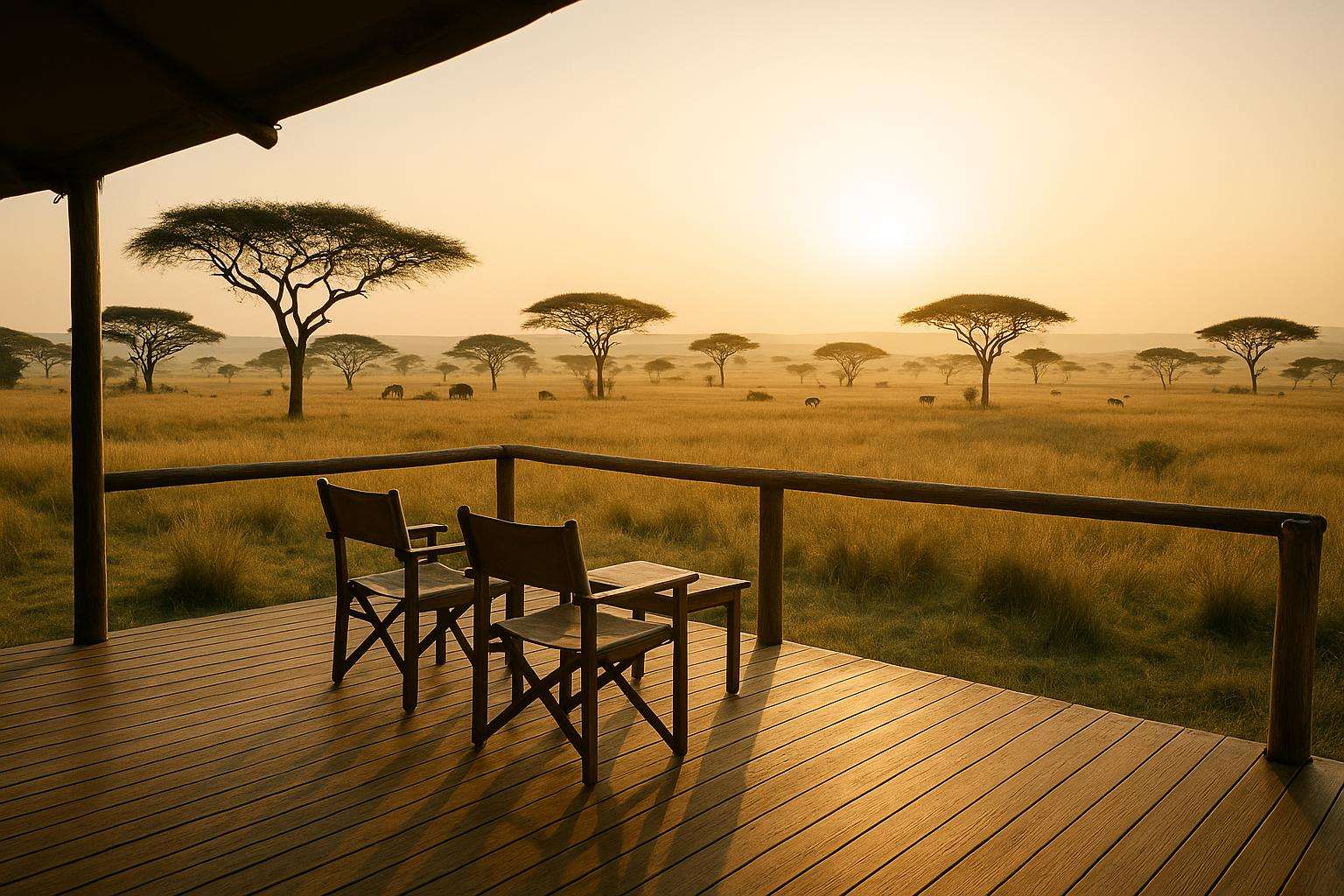
Choosing a country for a safari honeymoon is the single highest-leverage decision a couple will make. It dictates the budget, the logistics, the malaria exposure, the wildlife density, and the entire character of the experience — far more than which specific camp you book. The four leading safari countries each make a genuinely distinct case, and there is no universally 'best' answer, only the best fit for a given couple. This guide compares Kenya, Tanzania, Botswana, and South Africa on the variables that actually shape the trip, with real 2026 pricing and the health facts every couple needs before departure.
Which safari country is cheapest, and which is most exclusive?
The baseline per-person cost climbs steadily across the four. Complete Kenya honeymoon packages start around $6,997 per person; Tanzania commands a premium from about $7,997 for luxury private-reserve safaris; Botswana is the most expensive baseline, from around $8,997 per person; and South Africa offers the widest range of all — from roughly $80-per-night SANParks rest camps in public Kruger up to $3,745 per person per night at Singita Lebombo at peak.[Africa Uncovered] The exclusivity ladder runs the other way from the price. Botswana's low-volume, high-cost conservation model caps visitor numbers by law, so the Okavango and Chobe hold some of Africa's highest wildlife densities with the fewest competing vehicles. Kenya's conservancies bordering the Maasai Mara (Olare Motorogi, Naboisho) charge conservancy fees of $100 to $150 per person per day but reward couples with empty game drives — no other vehicles permitted at sightings.
| Country | Per-person start | Signature landscape | Malaria | Best paired with |
|---|---|---|---|---|
| Kenya | ~$6,997 | Maasai Mara savanna, Great Migration | Present (prophylaxis) | Beach at Diani or Zanzibar |
| Tanzania | ~$7,997 | Serengeti, Ngorongoro Crater | Present (prophylaxis) | Zanzibar beach extension |
| Botswana | ~$8,997 | Okavango Delta waterways | Present (prophylaxis) | Victoria Falls |
| South Africa | ~$80/night to $3,745/night | Sabi Sand / Kruger; malaria-free reserves | Malaria-free options exist | Cape Town wine country |
Where is the wildlife best?
Kenya's Maasai Mara delivers consistent drama — resident lion prides, rolling savanna, and the July-to-October Great Migration river crossings. Tanzania's Serengeti is Africa's largest protected ecosystem and holds the world's densest lion populations, roughly 4,000 animals across an area larger than Connecticut, plus the Ngorongoro Crater's 260 square kilometers containing some 25,000 animals including endangered black rhino. Botswana is architecturally different: the Okavango Delta operates on water, with mokoro canoe excursions poling through papyrus channels to islands where lion, elephant, and buffalo mingle. South Africa's Sabi Sand — sharing an unfenced boundary with Kruger — achieves roughly 90 percent leopard-sighting rates on three-night stays, the best leopard odds on the continent. The premier concessions across all four countries are managed by a handful of operators; Singita, andBeyond, Wilderness, and Great Plains Conservation set the luxury standard, with Singita's Grumeti Reserve properties in Tanzania sitting at the apex, from $2,455 to $3,525 per person per night.[Singita]
What about malaria and health — especially if we're planning a family soon?
This is where South Africa's structural advantage becomes decisive. All of sub-Saharan Africa carries chloroquine-resistant Plasmodium falciparum, and without prophylaxis the estimated malaria risk on a two-week East Africa trip runs 1.5 to 3.5 percent.[CDC] Couples should see a travel-medicine specialist 6 to 8 weeks before departure. Among the four FDA-approved regimens, atovaquone-proguanil (Malarone) is the best tolerated with the fewest neuropsychiatric events and only a 7-day post-travel tail, which is why it is the practical first choice for short trips; doxycycline is cheapest but carries a longer 28-day tail and photosensitivity, and can raise yeast-overgrowth risk in women; mefloquine carries a notably higher rate of anxiety, depression, and sleep disturbance and is contraindicated with any psychiatric history. From a functional-medicine standpoint, there is no validated natural substitute for pharmaceutical prophylaxis in high-transmission Africa — the contribution lies in choosing the best-tolerated drug rather than the cheapest, layering in permethrin-treated clothing and DEET or picaridin at dusk and dawn, and, for women on hormonal birth control, discussing that doxycycline may reduce its absorption. Do not start, stop, or change any prescribed medication without a qualified physician's guidance. For couples who are pregnant, planning to conceive soon, or who cannot take prophylaxis, South Africa's malaria-free reserves — Madikwe, the Waterberg, Welgevonden — carry full Big Five wildlife without malaria risk, making them the responsible and often the correct choice.[Cedarberg Travel]
How do we combine the safari with a beach or a city?
The best honeymoon itineraries pair the bush with a contrasting node. Kenya and Tanzania both extend naturally to a beach — Diani on the Kenyan coast or, more commonly, Zanzibar off Tanzania — for a few days of decompression after early game-drive wake-ups. Botswana pairs classically with Victoria Falls, reached by short charter, for one of the great romantic set-pieces of African travel. South Africa's unique advantage is Cape Town: a world-class city with Table Mountain, beaches, and the Stellenbosch and Franschhoek wine valleys, all reachable without malaria risk and within a single country's logistics. This is why South Africa suits first-time-to-Africa couples who want variety, while Kenya and Tanzania suit couples whose priority is the migration and raw wildlife spectacle.
When should we book, and when should we go?
Small camps of 8 to 15 tents sell out 12 to 18 months ahead for peak-season dates, and Singita's most-requested cottages are blocked by returning guests 18-plus months out — so book early. Shoulder-season travel (April to May in East Africa) cuts rates 20 to 50 percent at the same properties. Peak wildlife timing centers on the Great Migration river crossings, roughly July through October in the Mara and northern Serengeti. Promotions materially change the economics: andBeyond's honeymoon offer gives 50 percent off one partner's accommodation for the stay, and Singita runs a book-12-nights-get-two-free promotion across two regions, valid for defined 2026 windows — always confirm current terms directly.
Frequently asked
Which African country is best for a first safari honeymoon?
Kenya is the easiest entry point for first-timers: international flights connect directly to Nairobi, light aircraft reach the Maasai Mara in about 45 minutes, and the Mara delivers consistent, dramatic wildlife including the Great Migration river crossings from July to October. Complete honeymoon packages start around $6,997 per person. That said, South Africa is arguably the best all-rounder for a first trip to Africa because it offers the widest range of budgets, malaria-free Big Five reserves, and an easy pairing with Cape Town and its wine country — a variety that purely bush-focused destinations can't match. Choose Kenya for the classic migration safari, or South Africa if you want bush plus city plus wine in one straightforward itinerary.
Do I need malaria pills for a safari honeymoon?
For Kenya, Tanzania, Botswana, and the malaria-risk areas of South Africa (like Sabi Sand and greater Kruger), yes — all of sub-Saharan Africa carries chloroquine-resistant falciparum malaria, and prophylaxis is strongly recommended. Atovaquone-proguanil (Malarone) is the best-tolerated option for short trips, with the fewest side effects and only a 7-day post-travel course. See a travel-medicine specialist 6 to 8 weeks before departure. If you are pregnant, planning to conceive soon, or cannot take prophylaxis, structure the trip around South Africa's malaria-free reserves — Madikwe, the Waterberg, or Welgevonden — which carry full Big Five wildlife without malaria risk. Never start or stop any prescribed medication without a physician's guidance.
How much does a safari honeymoon cost?
It varies widely by country and tier. Per-person packages start around $6,997 for Kenya, $7,997 for Tanzania, and $8,997 for Botswana; South Africa spans the widest range, from roughly $80-per-night public Kruger rest camps to $3,745 per person per night at ultra-luxury lodges like Singita Lebombo. A realistic mid-luxury two-week Southern Africa honeymoon runs about $18,000 to $28,000 per couple all-in, while a fully custom ultra-luxury version can reach $60,000 to $90,000 before international airfare. Shoulder-season travel (April to May in East Africa) can cut rates 20 to 50 percent, and honeymoon promotions like andBeyond's 50-percent-off-one-partner offer materially lower the cost at mid-tier camps.
When is the best time for a safari honeymoon?
The headline wildlife event is the Great Migration river crossings in the Maasai Mara and northern Serengeti, which peak roughly July through October — the most dramatic wildlife spectacle in Africa, but also peak-season pricing. For value, East Africa's shoulder season (April to May) cuts rates 20 to 50 percent at the same properties and delivers lush green landscapes with fewer vehicles, though some short rains are likely. Botswana's Okavango is best during the flood season (roughly May to September), and South Africa's Sabi Sand offers strong year-round game viewing with dry-season (May to September) sightings clustering around water. Book small camps 12 to 18 months ahead for peak dates, as the best tents sell out early.
Which safari country has the best wildlife?
It depends on what you want to see. Tanzania's Serengeti is Africa's largest protected ecosystem and holds the world's densest lion populations — roughly 4,000 animals — plus the Ngorongoro Crater's 25,000 animals including black rhino, making it the top pick for sheer density. Kenya's Maasai Mara offers the most reliable Great Migration river-crossing drama. Botswana's Okavango Delta delivers a water-based experience with elephant, lion, and rare species like African wild dog at very low vehicle volumes. South Africa's Sabi Sand achieves roughly 90 percent leopard-sighting rates on three-night stays, the best leopard odds on the continent. For overall density choose Tanzania; for leopards, South Africa; for a water safari, Botswana; for the migration, Kenya.
Should we add a beach or Victoria Falls to our safari?
Most couples benefit from pairing the bush with a contrasting node, since early game-drive wake-ups make a few days of decompression welcome. Kenya and Tanzania pair naturally with a beach — Diani on the Kenyan coast or Zanzibar off Tanzania. Botswana pairs classically with Victoria Falls, a short charter flight away and one of the great romantic set-pieces of African travel, where helicopter flights over the falls are a signature honeymoon experience. South Africa offers the most self-contained variety, combining a safari with Cape Town, Table Mountain, and the Stellenbosch and Franschhoek wine valleys inside one country. Build in at least three nights at the second node so it feels like a genuine second chapter rather than a rushed add-on.