Experiences
Budget Safari Honeymoon Options: Northern Circuit vs. Private Reserves
A genuinely romantic safari under $500 a night exists — but only if you know which concessions, camps and seasons hold the quality floor. Tanzania's Northern Circuit and South Africa's private reserves, compared honestly.
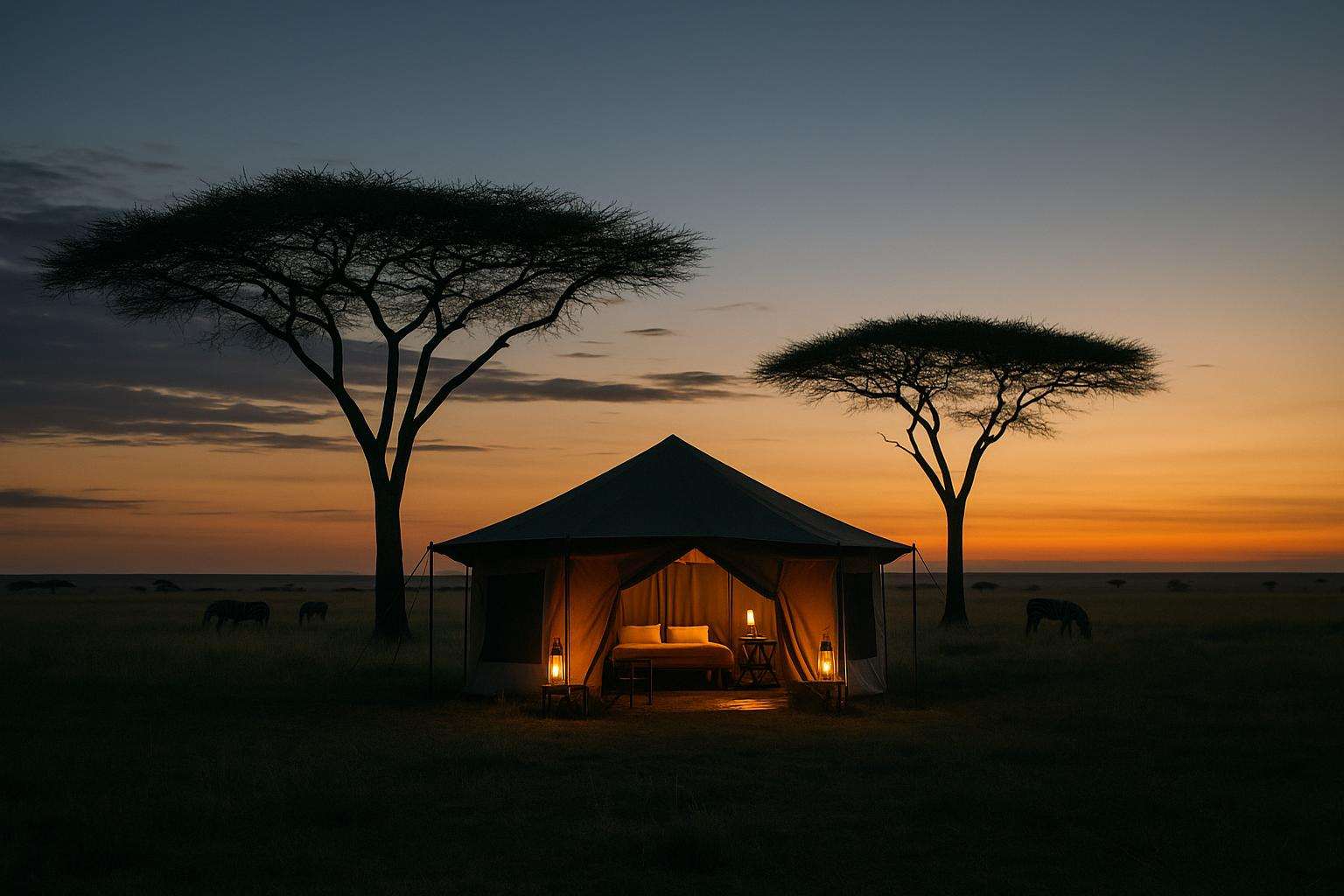
Somewhere between the honeymoon fantasy and the invoice, most couples discover that a private-guide safari at a marquee camp runs $2,000 to $3,500 per person per night. The good news I give them: a genuinely romantic safari honeymoon well below $500 per person per night exists. The catch is that it requires knowing which concessions, which camps and which seasons hold the quality floor — the point below which the experience stops being honeymoon-grade. Two regions do this best: Tanzania's Northern Circuit and South Africa's private reserves.
Tanzania's Northern Circuit: scale on a budget
The Northern Circuit — Arusha to Tarangire, Lake Manyara, Ngorongoro and the Serengeti — is the world's most species-dense safari circuit, and it operates at meaningfully lower prices than equivalent private Kenyan conservancy camps or Botswana Delta lodges. Budget tiers in 2025–2026 break into three bands: basic camping or lodge ($150 to $250 per person per night), mid-range tented camp ($250 to $450), and upper-mid or entry-luxury ($450 to $650).
Named camps in the sub-$400 band that clear a honeymoon quality floor include Enkirari Wilderness Camp in the central Serengeti ($200 to $325 full-board, with en-suite tents and year-round resident lion, cheetah and leopard), Highview Coffee Lodge in the Karatu highlands ($250 to $400, with colobus monkeys in camp and easy Crater access), and the NCA Woodlands camp near Ngorongoro ($250 to $400, with zebra grazing in camp at dawn). These are documented in operator listings such as Tanzania Wild Camps' affordable-camp roundup.
The park-fee trap: Tanzania National Parks fees are frequently quoted separately from camp rates and add roughly $350 to $450 per person for a five-day circuit — Serengeti entry is about $60 to $70 per day, and the Ngorongoro Crater descent adds a $200 to $250 vehicle fee. Always confirm whether a quoted rate includes park fees before you compare it against another camp's.
Green-season travel — roughly November through June, excluding the January calving peak at Ndutu — cuts rates 20 to 35 percent while delivering lush landscapes, fewer vehicles and, for couples who value quiet, superior photographic conditions. A full ten-night Tanzania honeymoon at mid-range camps, including a Zanzibar beach extension, comes to roughly $3,500 per person; the same at upper-mid camps runs about $6,800, per operator cost guides like Ecological Adventure's 2026 budget analysis.
South Africa's private reserves: reliability and no malaria drugs
South Africa's decisive structural advantage for budget-conscious honeymooners is its malaria-free private-reserve network. Madikwe Game Reserve — 75,000 hectares of Big Five habitat on the Botswana border, about 4.5 hours from Johannesburg — prohibits day visitors and hosts the country's best African wild dog population, all without malaria risk.
Named properties in or near the sub-$500 band (converted from rand at mid-2025 rates) include Impodimo Game Lodge, widely considered Madikwe's strongest value-for-money option, in the $300 to $450 range at non-peak periods; Jaci's Safari Lodge and its treehouse-style Jaci's Tree Lodge on the Marico River, from around $350 to $500 per person per night off-peak; and Madikwe Safari Lodge's Kopano Camp, a four-suite adults-only camp with private plunge pools positioned as the property's honeymoon product. The Waterberg Biosphere, 2.5 to 3 hours from Johannesburg, offers an alternative malaria-free Big Five circuit with dramatic red-sandstone scenery, as Cedarberg Travel's malaria-free guide details.
The famous Sabi Sand reserve in the Greater Kruger achieves roughly 90% leopard-sighting rates on three-night stays — but it is a malaria-risk area and sits above the $500 floor at most properties. Couples set on Sabi Sand but budget-constrained should travel in the January-to-April green season and negotiate directly with smaller owner-operated camps.
The comparison, decided honestly
| Factor | Tanzania Northern Circuit | South Africa private reserves |
|---|---|---|
| Honeymoon quality floor | ~$250 pp/night | ~$300 pp/night |
| Wildlife scale | Highest (dense Serengeti game) | Good; lower Big Five density outside Sabi Sand |
| Malaria risk | Yes (prophylaxis advised) | Madikwe/Waterberg malaria-free |
| Logistics | Fly-in; variable infrastructure | Johannesburg hub; sometimes self-drive |
| Best pairing | Zanzibar beach extension | Cape Town + winelands |
| Park-fee surprise | High ($350–$450 pp added) | Usually bundled into lodge rate |
My verdict: choose Tanzania's Northern Circuit if you prioritise the raw wildlife spectacle and the density of the Serengeti, and you are comfortable taking malaria prophylaxis. Choose South Africa's malaria-free reserves if you want more predictable luxury standards, simpler logistics, and the option to combine bush with Cape Town — especially if one of you is pregnant or planning to be. Either way, the smartest budget lever is season, not tier: a quality-floor camp in green season buys a better experience per dollar than peak-season budget camping.
Health, honestly
Do not economise on health preparation. See a travel medicine physician six to eight weeks before departure. For the Tanzania route, malaria prophylaxis is strongly advised — the CDC Yellow Book notes that malaria symptoms can appear up to a year after return, so any fever within twelve months of an Africa trip is a medical emergency requiring disclosure of your travel history. Atovaquone-proguanil is generally the best-tolerated regimen; doxycycline is cheapest but carries photosensitivity and yeast-overgrowth considerations worth discussing with your doctor. This is editorial information for planning purposes, not medical advice.
Frequently asked
Can you really do a romantic safari honeymoon under $500 a night?
Yes, but selectively. In Tanzania's Northern Circuit, mid-range tented camps run roughly $250 to $450 per person per night full-board, and several named properties — Enkirari Wilderness Camp in the central Serengeti, Highview Coffee Lodge in the Karatu highlands, and NCA Woodlands near Ngorongoro — deliver en-suite tents, hot water and strong wildlife positioning inside that band. In South Africa's malaria-free Madikwe reserve, Impodimo Game Lodge and Jaci's Safari Lodge sit near or within the $300 to $500 range at off-peak periods. The key is that you must pick specific camps and seasons; the category average is higher, and the sub-$250 tier usually means basic camping rather than a honeymoon-grade stay.
Are Tanzania park fees included in camp rates?
Often not — and this is the single biggest budget surprise for first-time couples. Tanzania National Parks charges mandatory fees that are frequently quoted separately from the camp rate, adding roughly $350 to $450 per person for a typical five-day circuit. Serengeti entry runs about $60 to $70 per day, and the Ngorongoro Crater descent adds a vehicle fee of roughly $200 to $250. Always ask your operator whether quoted rates are inclusive of park fees, and budget for them explicitly. On the plus side, green-season travel (roughly November to June, outside the January calving peak) can cut camp rates 20 to 35 percent, which more than offsets the fees.
Which is better value: Tanzania's Northern Circuit or South Africa's private reserves?
They win on different axes. Tanzania's Northern Circuit offers unmatched wildlife scale and ecosystem variety — the Serengeti holds the world's densest lion populations, and the circuit strings together Tarangire, Lake Manyara, Ngorongoro and the Serengeti. But it requires malaria prophylaxis and tolerance for more variable infrastructure. South Africa's malaria-free reserves like Madikwe deliver more predictable luxury standards, simpler logistics (Johannesburg hub, sometimes self-drive), and the ability to add Cape Town for a more varied honeymoon. The tradeoff: Big Five density outside Sabi Sand is lower than in the Serengeti. Choose Tanzania for the wildlife spectacle, South Africa for reliability and no malaria drugs.
Why do people recommend South Africa's malaria-free reserves for honeymoons?
Because they solve a real problem: some couples cannot or would rather not take malaria prophylaxis — for example, if one partner is pregnant, planning pregnancy, or has a contraindication to the common drugs. Reserves like Madikwe (75,000 hectares on the Botswana border), the Waterberg Biosphere and Welgevonden carry full Big Five wildlife with no malaria risk, and they sit only 2.5 to 4.5 hours from Johannesburg, avoiding a bush-strip flight. Madikwe also prohibits day visitors, keeping the experience exclusive. The honest caveat is that leopard and lion sighting rates are more variable there than in the Greater Kruger's Sabi Sand, which is a malaria-risk area.
What is the quality floor — how cheap is too cheap for a honeymoon safari?
The realistic honeymoon floor is around $250 per person per night on the Northern Circuit and roughly $300 in South Africa's private reserves. Below that you drop into basic camping or budget lodges that, while adventurous, lack the en-suite bathrooms, hot water, private-feeling settings and guiding consistency most couples want for a honeymoon. The named mid-range camps in this guide — chosen for en-suite tents and strong wildlife positioning — represent that floor. Rather than chasing the absolute cheapest bed, the smarter budget move is to travel in green season at a quality-floor camp, which buys you a far better experience per dollar than a peak-season budget-camping trip.
Do we still need malaria medication on a budget Tanzania safari?
Yes. The entire Northern Circuit is a malaria-risk area, and all of sub-Saharan Africa carries chloroquine-resistant Plasmodium falciparum, the most dangerous species. Prophylaxis is strongly advised regardless of budget — atovaquone-proguanil (Malarone) is generally the best-tolerated, and doxycycline is the lowest-cost option, though it carries photosensitivity and, for some women, a yeast-overgrowth risk worth discussing with a physician. Layer drugs with permethrin-treated clothing, DEET or picaridin repellent at dusk and dawn, and treated bed nets. Couples set on avoiding prophylaxis entirely should choose South Africa's malaria-free reserves. See a travel medicine physician six to eight weeks out; this is editorial information, not medical advice.