Experiences
Food & Wine Honeymoon Guide: The Best Destinations for Couples Who Love to Eat
For couples who plan trips around dinner reservations, the honeymoon is the meal of a lifetime. Here are the world's great food-and-wine destinations — Tuscany, Japan, the Basque Country, Champagne, and Napa's alternatives — with the reservations, cellars, and lead times that make or break the trip.
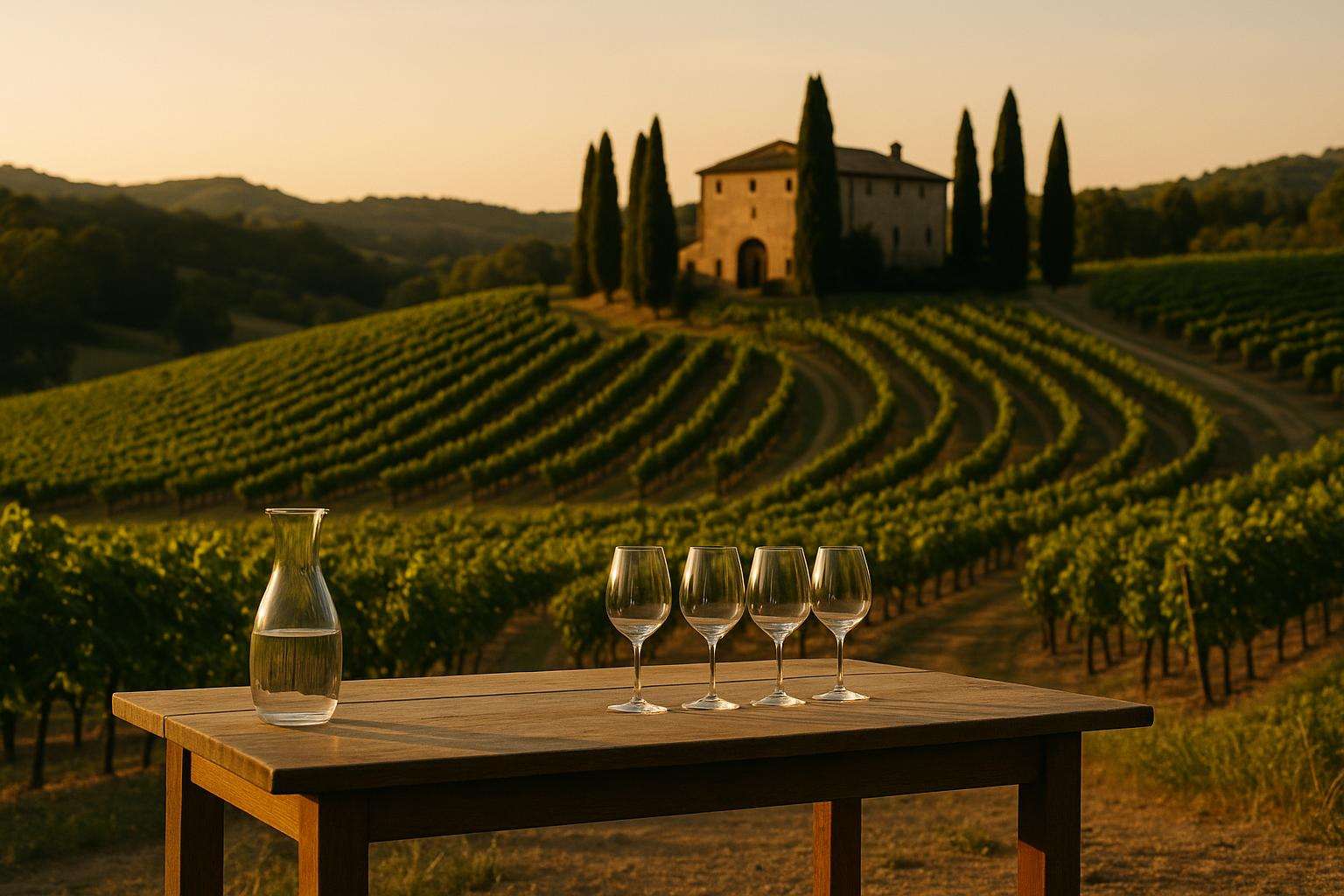
For couples who plan their trips around dinner reservations, the honeymoon is the meal of a lifetime — and the great food-and-wine destinations reward that appetite in categorically different ways. Italy offers centuries-old winemaking estates and truffle forests within a compact footprint; Japan offers the world's most disciplined food culture; Spain's Basque Country claims one of the planet's highest densities of Michelin stars; France's Champagne country puts you underground in chalk cellars; and the American wine regions beyond Napa deliver the emotional texture of wine country without the crowds. This guide maps all five, with the marquee tables, real pricing, and — most important for a food honeymoon — the advance-booking strategy each demands, because the difference between a great culinary honeymoon and a frustrating one is almost entirely about reservations secured months ahead.
Italy: Tuscany's wine estates and truffle hunts
Italy is the world's preeminent food-and-wine honeymoon destination for a reason — the convergence of winemaking estates, truffle forests, and Michelin dining within a compact geography makes itinerary-building straightforward. In Tuscany, the flagship entry point is Antinori nel Chianti Classico, named the world's best winery in 2022, housed in a landmark building with a vine-planted roof. Its tiered visits require advance reservation: the entry Tinaia Tour (cellar walk plus a three-wine tasting) runs from about €35 per person, rising to the premium CRU Tour that concludes with lunch at the rooftop restaurant and pours Tignanello and Solaia.[Antinori] Twenty minutes east, Castello di Ama layers wine onto contemporary art, with its Symposium of San Lorenzo experience at €169 per person. For truffles, neighboring Umbria produces Italy's highest volume of black truffles; half-day hunts with a trained hound and an osteria lunch run roughly €185 to €230 per person, with prestige white truffles available September through December. Choose Italy if you want the most complete, most accessible food-and-wine honeymoon with the shortest learning curve.
Japan: kaiseki, sake, and the world's most disciplined food culture
Japan offers an unmatched progression from refined haute cuisine to street-level vitality to pastoral farm-table simplicity. Kaiseki — multi-course haute cuisine tracing to the 16th-century tea ceremony — is the primary pillar, and Kyoto's concentration of kaiseki restaurants is unrivaled. Entry-level courses at well-regarded Kyoto restaurants begin around ¥14,850 (about $99) per person, while three-star kaiseki in Tokyo runs to ¥49,500 (about $330) per person.[Japan-Guide] The essential complement is a sake-brewery experience in Kyoto's Fushimi district, whose pure underground water has been prized for centuries; curated brewery-and-pairing tours run ¥5,000 to ¥20,000 per person. Osaka's Dotonbori delivers the street-food counterpoint — takoyaki, okonomiyaki, kushikatsu on guided tours from roughly ¥12,000 to ¥25,300 per person — and Hokkaido closes the itinerary with farm-to-table ryokan dinners built on Japan's finest dairy and seafood. Reserve top kaiseki two to four months ahead. Choose Japan if craft and precision move you more than the conviviality of a European wine table.
Spain's Basque Country: Michelin density and pintxo culture
The Basque Country is the functional culinary capital of Spain, and San Sebastián has one of the highest densities of Michelin stars per capita on the planet. Every evening is structured by pintxo culture — the Basque elevation of tapas — with bar crawls through the Parte Vieja anchoring the experience. Arzak has held three Michelin stars continuously since 1989 and founded the Nueva Cocina Vasca movement; reservations require two to three months' lead time. The region links by high-speed rail to Barcelona, home to Disfrutar, ranked the world's number-one restaurant in 2024 and a three-star table whose Classic and Festival tasting menus run about €295 per person, with wine pairing around €165 — its reservations open roughly 12 months ahead on a rolling basis, and it is among the hardest tables to secure in Europe.[MICHELIN] Add a La Rioja wine-tour day, where guided cellar tastings average €40 per person and Marqués de Riscal's Frank Gehry-designed hotel is a honeymoon stay in itself. Choose the Basque Country if you want the highest concentration of world-class tables and a vibrant street-eating culture in one rail-linked circuit.
France: Champagne cellars near Paris
France remains the global benchmark for culinary travel, and Champagne is the most romantic single node — 1.5 hours from Paris by TGV, making it a natural first or last stop. The UNESCO-listed chalk crayères beneath Reims descend 55 to 65 feet underground at a constant 48°F, and the great houses run cellar tours through them. Veuve Clicquot offers guided crayères tours concluding with a flute of Yellow Label, with a terrace now serving daytime lunch.[Veuve Clicquot] Individual cellar-tour prices average about €66 per person across the region, ranging from under €20 for entry experiences to premium by-invitation appointments at Krug and Ruinart; Dom Pérignon's Hautvillers cellar is among the most sought-after reservations and should be booked months ahead. Beyond Champagne, a full French culinary honeymoon can string together Burgundy's Pinot Noir pilgrimage sites, Provence cooking classes, and Paris fine dining at tables like Guy Savoy, whose pre-bookable €125 lunch is the most-cited value play against its €490 tasting menu. Choose France for cellar romance and the deepest bench of classic haute cuisine.
Beyond Napa: American wine country without the crowds
For couples who want the emotional texture of wine-country travel without Napa's price pressure and crowds, four domestic regions deliver vineyard-view lodging, cellar-door tastings, and farm dinners with distinct personalities. Oregon's Willamette Valley is the premier New World Pinot Noir appellation, with 700-plus wineries and boutique inns like the Allison Inn & Spa (roughly $400 to $700-plus per night at peak) and Abbey Road Farm's converted grain-silo suites. New York's Finger Lakes was named American Wine Region of the Year by Wine Enthusiast in 2025, its Riesling the benchmark, with lakeside inns from around $111 per night. Washington's Walla Walla packs 140-plus wineries into a walkable downtown known for Cabernet and Syrah. And Charlottesville's Monticello AVA offers the most historically resonant option, at the symbolic birthplace of American wine, with signature 'vineyard safari' tastings. Private-tour pricing across these regions runs roughly $50 to $200-plus per person, a fraction of Napa's cost. Choose a Napa alternative if you want authentic wine country, lower prices, smaller crowds, and an easier domestic trip.
How to choose — and how far ahead to book
Match the destination to your palate and your travel appetite. Want the most complete, most beginner-friendly food-and-wine trip? Tuscany. Prize craft and precision above all? Japan. Chase the highest Michelin density and lively street eating? The Basque Country. Want cellar romance you can pair with Paris? Champagne. Prefer an easier, lower-cost domestic trip with real wine-country soul? A Napa alternative. Whatever you choose, the single most important planning rule for a food honeymoon is lead time: the trip lives or dies on reservations. Book three-star tables like Disfrutar and Arzak two to twelve months ahead, top Kyoto kaiseki two to four months out, and Dom Pérignon and Antinori CRU experiences weeks to months in advance for peak season. Build the itinerary around the tables you must have, then fill in the rest.
Frequently asked
What is the best food and wine honeymoon destination?
It depends on your palate and how far you want to travel. Tuscany is the most complete and beginner-friendly, combining wine estates like Antinori, truffle hunts, and Michelin dining in one compact region. Japan offers the highest level of craft — kaiseki, sake, and street food — for couples who prize precision. Spain's Basque Country claims one of the world's highest Michelin-star densities plus vibrant pintxo culture, all rail-linked to Barcelona. France's Champagne country delivers cellar romance 90 minutes from Paris. And American regions beyond Napa — Willamette Valley, the Finger Lakes — offer authentic wine country at lower cost. Choose Tuscany for the all-rounder, Japan for craft, the Basque Country for Michelin density, Champagne for romance, or a Napa alternative for value.
How far in advance should I book restaurants for a culinary honeymoon?
Lead time is the single most important factor in a food honeymoon, because the best tables sell out months ahead. Reserve three-star restaurants like Disfrutar in Barcelona up to twelve months in advance — its bookings open on a rolling basis one year out and are among the hardest in Europe to secure. Arzak in San Sebastián needs two to three months for weekend tables. Top Kyoto kaiseki should be booked two to four months ahead, often through a concierge or platform like byFood. In Champagne, Dom Pérignon's Hautvillers cellar and Antinori's premium CRU tour in Tuscany book weeks to months ahead in peak season. Build your itinerary around the must-have tables first, then arrange lodging and transport around them.
How much does a food and wine honeymoon cost?
It varies enormously by choices. Individual experiences range from modest to marquee: an entry Antinori tasting starts around €35 per person and a Champagne cellar tour averages €66, while a three-star tasting menu at Disfrutar runs about €295 plus €165 for wine pairing, and top Tokyo kaiseki reaches roughly $330 per person. Truffle hunts run €185 to €230 per person; Japanese street-food tours €80 to €170. Packaged multi-day culinary tours give a benchmark: a Bologna itinerary from about €2,900 per person, a Spain culinary tour from €2,075. American wine regions are the value play, with private tours at $50 to $200-plus per person, far below Napa. Budget for the marquee meals as anchors and fill in with affordable regional dining.
Is Italy or France better for a wine honeymoon?
Both are exceptional, but they suit different couples. Italy — especially Tuscany — is the more accessible and forgiving choice: wine estates, truffle forests, and Michelin dining sit within a compact, easily driven region, and even flagship wineries like Antinori welcome visitors with tiered tours starting around €35. France offers the deeper, more formal bench: Champagne's chalk cellars near Paris, Burgundy's Grand Cru pilgrimage sites, and Paris's three-star tables represent the global benchmark for classic haute cuisine, but the experience is more structured and often pricier. Choose Italy for a relaxed, all-in-one wine-and-food honeymoon with a short learning curve; choose France for cellar romance, classical prestige, and the ability to pair wine country with Paris.
What are the best alternatives to Napa for a wine honeymoon?
Four American regions deliver wine-country romance without Napa's crowds and prices. Oregon's Willamette Valley is the premier New World Pinot Noir appellation, with 700-plus wineries and boutique inns like the Allison Inn & Spa and Abbey Road Farm's grain-silo suites. New York's Finger Lakes, named 2025 American Wine Region of the Year by Wine Enthusiast, is Riesling country with lakeside inns from around $111 a night. Washington's Walla Walla packs 140-plus Cabernet and Syrah producers into a walkable downtown. And Charlottesville's Monticello AVA — the symbolic birthplace of American wine — offers historic estates and signature 'vineyard safari' tastings. All four cost a fraction of Napa, with private tours running roughly $50 to $200-plus per person.
When is the best time of year for a culinary honeymoon?
Timing depends on the region and what you want to taste. For Italy's prestige white truffles, travel September through December; for Tuscan and Umbrian wine estates, April through October when wineries keep full hours. Spain's Basque Country is best in June and September — comfortable weather, lower crowds, and full restaurant operations. American wine regions peak during harvest, September through November, when crush activity, festivals, and autumn foliage amplify the experience. Champagne and Burgundy are pleasant spring through autumn, with harvest visits possible in September. Japan's Hokkaido crab season runs November through January. As a rule, shoulder seasons deliver the best balance of good weather, open venues, and easier reservations — avoid peak August in Europe if you can.