Experiences
Italy Food & Wine Honeymoon Itinerary: Tuscany, Umbria Truffles & Bologna
A route-tested route through Chianti's great estates, Umbria's truffle woods and Bologna's Michelin tables — with real 2026 tour prices, booking lead times and the tradeoffs no brochure mentions.
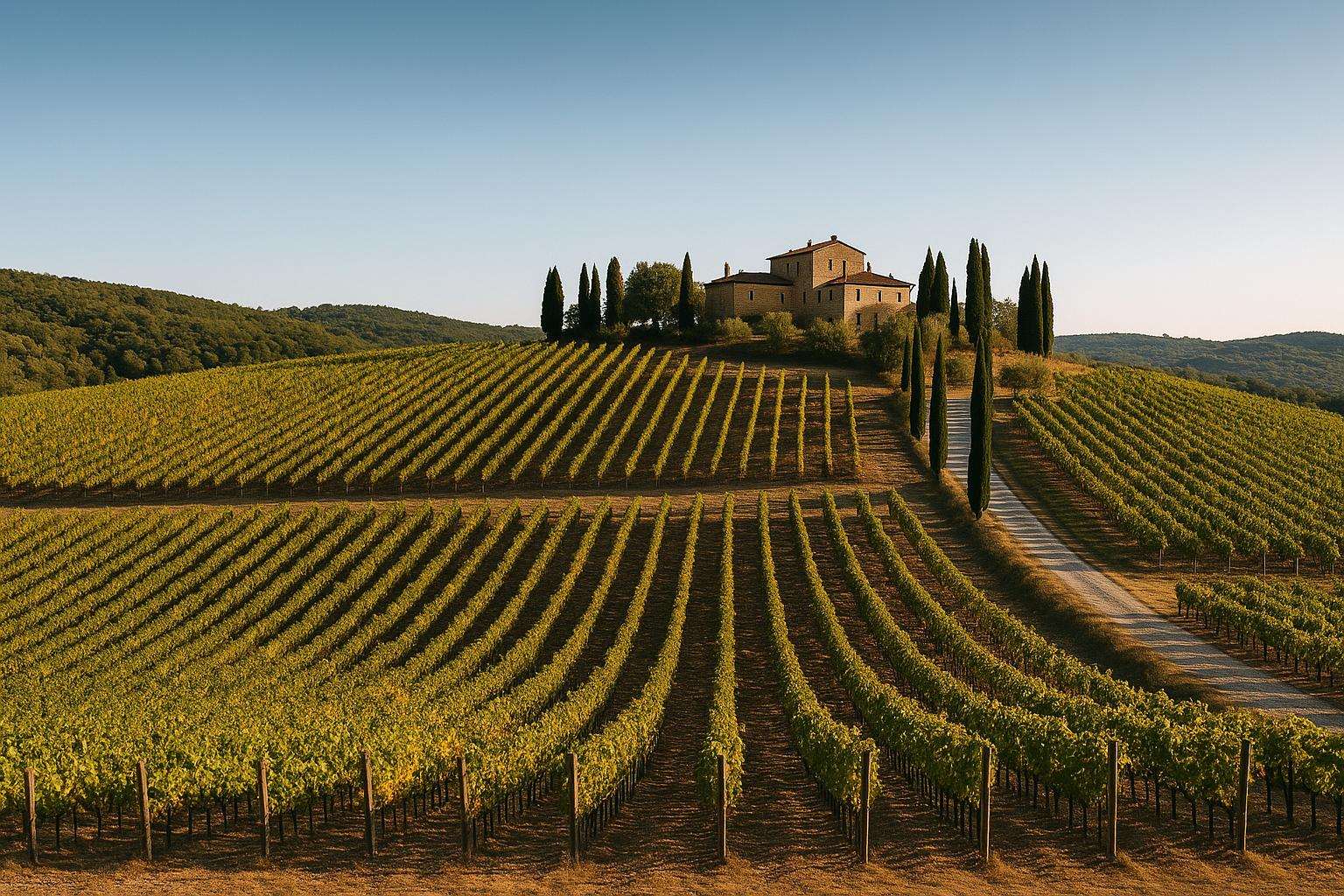
Italy has held its place as the world's preeminent food-and-wine honeymoon for one structural reason: nowhere else packs centuries-old winemaking estates, truffle-rich forests and Michelin-starred urban dining into so compact a footprint. You can build a genuinely comprehensive itinerary — Chianti, an Umbrian truffle wood, Emilia-Romagna — inside a single loop, and the transitions are short enough that most of your days are spent tasting rather than driving. What follows is how I sequence it, what each stop actually costs as of 2026, and the tradeoffs the glossy tour pages leave out.
The route in one line: three nights in Chianti (Antinori + Castello di Ama), two in Umbria's Spoleto-Norcia corridor for a truffle hunt, two to three in Bologna for the Michelin tables — ten to twelve days total, best run late September to mid-November when the white-truffle season overlaps the harvest.
Why start in Chianti, and which two estates matter most?
Chianti Classico is the natural first anchor because the two estates that define a Tuscan wine honeymoon sit twenty minutes apart. Antinori nel Chianti Classico, in San Casciano in Val di Pesa, is the flagship entry point — named Best Winery in the World in 2022 by World's Best Vineyards and housed in a landmark building by architect Marco Casamonti, its roof planted with vines that continue the surrounding landscape. Visits are by appointment only, booked directly at antinori.it, in three tiers: the entry-level Tinaia Tour (a cellar walk plus a three-wine tasting, roughly 90 minutes, from €35 per person); the two-hour Bottaia Tour, which opens the private barrel cellars over four wines; and the premium CRU Tour, which closes with lunch at the rooftop Rinuccio 1180 restaurant and pours seven wines including Tignanello, Brunello di Montalcino Pian delle Vigne and Solaia. The estate is open April–October, 10 a.m. to 6 p.m., and weekdays only November–March.
Twenty minutes east, Castello di Ama in Gaiole in Chianti layers wine onto contemporary art — every year the estate commissions a new site-specific installation, and the grounds permanently display works by Anish Kapoor and Michelangelo Pistoletto. The flagship shared experience, The Symposium of San Lorenzo, runs €169 per person and combines a one-hour guided walk through vineyards, cellars and artworks with a three-wine set lunch at the Ristoro. A private Feast of Villa Pianigiani, adding verticals of San Lorenzo, La Casuccia and L'Apparita, is priced on request. If your budget is tighter, a standalone three-wine enoteca tasting without the guided tour begins at just €15.
The honest tradeoff: these are the two estates most worth your money, but they are also the two that book weeks ahead in peak season. Reserve them first and build your Chianti nights around confirmed slots — do not treat them as walk-ins.
How does the Umbria truffle leg work — and when?
From Chianti, drop south into Umbria, which produces the highest volume of black truffles in Italy; the Spoleto-Norcia corridor is the canonical hunting ground. A half-day hunt pairs a trained hound with a local trifolau and finishes with an osteria lunch of truffle pairings — expect roughly €185–€230 per person for a group experience. The species you find is governed entirely by the calendar: white truffles, the prestige variety, September through December; black summer truffle May through September; bianchetto January through April. That is why I push couples toward late September to mid-November — it is the only window that delivers both the coveted white truffle and the grape harvest.
Book the hunt two to three months out for prime white-truffle dates. It is a genuinely romantic morning — muddy boots, a working dog, a bottle opened at a farmhouse table — and it is the leg most likely to become the story you retell.
Where does the Michelin dining happen — Bologna or Modena?
The finale belongs to Emilia-Romagna, the region Italians call La Grassa ("the fat one") for good reason. Drop the car and take the 40-minute high-speed train from Florence to Bologna, a walkable Michelin city. Bologna itself hosts several one-star tables and Osteria Francescana-alumna concepts; a multicourse tasting dinner without a truffle add-on typically runs €80–€150 per person before wine. For a standout day, the Michelin-starred Amerigo 1934 in nearby Savigno pairs chef Alberto Bettini's black-truffle and seasonal-mushroom menus with the wines of Emilia-Romagna, and takes reservations directly; a composite Viator day tour even bundles a truffle producer visit, a hunt in the Apennine hills and a five-course dégustation there for around $795 per person for two.
The white whale is Osteria Francescana in Modena — Massimo Bottura's three-star, a former World's 50 Best number one. Its tables release online and vanish within minutes, so plan for it as a stretch goal, not a fixed anchor. Set a reminder for the booking window and keep the one-star tables above as your reliable fallback.
What does the whole thing cost — and how do I package it?
| Experience | Region | Price (2026) | Book ahead |
|---|---|---|---|
| Antinori Tinaia Tour | Chianti Classico | from €35 / person | 2–4 weeks |
| Antinori CRU Tour (rooftop lunch) | Chianti Classico | premium tier | 4–6 weeks (peak) |
| Castello di Ama — Symposium | Gaiole in Chianti | €169 / person | 3–4 weeks |
| Umbria half-day truffle hunt + lunch | Spoleto-Norcia | €185–€230 / person | 2–3 months (white season) |
| Bologna tasting dinner (before wine) | Emilia-Romagna | €80–€150 / person | 1–4 weeks |
| Packaged multi-day Bologna itinerary | All-in | from €2,900 / person | 2–3 months |
You have two viable structures. The first is à la carte: reserve each estate, hunt and dinner yourself, rent a car for the Tuscany-Umbria legs, and switch to rail for Bologna. The second is a packaged multi-day itinerary — the Cooking Vacations operator, for instance, bundles classes, truffle hunts and estate visits with accommodation from around €2,900 per person in a shared double. The package removes logistics and the drink-driving problem in Chianti (private minivan day tours from Florence, run by Cellar Tours and Under the Tuscan Sun Tours, are the benchmark) but costs a premium over booking direct and gives you less control over which specific tables you sit at.
My recommendation for most couples: book the two Chianti estates and the truffle hunt directly, use a private driver for the two Tuscan wine days, and DIY Bologna by train. You keep the marquee experiences under your own control, avoid the car in the city, and spend the package premium on one better dinner instead.
The bottom line
Italy earns its reputation because the density is real: two world-class estates within twenty minutes of each other, a truffle wood a short drive south, and a Michelin city on a fast train north. Anchor the trip on confirmed Antinori and Castello di Ama slots, time it to the September–November overlap of harvest and white truffle, treat Osteria Francescana as a bonus rather than a plan, and you will have built the food-and-wine honeymoon the rest of the map is measured against.
Frequently asked
How many days do I need for an Italy food and wine honeymoon?
Ten to twelve days is the honest minimum to move through Tuscany, Umbria and Emilia-Romagna without rushing. A tight version works in eight: three nights in Chianti for the estate visits, two nights in Umbria for a truffle hunt, and two to three in Bologna for the Michelin tables. Fewer than eight days forces you to drop a region, and the transitions — Florence to Chianti, Chianti to the Spoleto-Norcia corridor, then north to Bologna — each eat half a day. If you can stretch to two weeks, add a fourth Chianti night so you are not tasting serious wine on your first jet-lagged afternoon.
When is the best time of year to go for truffles and harvest?
The prestige white truffle (tuber magnatum pico) runs September through December, which overlaps with the grape harvest, so late September to mid-November is the single best window for a combined food-and-wine trip. Black summer truffle is available May through September if you travel earlier, and bianchetto fills January through April. The trade-off with peak white-truffle season is demand: Antinori's CRU experience and Castello di Ama's Feast book weeks ahead in that window, and truffle hunts should be reserved two to three months in advance. Spring (April–May) is quieter and cheaper but you sacrifice the white truffle entirely.
How far in advance do I need to book Antinori and Castello di Ama?
Antinori nel Chianti Classico is visit-by-appointment only, booked directly at antinori.it; the entry Tinaia Tour starts around €35 per person, and the premium CRU Tour with rooftop lunch fills weeks ahead in peak season (April–October). Castello di Ama's flagship Symposium of San Lorenzo runs €169 per person and its private Feast of Villa Pianigiani is priced on request — both are reservation-only, open daily 10 a.m. to 6:30 p.m. Treat the two estates as fixed anchors and build your Chianti nights around confirmed slots rather than hoping to walk in.
Is a rental car necessary, or can I do this by train and driver?
Chianti and the Umbrian truffle woods effectively require a car or a private driver — the estates and hunting grounds are rural and poorly served by public transit. Most couples avoid drink-driving anxiety by booking a private minivan day tour that packages Antinori and Castello di Ama into a single 11-hour outing from Florence, which operators such as Cellar Tours and Under the Tuscan Sun Tours run. Bologna, by contrast, is a walkable Michelin city on the high-speed rail line, so you can drop the car before the Emilia-Romagna leg and travel Florence–Bologna by train in about 40 minutes.
Can we actually get a table at Osteria Francescana?
Osteria Francescana in Modena — Massimo Bottura's three-Michelin-star restaurant, a former World's 50 Best number one — is one of the hardest reservations in Italy and releases tables on a rolling online basis that sell out within minutes. Realistically, plan for it as a stretch goal rather than an anchor: set a calendar reminder for the booking-window opening and have a backup. If it does not come through, Emilia-Romagna is dense with one-star tables and Bologna's own concepts, where a multicourse tasting typically runs €80–€150 per person before wine, plus the Michelin-starred Amerigo 1934 in nearby Savigno, which pairs black truffle menus with regional wines and takes reservations directly.
Roughly what should we budget per person for the experiences?
Experiences alone — not flights or hotels — run meaningfully. A packaged multi-day Bologna itinerary through Cooking Vacations, combining classes, truffle hunts and estate visits with accommodation, starts around €2,900 per person in a shared double as of 2026. Booking à la carte, budget roughly €35–€250 per person for winery visits depending on tier, €185–€230 per person for a group truffle hunt with osteria lunch, and €80–€150 per person for a Bologna tasting dinner before wine. Marquee experiences like Antinori's CRU Tour and Castello di Ama's private Feast sit at the top of those ranges and are worth reserving early.