Experiences
Japan Food Honeymoon Guide: Kaiseki, Sake & Hokkaido Farm-to-Table
Kyoto's multi-course kaiseki, Fushimi's sake breweries, Osaka's Dotonbori street food and Hokkaido's ryokan farm tables — a sequenced Japan food honeymoon with real 2026 prices and the booking lead times that actually decide your trip.
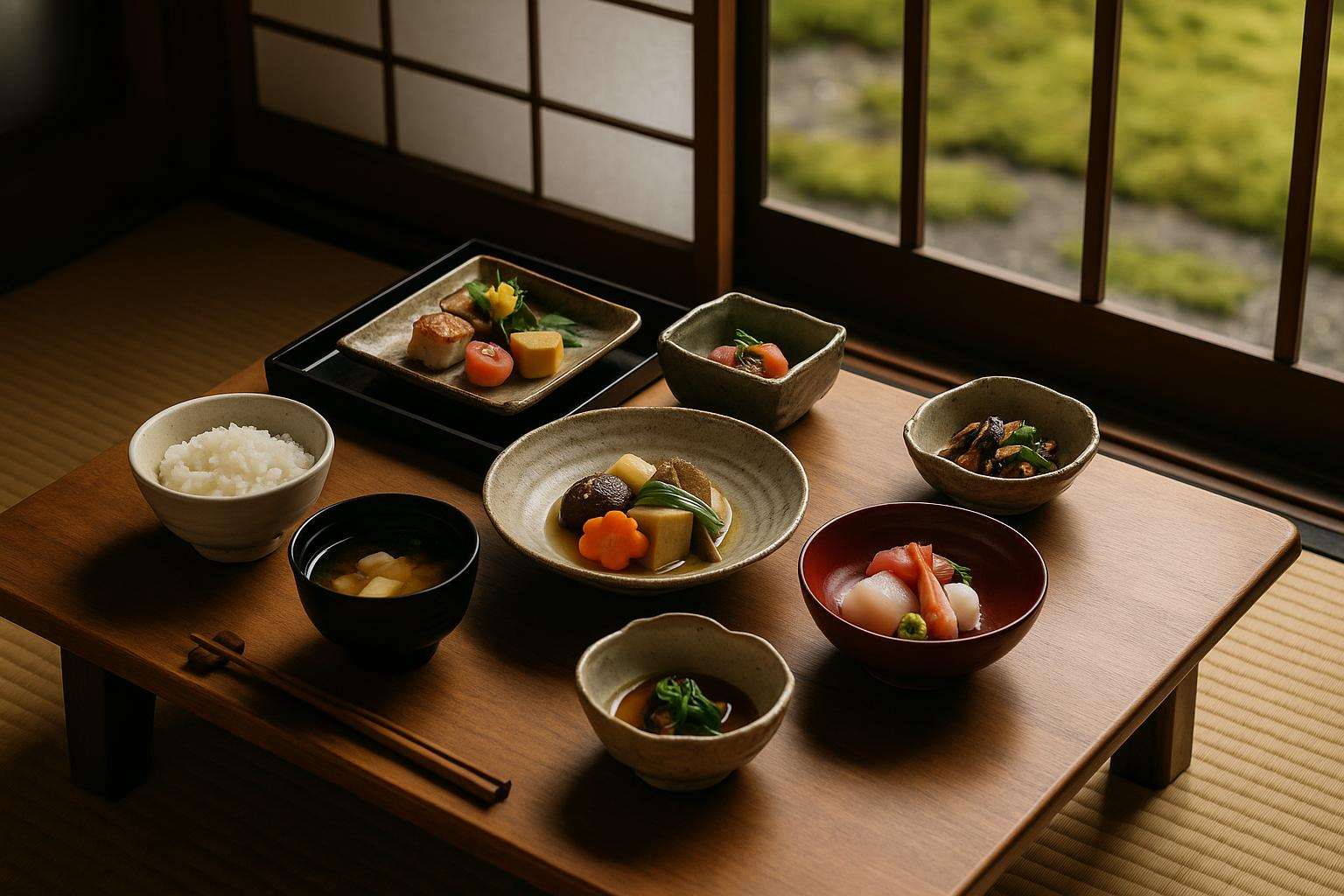
Japan is arguably the world's most disciplined food culture, and for honeymooners willing to navigate a modest language barrier and commit to booking early, it offers a progression no other country matches: refined haute cuisine, street-level vitality and pastoral farm-table simplicity, all in one itinerary. The catch is that the trip is decided less by geography than by reservations — the good kaiseki tables and crab-season ryokan fill months out. Here is how I sequence Kyoto, Osaka and Hokkaido, what each stop costs as of 2026, and the lead times that actually govern the plan.
The arc in one line: Kyoto for kaiseki and the Fushimi sake district → Osaka for Dotonbori street food → Hokkaido for a farm-to-table ryokan finale. Twelve to fourteen days, best run October–November for value and the start of Hokkaido crab season.
Why does Kyoto kaiseki anchor the whole trip?
Kaiseki-ryori, Japan's multi-course haute cuisine, traces its lineage to the 16th-century tea ceremony of master Sen-no-Rikyu and evolved into a philosophy that treats each dish as a seasonal, visual and textural composition. A full-course dinner runs 7 to 14 courses, each served on ceramics and lacquerware chosen to complement the food's aesthetic — it is as much a curated object as a meal, which is exactly why it belongs at the start of a honeymoon. Kyoto's concentration of kaiseki restaurants is unmatched: Kodaiji Wakuden changes its menu seasonally, Gion Karyo offers English menus for first-timers, and Izusen near Daitokuji Temple specializes in refined Zen Buddhist vegetarian shojin ryori served in a garden.
On price, entry-level kaiseki at well-regarded Kyoto restaurants begins around ¥14,850 (about $99) per person; at the top, three-star Michelin kaiseki such as Tokyo's Ishikawa is priced at ¥49,500 (about $330) per person for the single tasting course. Reserve the marquee dinner two to four months ahead, ideally through a hotel concierge or the byFood platform, both of which handle foreign bookings and the common Japanese-phone-number requirement. This is your one immovable anchor — build the Kyoto nights around it.
How do the Fushimi sake breweries fit in?
Sake is the natural complement to kaiseki, and Kyoto's Fushimi district makes it easy. The ward — whose pure underground water has been prized since warlord Hideyoshi Toyotomi established it as a strategic hub in the 16th century — today hosts roughly 20 active breweries. Fushimi-gura, a production facility and museum, offers free entry (reservation required) with an on-site restaurant pouring sake flights alongside kaiseki meals; the broader Fushimi tasting court lets you sample up to 18 regional varieties for about ¥2,300 per person. A curated brewery tour with food pairing runs ¥5,000–¥20,000 per person (roughly $33–$133) depending on inclusions. Book two to three weeks ahead, and slot it as a relaxed daytime counterpoint to an evening kaiseki.
Is an Osaka street-food tour worth it, or should we wander?
Osaka is the release valve after Kyoto's formality. Its street-food identity centers on Dotonbori, the neon-lit canal district that made takoyaki, okonomiyaki and kushikatsu globally legible, plus the older Shinsekai quarter. You can wander both on your own, but on a first evening a small-group tour earns its keep: a guide contextualizes Osaka as tenka no daidokoro — the nation's kitchen — and gets you past the ordering barrier. Operators including byFood, Arigato Japan, MagicalTrip and Osaka Food Tours run roughly three-hour walks priced around ¥12,000–¥25,300 per person (about $80–$168), with multiple tastings (takoyaki, kushikatsu, kitsune udon, tonpeiyaki) and usually two drinks. Friday and Saturday tours sell out weeks ahead, so book weekend dates one to two weeks in advance. Add a morning stroll through Kyoto's Nishiki Market before you leave — a covered arcade of pickles, tofu, knives and grilled skewers that is the best low-stakes primer on Japanese ingredients.
Why finish in Hokkaido?
Hokkaido's cold maritime climate produces Japan's finest dairy, seafood — sea urchin, king crab, scallops — and root vegetables, all showcased at their peak in a ryokan kaiseki dinner. It is the most immersive, pastoral close to a food itinerary. The Japan National Tourism Organization specifically highlights farm-to-table programs that combine a visit to the Aoki Sake Brewery (operating since 1831, with tasting glasses by glassmaker Hario) and a meal at Akiba Noen, a farm family-owned for over a dozen generations. Staying in a ryokan with dinner and breakfast included is the point here: you eat what the island grows and catches, prepared by a kitchen that reads the season.
What does it all cost, and how do I dodge the premiums?
| Experience | Where | Price (2026) | Book ahead |
|---|---|---|---|
| Entry-level kaiseki dinner | Kyoto | from ¥14,850 (~$99) / person | 2–4 months |
| Three-star kaiseki tasting | Tokyo (Ishikawa) | ¥49,500 (~$330) / person | 2–4 months |
| Fushimi tasting court (18 varieties) | Kyoto | ~¥2,300 / person | 2–3 weeks |
| Sake brewery tour + pairing | Kyoto | ¥5,000–¥20,000 / person | 2–3 weeks |
| Dotonbori street-food tour | Osaka | ¥12,000–¥25,300 / person | 1–2 weeks (weekends) |
| Mid-range ryokan (dinner + breakfast) | Hokkaido | ¥15,000–¥40,000 / person / night | 2–3 months (crab season) |
| Luxury onsen ryokan | Hokkaido | ¥100,000–¥200,000+ / person / night | 2–3 months |
Two levers control your budget. First, timing: shoulder-season mid-week stays in October and November deliver the best value and the start of Hokkaido's crab season, while Golden Week (late April–early May) and Saturday nights add 20–40% at ryokan. Second, the lead-time cascade — kaiseki at three-star tables two to four months out, Fushimi brewery tours two to three weeks, Osaka weekend food tours one to two weeks, and Hokkaido crab-season ryokan (November–January) two to three months. One honest caveat: Japan's national food and ryokan pricing has been rising — the national food CPI climbed roughly 7.2% year-on-year through mid-2025 — so confirm current rates when you reserve rather than treating the figures above as fixed.
The bottom line
A Japan food honeymoon works because the three acts are genuinely distinct: the composed formality of Kyoto kaiseki, the loud generosity of Osaka's canals, and the pastoral abundance of a Hokkaido farm table. Lock the marquee kaiseki dinner and any crab-season ryokan first, time the trip to the October–November value window, and let the sake district and street-food tour fill in around those anchors. Book in that order and the itinerary essentially assembles itself.
Frequently asked
How many days should a Japan food honeymoon be?
Twelve to fourteen days lets the progression breathe: four to five nights in Kyoto for kaiseki and the Fushimi sake district, two to three in Osaka for street food, and three to four in Hokkaido for a ryokan farm-table finale, with a domestic flight north factored in. A compressed ten-day version works if you cut Hokkaido and add a Kyoto-to-Osaka day trip instead, but you lose the pastoral final act that gives the trip its arc. Whatever the length, front-load the reservations — the itinerary is decided less by geography than by which tables and ryokan you can actually secure.
How far ahead do I book top kaiseki in Kyoto?
Reservations for top-tier kaiseki should be made two to four months in advance, and three-star tables essentially require it. Many Kyoto restaurants accept foreign reservations through a hotel concierge or the byFood platform, which sidesteps the language barrier and the common requirement of a Japanese phone number. Entry-level kaiseki at well-regarded Kyoto restaurants begins around ¥14,850 (about $99) per person; three-star Michelin kaiseki in Tokyo, such as Kagurazaka's Ishikawa, is priced at ¥49,500 (about $330) per person for the single tasting course. Book the marquee dinner first and plan your Kyoto nights around it.
Can we visit sake breweries in Kyoto, and what does it cost?
Yes — Kyoto's Fushimi district, prized for its pure underground water since the 16th century, hosts roughly 20 active breweries and is the essential complement to kaiseki dining. Fushimi-gura, a production facility and museum, offers free entry (reservation required) with an on-site restaurant serving sake flights and kaiseki meals. The broader Fushimi tasting court lets you sample up to 18 regional varieties for about ¥2,300 per person, and a curated brewery tour with food pairing typically runs ¥5,000–¥20,000 per person (roughly $33–$133) depending on inclusions. Book brewery tours two to three weeks ahead.
Are Osaka street food tours worth booking, or can we just wander?
You can absolutely wander Dotonbori and Shinsekai on your own, but a small-group tour is worth it on your first evening because a good guide contextualizes Osaka's identity as tenka no daidokoro — 'the nation's kitchen' — and gets you past the language barrier on ordering. Operators such as byFood, Arigato Japan, MagicalTrip and Osaka Food Tours run roughly three-hour walking tours priced around ¥12,000–¥25,300 per person (about $80–$168), including multiple tastings — takoyaki, kushikatsu, kitsune udon, tonpeiyaki — and usually two drinks. Friday and Saturday tours sell out weeks in advance, so book those dates one to two weeks ahead.
What makes Hokkaido the right finale for a food honeymoon?
Hokkaido's cold maritime climate produces Japan's finest dairy, seafood — sea urchin, king crab, scallops — and root vegetables, all showcased at their peak in a ryokan kaiseki dinner. The Japan National Tourism Organization specifically highlights farm-to-table programs pairing a visit to the Aoki Sake Brewery (operating since 1831) with a meal at Akiba Noen, a farm family-owned for over a dozen generations. It is the most immersive, pastoral close to a food-focused itinerary. Ryokan stays with kaiseki dinner and breakfast run ¥15,000–¥40,000 per person per night at mid-range properties, rising to ¥100,000–¥200,000+ at luxury onsen ryokan.
When is the best time to go, and how do I avoid peak premiums?
Shoulder-season mid-week stays in October and November give the best value and, in Hokkaido, the start of crab season. Avoid Golden Week (late April to early May) and Saturday nights, which carry 20–40% premiums at ryokan; Hokkaido crab-season dates (November–January) need booking two to three months ahead. One current caveat worth budgeting for: Japan's national food CPI rose roughly 7.2% year-on-year through mid-2025, so top-tier kaiseki and ryokan pricing may have drifted upward from the figures quoted here. Confirm current rates when you reserve, and lock marquee tables and crab-season ryokan first.