Experiences
Kenya vs. Tanzania for a Safari Honeymoon: Migration, Camps & Cost
Both East African giants deliver the Great Migration, the Big Five and world-class honeymoon camps — but they diverge on price, access and character. A head-to-head on the Maasai Mara vs. the Serengeti, plus Amboseli and Ngorongoro, to help you choose.
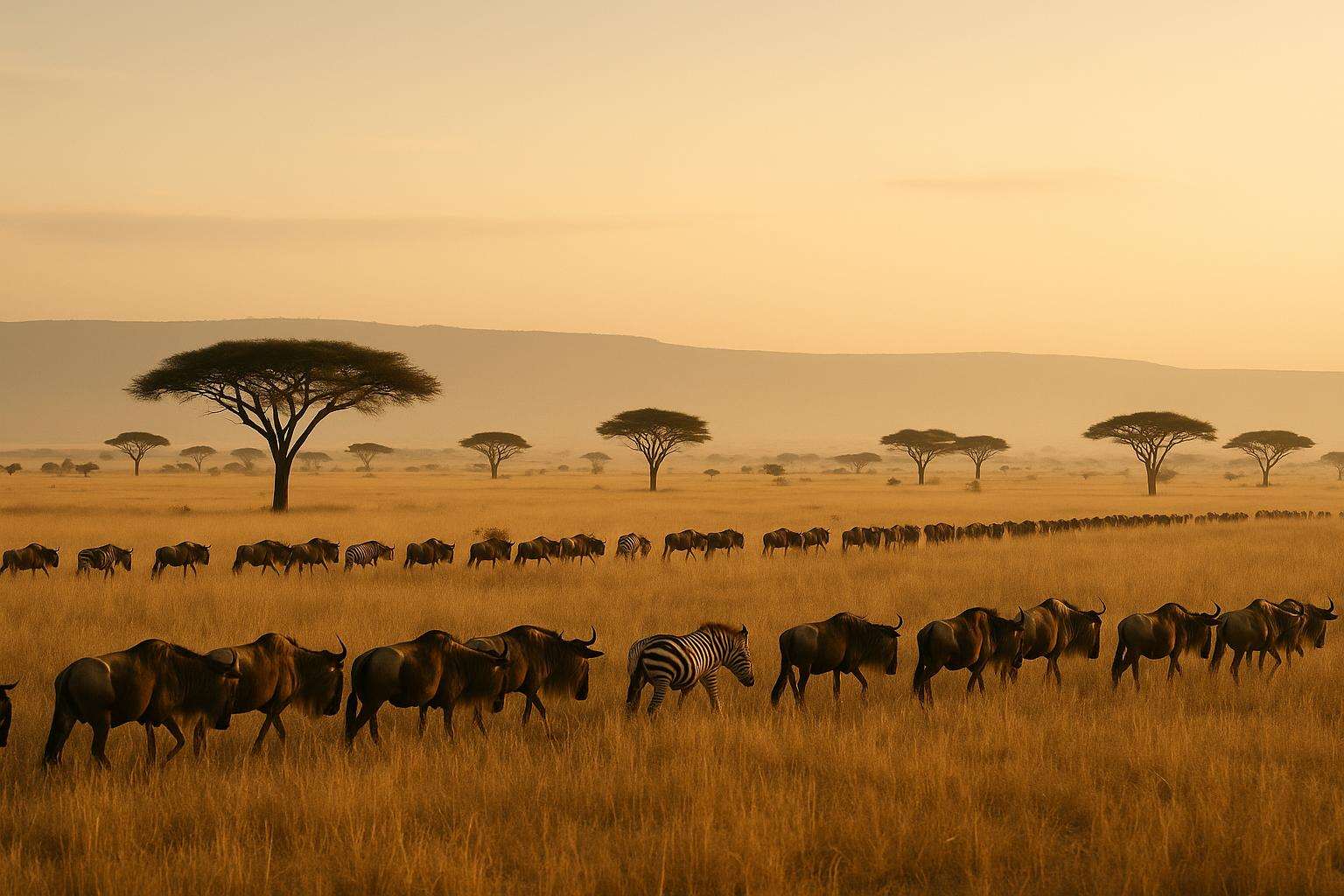
Choosing a country for a safari honeymoon is the single highest-leverage decision a couple will make — it dictates budget, logistics, migration timing and the character of the whole trip. For most honeymooners the choice comes down to East Africa's two giants: Kenya, built around the Maasai Mara, and Tanzania, built around the Serengeti. Both deliver the Great Migration, the Big Five and world-class romantic camps. Here is the honest head-to-head.
Kenya: the easy, romance-rich entry point
Kenya is the easiest entry point for first-timers. International flights connect directly to Nairobi, and light aircraft hop to the Maasai Mara in about 45 minutes. Complete per-person honeymoon packages start at roughly $6,997.[Asilia Africa] The Mara's rolling savanna, resident lion prides and July-to-October river crossings deliver consistent drama, and the private conservancies bordering the National Reserve — Olare Motorogi, Naboisho — charge a conservancy fee (typically $100 to $150 per person per day) but reward couples with near-empty game drives, off-road access and night drives that national parks prohibit.
Where Kenya truly shines for honeymooners is its camp infrastructure. Angama Mara sits on the Oloololo Escarpment — the precise ridge from the opening of Out of Africa — overlooking the Mara triangle. Cottar's 1920s Safari Camp caps itself at six luxury tents and offers a traditional Maasai blessing ceremony that draws consistently emotional responses from couples. Saruni's standalone honeymoon suite, with a private plunge pool and panoramic views, is available to one couple at a time. Kenya also owns Amboseli, where the world's most studied elephant herds walk beneath a full-frame Mount Kilimanjaro — the most cinematic backdrop in East Africa, at rates below the Mara's ultra-luxury peers.
Tanzania: scale, the Serengeti and Ngorongoro
Tanzania commands a premium, with luxury private-reserve safaris starting around $7,997 per person.[Asilia Africa] The Serengeti is Africa's largest protected ecosystem and holds the world's densest lion populations — roughly 4,000 animals across an area larger than Connecticut. At the apex sits Singita's Grumeti Reserve: Singita Sasakwa Lodge costs $2,455 to $3,525 per person per night depending on season, with nine private cottages each having a personal infinity pool on a hill above 350,000 acres shared with a handful of travelers.[Singita] The Grumeti and Lamai corridors intercept the migration's western and northern routes without the vehicle congestion of the central Seronera area.
Tanzania's other trump card is the Ngorongoro Crater — 260 square kilometers containing roughly 25,000 animals, including endangered black rhino, addable as a day descent. And for the calving season (January to February), the southern Serengeti's Ndutu plains are unmatched: hundreds of thousands of wildebeest give birth as predators close in. Kenya has no equivalent to either.
Migration timing: the deciding factor for many couples
The Great Migration is a year-round circular movement, not a single event. The famous Mara River crossings happen on the border roughly July through October, visible from both the Maasai Mara and the northern Serengeti. The calving spectacle is on the southern Serengeti in January and February. So a summer honeymoon works from either country; a January or February trip points firmly to Tanzania. For sighting reliability outside migration season, both countries hold strong resident game — Kenya's conservancy camps and Tanzania's Grumeti both deliver year-round predators.
| Factor | Kenya (Maasai Mara) | Tanzania (Serengeti) |
|---|---|---|
| Package starting cost | ~$6,997 per person | ~$7,997 per person |
| Peak camp rate (luxury) | ~$1,800–$2,200 pp/night | ~$2,210–$3,525 pp/night |
| River crossings | Jul–Oct (Mara triangle) | Jul–Oct (northern Serengeti) |
| Calving season | — | Jan–Feb (Ndutu) |
| Signature add-on | Amboseli + Kilimanjaro views | Ngorongoro Crater (Big Five in a day) |
| Off-road / night drives | Yes (private conservancies) | Limited (national park rules) |
| Ease of access | Highest (45-min Mara hop) | High, longer internal transfers |
The bottom line: choose Kenya for the easiest logistics, slightly lower cost, off-road conservancy game drives and the most intimate honeymoon camps plus Amboseli's Kilimanjaro backdrop. Choose Tanzania for the vast Serengeti, the calving season, and Ngorongoro Crater — a grander, wilder canvas at a premium price.
Cost, offers and the honest tradeoffs
Both countries reward shoulder-season travel: April to May cuts rates 20 to 50 percent at the same properties. andBeyond's honeymoon promotion — 50 percent off one partner's accommodation for the length of a stay — materially changes the economics at mid-tier camps.[andBeyond] Watch two Tanzania-specific costs: national-park fees are often excluded from camp rates and add $350 to $450 per person for a five-day circuit, and the Ngorongoro crater fee runs $200 to $250 per vehicle. Small camps of 8 to 15 tents sell out 12 to 18 months ahead for peak dates, so book early and buy trip-cancellation insurance given long non-refundable windows.
The genuine downsides: both countries require malaria prophylaxis, which some couples cannot or prefer not to take — those travelers should consider South Africa's malaria-free reserves instead. See a travel medicine specialist six to eight weeks out, since all of sub-Saharan Africa carries chloroquine-resistant malaria and atovaquone-proguanil is usually the best-tolerated option; a yellow fever certificate is required if arriving from a WHO-listed risk country, and a long Nairobi layover en route to Tanzania can trigger Tanzania's requirement.[CDC Yellow Book] This is editorial information, not medical advice — consult a qualified physician. Beyond health, temper expectations: game viewing is weather- and luck-dependent, and neither country guarantees a river crossing on a given day. Build in enough nights (four to six on safari) to raise your odds, and treat the quieter moments — a bush breakfast, sundowners over the plains — as the honeymoon, not just the big sightings.
Frequently asked
Is Kenya or Tanzania cheaper for a safari honeymoon?
Kenya is the more affordable of the two at comparable quality. Complete Kenya honeymoon packages start at roughly $6,997 per person, while Tanzania luxury private-reserve safaris begin around $7,997 per person and can climb well beyond that. At the top tier, Tanzania's Singita Grumeti properties run $2,210 to $3,525 per person per night depending on season and camp, among the highest rates in Africa. Kenya's ceiling is a notch lower — Angama Mara and andBeyond Bateleur Camp sit around $1,800 to $2,200 per person sharing at peak. Both countries reward shoulder-season travel (April to May in East Africa), which can cut rates 20 to 50 percent at the same properties. Note that Tanzania's national-park fees are often not included in camp rates and add $350 to $450 per person for a five-day circuit.
When is the Great Migration in Kenya vs. Tanzania?
The Great Migration is a year-round circular movement, not a single event, so the country you choose depends on when you travel. The famous Mara River crossings — the dramatic scenes of wildebeest braving crocodile-filled water — happen on the Kenya-Tanzania border roughly July through October, visible from both the Maasai Mara (Kenya) and the northern Serengeti (Tanzania). Earlier in the year, the herds are in Tanzania: the calving season on the southern Serengeti's Ndutu plains peaks around January and February, when hundreds of thousands of wildebeest give birth and predator action is intense. So for a summer honeymoon, either country works for the crossings; for a January or February trip, Tanzania is the clear choice.
Which has better honeymoon camps, the Maasai Mara or the Serengeti?
Both are exceptional, with slightly different strengths. Kenya's Maasai Mara concentrates the continent's most romantic couple-focused infrastructure in a compact area: Angama Mara on the Oloololo Escarpment (the Out of Africa ridge), Cottar's 1920s Safari Camp with its six-tent exclusivity and Maasai blessing ceremony, and Saruni's purpose-built honeymoon suite are all built with couples in mind, and Kenya's private conservancies allow off-road driving and night drives that national parks forbid. Tanzania's Serengeti answer is scale and grandeur — Singita Sasakwa Lodge's nine private cottages, each with a personal infinity pool, sit on a hill above 350,000 acres shared with only a handful of guests. Kenya edges ahead on intimate romance and conservancy exclusivity; Tanzania on sheer wilderness scale.
What is Ngorongoro Crater and is it worth adding?
Ngorongoro Crater is a 260-square-kilometer collapsed volcanic caldera in Tanzania containing roughly 25,000 animals, including one of the best chances in Africa to see the endangered black rhino — completing the Big Five in a single, contained day. It's typically added as a day descent from a lodge on the crater rim and pairs naturally with the northern Serengeti and the Tarangire and Lake Manyara parks on Tanzania's Northern Circuit. It is one of Tanzania's signature advantages over Kenya, which has no equivalent. The tradeoff is crowding: the crater floor draws many vehicles, so it can feel less exclusive than a private Serengeti concession. A crater fee of roughly $200 to $250 per vehicle applies for a day descent.
What health precautions do we need for an East Africa safari honeymoon?
See a travel medicine specialist six to eight weeks before departure. All of sub-Saharan Africa carries chloroquine-resistant malaria, so prophylaxis is essential; atovaquone-proguanil (Malarone) is generally the best-tolerated option, with a convenient seven-day post-travel tail, though your physician should choose based on your history. Recommended vaccinations include hepatitis A, typhoid and rabies pre-exposure, and a yellow fever certificate is required if arriving from a WHO-listed risk country — note that a Nairobi layover of 12-plus hours en route to Tanzania can trigger Tanzania's yellow fever requirement. Layer non-pharmaceutical prevention too: permethrin-treated clothing, DEET or picaridin repellent at dusk and dawn, and treated bed nets (standard at reputable camps). This is editorial information, not medical advice — consult a qualified travel medicine physician for your situation.