Experiences
Northern Lights Honeymoons: Where and When to See the Aurora as a Couple
A practical guide to planning an aurora honeymoon — the best months, the three great base cities (Tromsø, Iceland's Reykjavík region and Finnish Lapland), the glass-igloo experience, and how to stack the odds of a truly clear, active night.
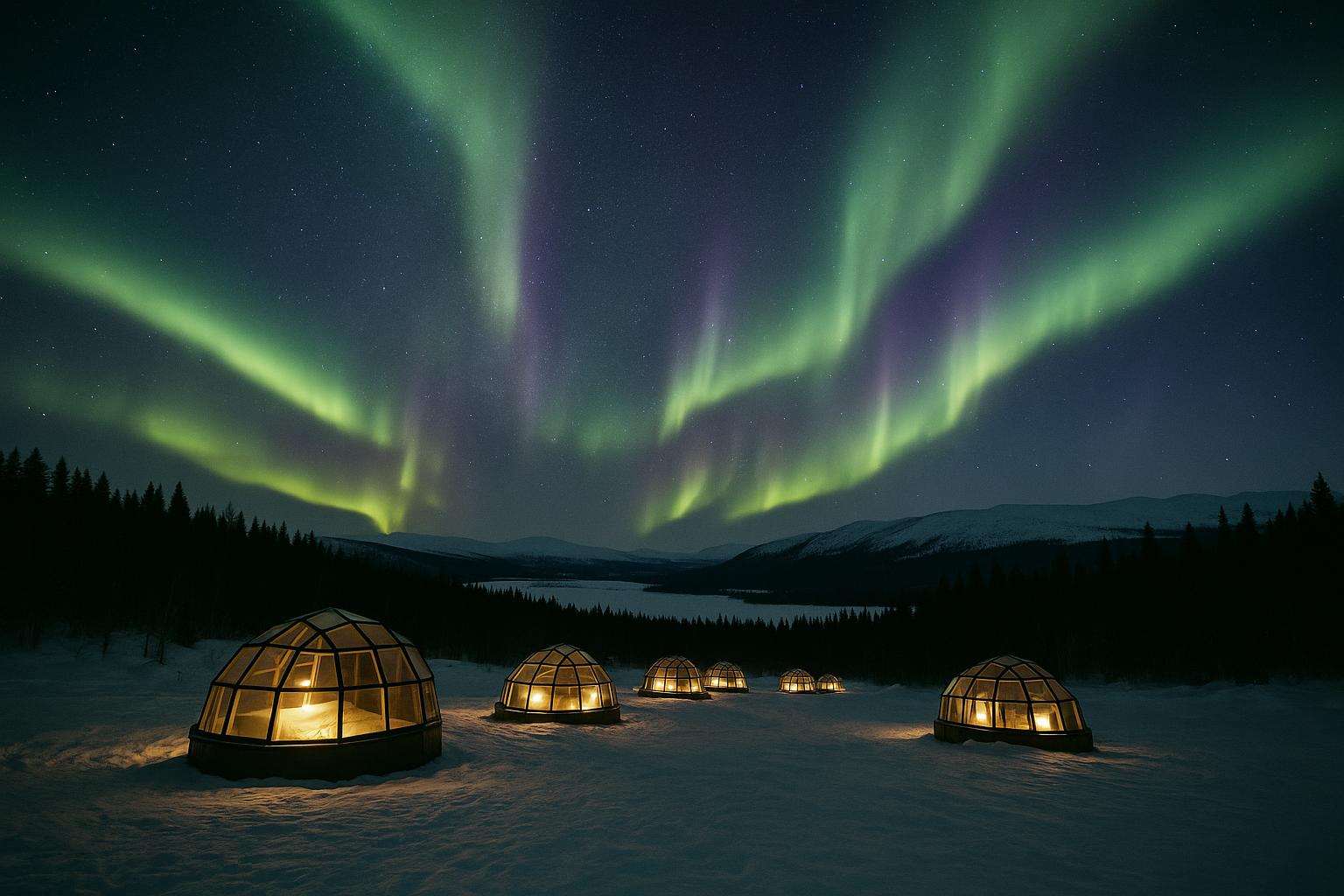
Few honeymoon backdrops rival the northern lights — curtains of green and violet rippling silently over a snowbound Arctic valley while you stand, or lie, beside the person you just married. But the aurora is a natural phenomenon, not a scheduled show, and the couples who come home thrilled are the ones who understood the season, the geography and the odds before they booked. This guide covers all three, plus how the glass-igloo experience really works.
When the aurora actually appears
The visible aurora season runs roughly from early September to mid-April — not because the lights stop in summer, but because Arctic skies aren't dark enough to see them under the midnight sun. Within that window, two periods stand out.
The equinoxes — September–October and February–March — bring the year's strongest geomagnetic activity, a pattern scientists attribute to the Russell-McPherron effect. Autumn also offers unfrozen lakes for mirror-image reflection shots and milder temperatures. The polar-night months of November through January deliver the most sheer darkness — near-24-hour night at the highest latitudes — and therefore the most hours in which a display can occur, at the cost of brutal cold and short days.
For honeymooners, late February and March are the sweet spot: dark, active nights combined with returning daylight and milder weather for husky sledding, snowmobiling and snowshoeing. Whatever month you pick, book at least three to five nights. A single clouded evening can erase a one-night gamble; five nights lets the weather turn in your favor.
The three great base regions
All three leading destinations sit under or beside the auroral oval, so all three genuinely deliver. They differ in reliability, non-aurora activities and atmosphere.
Tromsø, Norway sits at roughly 67° N, almost directly beneath the auroral oval — which means the lights are frequently visible even when the Kp index is low. As Visit Norway notes, the region combines aurora hunting with fjords, cable-car summits, dog sledding and winter whale-watching, making it the most reliable and most well-rounded base of the three.
Iceland offers the broadest non-aurora agenda: the geothermal Blue Lagoon, waterfalls, glacier hikes, black-sand beaches and the Golden Circle, all within easy reach of Reykjavík and a short flight from North America. Its maritime climate is milder than Scandinavia's but windier and more changeable, so cloud management is central to any aurora plan here.
Finnish Lapland — Saariselkä, Ivalo, Levi and Rovaniemi — is the glass-igloo heartland and the most immersive winter-wilderness setting, with reindeer, Santa-village folklore and vast silent forest. This is where the aurora feels most storybook.
| Base region | Best for | Signature non-aurora draw |
|---|---|---|
| Tromsø, Norway | Reliability under the oval | Fjords, whale-watching, cable car |
| Iceland | Variety + easy access | Blue Lagoon, glaciers, Golden Circle |
| Finnish Lapland | The igloo experience | Reindeer, husky safaris, wilderness |
The glass-igloo experience
Sleeping under a heated glass roof with the aurora potentially overhead is the defining honeymoon image of Finnish Lapland — and its practical genius is that it lets you watch from a warm bed rather than standing in sub-zero cold. Kakslauttanen Arctic Resort, which pioneered the concept, keeps its igloos open across the aurora season from late August to late April. As of 2026, a small glass igloo for two in peak winter (late November through February) commonly runs €800–€1,200 per night, half board (breakfast and a three-course dinner) included, per current booking listings. The larger Kelo-Glass Igloos add a private sauna, fireplace and kitchenette.
That is a real splurge for a small space, and — critically — a cloudy night shows you clouds, not lights. A sensible strategy many couples use: book one or two igloo nights as the centerpiece and surround them with cheaper cabins or hotels. Comparable glass-roofed options exist at Aurora Village Ivalo, Levin Iglut and Apukka Resort, sometimes at lower rates.
Iceland offers a different luxury register: the Blue Lagoon's on-site Retreat Hotel runs a Romantic Getaway package pairing geothermal bathing and fine dining with the possibility of aurora overhead during the October–March window.
How to stack the odds
Aurora visibility depends on five factors that must all align: the Kp index, cloud cover, moon phase, hours of darkness and your latitude. At high-latitude bases you can see the lights at a Kp of just 1 or 2, so cloud cover — not geomagnetic strength — is usually the deciding variable. Book a guided aurora chase that drives you to wherever skies are clear that night; local guides monitor forecasts and reposition constantly. The most active window is generally 9 p.m. to 2 a.m.
2026 remains a strong year: Solar Cycle 25 peaked around 2024–2025, and elevated solar activity persists beyond the maximum. Combine that with a well-chosen month, a multi-night stay and a flexible, chase-ready mindset, and an aurora honeymoon becomes one of the most memorable trips a couple can take — with the lights as a spectacular, if never fully promised, headline act.
Frequently asked
When is the best time for a northern lights honeymoon?
The aurora season runs roughly from early September to mid-April, when Arctic nights are dark enough for the lights to show. Two windows are especially strong: the equinoxes around September–October and February–March, when geomagnetic activity peaks due to the Russell-McPherron effect, and the deep polar-night months of November through January, when near-24-hour darkness gives the most viewing hours. For honeymooners, late February and March strike the best balance — dark, active nights plus enough daylight and milder temperatures for husky sledding and snowmobiling by day. Whatever month you choose, plan at least three to five nights so weather and activity variation don't cost you the whole trip.
Where should we base ourselves — Tromsø, Iceland or Finnish Lapland?
All three sit under or near the auroral oval, so all three deliver. Tromsø, Norway (about 67° N) sits almost directly beneath the oval, so the aurora is often visible even at a low Kp index, and the city pairs the lights with fjords, cable cars and whale-watching. Iceland offers the widest non-aurora agenda — the Blue Lagoon, waterfalls, glacier hikes and the Golden Circle — with easy air access from North America. Finnish Lapland (Saariselkä, Ivalo, Rovaniemi) is the glass-igloo heartland and the most immersive winter-wilderness setting. Choose Tromsø for reliability, Iceland for variety, and Lapland for the storybook igloo experience.
Are glass igloos worth it for a honeymoon?
For many couples, yes — sleeping under a heated glass roof with the aurora potentially overhead is a genuine bucket-list moment, and it hedges against the cold: you can watch from bed. But set expectations honestly. Kakslauttanen, which pioneered the concept in Finnish Lapland, is open across the aurora season from late August to late April, and a small glass igloo for two in peak winter (late November through February) commonly runs €800–€1,200 per night, half board included, per current listings. That is a premium for a small space, and a cloudy night shows you clouds, not lights. Many couples book one or two igloo nights as a splurge and pair them with cheaper cabins for the rest of the stay.
What is the Kp index and how much should we rely on it?
The Kp index is a 0-to-9 scale of global geomagnetic activity, published by NOAA's Space Weather Prediction Center every three hours; higher numbers mean the auroral oval expands toward lower latitudes. At high-latitude bases like Tromsø or Finnish Lapland you can often see the aurora at a Kp of just 1 or 2 because you are already under the oval, so the index matters less there than it does farther south. Use it as one input among five — Kp, cloud cover, moon phase, hours of darkness and your latitude — because all five must align. A high Kp is useless behind clouds, and a modest Kp under clear Arctic skies can still deliver a memorable display.
How likely are we actually to see the aurora?
There is no guarantee — the aurora is a natural phenomenon, and cloud cover is the biggest spoiler. The practical way to improve your odds is time on the ground: with a five-night stay in a high-latitude location during a strong month, a good chance exists of at least one solid sighting when skies clear. 2026 also benefits from lingering solar-cycle activity, as Solar Cycle 25 peaked around 2024–2025 and elevated activity continues past the maximum. Book guided aurora chases that drive you to clear skies, keep flexible evening plans, and treat the lights as a hoped-for bonus rather than a scheduled event — that mindset protects the honeymoon from disappointment.
Is it too cold to enjoy an aurora honeymoon?
It is cold, but manageable, and cold is actually your friend: the aurora needs dark, clear skies, and clear skies in the Arctic usually mean chilly nights. Deep-winter temperatures in Tromsø or Lapland can sit well below freezing, so pack serious layers, insulated boots and hand warmers, and lean on your accommodation's warm interiors — the glass igloo lets you watch from a heated bed. Iceland's maritime climate is milder but windier and more changeable. Choosing March over January buys you noticeably warmer conditions and longer usable daylight while keeping nights dark enough for excellent viewing, which is why it's a favorite honeymoon month.