Experiences
Southern Africa Safari Honeymoon: Vic Falls, Okavango & Cape Town 14-Day Itinerary
A three-node itinerary that pairs wine country, water-based Delta safari and the Zambezi — with real camp costs, flight transfers and the visa details that trip couples up.
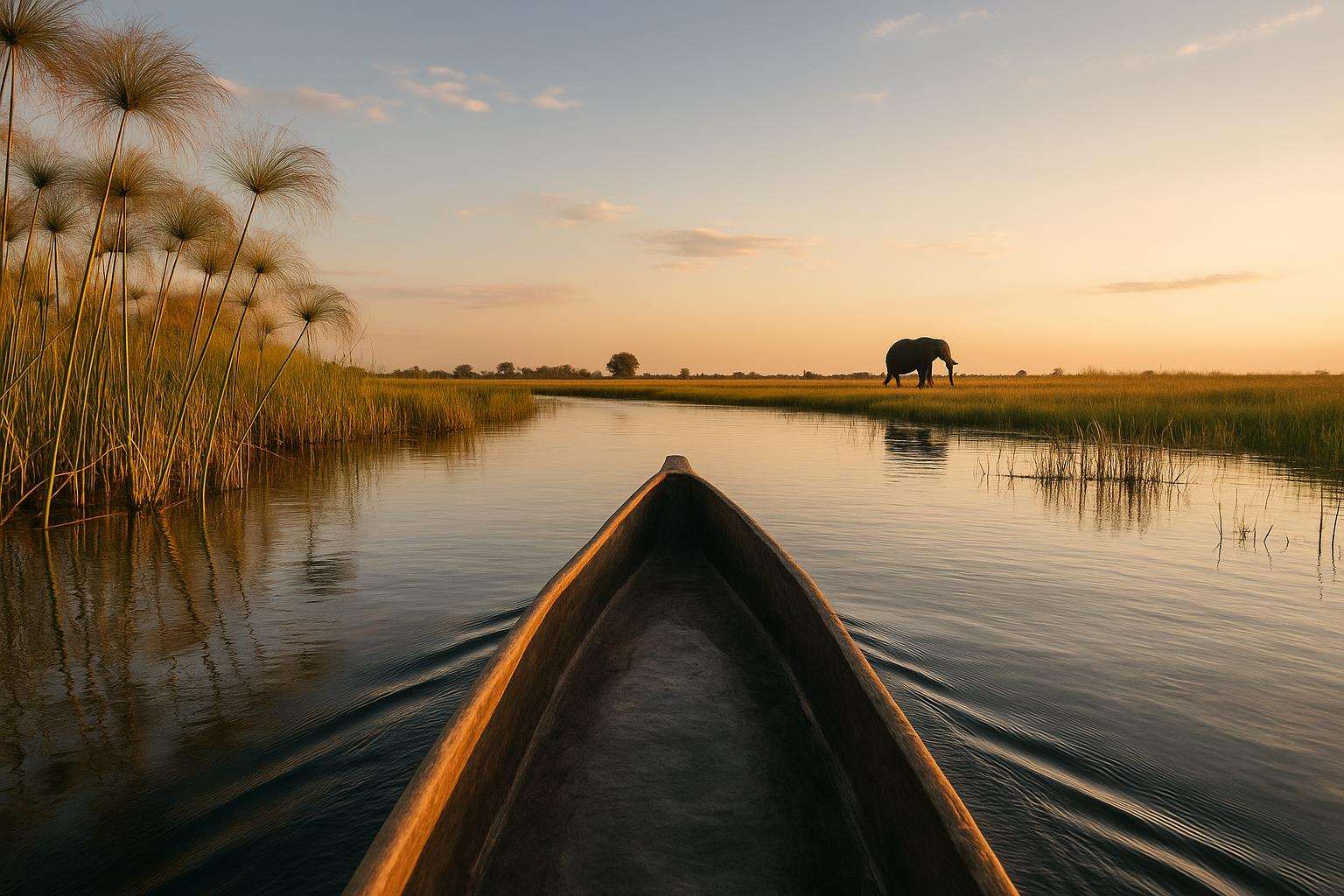
A Southern Africa honeymoon is, in my experience, the most structurally satisfying safari a couple can build. Where East Africa is all savanna, this three-node circuit — Cape Town, the Okavango Delta and Victoria Falls — gives you three completely different environments in fourteen days: a world-class coastal city and wine country, a water-based wilderness explored by canoe, and one of the planet's great waterfalls. The transitions are handled by light aircraft, and the wildlife depth rivals anywhere on the continent.
Below is the itinerary I return to again and again, with real costs and the logistics that actually matter.
Days 1–4: Cape Town and the winelands
Open in Cape Town. It doubles as your international arrival point — direct flights land from London, New York and Dubai — and as a sensory reset before the bush. Four nights is enough for Table Mountain (the Platteklip Gorge trail takes about two hours on foot, or take the cable car), the Clifton and Camps Bay beaches, and a full day in the Stellenbosch and Franschhoek wine valleys. There is no malaria risk in Cape Town and no special vaccination requirement for the city itself.
Accommodation spans the grande-dame Belmond Mount Nelson (from roughly $450 per night) to boutique Camps Bay guesthouses from about $250. Starting here also lets jet lag fade before you commit to early game drives.
Days 5–9: the Okavango Delta, Botswana
Fly Cape Town to Maun, connecting through Johannesburg, then transfer by bush aircraft to a private concession camp. Botswana runs a deliberately low-volume, high-cost conservation model that caps visitor numbers by law, which is why the Delta holds some of Africa's highest wildlife densities with the fewest competing vehicles.
The Jao Concession in the north-western Delta — home to Wilderness Jao Camp — is the most varied ecosystem here: permanent floodplains, seasonal islands and papyrus waterways supporting elephant, hippo, red lechwe, sitatunga, African wild dog, lion, leopard and an extraordinary bird count. Days rotate between morning game drives, afternoon mokoro canoe excursions poled through the reeds, and full-day motorboat exploration. At peak season, Jao-tier camps run $2,000 to $3,500+ per person per night, inclusive of activities, meals and drinks.
The Delta's water-based safari is best from roughly May through October, when the floodwaters peak. This is also when the &Beyond honeymoon offer — 50% off one partner's accommodation for the stay — can most usefully cut the lodging bill.
Days 10–14: Victoria Falls
A light aircraft or road transfer via Kasane (Chobe) links the Delta to Victoria Falls town. On the Zimbabwe side, Matetsi Victoria Falls commands the most exclusive position — a 136,000-acre private estate with 12 kilometres of Zambezi frontage, from around $900 per person per night inclusive. On the Zambian side, Tongabezi Lodge sits seven miles upstream on a quiet Zambezi bend; its Honeymoon House was voted "Best Room in Africa" by Travel Africa magazine, with standard rates near $750 per person all-inclusive and SADC-resident rates as low as $290 per person sharing on some 2026 dates.
The KAZA UniVisa ($50) covers both Zimbabwe and Zambia and is issued on arrival at Victoria Falls and Livingstone airports and major land borders — important because you will likely want to cross the bridge and see both sides. A helicopter flight over the Falls is one of the trip's signature romantic experiences.
Health note: the Delta and Victoria Falls are malaria-risk areas (Cape Town is not). See a travel medicine physician six to eight weeks out; atovaquone-proguanil is generally the best-tolerated prophylaxis. Note also that AMREF Flying Doctors evacuation coverage does not extend to Southern Africa, so arrange a comprehensive medical-evacuation policy separately. This is editorial information, not medical advice.
What it costs — and how to build it
| Tier | Approx. cost (couple, 14 nights) | Representative camps |
|---|---|---|
| Packaged mid-range | $13,735–$14,430 | Gondwana Delta/Chobe/Falls package (incl. transfers) |
| Mid-luxury custom | $18,000–$28,000 | Quality tented camps across all three nodes |
| Ultra-luxury custom | $60,000–$90,000 | Singita, Wilderness Jao, Matetsi + Cape Town |
Those packaged figures come from Gondwana Tours & Safaris and are inclusive of helicopter and light-aircraft transfers, park fees, meals, drinks and activities — the sort of all-in pricing that makes a first safari far less stressful to budget. International airfare sits on top.
Transfers, timing and lead time
The whole circuit is designed for air. Light-aircraft strips serve the Delta camps (30 to 45 minutes from Maun), and the small camps of eight to fifteen tents sell out twelve to eighteen months ahead for peak dates. If your dates are flexible, shoulder-season travel around April and May can cut camp rates by 20 to 50 percent at the same properties.
My timing recommendation for a honeymoon: aim for May through July. You get peaking Delta floodwater for the best canoe safaris, a still-powerful Victoria Falls, and pleasant Cape Town weather before deep winter. Book the camps first — they are the binding constraint — then let your operator assemble the flights and transfers around them. For couples who cannot take malaria prophylaxis, a South Africa malaria-free reserve paired with Cape Town is the sensible alternative to this exact routing.
Frequently asked
How much does a 14-day Southern Africa safari honeymoon cost?
There is a wide realistic range. A packaged mid-range version covering the Okavango Delta, Chobe and Victoria Falls with all internal transfers, park fees, meals and drinks starts around $13,735 to $14,430 per couple, as priced by Gondwana Tours & Safaris for recent seasons. A mid-luxury custom build using quality tented camps across all three nodes, with economy flights from North America, realistically lands at $18,000 to $28,000 per couple all in. A fully custom ultra-luxury version — Singita, Wilderness Jao Camp and Matetsi with a Cape Town stay — can run $60,000 to $90,000 for two before international airfare. The camps are the dominant cost; flights and transfers are secondary.
Do we need malaria medication for this itinerary?
For this specific itinerary, yes — the Okavango Delta and Victoria Falls are malaria-risk areas, though Cape Town itself is not. All of sub-Saharan Africa carries chloroquine-resistant Plasmodium falciparum, so prophylaxis is strongly advised. Atovaquone-proguanil (Malarone) is generally the best-tolerated regimen, with the fewest neuropsychiatric side effects and only a seven-day post-travel tail. See a travel medicine physician six to eight weeks before departure, and layer in non-drug measures: permethrin-treated clothing, DEET or picaridin repellent at dusk and dawn, and treated bed nets, which reputable camps supply. Couples who cannot take prophylaxis should consider South Africa's malaria-free reserves instead. This is editorial information, not medical advice — consult a qualified physician.
What visa do we need for Zimbabwe and Zambia at Victoria Falls?
The KAZA UniVisa is the practical answer for most couples. It costs $50, covers both Zimbabwe and Zambia, and is issued on arrival at Victoria Falls Airport, Livingstone Airport and major land borders — which matters because the Falls straddle the two countries and you may want to cross the bridge to see both sides. It also permits day trips into Botswana's Chobe. Always confirm current eligibility for your nationality before travel, as the UniVisa scheme's participating countries and rules can change. Keep US dollars in small, clean, recent-series bills, which are widely used at the border and by lodges.
How do the transfers between Cape Town, the Delta and Victoria Falls work?
This circuit is built for air, not road. From Cape Town you fly to Maun in Botswana, usually connecting through Johannesburg O.R. Tambo. From Maun, a light aircraft bush transfer of 30 to 45 minutes drops you at your Delta camp's airstrip. After the Delta, a light aircraft or road transfer via Kasane (Chobe) links to Victoria Falls town. A helicopter flight over the Falls is one of the signature romantic add-ons of the trip and is offered by most Victoria Falls operators. Because the camps sit on private airstrips, your safari operator coordinates these charters; you rarely book them piecemeal yourself.
Is a honeymoon discount available at safari camps?
Yes, and it can meaningfully change the budget. &Beyond runs a well-known honeymoon promotion giving 50% off one partner's accommodation rate for the duration of a qualifying stay, which effectively cuts the lodging bill by a quarter for a couple. On the Zambian side, Tongabezi's Honeymoon House — voted Best Room in Africa by Travel Africa magazine — anchors a strong romance stay, with SADC-resident rates dropping to around $290 per person sharing on some dates. Ask your operator to combine a honeymoon promotion with a multi-night or shoulder-season rate; East and Southern African shoulder seasons (roughly April to May) can cut camp rates by 20 to 50 percent.
When is the best time for an Okavango and Victoria Falls honeymoon?
The Delta's water-based safari is best from roughly May through October, when the annual floodwaters peak and fill the channels, making mokoro canoe excursions and boat safaris most rewarding while wildlife concentrates around the water. This dry season also coincides with the best general game viewing across Southern Africa. Victoria Falls is at its most thunderous from around February to May after the rains, while low-water months (roughly September to December) reveal more of the rock face and are better for activities like Devil's Pool. A May-to-July trip is a strong compromise: peaking Delta water, still-powerful Falls, and pleasant Cape Town weather before deep winter.