Experiences
Spain Culinary Honeymoon: Basque Pintxos, Barcelona & La Rioja Wine
Spain's food-and-wine honeymoon circuit is unusually compact: the Basque Country, Barcelona and La Rioja link by high-speed rail into a ten-day itinerary through the country's most decorated tables, liveliest street eating and greatest red-wine appellation.
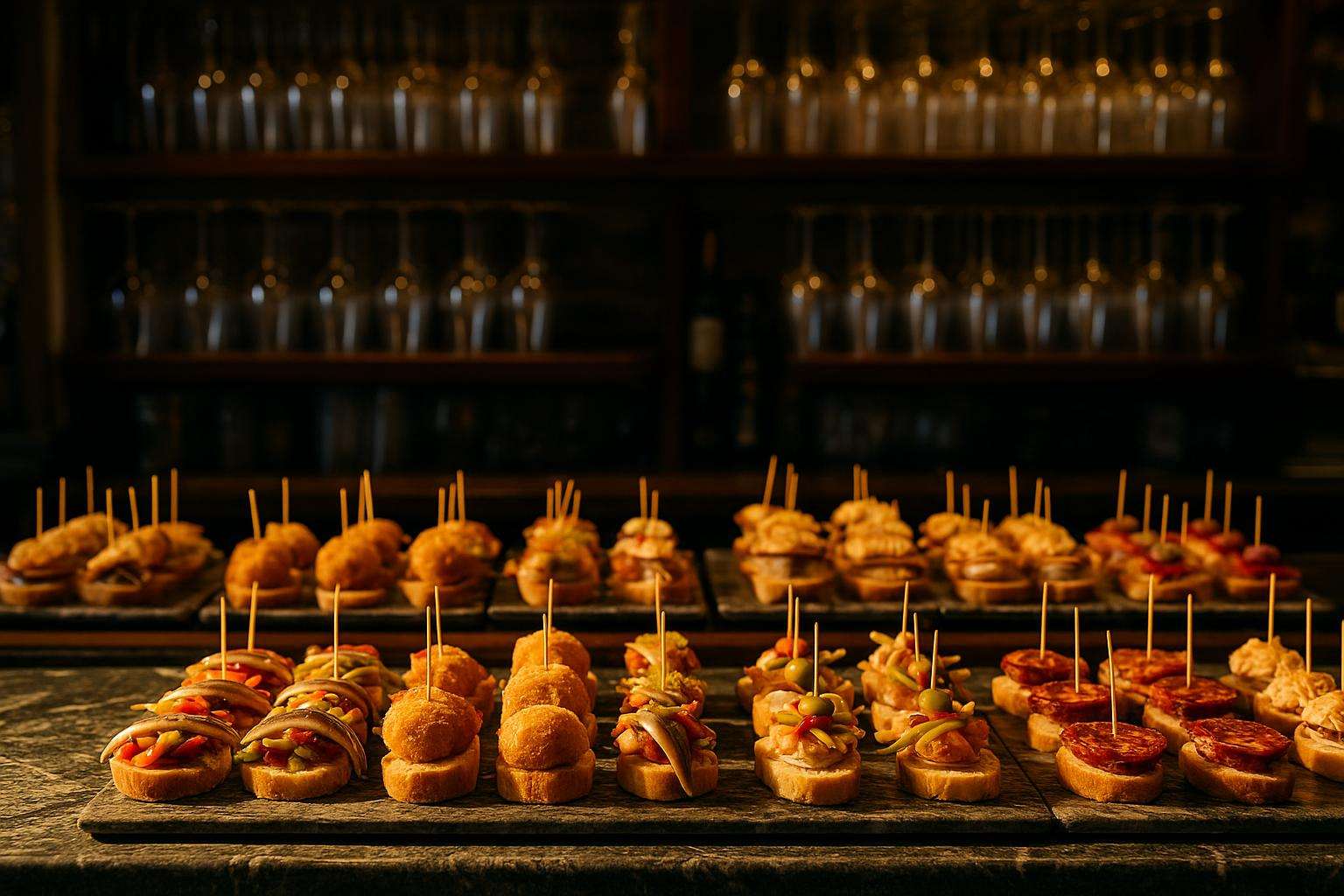
Spain's culinary honeymoon circuit is unusually well concentrated. The Basque Country, Barcelona and La Rioja can be linked by high-speed rail into a ten-day itinerary that encompasses the country's most decorated Michelin tables, its most vibrant street-eating culture and its most celebrated red-wine appellation — all achievable without a car. For couples who consider the meal the main event of the day, few countries reward the effort of advance planning as generously as Spain.
San Sebastian: the pintxo capital
San Sebastian (Donostia) is the functional culinary capital of Spain and, by some measures, the city with the highest density of Michelin stars per capita on the planet.[Honeyfund] The pintxo culture structures every evening: gildas (anchovy, olive and pickled pepper), txistorra (cured sausage) and bacalao montaditos anchor the bar crawls through the Parte Vieja, the Old Town. Pintxos are the Basque Country's elevated counterpart to tapas, and the etiquette is to graze — one or two bites and a small glass of wine or cider at each bar, then move on. For couples new to the scene, a guided crawl with a local expert is the ideal first night.
For the fine-dining anchor, Arzak has held three Michelin stars continuously since 1989 and is the founding institution of Nueva Cocina Vasca, the movement that transformed Spanish fine dining in the late 1970s under chefs Juan Mari and Elena Arzak. The restaurant offers a multi-course tasting menu; current pricing is confirmed by contacting the restaurant directly, and reservations run through the official site with two to three months' lead time standard for weekend tables.[Restaurante Arzak] The coastal complement is Elkano in nearby Getaria (one Michelin star), which specializes in whole grilled fish delivered straight from local boats and appears regularly on the World's 50 Best list.
Barcelona: the world's No. 1 table
The Barcelona anchor is Disfrutar, ranked No. 1 on the World's 50 Best Restaurants in 2024 and holder of three Michelin stars.[MICHELIN Guide] Founded in 2014 by chefs Mateu Casanas, Oriol Castro and Eduard Xatruch — all formerly of El Bulli — the restaurant offers Classic and Festival tasting menus at about 295 euros per person, with optional wine pairing around 165 euros. Reservations open roughly 12 months in advance on a rolling basis on the restaurant's website, and setting a calendar reminder for the exact release date one year out is the most reliable way to land a table. These are among the hardest reservations to secure anywhere in Europe, so treat the Disfrutar booking as the fixed point around which the whole trip is scheduled.
Barcelona also rewards the days between blowout meals: the Boqueria market off La Rambla for jamon and produce, a vermouth hour in Gracia, and Catalan seafood at more accessible neighborhood tables. Balancing one transcendent tasting menu against several relaxed local meals is the smart pacing for both your palate and your budget.
La Rioja: Gran Reserva country
Spain's most celebrated red-wine region is most efficiently organized from San Sebastian or Logrono. The average guided cellar tour with tasting across the appellation runs about 40 euros per person.[Winalist] The most-visited estates include Marques de Riscal, whose Frank Gehry-designed hotel is a honeymoon stay in itself; La Rioja Alta S.A., which pairs a guided tour with a four-wine tasting including its Gran Reserva 904; and Roda in Haro, known for exclusive VIP tastings by appointment. For a splurge day, private tours with luxury transport, an English-speaking guide, VIP winery access and a Michelin-starred lunch are bookable through operators such as Cellar Tours.
End a La Rioja day the canonical way: the evening pintxo crawl on Logrono's Calle Laurel, where each tiny bar specializes in a single preparation — one for grilled mushrooms crowned with a shrimp, another for garlic prawns, another for grilled pork. It is La Rioja's answer to San Sebastian's Parte Vieja, and it closes the loop on the Basque eating culture that opened the trip.
How to structure the ten days
| Segment | Nights | Culinary focus | Book ahead? |
|---|---|---|---|
| Barcelona | 3 | Disfrutar tasting menu; markets; Catalan seafood | Disfrutar ~12 months |
| La Rioja (from Logrono) | 2 | Winery tours; Calle Laurel pintxo crawl | Tours 2–4 weeks |
| San Sebastian | 4 | Arzak; Elkano; Parte Vieja pintxos crawls | Arzak 2–3 months |
Planning order: secure Disfrutar first (its release date dictates everything), then Arzak, then wire the train legs and winery days around those two anchors. Travel in June or September for the best mix of weather, crowds and full restaurant operation.
The honest tradeoffs
This is a demanding trip to plan and not a cheap one at the top tier — the two flagship tasting menus alone, with pairings, approach 500 euros per person before wine elsewhere. Reservation logistics are the real friction: miss the Disfrutar release window and you may not get in at all, and Arzak's weekends fill fast. August is a trap, with annual closures at many top kitchens and brutal inland heat. And a food-forward honeymoon can tip into over-scheduling — three consecutive multi-hour tasting menus is a lot of table time — so pace it, keep some days loose for markets, vermouth and long walks, and let La Rioja's slower rhythm reset you between the two urban peaks. Done with that balance, it is one of the most rewarding culinary honeymoons in the world, and the train-linked geography means you spend your energy eating rather than driving.
Frequently asked
How far in advance should we book Arzak and Disfrutar?
Both require serious lead time, but Disfrutar is the harder table. Arzak in San Sebastian, three Michelin stars continuously since 1989, typically needs two to three months for a weekend table; reservations are made through arzak.es, and current tasting-menu pricing is confirmed by contacting the restaurant directly. Disfrutar in Barcelona — ranked No. 1 on the World's 50 Best Restaurants in 2024 and holder of three Michelin stars — opens reservations roughly 12 months in advance on a rolling basis via disfrutarbarcelona.com. The most reliable strategy is to set a calendar reminder for the exact release date one year before your desired date; its tables are among the hardest to secure in Europe. Its Classic and Festival tasting menus run about 295 euros per person, with optional wine pairing around 165 euros.
Can you do a Spain culinary honeymoon without renting a car?
Yes — that's one of the circuit's great advantages. The Basque Country, Barcelona and La Rioja can be linked by high-speed rail, making a ten-day itinerary through Spain's most decorated tables, most vibrant street eating and most celebrated red-wine appellation entirely achievable without a car. Within cities, everything worth eating is walkable: San Sebastian's pintxos bars cluster in the Parte Vieja (Old Town), and Logrono's Calle Laurel packs its single-preparation bars onto a few streets. The one place a car (or better, a driver) helps is La Rioja itself, where wineries are spread across the countryside — but guided full-day tours with transport solve that, so you never need to drive.
What exactly are pintxos and how do you order them?
Pintxos are the Basque Country's elevated counterpart to tapas — small, often elaborate bites typically served on bread and pinned with a toothpick, though hot pintxos are made to order from a menu. Classics include the gilda (anchovy, olive and pickled pepper on a skewer, named after the Rita Hayworth film), txistorra (a thin cured sausage) and bacalao (salt cod) montaditos. The custom is a crawl: you stand at the bar of one place, eat one or two pintxos with a small glass of wine or cider, pay, and move to the next. Do not try to make a full meal at a single bar — the point is to graze across several. For couples new to the scene, a guided pintxos crawl with a local expert in the Parte Vieja is the recommended entry point.
Which wineries should we visit in La Rioja?
La Rioja tours are most efficiently organized from San Sebastian or Logrono, with the average guided cellar tour and tasting running about 40 euros per person. The most-visited estates include Marques de Riscal, whose Frank Gehry-designed hotel is a honeymoon stay in itself; La Rioja Alta S.A., which offers a guided tour plus a four-wine tasting including its Gran Reserva 904; and Roda in Haro, which does exclusive VIP tastings by appointment. For a splurge, a private full-day tour with luxury transport, an English-speaking guide, VIP winery access and a Michelin-starred lunch is available through operators like Cellar Tours. Close the day with the evening pintxo crawl on Logrono's Calle Laurel, where individual bars specialize in a single preparation.
When is the best time of year for a culinary honeymoon in Spain?
June and September are the sweet spots: lower crowds than midsummer, comfortable temperatures, and full restaurant operations before or after the August holiday lull, when some kitchens and wineries close for staff vacations. September also overlaps the early edge of the grape harvest in La Rioja, which adds energy to winery visits. Avoid the peak of August if you can — many top restaurants take annual closures then, and the heat inland (Barcelona, La Rioja) is punishing. Whichever month you pick, lock the marquee restaurant reservations first and build the rest of the itinerary, including train legs, around those fixed anchor dates.