The Milestones
Family Honeymoon Planning for Blended Families: A Practical Guide
How to plan a honeymoon that bonds a blended family and protects your couple time at once — the age conversations, the room geometry, the childcare model, and the timeline that makes it work.
A blended-family honeymoon carries a planning burden that a couple-only trip does not. You are not merely booking a romantic escape; you are staging the first shared trip of a family that, in some cases, only became a family a few weeks earlier. Done thoughtlessly, it can feel to a child like being dragged along on the celebration of a marriage they did not choose. Done well, it becomes the moment the family starts to feel like one. The difference is almost entirely in the planning.
This is now mainstream territory. The Pew Research Center reports that 17% of U.S. children under 18 live in a blended family most or all of the time, and roughly 40% of new marriages are a remarriage for at least one partner. Family counselors have responded by actively recommending a family honeymoon for these couples — a neutral, non-domestic setting reduces the territorial friction of newly merged households and builds shared memories from the start. This guide covers the decisions that make it work.
Decide who comes — and whether to split the trip
The default should not be automatic. For most blended families, including the children is the right call and pays real relational dividends. But if the couple has had zero time alone since the wedding, or the children are old enough to genuinely prefer to stay behind, a hybrid works beautifully: a short couple-only mini-moon first, then a family trip weeks or months later. Focus on the Family and other counseling resources note that the phased approach honors both the marriage and the new family without forcing a false choice. Make the decision with the children's ages, temperaments and relationship to the new stepparent honestly in view.
Have the three conversations before you book anything
The most important planning happens at the kitchen table, not on a booking site.
- Framing. Present the destination as our family's first adventure. Never call it 'the trip we took instead of a real honeymoon' — that framing tells a child they are an intrusion on the real event.
- Involvement. Give older children agency: let them choose between two vetted destinations, review the activity list, and name one personal priority for the trip. Ownership converts resentment into investment.
- Expectations. Explain up front that the couple will have some adult-only time — a spa afternoon, a dinner or two — and that this is normal and expected. Named in advance, it lands as routine; sprung mid-trip, it can feel like rejection. Teens especially respond to age-appropriate autonomy being promised early.
Choose childcare and room geometry — this is where romance is won or lost
Two structural choices determine whether the couple gets any genuine time together.
Childcare model. On-call, certified nanny service (Beaches Resorts' included nanny program, Kokomo Private Island's private nanny and chef, Nanuku Resort's complimentary 8am-to-8pm care for under-sixes) lets you claim couple time spontaneously. A fixed-hours kids' club — typically 9am to 5pm or 9pm — also works, but forces you to plan adult activities inside its window. Match the model to how much spontaneity you want.
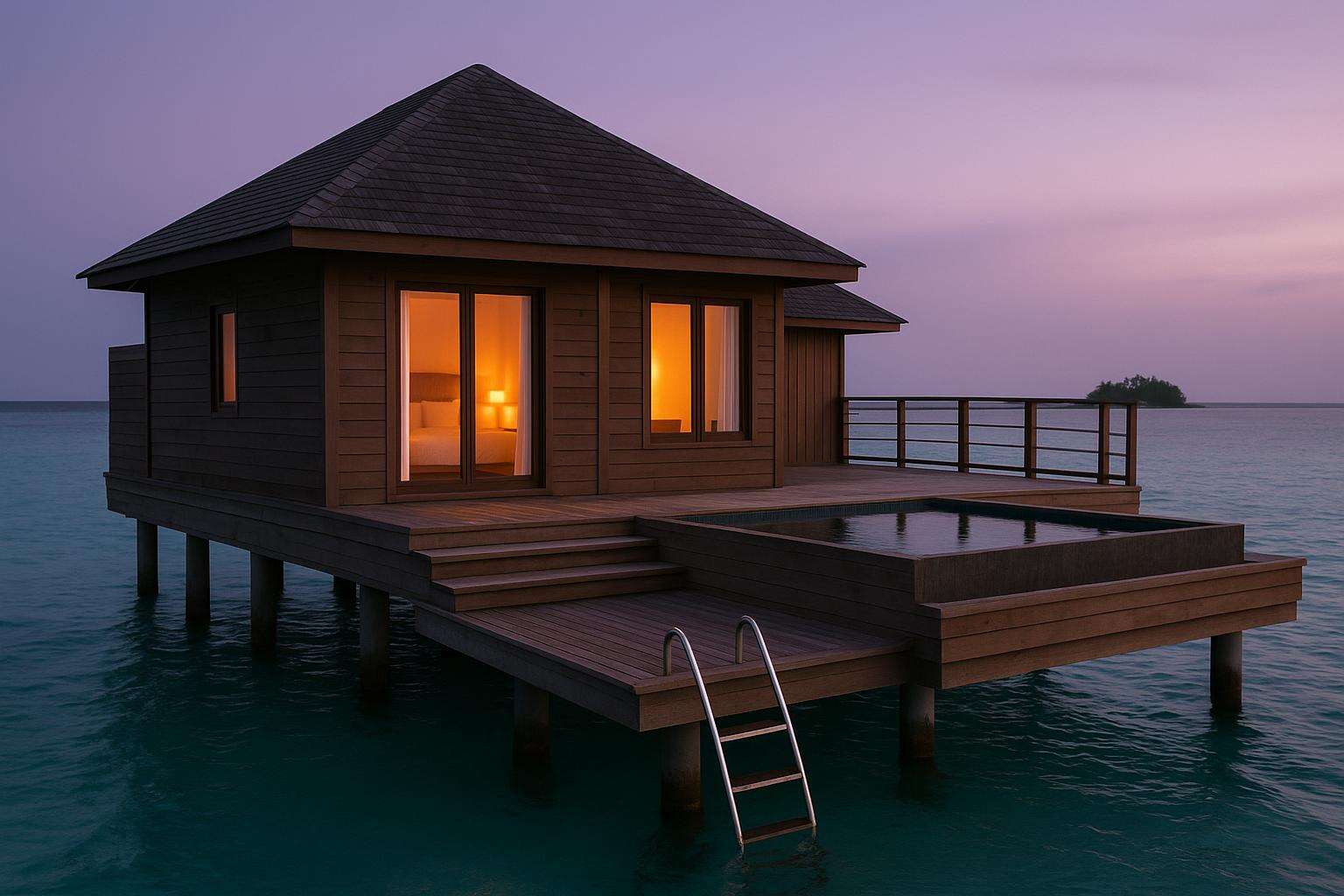
Room geometry. A one-bedroom suite forces the whole family into shared sleeping space and quietly kills adult evenings. A two-bedroom villa or suite separates the couple's bedroom from the children's, so your evenings remain yours after bedtime. Two-bedroom overwater villas in the Maldives, for example, start at $1,000 to $2,000 per night and exist precisely because this geometry is the difference between a family trip and a couple's honeymoon that happens to include kids. Then layer in adults-only zones — adult pools, spas and restaurants — for daytime retreat while the children are supervised.
Time it to the school calendar
Unlike a couple honeymoon keyed to the wedding date, a family honeymoon is governed by the school year.
| Window | Length | Best for | Booking note |
|---|---|---|---|
| Summer (late May–early Sept) | Longest | Long-haul, maximum flexibility | Peak rates; book 9–12 mo. ahead |
| Winter break (late Dec) | ~1 week | Caribbean, festive atmosphere | Premium holiday-week pricing |
| Spring break (late Mar–Apr) | 7–10 days | Warm-weather Caribbean/Mexico | Advance booking essential |
| Midwinter break (mid-Feb) | 3–5 days | Short-haul mini-familymoon | Short-haul only |
Clear the logistics
Four items catch parents out. First, passports: children's passports are valid only five years versus ten for adults, per the U.S. Department of State — check expiry before booking. Second, age minimums: most kids' clubs start at three or four, helmet diving from five, most surf lessons from six, and some safari and dive operators set floors between four and ten; missing one is the most common familymoon failure. Third, insurance: families need trip-cancellation coverage for child illness and pediatric medical-evacuation coverage abroad — Allianz and Travel Guard lead on the Cancel For Any Reason riders suited to unpredictable travel with young children. Fourth, food allergies: all-inclusive resorts handle dietary restrictions more reliably than a la carte venues; confirm allergen protocols at booking.
For resort-by-resort recommendations that put these principles into practice, see our guide to the best family-friendly resorts for blended families. A family honeymoon planned with this much care is not a diluted honeymoon. It is the day your family officially begins to travel as one.
Frequently asked
Should stepchildren come on the honeymoon at all?
For many blended families, yes — and family counselors increasingly recommend it. A shared trip in a neutral, non-domestic setting reduces the territorial tension that builds when step-siblings first share a home, and it gives everyone positive shared memories from the marriage's earliest days. That said, it is not automatic. If the couple has had no time alone together since the wedding, or if the children are old enough to genuinely prefer not to travel, a hybrid approach works well: a short couple-only mini-moon first, then a family trip later. The decision should be made with the children's ages, temperaments and relationship to the new stepparent honestly in view — not by a rule.
How do we protect couple time when kids are on the trip?
Structurally, not by willpower. The two highest-leverage choices are the childcare model and the room geometry. Choose a resort with certified, on-call nanny service (Beaches, Kokomo, Nanuku) rather than a fixed-hours kids' club if you want spontaneous couple time; a nine-to-five club works but requires planning adult activities inside its window. Then book a two-bedroom villa or suite so the couple's bedroom is physically separate from the children's — adult evenings survive after bedtime. Layer in adults-only zones (many family resorts have adult pools, spas and restaurants) for daytime retreat. With those three in place, romance is designed in rather than squeezed out.
When is the best time to take a family honeymoon?
Family honeymoon timing is governed by the school calendar more than the wedding season — a fundamental difference from couple-only honeymoons. Summer (late May to early September) offers the longest, most flexible break but coincides with peak Caribbean and resort pricing; book preferred rooms nine to twelve months ahead. Winter break (late December) is short but festive; spring break (late March to April) gives seven to ten days with warm-weather access and needs advance booking. Midwinter break (mid-February) is typically three to five days — short-haul only, ideal for a mini-familymoon. Couples marrying outside peak wedding season sometimes have flexible school timing and can capture shoulder-season pricing at premium destinations.
What conversations should we have with the kids before the trip?
Three, and they matter as much as the itinerary. First, framing: present the destination as 'our family's first adventure,' never as 'the trip we took instead of a real honeymoon' — the second framing plants the idea that they are an intrusion. Second, involvement: for blended families especially, let older children choose between two vetted destination options, review the activities, and set one personal priority for the trip. Ownership reduces resentment and accelerates the sense of shared family identity. Third, expectations: explain in advance that the couple will have some adult-only time (spa, a dinner or two) and that this is normal, so it does not land as rejection mid-trip. Teens in particular benefit from age-appropriate autonomy being named up front.
What are the logistics parents most often overlook?
Four recur. Passport validity: children's passports are valid only five years (adult passports ten), so check expiry before booking any international trip. Age minimums: most kids' clubs start at three or four, helmet diving from five, most surf lessons from six, and some safari drives and dive operators set floors of four to ten — confirm the exact minimum for any activity a child is excited about before you book. Insurance: families need trip-cancellation coverage for child illness (far more common than adult illness) and pediatric medical-evacuation coverage abroad; Allianz and Travel Guard lead on the Cancel For Any Reason riders that suit unpredictable travel with young kids. And food allergies: all-inclusive resorts handle dietary restrictions more reliably than a la carte spots — confirm allergen protocols at booking, not on arrival.
Is a family honeymoon much more expensive than a couple honeymoon?
Yes, structurally — room categories, dining and activities all scale with group size. As a 2026 guide for a family of four over seven nights including U.S. East Coast flights: an accessible all-inclusive runs roughly $4,000 to $9,000; a premium all-inclusive such as Beaches Turks & Caicos runs $9,000 to $18,000 (rooms from about $918 per night); and luxury international villas run $18,000 to $40,000+ before long-haul flight premiums. The cost-control levers are real: travel in shoulder rather than peak school breaks where the calendar allows, choose all-inclusive for budget predictability, and remember that children often fly cheaper than adults and that all-inclusive activity access removes the constant nickel-and-diming that inflates non-inclusive resort bills.