The Milestones
Destination Wedding Planning for the Couple AND Their Guests
A destination wedding is really two events planned at once — yours and your guests'. Here is the month-by-month timeline, the room-block math, and the welcome-event playbook that keeps everyone happy from save-the-date to send-off brunch.
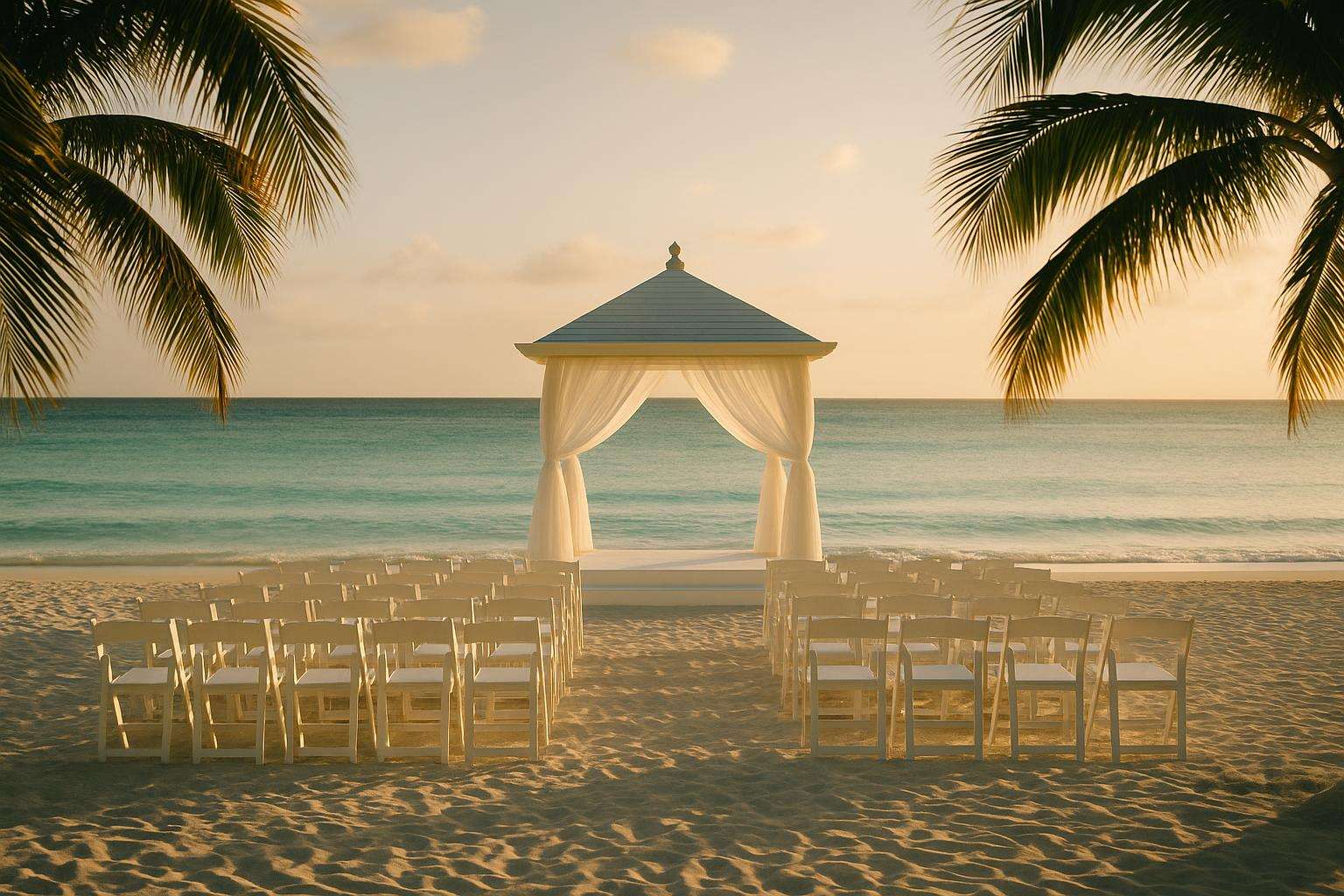
A destination wedding is not one event. It is two events planned simultaneously by the same two exhausted people: the wedding you have imagined for years, and the four-day group trip you are asking 20 to 70 people to take on your behalf. The couples who pull it off gracefully understand this from day one. They plan for their guests with the same care they plan the ceremony — because a destination wedding lives or dies on the guest experience.
The demand is real and mainstream now: 31% of all US weddings are destination weddings, and 54% of travel advisors reported an increase in destination-wedding inquiries in the year ending February 2026, according to Fora Travel's 2026 report. What separates a destination wedding from an elopement is precisely the group dimension — and that dimension is where the planning really happens.
The 18-Month Timeline (For You And For Them)
Destination planning runs on a longer lead time than a domestic wedding, currently averaging about 17.8 months per Destify's 2026 data. The critical path:
18 months out: Lock the three decisions that determine everything else — approximate guest count, budget range, and date window. Begin researching legal marriage requirements for your target destinations.
12 months out: Book the venue (peak-season Saturdays at top Mexico and Caribbean resorts are routinely booked 12–18 months ahead). Send save-the-dates now — a full year, versus six to eight months for a domestic wedding, because guests need runway to arrange leave, renew passports and budget. Execute the room-block contract.
9–12 months out: Hire the two professionals a destination wedding requires — the on-site planner and the travel advisor. The travel advisor is compensated by the resort, not you, and manages the entire guest-travel layer.
6–9 months out: Guest coordination begins in earnest. The advisor books individual guests into the block. You distribute a guest travel guide covering passports, airports, transfers, accommodation and a preliminary schedule.
3–6 months out: Send formal invitations (3 months prior), finalize any legal documentation, plan welcome bags, and lock seating, menus and vendor timelines.
Week of: Deliver welcome bags, walk the vendor timeline, hold the rehearsal, and — most importantly — greet your guests at the welcome party.
The Room Block: Your Central Financial Lever
The room block is the single most important instrument in destination-wedding planning, and it is widely misunderstood. Post-pandemic resort occupancy is high enough that couples rarely get a meaningful discount on the nightly rate. The value lives entirely in the perks that unlock as the block grows:
- Complimentary events: hosted cocktail receptions, a rehearsal-dinner credit or a day-after brunch, typically unlocking at 10–30 rooms.
- Free room credits: some resorts (UNICO in the Riviera Maya, for example) give one free room per 12–15 booked, up to three or four rooms.
- Suite upgrades: the couple is frequently upgraded to a suite or butler-service category on meeting the minimum.
A room block for 75 guests represents roughly $45,000 in total room revenue at $300–$400 per night for about four nights, which explains why resorts compete so hard for it. This is exactly the leverage your travel advisor negotiates on your behalf.
| Resort family | Region | Room-block perk structure |
|---|---|---|
| Sandals / Beaches | Caribbean (all-inclusive, adults-only / family) | WeddingMoon credits scale with room nights; ceremony infrastructure included in the all-inclusive rate |
| Hyatt Ziva / Zilara | Cancun, Punta Cana | Complimentary event thresholds; package pricing per guest count |
| Secrets / Dreams (AMResorts) | Cancun, Punta Cana, Riviera Maya | Complimentary ceremony with qualifying block; free nights at threshold bookings |
| UNICO | Riviera Maya | Free room credit per 12–15 rooms — strongest block ROI |
Where Couples Actually Go
Three destinations dominate the mainstream all-inclusive tier. Cancun and the surrounding Riviera Maya form the highest-volume corridor in the world; Mexico hosts over 25,000 destination weddings a year. Punta Cana in the Dominican Republic offers the lowest entry price points, with all-inclusive packages from roughly $1,000 to $5,000. And the Sandals group — spanning Jamaica, Saint Lucia, Antigua and the Bahamas — built its brand on the couples market, folding ceremony coordination, officiant, bouquet, cake and planner into the all-inclusive rate, as detailed on the Sandals weddings page.
Beyond the all-inclusive tier sit the boutique and luxury options — Tuscan villa estates, Santorini caldera venues, Amalfi cliffside hotels — where independent vendor coordination replaces the packaged simplicity of a resort. Those cost more and demand a local planner, but deliver a bespoke experience an all-inclusive cannot. The right tier depends on your guest count, your budget and how much coordination you are willing to own.
Welcome Events: The Guest-Experience Engine
The welcome event is where the two experiences — yours and theirs — first merge, and it sets the tone for the entire weekend. It is also the single highest-leverage thing you can do for guests who traveled thousands of miles for you. A hosted welcome cocktail or beach party on the first evening lets everyone meet, breaks the ice between the two families, and repays your guests' effort with immediate hospitality.
Structure the weekend as an arc: a welcome party the first night, the ceremony and reception as the centerpiece, and a farewell brunch to close. Between anchored events, leave deliberate downtime — guests booked a vacation, not a schedule, and over-programming is a common and resented mistake. Build a simple wedding website with all travel specifics (airports, transfers, room-block link, schedule) so guests are never guessing, per Zola's destination checklist.
What Your Guests Actually Spend — And Why It Matters
Guests typically spend $1,300 to $2,800 per person to attend, covering their own accommodation and flights. Understanding this number is not just etiquette — it is planning intelligence. It explains the 50–70% attendance rate, it justifies covering at least one group event, and it should shape your invite list: inviting people you know cannot afford the trip creates awkwardness for everyone. The travel advisor's ability to secure a competitive block rate directly lowers this per-guest number, which in turn raises attendance. Guest cost management is couple strategy, not an afterthought.
The Honeymoon Handoff
One quiet advantage of the destination wedding: you are already there. The most common and elegant move is to stay on after guests depart — a suite move, a private first dinner, and the transition from wedding mode to honeymoon mode without a single additional flight. Some couples relocate to a nearby adults-only property for contrast. Either way, the destination wedding is upstream of the honeymoon, and planning them as one continuous trip is both cheaper and more relaxing than treating them as separate events.
The couples who look back on their destination wedding without regret are, almost universally, the ones who planned generously for their guests. Do that — the timeline, the block, the welcome events, the honest guest-cost math — and the day itself takes care of the rest.
Frequently asked
How far in advance should we send save-the-dates for a destination wedding?
Twelve months, roughly double the six-to-eight-month lead time for a domestic wedding. Your guests are not just clearing a Saturday — they are arranging annual leave, renewing passports, booking flights and budgeting for a vacation-scale expense of roughly $1,300 to $2,800 per person. A 12-month save-the-date gives them the runway to say yes, which matters because destination-wedding attendance runs only 50 to 70 percent of the invited list. Send the save-the-date with the destination, the date window and a link to your wedding website so guests can start planning immediately, then follow with formal invitations about three months out.
Who pays for what at a destination wedding?
The traditional and widely accepted split: the couple pays for the wedding itself — ceremony, reception, their own travel, and typically a welcome event — while guests pay for their own flights and accommodation. Guests generally spend $1,300 to $2,800 out of pocket to attend. Because you are effectively asking guests to fund a vacation to celebrate you, most couples cover at least one hosted group event (a welcome party or farewell brunch) and skip a registry or gift expectation. Some couples subsidize a group activity or the airport transfer. What you should not do is expect guests to cover any part of the wedding costs — that etiquette line is firm.
Do we need both a wedding planner and a travel advisor?
For a group of any real size, yes — they do different jobs. The on-site wedding planner (often the resort's coordinator) manages vendors, timeline, décor and the ceremony itself. The travel advisor manages the group layer: negotiating the room-block contract, coordinating each guest's booking, arranging airport transfers and handling the travel logistics that quietly consume your time. Critically, a destination-wedding travel advisor is compensated by the resort, not by you, through booking commissions — so adding one costs you nothing and removes an enormous logistical burden. Specialist advisors are searchable through the Destination Wedding & Honeymoon Specialists Association (DWHSA).
What is a room block and why does it matter?
A room block is a group booking commitment you arrange with the resort — a set number of rooms held for your guests, usually at a group rate. The counterintuitive truth is that in the current high-occupancy market you rarely get a real discount on the nightly rate. The value is in the perks that unlock as your block grows: complimentary welcome cocktails or a rehearsal dinner credit, a free room credit for every 12 to 15 rooms booked at some resorts, and a suite upgrade for the couple. A hotel room block for 75 guests represents roughly $45,000 in total room revenue, which is why resorts throw substantial perks at couples who deliver it.
Should we have a legal or a symbolic ceremony abroad?
Most couples marrying abroad choose a symbolic ceremony at the destination and complete the legal marriage at home, before or after the trip. A legal ceremony abroad requires pre-travel documentation — notarized birth certificates, apostilles, official translations — plus $200 to $500 in fees and a minimum pre-arrival residency stay (typically three business days in Mexico, for example). A symbolic ceremony is identical in meaning and emotion, has no paperwork, and lets you exchange vows exactly where and when you want. Handle the legal marriage as a quick courthouse formality at home and keep the destination day purely about the celebration.
What goes in a destination wedding welcome bag?
Budget $20 to $50 per room (not per guest). Core inclusions: reef-safe sunscreen, SPF lip balm, electrolyte packets, local snacks, a printed itinerary and a personal welcome note. The logistics rule that saves money and sanity: buy bulky liquids like bottled water and local spirits on arrival to avoid airline weight fees and customs issues, and pack lightweight flat items in your checked luggage. Most resorts will deliver bags to guest rooms at check-in for a $3 to $5 fee, or you can hand them out personally at the welcome party — which doubles as a warm first impression for the weekend.