The Milestones
Driveable Mini-Moons by Major City: Weekend Escapes Within 3 Hours
No airport, no passport, no time-zone recovery. If you live in a major US city, a romantic newlywed escape is almost certainly within a three-hour drive. Here's where to point the car from New York, LA, Chicago, Atlanta and Dallas.
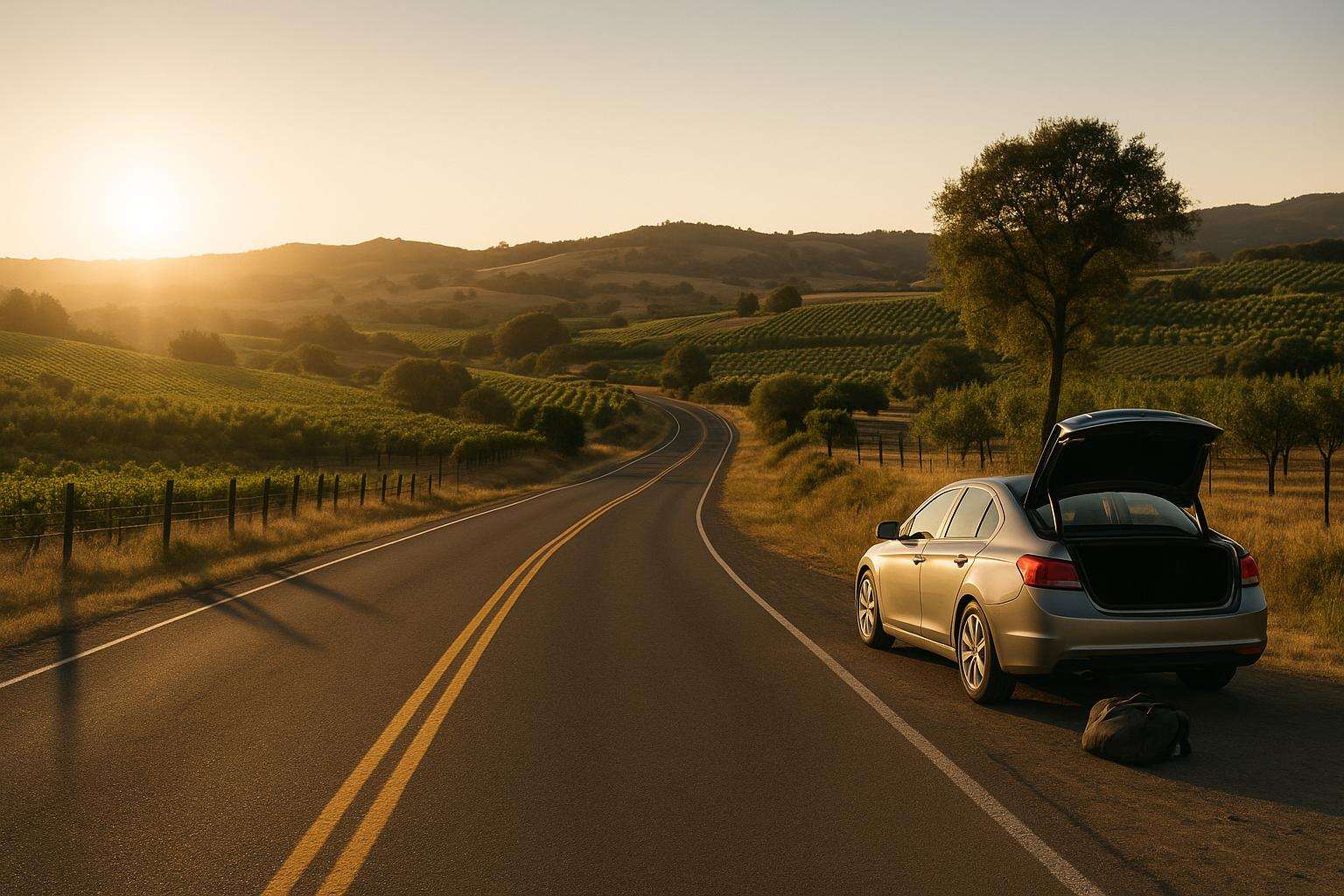
The most underrated mini-moon is the one where you never see an airport. After the marathon of wedding week, the last thing many newlyweds want is a 5 a.m. TSA line and the anxiety of a flight that could strand them the morning after their reception. A driveable mini-moon removes all of it: you leave when you want, you bring whatever fits in the trunk, and you can be checked in and pouring a glass of wine before dinner. Given that only 12% of couples specifically set out to take a mini-moon — most, per Guides for Brides survey data, back into it because a big trip is impractical on a 48-hour runway — the drive-to escape is often the most realistic option on the table.
The good news: if you live in almost any major US metro, a genuinely romantic escape is within roughly three hours of your driveway. Below, five city-by-city playbooks with real destinations, drive times and 2026 price anchors. The rule throughout is a three-hour ceiling each way — far enough to feel like a getaway, close enough that the drive never becomes the trip.
The three-hour rule: Keep each leg under about three hours. It lets you leave after a slow morning, arrive for a sunset dinner, and come home relaxed instead of road-weary. Anything farther is usually better as a short flight or saved for the megamoon.
From New York City
New Yorkers are spoiled for romantic drives. The Hudson Valley tops the list — roughly 90 minutes to two hours up the Taconic to Rhinebeck, Hudson or the Catskills, where converted farmhouses and design-forward inns sit among orchards, antique shops and farm-to-table restaurants. Fall foliage is the marquee season, but spring bloom and summer are quieter and cheaper. The Berkshires in western Massachusetts (about 2.5 to 3 hours) layer in Tanglewood, art museums and mountain spas. For a beach-leaning escape, the North Fork of Long Island — the calmer, wine-country cousin to the Hamptons — is about two to three hours depending on traffic, with tasting rooms and waterfront inns. Expect $250 to $450 a night for a good boutique inn across all three.
From Los Angeles
Santa Barbara, the self-styled American Riviera, is the classic LA mini-moon — about 90 minutes to two hours up the coast, per Visit California, with Spanish-revival architecture, urban wine tasting on the Funk Zone's Urban Wine Trail, and beachfront resorts. Just inland, the Santa Ynez Valley (Los Olivos, Solvang) adds proper wine country within the same drive. South and east, Palm Springs and the greater Coachella Valley (about two hours) deliver mid-century desert glamour, pools and spas — best October through April before the summer heat. Ojai (about 90 minutes) is the quiet, wellness-forward pick. Boutique and resort rates in these areas commonly run $300 to $600 a night in season.
From Chicago
Lake Geneva, Wisconsin is Chicago's closest romantic resort town — about 90 minutes north, a compact lakeside escape with historic resorts, a walkable shore path and spa treatments. Galena, Illinois (about 2.5 to 3 hours west) offers a preserved 19th-century Main Street, rolling driftless-region hills and cozy B&Bs. Saugatuck and the Michigan lakeshore (roughly 2 to 2.5 hours around the lake) bring dune beaches, a small arts-town scene and lakefront inns; summer and early fall are peak. Door County is beautiful but pushes past the three-hour rule at around four-plus hours, so save it for a longer trip. Expect $200 to $400 a night for a quality inn.
From Atlanta
Atlanta's romantic drives climb into the Blue Ridge Mountains. Blue Ridge, Georgia and the north-Georgia mountains are about 90 minutes to two hours away, with cabin rentals, wineries and access to the Blue Ridge Parkway corridor. Greenville, South Carolina (about 2 to 2.5 hours) has quietly become one of the Southeast's best small-city getaways — a revitalized downtown, a scenic river park with a suspended waterfall bridge, and excellent restaurants. Chattanooga, Tennessee (about two hours) pairs outdoor adventure — Lookout Mountain, the Tennessee River — with a walkable downtown. Serious mountain-and-craft-culture couples can reach Asheville, North Carolina in about 3 to 3.5 hours, right at the edge of the rule. Rates run $200 to $450 a night, with cabins often cheaper.
From Dallas
The Texas Hill Country is Dallas's answer — Fredericksburg and the Hill Country wine trail sit about 4 to 4.5 hours south, which stretches the rule, but Waco and the shorter drives south soften the trip. Closer in, the Hill Country town of Granbury and the lakes west of Fort Worth are under an hour. For a full romantic weekend within about three hours, Austin (roughly three hours) delivers a boutique-hotel and dining scene with the Hill Country's edge, while Hot Springs, Arkansas (about 4.5 hours) and Broken Bow, Oklahoma's luxury cabin scene (about 2.5 to 3 hours) are increasingly popular Texas escapes — Broken Bow in particular has built a reputation for hot-tub A-frame cabins tailor-made for a low-key mini-moon. Cabin and boutique rates run $200 to $400 a night.
Making the most of the drive
A driveable mini-moon rewards a little front-loading. Book a property where you can park once and walk to everything, so the car sits idle after arrival. Favor refundable rates, because wedding week has a way of running long and the ability to shift a driveable trip by a day is one of its best features. Pack the trunk the night before — champagne, gifts, comfortable clothes — and leave after a slow breakfast rather than at dawn; three hours is short enough that a mid-morning departure still lands you at your destination in time for a leisurely first evening as newlyweds.
Frequently asked
How far is too far to drive for a mini-moon?
For a 2-to-3-night mini-moon, a good ceiling is about three hours of driving each way. Beyond that, the drive starts eating meaningfully into a short trip — a four-hour haul on a Friday night after wedding week, then again on the return, can leave you feeling like you spent the weekend in the car rather than with each other. Three hours keeps the door-to-door effort low enough that you can leave after a slow morning and still arrive for a sunset dinner. If your ideal spot is four or five hours out, consider whether a short flight is actually the lower-stress option, or save that destination for the longer megamoon later.
Why choose a driveable mini-moon over flying?
The whole point of a mini-moon is decompression after the exhausting logistics of a wedding, and a car trip strips out the highest-friction parts of travel: no airport, no security line, no baggage limits, no risk of a delayed or cancelled flight stranding you the day after your wedding. You control your own schedule, you can bring wedding gifts, champagne or a dog, and you can leave and return exactly when you want. It is also usually cheaper — you skip airfare entirely and often the rental car too. For couples who are simply worn out, the ability to point the car and go, with no gate agents involved, is the entire appeal.
When should I book a driveable mini-moon?
Driveable mini-moons are the most bookable-late destinations in the category because they sidestep flight availability and pricing volatility. You can often lock a quality inn 2 to 4 weeks out, especially midweek or in shoulder season. That said, the best boutique properties in popular escapes — Hudson Valley in fall foliage, Santa Barbara in summer, Texas Hill Country during wildflower season in spring — do sell out on weekends, so if your dates are fixed by the wedding, book as soon as you know them and favor refundable rates in case wedding week runs long. The flexibility to shift a driveable trip by a day is one of its quiet advantages.
What should I look for in a driveable mini-moon property?
Prioritize the same couples-forward amenities that define any good mini-moon property: no children's programming, a spa or in-room soaking tub, romantic on-site or nearby dining, and a location where you can park once and not drive again. Because you are already road-tripping, a property with walkable surroundings — a wine-country inn near tasting rooms, a mountain lodge on a trailhead, a small-city boutique hotel in a historic district — lets you leave the car keys in the room. Ask whether the property offers a honeymoon or celebration package; many independent inns will add sparkling wine, a late checkout or a room upgrade if you mention you were just married.
Are driveable mini-moons cheaper than fly-to ones?
Generally yes, and the savings come from more than just skipped airfare. You avoid checked-bag fees, airport parking or rideshares, and often a rental car at the destination. That freed-up budget can be redirected into a nicer room or an extra spa treatment, which is why a driveable weekend can feel more indulgent than a flown one at the same total cost. A driveable weekend mini-moon typically runs $800 to $1,800 per couple all-in — a boutique inn at $250 to $350 a night for two nights, plus meals and a couple of activities. The main variable cost is fuel and any tolls, which are trivial next to a pair of last-minute plane tickets.