The Milestones
Elope-Moon: How to Combine Your Ceremony & Honeymoon in One Destination
The elope-moon folds the ceremony and the honeymoon into a single trip. Here is how to structure the itinerary, sequence the paperwork, and choose a destination that does both jobs well.
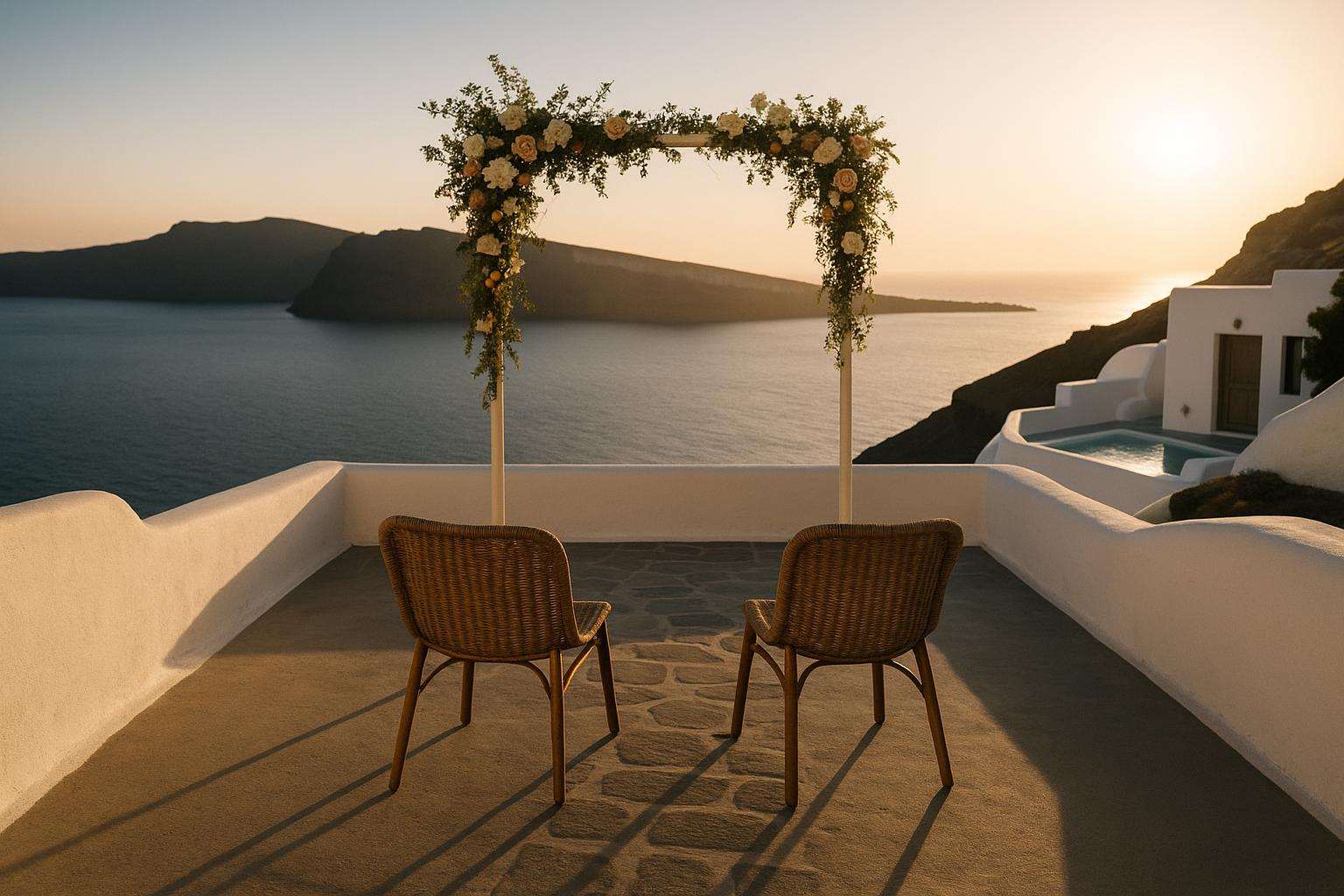
For a growing share of couples, the honeymoon is the wedding. The elope-moon — a single trip that folds the ceremony and the honeymoon into one destination — has moved from a clever hack to a named category, cited by Fora Travel as among the most advisor-reported wedding-travel patterns of 2026. It answers a question more couples are asking out loud: why spend $33,000 hosting a crowd, then spend again to escape afterward, when you could do both at once — and better?
This guide is the practical version of that idea. Not the case for eloping (the numbers make it themselves) but the mechanics: how to sequence the trip, when to handle the legal marriage, and how to pick a place that genuinely does both jobs.
What exactly is an elope-moon, and who is it for?
An elope-moon is an intentional design decision, not a compromise. Rochelle Cheever of The Elopement Experience told Forbes that more than 60% of engaged couples would consider eloping and roughly 26% feel they are spending too much on a traditional wedding — and that the modern luxury elopement is a fully designed, multi-day experience, not a rushed courthouse visit. The elope-moon extends that logic one step further: once the ceremony is a destination experience, the honeymoon is simply the days that follow, in the same place.
It suits couples who already lean intimate — the roughly one in six who now choose a "just the two of us" ceremony over a reception — and who would rather invest the wedding budget in the trip itself. It is also a strong fit for couples marrying later, or for second marriages, where a large traditional wedding holds less appeal than a meaningful, private, beautifully executed few days abroad.
How do you structure an elope-moon itinerary?
The governing principle is simple: put the ceremony early, then let the honeymoon breathe. A reliable 9-to-12-night template looks like this:
- Days 1–2: Arrive, recover from travel, settle any local paperwork, and do a location scout with your photographer if the ceremony is outdoors.
- Day 2 or 3: The ceremony — timed to the best light and, for permit-dependent locations, the confirmed permit window.
- Days 4 onward: The honeymoon proper. Move to a second setting if you want variety, or simply slow down where you are.
Two-leg elope-moons are increasingly popular because they map cleanly onto the ceremony-then-celebration arc. A couple might exchange vows at a Tuscan vineyard villa, then relocate to the Amalfi Coast for a week of boat days and long dinners. Or hold an Icelandic waterfall ceremony, then spend the honeymoon circling the Ring Road's glaciers and lagoons. The ceremony leg is short and intense; the honeymoon leg is long and unhurried.
When should the legal marriage happen?
This is the single most important logistical decision, and it splits into two clean paths.
Path one — legal at home, symbolic abroad. You quietly complete the legal marriage at a courthouse before you fly, then hold a symbolic ceremony at the destination. This is the lowest-friction option for most international elope-moons: no residency requirement, no document apostille, no processing delay eating into your trip. The destination ceremony is emotionally identical — the difference is purely administrative.
Path two — legal at the destination. A short list of countries make foreign-couple marriage genuinely easy: Iceland, Scotland, Denmark and Gibraltar all process it in days once paperwork is lodged, and Nevada issues a US license with no waiting period. If a legally binding ceremony in the destination matters to you, choose one of these low-friction jurisdictions rather than a country (like Italy) that imposes prior-residence and documentation hurdles.
Decide the legal path before you book anything. It determines your document lead time, whether you need a local registrar or coordinator, and even which destinations stay on your shortlist. Symbolic-abroad + legal-at-home is the default that keeps the trip simple; legal-abroad is worth it only in the handful of countries that process it fast.
Which destinations do both jobs best?
The best elope-moon destinations are places that are already world-class honeymoons — then you add the ceremony. Four consistently deliver:
| Destination | Ceremony setting | Honeymoon depth | Legal note |
|---|---|---|---|
| Santorini, Greece | Caldera-rim terrace at sunset | Cave suites, wine country, Mykonos second leg | Usually symbolic; legalize at home |
| Maui, Hawaii | Beach or upcountry; no passport needed | Wailea/Kaanapali resorts, whale season Dec–Mar | US license, straightforward |
| Iceland | Waterfall, black-sand beach, glacier plain | Ring Road glaciers, lagoons, northern lights (Sep–Mar) | Legal marriage genuinely easy for non-residents |
| Tuscany, Italy | Vineyard or villa; symbolic | Slow-food touring, pairs with Amalfi Coast | Legal has residency hurdles; symbolic + home-legal |
Resort infrastructure can make an elope-moon almost turnkey. On Maui, the Montage Kapalua Bay's intimate ceremony package starts around $7,500 for the ceremony space and coordinator, with photography and dinner added on, per The Knot's elopement-package roundup — after which you simply stay for the honeymoon. In the Caribbean and Mexico, all-inclusive brands fold a legal ceremony, officiant, bouquet, and cake into the nightly rate, so the ceremony is effectively bundled into the honeymoon stay.
The honest tradeoffs
An elope-moon is not free of friction. The biggest is family: choosing to marry privately abroad can disappoint parents and close friends who expected to be present, and the resentment is real if it is not handled with care. Many couples soften this with a small at-home celebration weeks later, or by streaming the ceremony live for family who cannot attend. Weather is the second risk — an outdoor ceremony in Iceland or a national park can be rained or snowed out, so build a backup date and buy travel insurance with trip-cancellation and, ideally, Cancel For Any Reason coverage. Finally, a two-in-one trip concentrates a lot of emotional and logistical weight into one window; the fix is to keep the ceremony day light and let the honeymoon days stay genuinely unstructured. Done thoughtfully, though, the elope-moon delivers exactly what its enthusiasts promise: the wedding you actually wanted, and the honeymoon you always meant to take, in one uninterrupted trip.
Frequently asked
What is an elope-moon?
An elope-moon is a single trip that combines the elopement ceremony and the honeymoon in one destination, rather than treating them as two separate events. The couple travels to a place they love, holds an intimate ceremony (legal or symbolic), and then simply stays on to honeymoon in the same region. Fora Travel names it among the most advisor-reported wedding-travel patterns of 2026. The appeal is efficiency and coherence: one set of flights, one destination to research, one block of time off work, and a seamless emotional arc from vows straight into celebration. It suits couples who already dislike the idea of a large wedding and would rather spend the wedding budget on the experience itself — the landscape, the stay, and uninterrupted time together.
Should we get legally married before the elope-moon or during it?
It depends entirely on the destination's marriage laws. The cleanest approach for most international elope-moons is to complete the legal marriage quietly at home (a courthouse ceremony days or weeks before you fly) and hold a symbolic ceremony at the destination, which requires no local paperwork. This removes residency requirements, document translation, and processing delays from your trip. Alternatively, a handful of countries make legal marriage genuinely easy for non-residents — Iceland, Scotland, Denmark and Gibraltar all process foreign-couple marriages in days rather than weeks. For US domestic elope-moons, states like Nevada issue a license with no waiting period. Decide this first, because it determines whether your ceremony day is a legal event or a celebration of one already completed.
How long should an elope-moon be?
Most couples plan a 7-to-12-night elope-moon, with the ceremony landing early in the trip so the days after become a true honeymoon. A common structure is a ceremony on day two or three (after you have arrived, rested, and dealt with any paperwork or a photographer's timeline), followed by five to ten nights of honeymoon. Shorter three-to-five-night versions work for domestic destinations where travel is quick, but they compress the honeymoon into a long weekend. Longer trips let you split the itinerary across two settings — for example, ceremony in the Tuscan countryside, then a coastal honeymoon leg on the Amalfi Coast, or an Iceland ceremony followed by a Reykjavik-and-glacier honeymoon week.
Is an elope-moon cheaper than a traditional wedding plus a separate honeymoon?
Almost always, and often dramatically so. The US traditional wedding averaged $33,204 in 2025 per The Knot, and roughly 89% of couples who elope report saving more than $10,000 versus a full wedding, with median savings around $22,500. Because the elope-moon folds the ceremony into the honeymoon trip, you also avoid duplicating travel, accommodation, and time off. A well-planned international elope-moon typically lands in the $10,000–$20,000 range all-in — ceremony, photography, flights, a luxury stay, and experiences — which is comparable to what many couples spend on a honeymoon alone. The savings come from not hosting 150 guests, not renting a reception venue, and not buying catering, florals, and entertainment at scale.
Which destinations are best for an elope-moon?
The best elope-moon destinations pair a photogenic ceremony setting with genuine honeymoon depth so you never have to leave. Santorini delivers caldera-view ceremonies and cave-suite honeymoons in one place. Maui offers beach or upcountry ceremonies plus the Wailea resort corridor for the honeymoon days. Iceland gives adventure couples waterfall and black-sand ceremonies with a straightforward legal path and a glacier-and-lagoon honeymoon week. Tuscany combines vineyard-villa symbolic ceremonies with slow-food honeymoon touring, and pairs neatly with an Amalfi Coast second leg. The common thread: choose somewhere that is already a bucket-list honeymoon, then add the ceremony to it — not the reverse.