The Milestones
Minimoon Now, Megamoon Later: How to Plan a Phased Honeymoon
The two-phase honeymoon has gone mainstream: a short escape right after the wedding, a bucket-list trip once you've recovered your energy and savings. Here's how to plan both without overpaying for either.
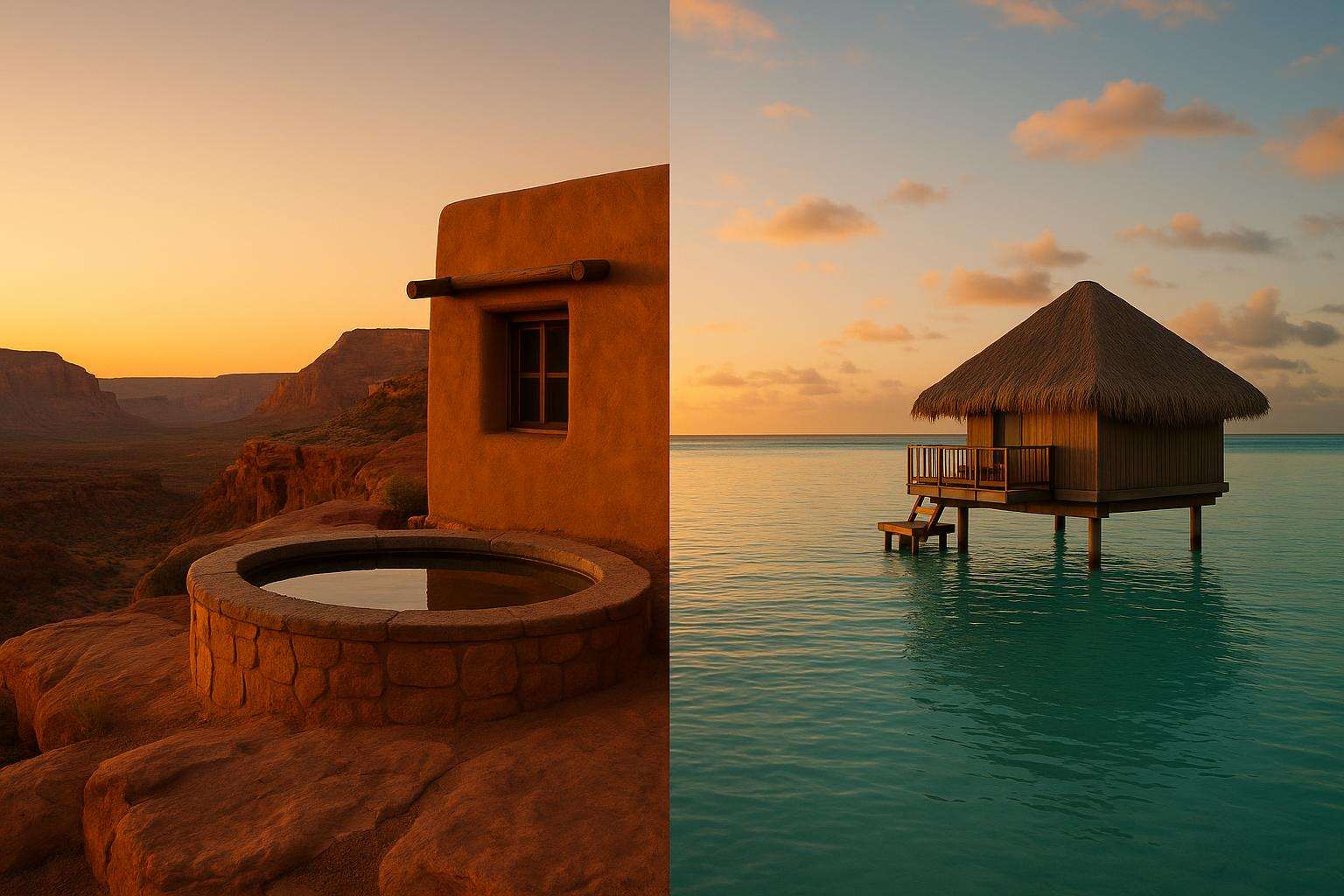
For most of the last century, the honeymoon was a single event: you got married, you flew somewhere warm, you came home tanned and broke. That model is quietly breaking apart. Couples are increasingly splitting the honeymoon into two trips — a short escape right after the wedding, and a bigger, farther, better-planned trip months later. The wedding industry has a name for it now: the phased honeymoon, or duo-moon. The shorthand you will see everywhere is minimoon now, megamoon later.
This is not a fringe habit. Fora Travel's 2026 Wedding and Honeymoon Report found that 59% of couples now take a minimoon immediately after the wedding while reserving the larger trip for later, and Expedia survey data cited across the travel trade shows 83% of engaged couples say they want exactly this two-trip structure. If you are feeling pulled in two directions — wanting to get away right now but also dreaming of a bucket-list trip you cannot yet afford or schedule — you are not indecisive. You are describing a phased honeymoon.
Why the two-phase honeymoon makes sense
The logic is almost entirely practical. Weddings in the US now average $30,000 to $35,000 and 12 to 18 months of planning. By the time the last guest leaves, most couples are financially and emotionally depleted, and many have burned through their PTO on the wedding itself. Trying to execute a polished 10-night international honeymoon on that foundation — on a 48-hour runway, with a drained savings account and no flexibility — is a recipe for a stressful, overpriced trip.
The Guides for Brides survey on why couples delay the full trip reads like a checklist of these pressures: 31% said it is more relaxing not to travel immediately, 24% needed time to save, 22% were waiting for the optimal season at their destination, and 20% wanted more planning time. The phased structure resolves every one of those. The minimoon delivers the emotional payoff — the first private days as a married couple — in a low-logistics format you can actually pull off, and the megamoon gets the money, the season and the planning it deserves.
The core idea: Don't force one trip to do two jobs. Let the minimoon handle immediate decompression and romance; let the megamoon handle the bucket-list dream. Budget and book them on separate timelines.
Phase 1: The minimoon
The minimoon is a 2-to-4-night escape taken within days of the wedding. The defining constraints are simplicity and proximity: driveable or a single short flight, a property that handles the details for you (spa, dining, a concierge), and experiences that need no advance booking. This is not the trip to fly 20 hours to a resort you researched for six months — it is the trip where you sleep in, get a couples massage, and eat somewhere lovely without a plan.
Domestic destinations dominate here for good reason: no passport, no long-haul flight, no time-zone wreckage, and you can be home in 72 to 96 hours. Sedona, Arizona is a canonical example — 45 minutes from Phoenix's Sky Harbor, with red-rock spa resorts like the Enchantment Resort (from roughly $600/night as of 2026) where the entire itinerary is a hike, a soak and a sunset. Wine country (Napa, Sonoma, the Finger Lakes), mountain towns (Asheville, Stowe), and charming Southern cities (Charleston, Savannah) all serve the same function. Budget-wise, a weekend minimoon runs about $800 to $1,800 per couple; a slightly more elevated 3-to-4-night version with a flight and spa treatments runs $2,000 to $4,500.
Because you are booking on a short runway with wedding logistics still in flux, prioritize refundable rates. A non-refundable deal is a false economy if a wedding-week complication forces you to move it.
Phase 2: The megamoon
The megamoon is the trip the honeymoon fantasy was always about: the overwater bungalow, the safari, the multi-stop European rail journey, the long-haul beach paradise. It is deferred 3 to 12 months so you can fund it from recovered savings, take it in the destination's peak season, and plan it with a clear head. This is where the full honeymoon budget lives — roughly $5,000 to $15,000-plus per couple — and where premium properties like an overwater villa in the Maldives or Bora Bora earn their splurge.
The counterintuitive scheduling rule: book the megamoon first. Flagship resorts in the Maldives, French Polynesia and the Amalfi Coast fill their best rooms 6 to 12 months out, and the honeymoon-defining suites go earliest. Reserve those dates and that property — even before the wedding if you can — then slot the minimoon into the immediate post-wedding window around it. Waiting until after the wedding to start megamoon research is how couples end up with the second-choice room in the wrong month.
How to budget for both without overspending
Two trips cost more than one — there is no way around it. UK data from Aviva puts the average minimoon at about £3,438 (~$4,300), and the subset of couples booking both an overseas minimoon and a full honeymoon spends around £8,861 combined. But the phased structure is friendlier to cash flow than a single mega-trip, because you split the spend across a wider window.
| Element | Minimoon (Phase 1) | Megamoon (Phase 2) |
|---|---|---|
| Timing | 0–4 days after wedding | 3–12 months later |
| Duration | 2–4 nights | 7–14 nights |
| Distance | Drive or short flight | Long-haul / bucket-list |
| Typical spend (per couple) | $800–$4,500 | $5,000–$15,000+ |
| Booking runway | 4–8 weeks, refundable | 6–12 months, book first |
| Job it does | Decompress + romance | Bucket-list dream |
A practical sequence: (1) Decide the megamoon budget and destination first, since it is the larger and less flexible number. (2) Size the minimoon to what you can spend comfortably in the weeks right after the wedding — keep it modest and domestic if the megamoon is ambitious. (3) Use a honeymoon fund or registry to help underwrite the megamoon, and keep the minimoon on cash or points so you are not carrying a balance into married life.
Should you do a phased honeymoon at all?
Not every couple should split the trip. If you have the PTO, the savings and the energy to take one great honeymoon right after the wedding, do that — a single well-executed trip is simpler and often cheaper than two. The phased structure earns its keep specifically when at least two of these are true: your budget is stretched by the wedding, your PTO is depleted, your dream destination is out of season in your wedding month, or you simply cannot face a long-haul flight 48 hours after the reception. If that describes you, the minimoon-now-megamoon-later model is not a compromise — it is the smarter design.
Frequently asked
What is a phased honeymoon?
A phased honeymoon splits the celebration into two distinct trips instead of one. The first phase, the minimoon, is a short 2-to-4-night escape taken immediately after the wedding — usually somewhere driveable or a single short flight away — to decompress and enjoy the first private time as a married couple. The second phase, the megamoon, is the longer bucket-list trip, deferred 3 to 12 months while you recover your PTO, rebuild savings and plan properly. Travel advisors also call it a duo-moon. Fora Travel's 2026 report found 59% of couples now opt for a minimoon immediately post-wedding while reserving the larger trip for later, and Expedia survey data shows 83% of engaged couples want this two-trip structure.
Why do couples delay the full honeymoon?
The reasons are practical and emotional. In Guides for Brides survey data, 31% of couples said it is simply more relaxing not to travel immediately after the exhausting wedding day; 24% needed more time to save money; 22% were waiting for the optimal season at their dream destination; and 20% wanted more planning time. Only 12% specifically set out to take a minimoon first. In short, most couples do not plan a phased honeymoon on principle — they arrive at it because a full international trip on a 48-hour runway, with depleted savings and PTO, is genuinely hard to pull off well. Splitting the trip solves all four constraints at once.
How much does a phased honeymoon cost compared to one trip?
Doing both trips costs more in total than a single honeymoon, but each individual outlay is smaller and better-timed. A domestic minimoon typically runs $800 to $4,500 per couple depending on tier, while the megamoon carries the full honeymoon budget of roughly $5,000 to $15,000-plus. UK data from Aviva puts the average minimoon at about £3,438 (~$4,300), and the sub-group of couples booking both an overseas minimoon and a full honeymoon spends around £8,861 combined. The key advantage is cash flow: you spend a smaller sum right after the wedding when finances are tight, then fund the big trip later once you have recovered. Budget the megamoon first, then size the minimoon to what is left comfortably.
How far in advance should I book each phase?
They run on opposite timelines. The minimoon is a fast-turnaround booking, often locked in during the final 4 to 8 weeks before the wedding — favor refundable rates and driveable or single-hop destinations with last-minute availability, since you cannot risk a booking you might need to move. The megamoon is the opposite: because it targets a specific season and premium property, you should hold or research it early, sometimes before the wedding, so you do not lose peak availability at flagship resorts in the Maldives, French Polynesia or the Amalfi Coast, which book 6 to 12 months out. A useful rule: reserve the megamoon dates and property first, then slot the minimoon into the immediate post-wedding window.
Can a minimoon lead naturally into the megamoon destination?
Sometimes, and it can be a smart way to sample before you commit. A couple who loves the desert-luxury minimoon in Sedona might build the megamoon around a longer Southwest-and-national-parks itinerary, or graduate from a Caribbean minimoon in Turks and Caicos to an overwater-bungalow megamoon in the Maldives or Bora Bora. But there is no requirement to connect them thematically — many couples deliberately contrast the two, keeping the minimoon low-key and domestic and saving the exotic long-haul trip for the megamoon. Choose the connection only if it genuinely excites you; otherwise treat each phase as its own distinct experience with its own mood.