The Milestones
National-Park Elopement Guide: Permits, Best Parks & Photographers
National-park elopements grew 45% in two years. Here is the real guide to special-use permits by park, the best parks for a ceremony, and how to hire a photographer-guide who handles the logistics.
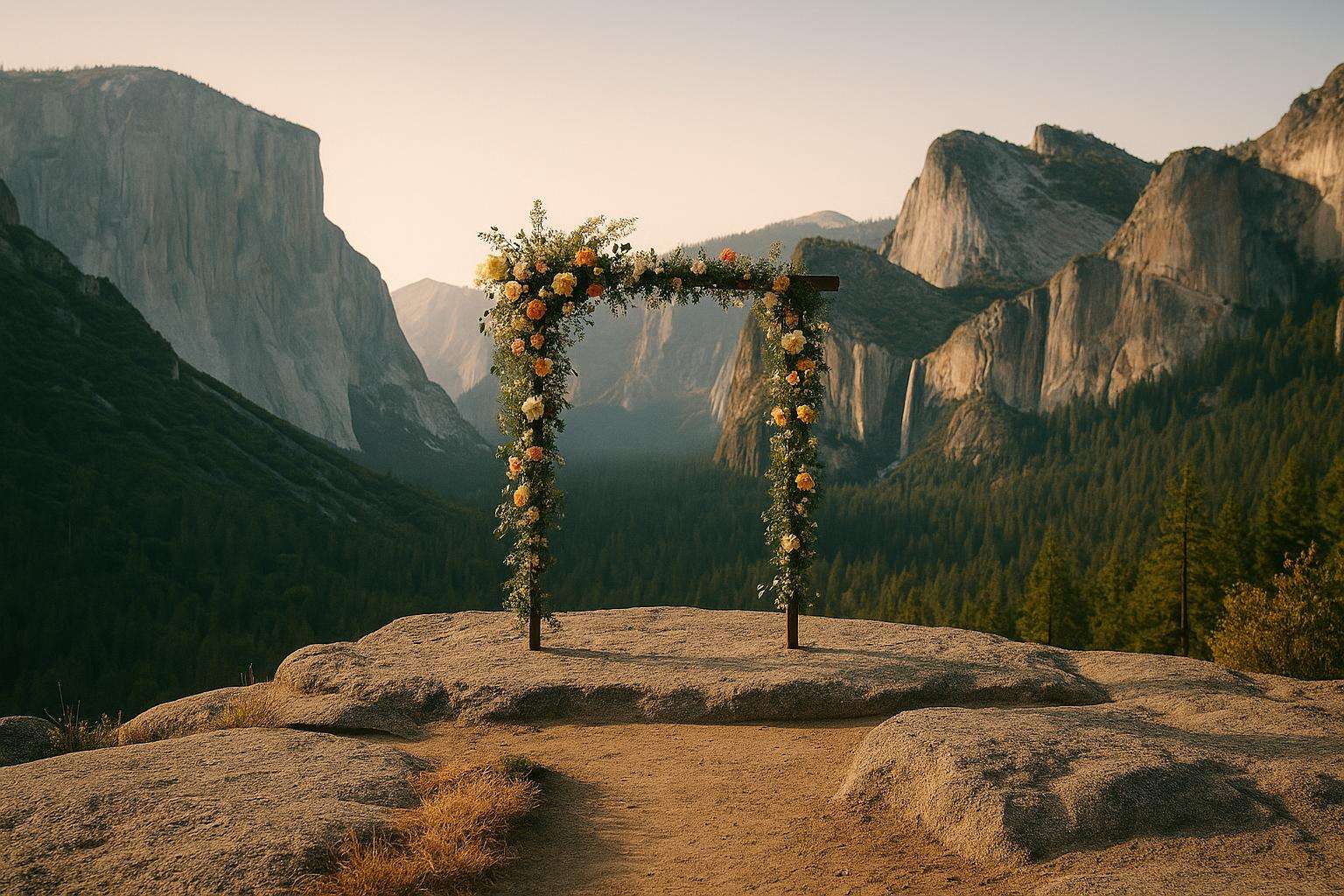
There is a reason national-park elopements grew roughly 45% between 2020 and 2022: for a fraction of a traditional-wedding budget, a couple can exchange vows beneath El Capitan, on a ridge facing the Tetons, or in the red-rock silence of Zion — backdrops that no ballroom can rival and that money largely cannot buy at a private venue. The catch is that these are protected federal lands, and marrying on them means working within the National Park Service's rules. This guide covers the three things that decide a park elopement: the permit, the park, and the photographer.
The special-use permit: what it is and why you need one
The National Park Service treats a wedding ceremony — even a two-person elopement — as a special use rather than ordinary recreation, so it requires a special-use permit (sometimes labeled a wedding or special-event permit) for a ceremony held on park land. The permit exists to designate approved ceremony locations, cap group sizes, and protect fragile areas from the wear a gathering can cause. You apply through each park's Special Park Uses office; fees, locations, and timelines are set park by park.
Do not assume any park is permit-free. A few waive permits for very small parties at specific locations, but the default is that a ceremony needs a permit, and marrying without one risks fines and a voided event. Portrait photography is often treated separately and can happen more freely; it is the ceremony itself that triggers the permit.
Permits, fees, and timelines by park
Fees are modest, but timelines are not — popular parks and summer dates book out months ahead. Here are the headline figures for the most-searched parks, drawn from each park's own NPS page.
| Park | Permit fee (approx.) | Best season | Notes |
|---|---|---|---|
| Yosemite, CA | $150 application (+ $50/hr monitoring for 30+) | Apr–Jun (waterfalls, green valley) | Apply up to 12 months ahead; no Glacier Point permits Jul–Aug |
| Grand Teton, WY | $200 wedding/elopement permit | Jun–Sep; early Oct for aspens | ~4+ weeks processing; portraits allowed park-wide |
| Zion, UT | Park-set special-use fee | Spring & fall (avoid summer heat) | Designated sites; part of the Utah red-rock cluster |
| Olympic, WA | $50 (groups over 5) | Summer for alpine; year-round beaches | Small parties can use many spots freely |
| Rocky Mountain, CO | US Forest Service / NPS special-use fee | Jun–Sep; late Sep for color | Most-booked elopement region in the US |
Yosemite's own weddings page details the $150 nonrefundable application fee and the Glacier Point summer restriction; Grand Teton's covers the $200 permit and its designated ceremony sites; and Zion's lays out its special-use process. Always read the specific park page — fees and conditions change, and each park's designated sites differ.
The permit timeline drives everything. For permit-dependent parks on summer dates, apply six to twelve months ahead; Grand Teton alone needs about four weeks to process. Lock your date and location first, apply as early as the window opens, and reserve a backup date for weather-sensitive spots. US Forest Service permits for public lands adjacent to famous parks are usually faster and can be a smart fallback.
Which park is right for your ceremony?
Match the park to both the landscape you want and the season it looks best.
- Yosemite (California): the most recognized elopement landscape in the country — granite domes, waterfalls, and soft valley light peaking April through June.
- Grand Teton (Wyoming): 13,000-foot peaks rising straight from the valley floor, spectacular June–September, with golden aspens in early October.
- Zion and the Utah red-rock cluster: canyon walls unlike anything in the eastern US, with Arches and Canyonlands nearby; best in spring and fall to avoid summer heat.
- Rocky Mountain (Colorado): the most-booked elopement region in the country, with high-alpine passes and easy access from Denver.
- Olympic (Washington): uniquely offers rainforest, alpine, glacier, and Pacific-beach settings in a single park — Ruby Beach and the Hoh Rainforest are the most requested.
- Big Sur and Sedona: a coastal-cliffs option and a red-rock desert option, respectively, both on public lands with lighter permit requirements than the marquee parks.
As a rule of thumb: high-alpine parks are June–October, red-rock deserts shine in spring and fall, and coastal settings work much of the year. Avoid peak July–August at the most congested parks — Yosemite's Glacier Point closes to permits entirely, and crowds undercut the seclusion that draws couples to elope in the first place.
Hiring an adventure elopement photographer-guide
Photography is the single largest line item in a park elopement — typically $3,500 to $7,000, and higher for remote or multi-day coverage — and it is worth it, because for many adventure couples the photographer is also the guide. Specialist adventure elopement photographers routinely handle permit applications, scout locations, time the ceremony to the best light, manage gear over difficult terrain, and build in weather contingencies as part of the package. Ask any candidate three questions: Have you shot this specific park before, and do you know its designated ceremony sites? Do you handle the permit, or is that on us? And what is your weather-and-backup-date plan? A photographer who answers all three confidently is functioning as your producer, not just your shooter.
The rules — and the ethics — of marrying on protected land
A permit is the beginning, not the end, of your obligations. Parks impose strict group-size limits, allow ceremonies only at designated locations, and prohibit anything that harms the landscape: no releasing petals, rice, birds, or balloons; no staking an arch into fragile soil or meadow; no amplified sound; and no blocking trails or overlooks that other visitors are using. You are expected to stay on durable surfaces and pack out everything you bring in. This is where Leave No Trace stops being a slogan and becomes the operating manual for your day — the reason these places remain worth marrying in is precisely that couples before you left them undamaged.
The honest tradeoffs are real. Weather can cancel an outdoor ceremony outright, so travel insurance with trip-cancellation coverage is a genuine necessity, not an upsell. Permit competition can force you to a less-iconic spot or a shoulder-season date. And the logistics — hiking in attire, carrying gear, timing light — demand more of you than a hotel ballroom ever would. But for couples who want their marriage to begin in a place that will outlast them, a national-park elopement remains one of the most meaningful, and most affordable, ways to say vows anywhere in the country.
Frequently asked
Do you need a permit to elope in a national park?
Almost always, yes. The National Park Service requires a special-use permit (often called a wedding or special-event permit) for any ceremony held on park land, even a two-person elopement, because a ceremony is treated as a special use rather than ordinary recreation. Permits designate specific approved ceremony locations, set group-size limits, and protect fragile areas. Fees and rules vary by park: Yosemite charges a $150 nonrefundable application fee, Grand Teton issues a $200 wedding permit, and Zion and others set their own fees. A few parks waive permits for very small parties at certain locations, but you should never assume a park is permit-free. Apply through the park's Special Park Uses office well ahead of your date, because popular parks and summer dates fill months in advance.
How far in advance should I apply for a national-park elopement permit?
For permit-dependent parks on popular summer dates, apply six to twelve months ahead. Yosemite accepts applications up to a year in advance and its most photogenic spots book out early; Glacier Point issues no permits at all during the July–August peak because of congestion. Grand Teton's processing takes roughly four weeks or more. Less-trafficked parks and shoulder-season dates can sometimes be secured in a few weeks, and US Forest Service permits for non-park public lands (often adjacent to famous parks) are typically faster to obtain. The safe rule: lock your date and location, then apply as early as the park's window opens. Building in a backup date is wise for weather-sensitive or permit-competitive locations.
Which national parks are best for an elopement?
The most popular are Yosemite (granite domes, waterfalls, best light April–June), Grand Teton (13,000-foot peaks rising straight from the valley, best June–September), Zion and the wider Utah red-rock cluster including Arches and Canyonlands, Rocky Mountain National Park in Colorado (the most-booked elopement region in the country), and Olympic in Washington, which uniquely offers rainforest, alpine, glacier, and Pacific beach settings in one park. Big Sur along California's coast and Sedona's surrounding public lands round out the list. Choose based on the landscape you want and the season: high-alpine parks are June–October, red-rock deserts are best in spring and fall, and coastal settings work much of the year. Match the park to both your aesthetic and the permit realities.
How much does a national-park elopement cost?
The permit itself is modest — roughly $50 to $275 depending on the park — but the total elopement lands higher because of photography and travel. A typical national-park elopement runs $5,000 to $12,000 all-in: permit ($50–$275), an adventure elopement photographer-guide ($3,500–$7,000, the single largest line item), two to three nights of lodging ($600–$2,000), travel ($400–$1,500), attire, hair and makeup, and a celebratory dinner. That is still dramatically less than the US traditional wedding average of $33,204, and most couples reinvest the savings into a better photographer and a special-stay property. Budget elopements are possible below $5,000 by choosing permit-light or permit-free public lands and shorter photography coverage.
What are the rules for an outdoor ceremony in a national park?
Beyond the permit, parks impose rules that protect the landscape and other visitors. Expect strict group-size limits, designated ceremony locations only, and prohibitions on anything that damages the environment — no releasing petals, rice, birds, or balloons, no staking arches into fragile soil or vegetation, no amplified sound, and no blocking trails or overlooks. Many parks require you to stay on durable surfaces and pack out everything you bring in. Following Leave No Trace principles is not optional; it is the ethical and often legal baseline for marrying in a protected place. Confined ceremony windows and monitoring fees may apply for larger groups. Read your specific park's special-use conditions carefully, because violations can void a permit or incur fines.