The Milestones
Room-Block & Welcome-Event Logistics for a Destination Wedding
The room block is the financial lever nobody explains properly, and the welcome party is the guest-experience payoff. Here is exactly how group rates, resort contracts and welcome events work — and how to make them earn their keep.
Two logistics decide whether your destination wedding feels effortless or exhausting: the room block and the welcome event. The first is the financial machinery that funds most of your perks; the second is the emotional payoff that repays your guests for showing up. Neither is complicated once you understand how it actually works — and almost every couple misunderstands the room block at first.
How Group Rates And Room Blocks Actually Work
A room block is a group booking commitment: the resort holds a set number of rooms for your guests, usually at a designated group rate, for a defined window. Here is the counterintuitive part, confirmed across the market and in Destify's 2026 destination-wedding data: in the current high-occupancy environment, the group rate is often barely below the public rate. Resorts do not need to discount to fill rooms.
What they will do is reward volume with perks. The room block for a 75-guest wedding represents roughly $45,000 in total room revenue — at $300 to $400 per night across about four nights — and resorts compete for that revenue with complimentary events, free nights and upgrades rather than a lower rate. So the right way to read a block offer is to add up the perks, not to compare the nightly price.
The Perk Ladder
Perks scale with room-night commitment, and the thresholds vary by resort family. The typical ladder, per All Inclusive Weddings' resort documentation:
- Complimentary events — a hosted cocktail reception, a rehearsal-dinner credit or a day-after brunch, usually unlocking somewhere between 10 and 30 booked rooms.
- Free room credits — the strongest structure in the market. UNICO in the Riviera Maya, for example, gives one free room for every 12 to 15 booked, up to three or four rooms depending on season. Secrets and Dreams (AMResorts) offer complimentary nights at threshold bookings.
- Suite upgrades — the couple is frequently upgraded to a suite or butler-service category once the block minimum is met.
| Rooms booked (typical block) | Perks that commonly unlock |
|---|---|
| 10–15 | Complimentary symbolic ceremony package; welcome cocktail |
| 15–25 | Rehearsal-dinner or brunch credit; couple's suite upgrade |
| 25–40 | Free room credits (1 per ~12–15 booked); private reception venue |
| 40+ | Multiple free rooms; enhanced private dining and event exclusives |
What Resort Contracts Commit You To
The room-block contract is where couples get burned, and the culprit is almost always the attrition clause. Attrition makes you financially responsible for a percentage of blocked rooms even if guests never book them. Block 40 rooms with 80% attrition, fill only 25, and you may owe for the gap down to the 32-room floor.
Three levers protect you. First, block conservatively — for 70 to 80 percent of expected need, never 100 percent, because attendance runs 50–70% of the invite list. Second, negotiate a reasonable cutoff date, after which unbooked rooms release back to the resort without penalty. Third, have a specialist read the contract before you sign. A destination-wedding travel advisor — compensated by the resort, not by you — does exactly this, and the DWHSA maintains a directory of qualified specialists. The math is simple: the advisor costs you nothing and can save you thousands in attrition exposure alone.
The Welcome Event: Your Guests' Payoff
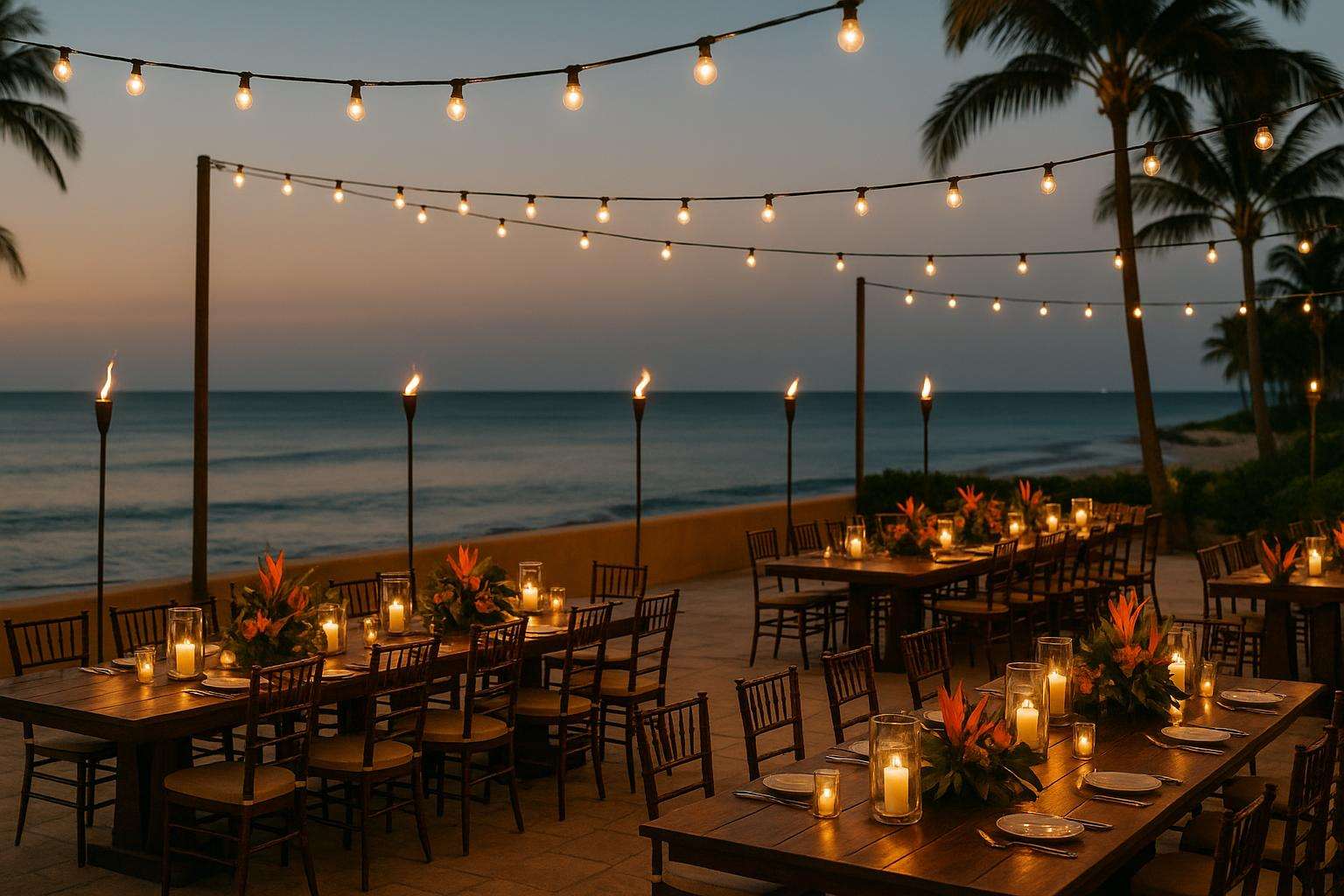
If the room block is the machinery, the welcome party is the point. Your guests spent $1,300 to $2,800 and days of their lives to be there. The welcome event — held the first evening most guests have arrived, usually the night before the wedding — is your first chance to repay that.
Keep it warm and unstructured: a beach cocktail hour, a relaxed dinner, a poolside gathering with local food and music. Its jobs are to dissolve travel fatigue, introduce the two families to each other before the ceremony, and signal hospitality from minute one. Resist the urge to make it a formal event that competes with the wedding — it should feel like an exhale, not a second reception.
The welcome party also solves welcome-bag logistics elegantly. You can hand bags out in person here (free, personal) or have the resort room-deliver them at check-in for $3 to $5 each. A common hybrid: room-deliver the essentials so they greet tired arrivals, and give a small extra token at the party. Whatever you choose, Zola's destination checklist recommends a wedding website carrying the full schedule so no guest is ever guessing where to be.
Putting It Together
The couples who make destination weddings look effortless treat the room block as a negotiation, not a formality, and the welcome event as the emotional core of the weekend, not an add-on. Block conservatively, read the attrition clause, stack the perks, and open the weekend with genuine hospitality. Get those two logistics right and the rest of the trip — the ceremony, the reception, the honeymoon that follows — inherits the goodwill.
Frequently asked
Does a room block actually get us a discount?
Usually not much of one, and this surprises most couples. Post-pandemic resort occupancy stays high enough that nightly-rate discounts on group blocks are rare. The real value is in perks that scale with your total room-night commitment — complimentary events, free room credits and suite upgrades — not in a lower per-night price. So do not evaluate a block by the headline rate. Evaluate it by the perks it unlocks: a rehearsal dinner credit, a welcome cocktail, or a free room for every 12 to 15 booked. A block that looks identical on rate can differ enormously on perks, and that is where your travel advisor earns their keep negotiating.
How many rooms do we need to block?
Block conservatively — for roughly 70 to 80 percent of the rooms you expect guests to need, not 100 percent. Attendance at destination weddings runs only 50 to 70 percent of the invited list, and most resort contracts include an attrition clause that penalizes you for unfilled rooms. It is far easier to add rooms to an under-blocked group than to eat the cost of empty ones. A good travel advisor sizes the block to your confirmed-interest count, negotiates a favorable attrition and cutoff date, and adjusts as RSVPs firm up. For a typical 20–50 guest destination wedding, that is often 15–30 rooms across three or four nights.
What is an attrition clause and why does it matter?
Attrition is the contract term that makes you financially responsible for a percentage of blocked rooms even if guests do not book them. If you block 40 rooms with 80 percent attrition and only 25 fill, you may owe for the shortfall down to the 32-room floor. This is the single most important line in a resort contract and the biggest source of unexpected cost. Mitigate it by blocking conservatively, negotiating a lower attrition percentage, securing a reasonable cutoff date after which unbooked rooms release back to the resort penalty-free, and letting a specialist advisor read the contract before you sign. Never sign a room-block contract without understanding your attrition exposure.
When should we host the welcome party?
The first evening most of your guests have arrived — typically the night before the wedding. The welcome party's job is to release travel tension, introduce the two families and friend groups to each other, and repay guests immediately for a trip that cost them $1,300 to $2,800. Keep it casual: a beach cocktail hour, a relaxed dinner, or a poolside gathering with local food. It should feel like a warm exhale after travel, not a formal event that competes with the wedding. Many couples use the welcome party to distribute welcome bags personally, which adds a hosting touch and saves the resort's per-bag delivery fee.
Can the resort deliver welcome bags to guest rooms?
Yes — most resorts will place welcome bags in guest rooms at check-in for a small fee, typically $3 to $5 per bag. The alternative is handing them out yourself at the welcome party, which costs nothing and adds a personal moment but requires guests to attend that event to receive them. If a meaningful number of guests arrive on staggered schedules, room delivery ensures everyone gets theirs on arrival. A practical middle path: room-deliver the essentials (water, itinerary, sunscreen) so they land the moment guests walk in tired, and hand out a small extra token at the welcome party.
Do we need a travel advisor to manage the room block?
For any group beyond a handful of guests, strongly yes. A destination-wedding travel advisor negotiates the block contract, reads the attrition and cutoff terms, coordinates each guest's individual booking, and troubleshoots travel problems — and is compensated by the resort through commission, not by you. That means the guest-logistics layer is effectively free to add and removes what is otherwise dozens of hours of email and spreadsheet work. Specialist advisors are searchable through the Destination Wedding & Honeymoon Specialists Association (DWHSA). The couples who skip this step are the ones who spend their engagement acting as an unpaid travel agency.