Planning
Honeymoon Packing List by Destination Type: Beach, City, Safari & Adventure
What to pack changes entirely with the destination. Here are four destination-specific honeymoon packing systems — beach, city, safari, and adventure — with the gear that actually matters and the mistakes that cost couples money at the airport.
Beach packingCity packingSafari packingAdventure packingCarry-on strategy
The quick verdict
Four destination-specific packing systems — beach, city, safari, and adventure — built on what resorts supply versus what you must bring yourself.
- Best overall
- The Beach & Overwater System — Covers the most common honeymoon type, and its reef-safe-sunscreen and dry-bag essentials are legally and practically non-negotiable in banned-chemical jurisdictions.
- Best value
- Carry-On-Only Strategy (5-4-3-2-1 + cubes) — Skips $35–$70 checked-bag fees each way, eliminates lost-luggage risk on your most consequential trip, and fits ten days into a single compliant carry-on.
- Best for African safari with bush flights
- The Safari System — Strict 33-pound weight limits and tsetse-fly and malaria realities make earth-tone clothing, insect protection, and weight discipline mandatory, not stylistic.
How we evaluated
Each destination system is built from what luxury and boutique properties consistently supply versus omit, layered with 2026 gear testing (Treeline Review sunscreen, Away luggage specs, Peak Design and Eagle Creek cubes), CDC/EPA repellent guidance, and current TSA and country-specific rules. The goal is a packed bag that is complete but disciplined.
- What the destination supplies vs. omits. We start from what properties reliably provide (towels, loungers, snorkel gear) so packing focuses only on genuine gaps.
- Regulatory and health requirements. Legal bans (reef-safe sunscreen, plastic-bag bans) and health needs (malaria prophylaxis, weight limits) are treated as hard constraints.
- Weight and volume discipline. Every system optimizes toward a carry-on-or-light footprint using the 5-4-3-2-1 framework, packing cubes, and solid toiletries.
Rating scale: Each system is rated 1–5 on completeness, discipline, and how well it prevents costly airport and destination mistakes.
Last verified .
At a glance
| # | Name | Rating | Best for | Pricing |
|---|---|---|---|---|
| 1 | The Beach & Overwater System | 5.0 | Caribbean, Maldives, French Polynesia, and Hawaii beach and overwater honeymoons | Reef-safe sunscreen ~$3–$6/oz; dry bag ~$20–$40 |
| 2 | The City & Culture System | 4.5 | European, Japanese, and other culture-and-cuisine city honeymoons | Universal adapter ~$15–$30; walking shoes vary |
| 3 | The Safari System | 4.5 | Kenya, Tanzania, Rwanda, and Botswana safari honeymoons with bush flights | Picaridin spray ~$8–$12; safari layers vary; antimalarials by prescription |
| 4 | The Adventure & Eco-Lodge System | 4.0 | Eco-lodge, trekking, and active-adventure honeymoons off the resort grid | Sawyer Squeeze filter ~$40; medical kit items vary |
| 5 | The Carry-On-Only Strategy (All Destinations) | 4.5 | Beach and city honeymoons, and any couple wanting to skip checked bags | Packing cubes ~$25–$50/set; Away Carry-On $275 |
The Beach & Overwater System
Reef-safe sunscreen, two swimsuits, and a dry bag lead everything.
Editor's pick
A beach honeymoon's packing calculus begins with what the resort already supplies. Top-tier all-inclusive and boutique properties typically provide in-room beach towels (often Egyptian or Turkish cotton), loungers and umbrellas, and curated snorkel and kayak gear, so packing those is wasted space. Prioritize what resorts omit. Reef-safe sunscreen is the single most critical bring-your-own item, because Hawaii, Palau, and multiple Caribbean jurisdictions have banned oxybenzone and octinoxate and enforce it in resort stores — the compliant formulations use non-nano zinc oxide. Treeline Review's top 2026 pick is Badger Sport SPF 40 at roughly $6.03/oz; ThinkSport SPF 50+ is the affordable premium option at about $3.23/oz with 80 minutes of water resistance. Plan roughly one ounce per full-body application, reapplied every two hours, so 28+ ounces per person for a week. For beachwear: pack two to three swimsuits so you never put on a damp one, at least one UPF 50+ rash guard for snorkeling, a wide-brim hat, and polarized sunglasses. Your beach bag needs a waterproof dry bag for phones and documents, an insulated water bottle, SPF lip balm, and after-sun aloe. Solid formats (shampoo bars, solid deodorant) keep you inside the TSA quart-bag limit.
Strengths
- Focuses spend and space only on what resorts omit — sunscreen, beachwear, dry bag
- Keeps you legal in reef-safe-sunscreen ban jurisdictions where resort shops enforce it
- The two-to-three-swimsuit rule ends the misery of a still-damp suit
Weaknesses
- 28+ ounces of zinc sunscreen per person is heavy and often exceeds carry-on liquid limits, forcing a checked bag or destination top-up
- Best for
- Caribbean, Maldives, French Polynesia, and Hawaii beach and overwater honeymoons
- Pricing
- Reef-safe sunscreen ~$3–$6/oz; dry bag ~$20–$40
The City & Culture System
Versatile evening wear, real walking shoes, and adapters.
A city honeymoon — Rome and the Amalfi Coast, Paris, Kyoto, Lisbon — inverts the beach priorities. Here the constants are versatile clothing that dresses up and down, footwear that survives cobblestones and museum floors, and the right power adapters, which are the item city travelers most often forget. Build the wardrobe around the 5-4-3-2-1 framework, biasing tops and bottoms toward smart-casual pieces that transition from daytime sightseeing to an evening dinner reservation with only a change of shoes or a jacket. Linen and Merino-wool tops (Smartwool, Unbound Merino) earn re-wears without odor, materially cutting the count for a longer trip. Pack one genuinely comfortable walking shoe plus one dressier option, and wear the bulkier pair on travel days. Beyond clothing: pack a compact day bag or crossbody with a zip closure for pickpocket-heavy tourist zones, a slim portable charger for long days out, and outlet adapters matched to the destination — Europe's Type C/F, the UK's Type G, Japan's Type A. Check the voltage rating on any heat-styling tools, since much of the world runs 220–240V versus North America's 120V, and an unrated tool will fry. Solid toiletries and packing cubes keep the whole city kit inside a single carry-on, sidestepping checked-bag fees and lost-luggage risk on tight European connections.
Strengths
- Smart-casual, re-wearable pieces cover both sightseeing and evening dining from one bag
- Correct adapters and voltage awareness prevent fried tools and dead devices
- A zip-closure crossbody addresses the real pickpocket risk of tourist cities
Weaknesses
- Balancing 'dressy enough for dinner' with 'comfortable for all-day walking' is the hardest wardrobe tradeoff and tempts over-packing
- Best for
- European, Japanese, and other culture-and-cuisine city honeymoons
- Pricing
- Universal adapter ~$15–$30; walking shoes vary
The Safari System
Earth tones, insect protection, and strict weight discipline.
An African safari imposes the strictest packing discipline of any honeymoon type, because many bush flights on Eastern African circuits enforce a 33-pound total luggage limit including carry-on. Weight management is a first-order constraint, not a preference. Clothing must be neutral earth tones — khaki, olive, beige, sage — because dark colors attract tsetse flies and wildlife is least spooked by colors that blend into the bush. Build a three-layer system: a moisture-wicking base (Merino from Smartwool or Icebreaker resists odor and enables re-wears that cut volume), a fleece or light down mid-layer for cold dawn game drives, and a windproof shell. ExOfficio's permethrin-treated BugsAway shirts are a serious-safari favorite. Insect protection is layered: picaridin 20% (8–14 hours, no odor or gear damage) or DEET 20–30% (5–8 hours) on skin, plus permethrin on clothing. Crucially, repellent does not replace malaria prophylaxis — consult a travel-medicine clinic at least six weeks out for atovaquone-proguanil, doxycycline, or mefloquine appropriate to your itinerary, and never self-adjust prescribed medication. Pack a medical kit (prescribed antibiotic, loperamide, antihistamine, oral rehydration salts, ibuprofen, blister treatment). Note that Kenya, Tanzania, and Rwanda ban single-use plastic bags at entry, so swap Ziplocs for reusable silicone pouches to avoid customs fines.
Strengths
- Earth-tone, layered clothing addresses tsetse flies, cold drives, and dust in one system
- Layered insect defense (picaridin/DEET plus permethrin) matches CDC/EPA guidance
- Weight-conscious Merino re-wears keep you under the 33-pound bush-flight limit
Weaknesses
- Requires medical-clinic lead time and prescription antimalarials, which some couples underestimate and leave too late
- Best for
- Kenya, Tanzania, Rwanda, and Botswana safari honeymoons with bush flights
- Pricing
- Picaridin spray ~$8–$12; safari layers vary; antimalarials by prescription
The Adventure & Eco-Lodge System
Layering, a medical kit, and water purification.
Adventure honeymoons — Central American eco-lodges, Himalayan trekking circuits, Patagonian hikes, Costa Rican cloud forests — sit between the safari's discipline and the beach's simplicity, and they reward the same three-layer clothing logic: a moisture-wicking base, a fleece or lightweight down mid-layer, and a windproof, water-resistant outer shell. Patagonia's Capilene and lightweight down pieces and Merino base layers from Smartwool cover the range while resisting odor for multi-day wear. The two additions that define this system are a proper medical kit and water purification. At minimum, pack a physician-prescribed broad-spectrum antibiotic, loperamide, an antihistamine, oral rehydration salts, ibuprofen, adhesive bandages, and blister treatment such as Compeed, plus a digital thermometer. For any off-grid trekking, a compact water-purification solution — a Sawyer Squeeze filter or Aquatabs tablets — is essential, since potable water is not guaranteed at eco-lodges or on trail. Follow the CDC/EPA repellent guidance (picaridin or DEET) for insect-heavy environments, and add permethrin-treated clothing where mosquitoes or ticks are a concern. Footwear matters more here than any other destination type: a broken-in trail shoe or light hiking boot, never new ones. Check whether your outfitter provides any kit items in-lodge before duplicating them, and confirm plastic-bag rules for your destination. This is the one system where under-packing gear can be genuinely risky rather than merely inconvenient.
Strengths
- Three-layer clothing plus water purification handles unpredictable off-grid conditions
- A real medical kit turns common trail problems into minor inconveniences
- Emphasis on broken-in footwear prevents the trip-ruining blister
Weaknesses
- The medical-kit and purification requirements add weight and pre-trip effort, and under-packing here carries real safety risk
- Best for
- Eco-lodge, trekking, and active-adventure honeymoons off the resort grid
- Pricing
- Sawyer Squeeze filter ~$40; medical kit items vary
The Carry-On-Only Strategy (All Destinations)
5-4-3-2-1 clothing plus cubes and solid toiletries for any trip.
Best value
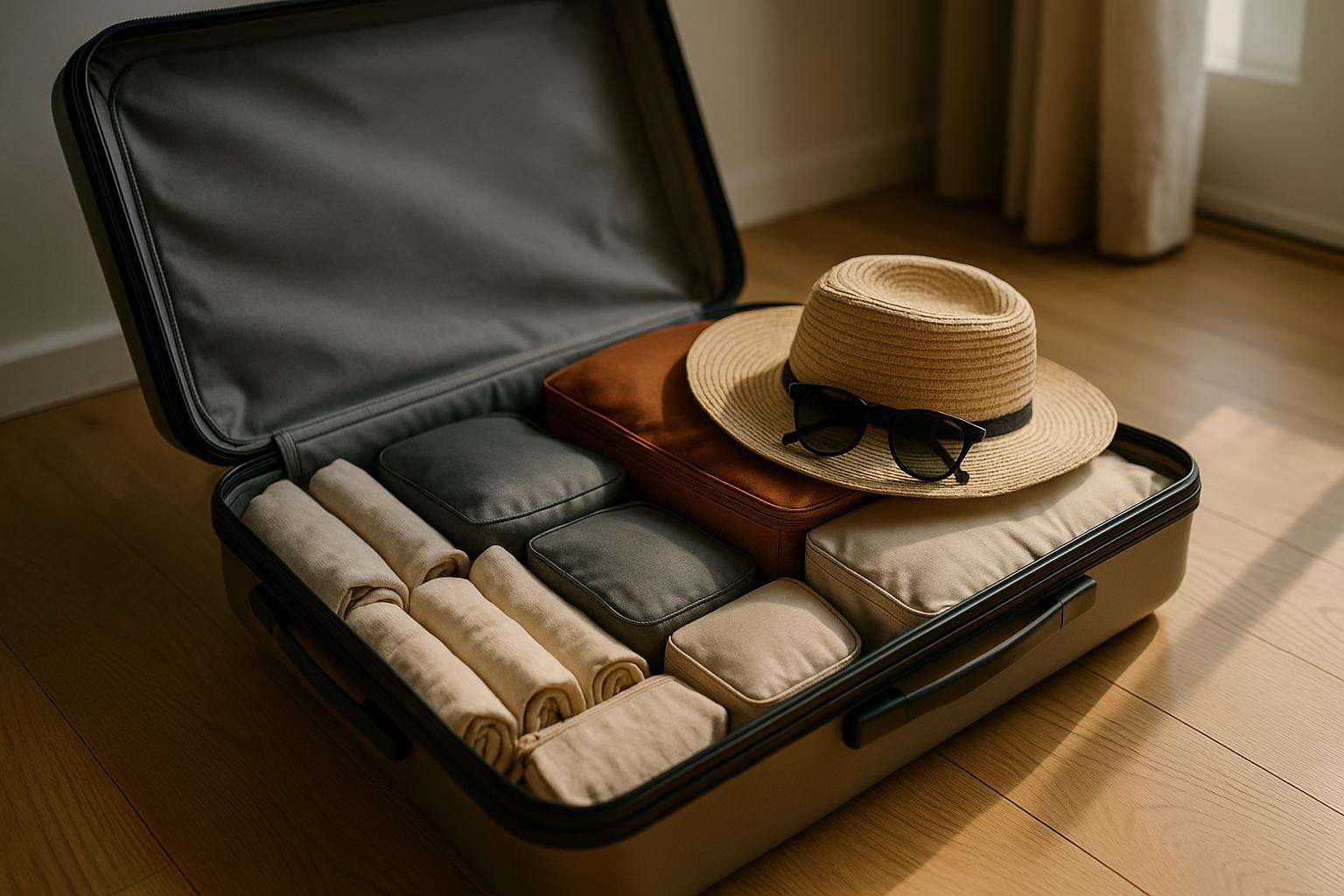
The overlay that improves every destination type is packing carry-on-only, and for a honeymoon the case is unusually strong: no $35–$70 checked-bag fees each way, no carousel waiting, and zero risk of lost luggage on a trip where lost formalwear or swimwear is genuinely consequential. The clothing baseline is the 5-4-3-2-1 framework — five pairs of underwear and socks, four tops (two casual, one activewear, one dressier), three bottoms, two pairs of shoes, and one jacket or light layer — with Merino tops earning re-wears that stretch it to ten-plus days. Wear the bulkiest items (shoes, jacket) on travel days. On liquids, the TSA 3-1-1 rule is unchanged for 2026 (3.4 oz containers in one clear quart bag), and the smartest move is shifting to solid formats — shampoo and conditioner bars, solid deodorant, bar soap — which nearly eliminates the quart-bag constraint. For organization, the two top 2026 packing-cube brands are Peak Design (self-healing nylon, one-handed clamshell lid, clean/dirty divider) and Eagle Creek (a compression zipper that physically reduces volume, lifetime warranty). A practical system: a Medium cube for tops and layers, a Small for underwear and socks, a quick-access toiletry cube near the top for the checkpoint, and a dedicated shoe bag at the base. An Away standard Carry-On (41L, $275) or any 40–45L hard-shell absorbs a ten-day beach-and-city wardrobe with two to three inches of buffer.
Strengths
- Eliminates checked-bag fees and lost-luggage risk on your most consequential trip
- Solid toiletries sidestep the TSA quart-bag limit almost entirely
- Packing cubes plus the 5-4-3-2-1 framework fit ten-plus days in one bag
Weaknesses
- Bulky or liquid-heavy needs (28+ oz of sunscreen, hiking boots, safari layers) can push some destination types past carry-on capacity
- Best for
- Beach and city honeymoons, and any couple wanting to skip checked bags
- Pricing
- Packing cubes ~$25–$50/set; Away Carry-On $275
Which should you choose?
The overwater-bungalow couple · Maldives or French Polynesia beach honeymoon
Goal:Pack the right beach essentials without duplicating what the resort supplies
The Beach & Overwater System — Resorts supply towels and snorkel gear; you must bring reef-safe sunscreen, swimsuits, and a dry bag — and stay legal in ban jurisdictions.
The bush-flight safari couple · Kenya or Tanzania safari honeymoon
Goal:Meet the 33-pound weight limit while staying protected from insects and malaria
The Safari System — Earth-tone Merino layers, layered insect protection, and clinic-prescribed antimalarials are mandatory under strict bush-flight limits.
Frequently asked
Do I really need reef-safe sunscreen for a beach honeymoon?
Yes, and in several destinations it is legally required, not optional. Hawaii, Palau, and multiple Caribbean jurisdictions have banned sunscreens containing oxybenzone and octinoxate — the chemical UV filters linked to coral bleaching — and enforcement extends to resort stores, so you cannot always buy a compliant product on arrival. Compliant formulations use non-nano zinc oxide as the active ingredient. Treeline Review's 2026 testing rates Badger Sport SPF 40 (22.5% non-nano zinc, EWG-certified) at the top, with ThinkSport SPF 50+ as the most affordable premium option and 80 minutes of water resistance. Plan for roughly one ounce per full-body application, reapplying every two hours, which means about 28+ ounces per person for a seven-day trip. Buy a large tube in advance rather than relying on the resort shop.
What is the best luggage for an international honeymoon?
For international travel, prioritize guaranteed airline compliance over maximum capacity. Away's standard Carry-On ($275, 41L, 21.7" × 14.4" × 9") fits the stated overhead limits of all major U.S. carriers and is the safest choice for Europe and Southeast Asia routes. Away's Bigger Carry-On ($295) adds about 8L but exceeds published limits on several European and Canadian carriers, and fails the physical sizers for Ryanair and Wizz Air, making it a domestic-first bag. In the premium tier, Monos and Rimowa offer aluminum shells that will scratch and dent with normal handling — that is aesthetic, not structural. A 40–45L hard-shell carry-on comfortably holds a ten-day beach-and-city wardrobe using the 5-4-3-2-1 framework and a solid-toiletry system. Always verify your specific airline's current dimension policy before booking.
Are packing cubes worth it for a honeymoon?
For a honeymoon they are genuinely worth it, because they let you compress a week-plus wardrobe into a carry-on and keep two people's belongings organized without rummaging. The two consistently top-ranked 2026 brands are Peak Design and Eagle Creek. The Peak Design Packing Cube (Medium ~$40) uses a self-healing nylon blend with a clamshell peel-back lid for the fastest clothing access and a clean-versus-dirty divider. The Eagle Creek Pack-It Isolate compression set (S+M ~$49) adds a secondary compression zipper that physically reduces volume when fully loaded, backed by a lifetime warranty. A practical honeymoon system uses a Medium cube for tops and layers, a Small for underwear and socks, and a separate quick-access toiletry cube near the top of the bag for the checkpoint. A dedicated shoe bag keeps footwear away from clean clothing.
What clothing colors should I pack for a safari honeymoon?
Stick to neutral, earth-tone colors — khaki, olive, beige, and sage — which is the universal guidance for safari packing. There are two practical reasons. First, dark colors, especially dark blue and black, attract tsetse flies, which can carry disease and deliver a painful bite. Second, wildlife is least spooked by earth tones that blend into the bush, giving you closer, calmer sightings on game drives. Avoid bright colors and white, which stand out and show dust. Build a three-layer system: a moisture-wicking base layer, a fleece or lightweight down mid-layer for cold morning drives, and a windproof outer shell. Brands like ExOfficio (including permethrin-treated BugsAway shirts), Patagonia, and Merino-wool specialists Smartwool and Icebreaker are favorites because Merino resists odor and lets you re-wear, cutting total volume under the strict 33-pound bush-flight limit.
DEET or picaridin for an adventure or safari honeymoon?
Both are evidence-backed, and the CDC and EPA jointly recommend DEET, picaridin, and IR3535 as the three proven topical repellents. DEET at 20–30% provides five to eight hours of protection against mosquitoes and ticks; concentrations above 30% add no meaningful protection and can degrade plastics and synthetic fabrics. Picaridin at 20% is considered near-equivalent in efficacy, with EPA data indicating 8–14 hours of protection, no odor, no greasy residue, and no damage to gear — which is why many travelers now prefer it. Permethrin, applied to clothing rather than skin, adds a complementary layer that persists through about six washes. Essential oils like citronella protect for under an hour and are not EPA-registered, so they are inadequate for malaria-endemic destinations. Critically, no repellent replaces malaria prophylaxis — consult a travel-medicine clinic at least six weeks before a safari.