Planning
Planning Your Honeymoon Around Weather: The Month-by-Month Method
The same overwater villa can be transcendent in February and rain-punctuated in September. A working method for matching your wedding date to a destination's real dry season — Maldives, Caribbean, Southeast Asia and Europe included.
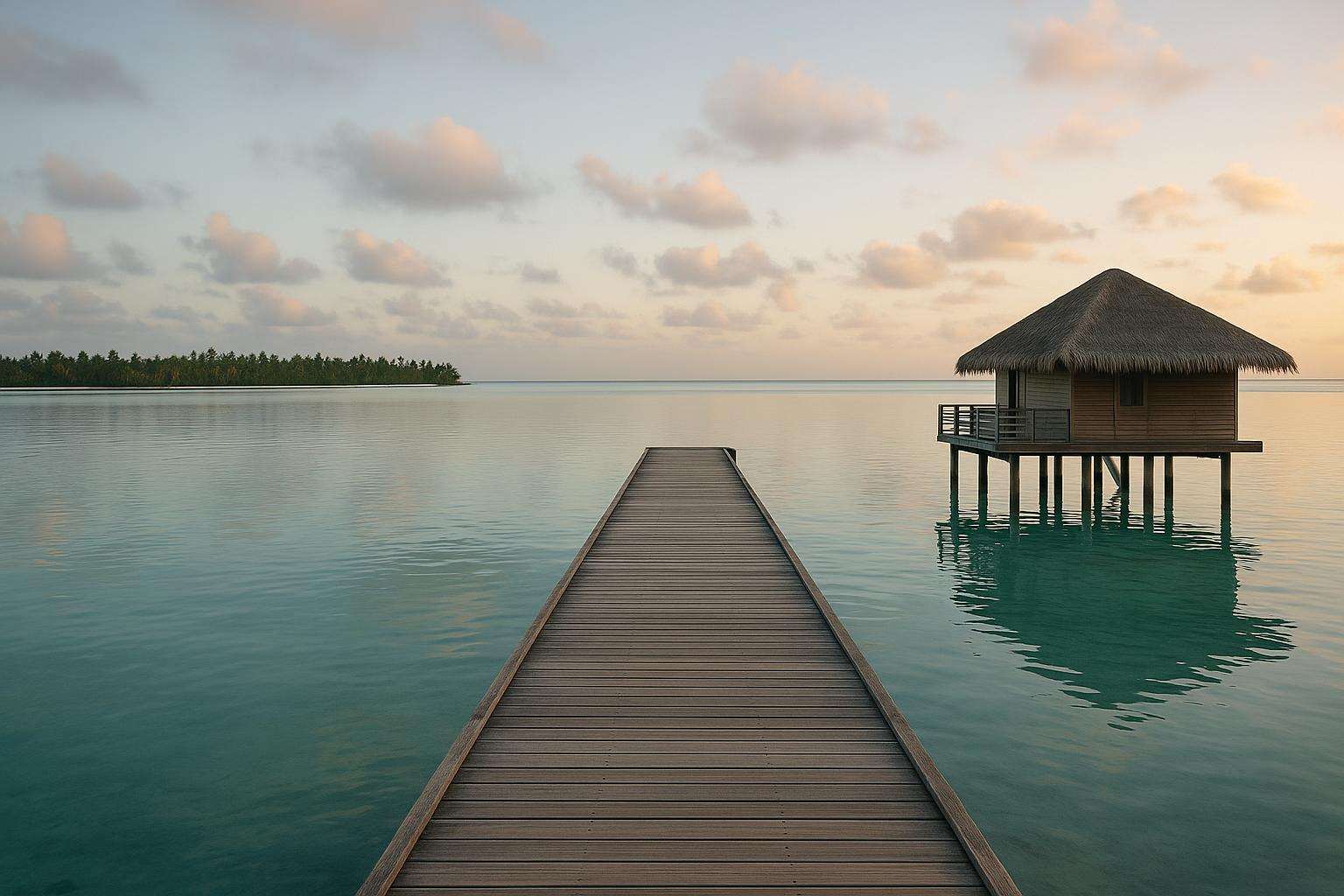
Weather timing is the highest-leverage decision in honeymoon planning, and it is also the one couples most often get backwards. The temptation is to fall in love with a destination first and then find out, too late, that your wedding month lands squarely in its rainy season. The same overwater villa that feels transcendent in February can be a rain-punctuated compromise in September — same resort, same photos on the website, radically different trip. The fix is a repeatable method, and it starts with the one variable you cannot negotiate.
The method in one sentence: Your wedding date fixes your travel month; let that month select the destination by qualifying only the regions in their dry, calm season — then filter by budget and experience, and price the shoulder-season tradeoff last.
Start from your locked date, not your dream destination
Because most couples travel within a day or two of the reception, your honeymoon month is effectively fixed the moment you set the wedding. That is a constraint, not a limitation — it collapses an overwhelming global choice into a short, weather-qualified shortlist. Instead of asking "where do we want to go?" ask "which regions are at their best in our month?" A February wedding points at the Maldives at its statistical peak. A July wedding steers you toward Croatia, Bali, or an East African safari rather than a monsoon-bound Andaman coast. Work in that order and you will never book a resort into its wettest weeks.
The Maldives: a dual-monsoon calendar that genuinely matters
The Maldives runs on two seasons. The northeast monsoon (Iruvai) delivers the dry season from roughly November through April: clear skies, calm seas, and the archipelago's lowest rainfall. February is the sweet spot at about 50 mm for the month, with January and March close behind near 60 mm and underwater visibility exceeding 30 meters, according to the Maldives Nomad weather guide. Demand tracks the weather precisely — December and January carry the highest rates of the year, with some premium villas topping $5,000 a night and holiday surcharges over Christmas and New Year.
The wet season (May-October) is widely mischaracterized. Rain tends to arrive in short afternoon bursts rather than all-day downpours, water stays a warm 26-29 degrees C year-round, and the marine calendar is actually better — mantas aggregate at Hanifaru Bay from May to November and whale sharks concentrate in Ari Atoll from June to September. Rates fall 30-50%. If you book wet season, note two things: choose a northern atoll for the best odds of drier days, and remember that seaplane transfers (serving two-thirds of resorts) are more delay-prone in the monsoon. Late November and late October are the two best value entry points.
The Caribbean: hurricane season is a map problem, not a blanket ban
Atlantic hurricane season officially runs June 1 to November 30, peaking mid-August to mid-October with a statistical crest around September 10, per NOAA's HURDAT2 record. But risk is profoundly non-uniform. The ABC islands — Aruba, Bonaire and Curacao — sit near 12 degrees north, below the band where cyclones typically intensify, and have seen no major hurricane landfalls in the historical record; Bonaire has no recorded direct landfall at all. Barbados, Grenada and Trinidad and Tobago sit far enough south to carry materially lower strike rates than the northern islands.
Timing within the season matters as much as geography: June and November are far lower-risk than August-September. The reward for accepting some risk is 30-50% off hotels and airfare. The non-negotiable protection is a Cancel For Any Reason policy, purchased within 10-21 days of your first deposit — standard travel insurance generally will not cover weather cancellations absent a government evacuation order.
Southeast Asia: the region always has a dry coast somewhere
The single most useful fact about Southeast Asia is that its monsoons do not fire in unison. Bali is the outlier — its dry season runs roughly May through September, with August the driest month at about 16 mm, per Bali Holiday Secrets, so it is sunny precisely while mainland neighbors are wet. Thailand splits by coast: the Gulf side (Koh Samui) peaks April-August, the inverse of the Andaman side (Phuket, Krabi), which is best November-April. Central Vietnam (Hoi An, Da Nang) is strong February through August but sits in the typhoon path October-December.
| Region / coast | Best months | Avoid |
|---|---|---|
| Bali (esp. Bukit Peninsula) | May-September | Jan-Feb (peak wet, debris on west beaches) |
| Thailand — Andaman (Phuket, Krabi) | November-April | October (wettest) |
| Thailand — Gulf (Koh Samui) | April-August | October-December |
| Central Vietnam (Hoi An, Da Nang) | February-August | October-December (typhoons, flooding) |
So a summer honeymooner is not stranded: Bali's sheltered Bukit Peninsula, Koh Samui, and the Da Nang coast are all reliable in June and July while Phuket and northern Vietnam are in monsoon.
Europe: September is the quiet winner
The Mediterranean concentrates demand into July and August, which makes the shoulder months genuinely valuable. Rates typically fall to 60-75% of peak, and a Santorini caldera-view suite at 400-800 euros in July can drop 30-40% in May or October with comparable weather. Across Italy, Greece and France, September repeatedly emerges as the highest-value month: Aegean sea temperatures hit their annual peak near 24 degrees C — warmer than July — while European school calendars pull family crowds out, dropping visitor volumes 30-50% from August, as Rick Steves and regional operators consistently report.
May is the better of the two spring-or-fall choices for beach-centric trips, because sea temperatures have risen and ferries are reliably running. The operational caveat is late-shoulder closures: on the Amalfi Coast and Greek islands, ferry service, hotels and restaurants begin shutting from mid-October, so October and November trips demand specific research into what is actually open. One money detail worth planning around — Greece's Climate Resilience Fee stays at peak rates through October 31, then drops roughly 70% on November 1, as the Greek Trip Planner report details.
Putting the method to work
Run the sequence every time: fix your month, list the regions in their dry season, filter by budget and the experience you want, then decide consciously whether the shoulder-season discount is worth trading a small amount of weather certainty for a materially better room or a longer trip. On a $10,000 budget, choosing shoulder season can deliver an equivalent experience for $6,500-$7,500, freeing capital for an upgraded villa category. The couples who regret their weather timing almost always skipped step one — they picked the place before they checked the calendar. Reverse that order and the most photogenic version of your destination is the one you will actually experience.
Frequently asked
How do I choose a honeymoon destination based on my wedding month?
Work backwards from the one variable you cannot move: your wedding date. Because most couples travel within days of the reception, your honeymoon month is effectively fixed, so the destination must bend to it, not the reverse. List the regions that are in their dry, calm season during your travel month, then filter by everything else — budget, flight time, the experience you want. A February wedding points toward the Maldives at its statistical best; a July wedding steers you to Croatia, Bali or sub-Saharan Africa rather than a monsoon-bound coast. The method turns an overwhelming global choice into a short, weather-qualified shortlist, which is exactly the constraint that prevents the most common and expensive honeymoon mistake: a dream resort experienced in its wettest month.
When is the best month for a Maldives honeymoon?
The Maldives dry season, the northeast monsoon locally called Iruvai, runs roughly November through April. February is the statistical sweet spot at about 50 mm of rain for the month, followed closely by January and March at around 60 mm each, with calm seas and underwater visibility above 30 meters. That reliability comes at a price: December and January command the highest rates of the year, some premium overwater villas exceeding $5,000 per night, with Christmas-to-New-Year holiday surcharges on top. Late November is the underrated entry point — conditions have improved sharply but peak pricing has not yet arrived. The wet season (May-October) is not the washout it's assumed to be, delivering short afternoon bursts rather than all-day rain, 30-50% lower rates, and exclusive marine spectacles like manta aggregations and whale sharks.
Is it safe to honeymoon in the Caribbean during hurricane season?
It can be, if you choose the island and the month deliberately. Atlantic hurricane season runs June 1 to November 30, with peak activity concentrated mid-August to mid-October and a statistical peak around September 10, per NOAA. Risk is highly non-uniform: the ABC islands (Aruba, Bonaire, Curacao) sit near 12 degrees north, below the band where cyclones usually intensify, and have no record of major hurricane landfalls; Bonaire has no recorded direct landfall at all. Within the season, June and November are far lower-risk than August-September. The tradeoff is real value — 30-50% off hotels and airfare. Protect yourself with a Cancel For Any Reason policy purchased within 10-21 days of your first deposit, since standard insurance rarely covers weather cancellations without an evacuation order.
Where can I honeymoon in Southeast Asia during the summer monsoon?
Southeast Asia's monsoons run on different schedules across the region, so a summer wedding does not lock you out — it just narrows the map. Bali is the key outlier: its dry season spans roughly May through September, with August the driest month at about 16 mm, so it runs sunny precisely while mainland neighbors are in monsoon. Thailand's Gulf coast (Koh Samui, Koh Phangan) peaks April through August, inverse to the Andaman coast (Phuket, Krabi), which is best November-April. Central Vietnam (Hoi An, Da Nang) is strong February through August. So a June or July honeymooner can reliably access Bali's Bukit Peninsula, Koh Samui, or the Da Nang coast while Phuket and northern Vietnam are wet.
Is shoulder season actually worth it for a honeymoon?
For most couples, yes — the value is substantial and the experiential sacrifice is often minimal. Shoulder-season rates typically run 60-75% of peak, and in the Mediterranean the difference is stark: a Santorini caldera-view suite at 400-800 euros per night in July can drop 30-40% in May or October with comparable, sometimes superior, weather. September is Europe's single highest-value month, with Aegean sea temperatures at their annual peak (around 24 degrees C, warmer than July), full ferry and restaurant operation, and crowds down 30-50% from August. The caution is operational: on the Amalfi Coast and Greek islands, ferry service, hotels and restaurants begin seasonal closures from mid-October, so late-shoulder trips need specific research into what is actually open.
What weather buffer should I build into honeymoon planning?
Plan for variability even in dry season, and protect the parts that can be disrupted. In the Maldives, roughly two-thirds of resorts rely on seaplane transfers that are more vulnerable to weather delays, so avoid the tightest possible connection between your international flight and the last seaplane of the day. If you travel during any hurricane or typhoon season, monitor the National Hurricane Center's 5-day cone forecasts and confirm both your airline and resort have named-storm rebooking policies in writing before you book. Everywhere, buy comprehensive travel insurance, and add Cancel For Any Reason coverage within the required 10-21 day window after your first deposit when full prepayment is unavoidable. Finally, keep a 24-48 hour cushion between the wedding and departure to absorb any front-end disruption.