Planning
Passport Timeline for Honeymoon Travel: Processing Times & Expedited Options
Routine service, expedited service, and same-day agency appointments — plus the name-change trap that catches nearly every newlywed. Here is how to time your passport so it never threatens the trip.
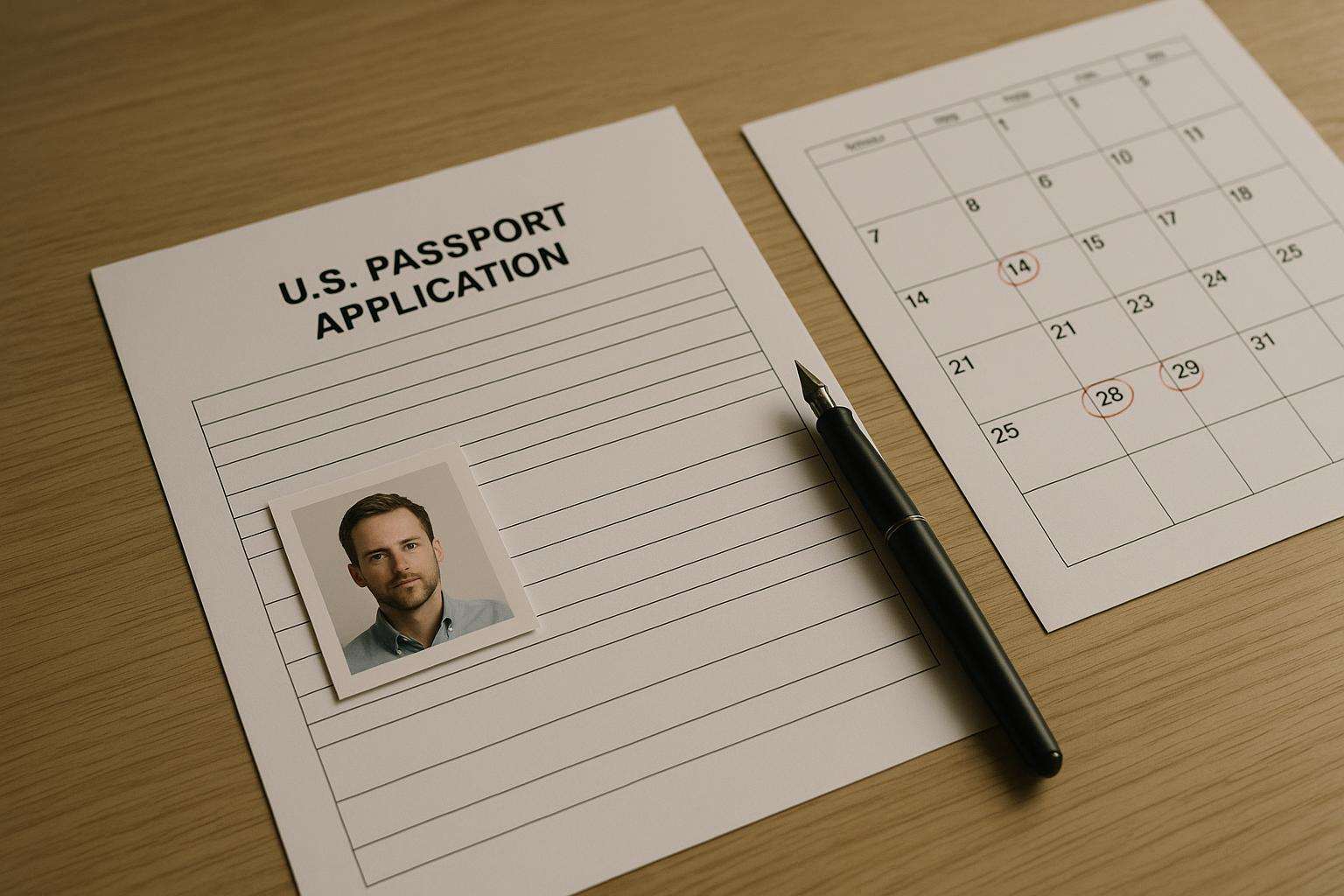
Ask any honeymoon travel advisor for the single most common — and most avoidable — planning failure, and the answer is almost always the same: the passport. Couples pour months into choosing a resort and days into the perfect itinerary, then discover with six weeks to go that one spouse's passport expired, was never renewed, or is stuck in processing. Because a passport problem can cancel a trip outright, it deserves to be the very first logistics item you handle, ideally the week you set a date. Here is how the timeline actually works in 2026, drawn from the US Department of State's own published figures.
What are the current passport processing times?
As of April 2026, the State Department publishes three tiers. Routine mail service takes 4–6 weeks. Expedited mail service takes 2–3 weeks and costs an additional $60. Urgent in-person appointments at a regional passport agency run from same-day to three business days, but they are reserved for travelers with documented international travel within 14 calendar days (or 28 days if a visa is required).
The crucial caveat, stated by the State Department itself on its processing-times page, is that these windows cover only agency review — they exclude mailing. Each direction of mailing can add up to two weeks, which means the real-world expedited timeline is often 5–7 weeks door-to-door, and routine service can stretch toward two months. Treat routine service as a three-month project and you will never be caught short.
Why are wait times still long, and when should we apply?
Demand has not returned to pre-2020 norms. The United States issued a record 27.3 million passport books and cards in fiscal year 2025 — the highest volume in the program's history — and that surge has continued into 2026. Peak application season runs from late winter through summer, which is precisely when most weddings happen. The strategic move: if your timeline allows, submit your application between October and December, when queues are materially shorter. You can watch your application move in real time at passportstatus.state.gov. The governing principle is to build a buffer against the slowest plausible outcome, not the fastest advertised one.
What does a passport actually cost in 2026?
Fees depend on whether you are applying for the first time or renewing. A first-time adult passport book (Form DS-11, submitted in person at an acceptance facility) costs $130 in application fees plus a $35 execution fee paid directly to the accepting facility. Expedited service adds $60. Return USPS Priority Mail Express shipping, which delivers in 1–3 days, begins around $22.05. For a renewal by mail (Form DS-82), the application fee is $130 routine or $190 expedited, with no separate execution fee. You can confirm current fees and even book photo and appointment services through the USPS passport service.
| Service level | Agency review time | Realistic door-to-door | Extra cost |
|---|---|---|---|
| Routine mail (DS-11/DS-82) | 4–6 weeks | 6–8+ weeks | — |
| Expedited mail | 2–3 weeks | 5–7 weeks | +$60 (+ ~$22 shipping) |
| Urgent agency appointment | Same day–3 business days | Same day–1 week | +$60, travel within 14 days required |
How do urgent, last-minute appointments work?
If your international departure is within 14 days (or 28 with a required visa), you qualify for an in-person appointment at one of the 26 regional passport agencies — in cities such as New York, Los Angeles, Chicago, and Houston. Call the National Passport Information Center at 1-877-487-2778 to schedule; you will need proof of travel such as a flight itinerary. The State Department's Get Your Passport Fast guidance details eligibility. Availability swings hard by location and season, so call to understand waitlist conditions even before you strictly qualify — it costs nothing to ask and can save the trip.
The name-change trap every newlywed should know
Here is where couples most often self-inflict a crisis. The instinct is to update the passport to the married name before the honeymoon. Do not do this. Your existing passport remains fully valid under your current name until its expiration date, and a marriage certificate does not change it. If you file a name-change application before the trip, the State Department holds your existing passport during processing — and if it is still pending at departure, you have no travel document.
The correct sequence: book every flight, hotel, and cruise under the exact name on your current passport. Travel and enjoy the honeymoon. On return, change your Social Security record first (Form SS-5, often 3–7 business days), then the passport, then the driver's license, then loyalty accounts and credit cards. If your passport is under one year old, Form DS-5504 makes the passport name change free; if it is older than a year, Form DS-82 applies at the standard $130 (or $190 expedited) fee.
One document that will not cut it: the passport card
A US passport card is valid only for land and sea entry between the US and Canada, Mexico, the Caribbean, and Bermuda — never for international air travel. For any honeymoon involving a flight abroad, both spouses need the full passport book. The card is a fine low-cost federal ID and a useful backup, and you can request it alongside the book on the same DS-11, but it does not change your air-travel requirement. Verify both partners' book validity — remember many destinations and airlines enforce a six-month rule — the moment you set your date, and you will have removed the single biggest logistical threat to your honeymoon.
Frequently asked
How long does a US passport take to process in 2026?
As of April 2026, the State Department's published windows are 4–6 weeks for routine mail service, 2–3 weeks for expedited mail service (an added $60 fee), and same-day to three business days for an urgent in-person appointment at a regional passport agency. Those windows cover only agency review — they exclude mailing. The State Department itself cautions that mailing can add up to two weeks in each direction, which is why the real-world expedited timeline runs closer to 6–10 weeks from submission to passport in hand. For a honeymoon, treat routine service as a three-month project and apply as early as you possibly can.
How much faster is expedited passport service?
Expedited service adds $60 to your application and cuts agency review time from 4–6 weeks to 2–3 weeks. For an extra charge you can also add USPS Priority Mail Express return shipping, which delivers in 1–3 days and starts around $22.05, shaving the return-mail leg. But expedited does not eliminate mailing time on the front end, so the honest total is often 5–7 weeks door-to-door rather than the headline two-to-three. If your trip is under 14 days away, expedited mail is too slow — you need an urgent in-person appointment at a regional agency instead.
Can we get a passport in a few days for a last-minute honeymoon?
Yes, through an urgent in-person appointment at one of the 26 regional passport agencies. This path is reserved for travelers with documented international travel within 14 calendar days, or within 28 days if a visa is required. Call the National Passport Information Center at 1-877-487-2778 to book; availability varies by location and season, and agencies sit in cities like New York, Los Angeles, Chicago, and Houston. Bring proof of travel, such as a flight itinerary. Turnaround is same-day to three business days. Because peak season fills fast, call to understand waitlist conditions even before you technically qualify.
Why are passport wait times still long in 2026?
Demand remains historically elevated. The United States issued a record 27.3 million passport books and cards in fiscal year 2025 — the highest volume in the program's history — and that pressure has carried into 2026. Peak application season runs from late winter through summer, which unfortunately overlaps the heart of wedding season. Couples who can apply between October and December will face materially shorter queues. You can monitor your application in real time at passportstatus.state.gov, and you should build a generous buffer rather than relying on the fastest published estimate, which assumes ideal conditions.
Should I change my passport to my married name before the honeymoon?
No — this is the classic newlywed mistake. Your existing passport remains fully valid under your current name until it expires, and a marriage certificate does not update it. If you start a name-change application before the trip, the State Department holds your existing passport during processing, and if the application is still pending at departure you have no valid travel document. Book all travel under your current passport name, take the trip, then change names afterward. If you do change it later and your passport is under a year old, Form DS-5504 does it for free; if it is older, Form DS-82 applies at the standard fee.
Is a passport card enough for an international honeymoon?
No. A US passport card is valid only for land and sea entry between the United States and Canada, Mexico, the Caribbean, and Bermuda — it can never be used for international air travel. For any honeymoon that involves a flight abroad, both spouses need the full passport book. The card can be a useful backup form of federal ID and costs far less, but it does not substitute for the book. If you are applying for the first time, you can request both the book and the card on the same DS-11 application, though the card adds a fee and does not change your international air-travel needs.