Resorts & Stays
Aman Resorts for Honeymoons: Amangiri, Amanjiwo & Amangani Reviewed
No loyalty program, no room categories, no advertising — Aman competes on place and design rather than amenity count. Here is what actually justifies $2,000-plus a night at Amangiri, Amanjiwo, and Amangani for a honeymoon, and where the model falls short.
Aman Resorts occupies a singular position in luxury hospitality: no loyalty program, no referral points, minimal advertising, and properties that compete on design and place rather than amenity count. For honeymooners weighing the $2,000-plus-per-night tier, that model demands honest scrutiny — you are not buying inclusions, you are buying architecture, seclusion, and a service culture. The three properties reviewed here — Amangiri in Utah, Amanjiwo in Central Java, and Amangani in Jackson Hole — represent the brand's American and Southeast Asian ranges and reward careful analysis before you commit.
What are you actually paying for at Aman?
Aman properties maintain very low room counts — Amangiri has 34 suites, Amanjiwo 35, Amangani 40 — which produces high staff-to-guest ratios and a service culture trained to anticipate rather than react. There are no tiered room categories in the traditional sense; even entry-level suites are exceptionally large with private outdoor spaces, so you are not climbing an upsell ladder. Meals are either fully included or served from a captive, controlled on-property kitchen. The absence of a loyalty program is itself a positioning statement: Aman targets guests who are indifferent to points accumulation. Whether that justifies the rate depends entirely on how much you value singular design and privacy over the tangible inclusions a comparably priced Four Seasons or St. Regis would bundle in.
Amangiri: the landscape is the product
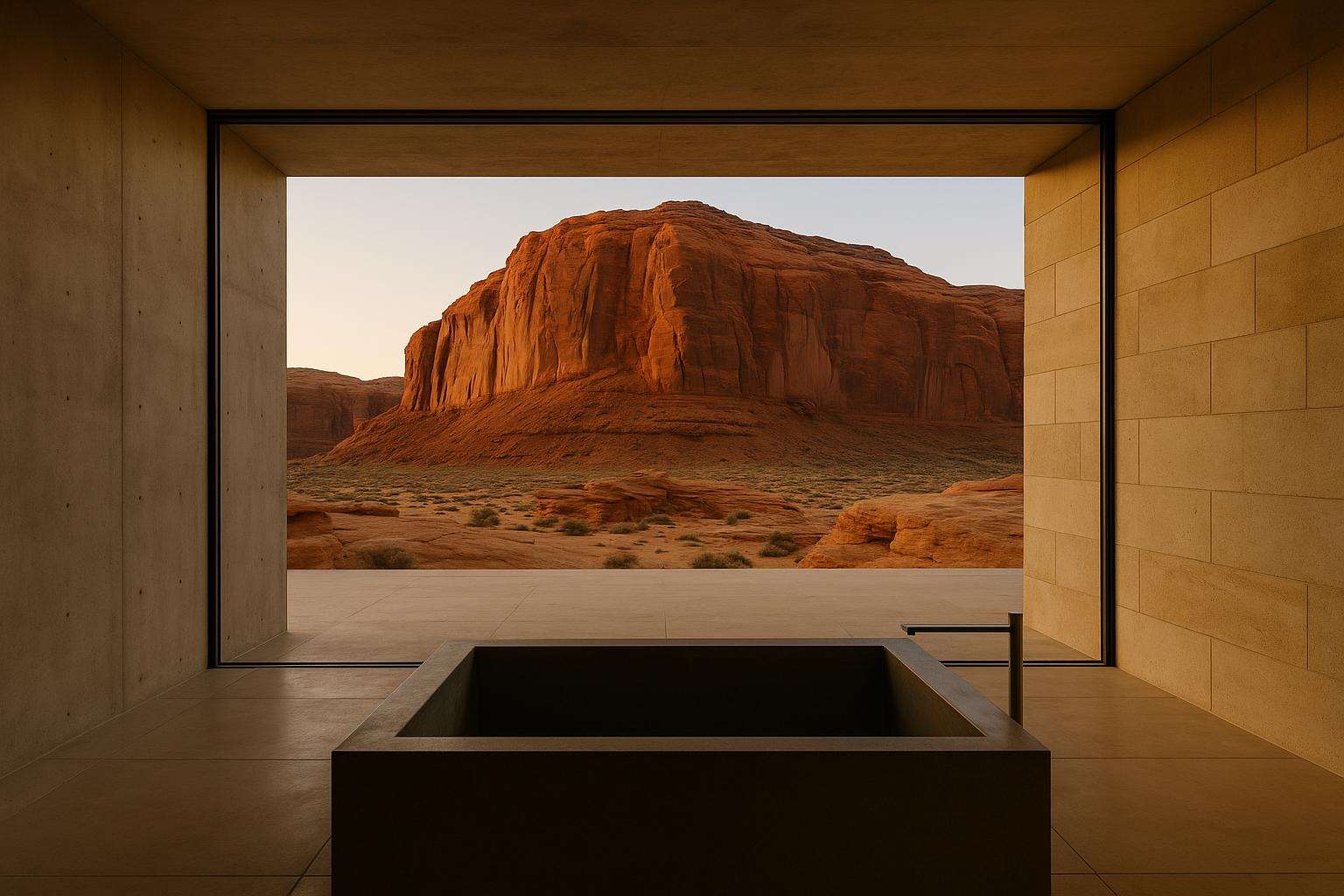
Amangiri (Canyon Point, Utah) sits on 920 acres of the Colorado Plateau at the intersection of the Grand Canyon, Monument Valley, Bryce, and Zion — a landscape with no comparable equivalent in American luxury hospitality, as the resort's own property page makes clear. Its 34 suites are hewn into the desert, with poured-concrete walls, limestone floors, retractable glass walls opening to the desert, deep soaking tubs positioned for Navajo sandstone views, and fireplaces. The mesa-embracing pool is among the most photographed in the world. Nightly rates in 2026 range from $3,700 to $9,450 for standard suites, with private-pool suites reaching $6,000 to $12,000 and the Mesa Home at $15,000 to $25,000. Daily breakfast, lunch, and dinner for two are included; alcohol and excursions are billed separately and priced aggressively, with guided canyon excursions running $700-plus per person.
The honest caveat matters here. Luxury Intel's 2026 review rates Amangiri 7.9 out of 10, awarding perfect scores for ambiance and near-perfect scores for rooms, while noting that service (2.7) and food (2.1) are relative weaknesses — the architecture is the product, not the gastronomy. The Aman Spa draws on Navajo traditions, emphasizing earth, wind, fire, and water. If you come for the landscape and design and treat dining as functional, Amangiri delivers a honeymoon few settings can rival; if you expect food to match the price, temper expectations before you book.
Amanjiwo: where the emotions match the cost
Amanjiwo (Borobudur, Central Java) is named 'Peaceful Soul' and overlooks the UNESCO World Heritage Site of Borobudur — the world's largest Buddhist temple complex — from within a natural amphitheatre at the foot of the Menoreh Hills. Architect Ed Tuttle designed the resort as an architectural homage to Borobudur itself, with the resort's entrance, central dome, and the temple all aligned on the same axis, per the official resort page. Built almost entirely from locally quarried limestone, its 35 suites are laid out in a crescent, each with four-poster beds on raised platforms, thatched-roof pavilions, outdoor soaking tubs, and many with private pools. The Dalem Jiwo Suite — a two-bedroom retreat with a 15-meter infinity pool finished in traditional Javanese green stone — is the property's apex.
Current rates run $1,086 to $1,450 per night, with Monday bookings typically at the lower end — a fraction of Amangiri's pricing. Amanjiwo's most unreplicable feature is exclusive dawn access to Borobudur: hotel guests alone may visit the temple at sunrise, before general admission opens. Its Cultural Trails Package provides a guided private tour of the upper portions with expert guides, an access level unavailable through any other accommodation in the region. Guest reviews specifically characterize Amanjiwo as the first luxury property where the emotions matched the costs — a distinction the architecture-first, service-heavy Aman model earns most reliably in deeply cultural settings. For a honeymoon blending luxury with genuine cultural depth, it is arguably the best value in the entire portfolio.
Amangani: mountain scenery, with a caveat
Amangani (Jackson Hole, Wyoming) is an imposing structure of Oklahoma sandstone, glass, and Pacific redwood set at 7,000 feet on Gros Ventre Butte, with floor-to-ceiling windows in all 40 suites framing direct Teton views. The critical planning note: the property closed in April 2025 for an extensive renovation, so prospective honeymooners booking for 2026 should confirm the reopening timeline directly with the resort before finalizing plans. Pre-renovation, rates ran roughly $1,500 to $3,000-plus per night depending on season, with peak ski season (December through February) at the upper end. Amangani provides complimentary shuttles to Jackson Hole Mountain Resort and concierge-arranged access to guided Yellowstone and Grand Teton treks, hot-air ballooning, dog sledding, and wildlife safaris; The Grill sources regionally in a mountain-view setting. Unlike Amangiri and Amanjiwo, Amangani's draw is as much seasonal activity as intrinsic design — the correct Aman choice for couples who want dramatic American mountain scenery and adventure programming alongside the brand's service.
| Property | Setting | Suites | 2026 rate (per night) | Best for |
|---|---|---|---|---|
| Amangiri | Utah desert / Colorado Plateau | 34 | $3,700–$9,450+ | Iconic design and landscape; not the food |
| Amanjiwo | Borobudur, Central Java | 35 | $1,086–$1,450 | Cultural depth and best portfolio value |
| Amangani | Jackson Hole, Wyoming | 40 | ~$1,500–$3,000+ (confirm status) | Mountain adventure; renovation in progress |
The verdict — and where else to look
Choose Amangiri for a once-in-a-lifetime desert-design honeymoon, accepting that the architecture, not the kitchen, is the reason you are there. Choose Amanjiwo for the best value and the most emotionally resonant stay in the portfolio, with cultural access no competitor can match. Consider Amangani for mountain adventure — but only after confirming its post-renovation operational status. Beyond these three, Amanyara in Turks and Caicos is the frequent honeymoon pick for couples who want a Caribbean beach and reef with a shorter flight, applying the same Aman model of few rooms, no tiered categories, and place-driven design. The consistent thread is that the Aman premium buys the setting and the service culture, not a list of inclusions — so choose the landscape you most want to wake up in, and use the third-party levers to make the rate defensible, following the value playbook laid out by points-and-travel analysts.
Frequently asked
What actually justifies Aman's $2,000-plus nightly rates?
Aman competes on architecture, place, and service culture rather than amenity count. The properties maintain very low room counts — Amangiri has 34 suites, Amanjiwo 35, Amangani 40 — which produces high staff-to-guest ratios and genuine privacy. There are no tiered room categories in the traditional sense; even entry-level suites are exceptionally large with private outdoor spaces, so you are not buying your way up a ladder. The architecture is the product: Amangiri is hewn into the Utah desert, Amanjiwo is built as an axial homage to Borobudur temple. Meals are either included or served from a controlled on-property kitchen. The absence of a loyalty program is itself a positioning statement — Aman targets guests indifferent to points. Whether that justifies the rate depends on how much you value design and seclusion over the tangible inclusions a comparable-priced Four Seasons or St. Regis would offer.
Is Amangiri worth it for a honeymoon?
Amangiri is the most photographed and most requested Aman for honeymoons, and its setting is genuinely without equal in American luxury hospitality — 34 suites hewn into 920 acres of the Colorado Plateau near the Grand Canyon, Monument Valley, Bryce, and Zion, with poured-concrete walls, retractable glass, and soaking tubs framing Navajo sandstone. But an honest review must note the tradeoffs: Luxury Intel's 2026 assessment rates it 7.9 out of 10, awarding near-perfect scores for ambiance and rooms but flagging service (2.7) and food (2.1) as relative weaknesses. In other words, the architecture is the experience, not the gastronomy. Rates run roughly $3,700 to $9,450 for standard suites, with private-pool suites reaching $6,000 to $12,000. If you come for the landscape and design and treat dining as functional rather than a highlight, it delivers; if you expect food to match the price, temper expectations.
Why do reviewers rate Amanjiwo so highly for value?
Amanjiwo in Central Java is the property where guest reviews most often say the emotions finally matched the cost — a distinction the architecture-first, service-heavy Aman model earns most reliably in deeply cultural settings. Named 'Peaceful Soul,' it overlooks Borobudur, the world's largest Buddhist temple complex, from a natural amphitheatre at the foot of the Menoreh Hills, with the resort's entrance, central dome, and the temple all aligned on a single axis. Its 35 limestone suites are laid out in a crescent, many with private pools. Crucially, rates run roughly $1,086 to $1,450 per night — a fraction of Amangiri — while delivering Aman's most unreplicable feature: exclusive dawn access to Borobudur before general admission opens. For a honeymoon that blends luxury with genuine cultural depth, it is arguably the best value in the entire Aman portfolio.
Can I stay at Amangani in Jackson Hole in 2026?
Confirm directly before planning. Amangani, the imposing Oklahoma-sandstone-and-redwood property set at 7,000 feet on Gros Ventre Butte with direct Teton views from all 40 suites, closed in April 2025 for an extensive renovation. Prospective honeymooners booking for 2026 should verify the reopening timeline with the resort before finalizing any plans, as dates can shift. Pre-renovation, rates ran roughly $1,500 to $3,000-plus per night depending on season, with peak ski season (December through February) at the upper end. Amangani's draw is as much seasonal activity — world-class ski access in winter, Teton hiking in summer, concierge-arranged Yellowstone treks and hot-air ballooning — as intrinsic design, making it the right Aman choice for couples who want dramatic American mountain scenery and adventure alongside the brand's service culture. But nail down the operational status first.
How do I get value at Aman without a loyalty program?
Because Aman has no points program, value comes from third-party benefits and direct packages. American Express Fine Hotels + Resorts is generally the strongest lever — it has offered a $700 spa credit on Amangiri bookings, plus the standard FHR perks of complimentary breakfast, a property credit, and possible upgrades. The Citi 4th Night Free benefit is widely considered the most useful third-party tool for Aman stays, effectively discounting a four-night booking by 25 percent on the room. Booking directly via aman.com unlocks seasonal packages, including three-night full-board romance packages listed at Amangiri. Stacking a channel like FHR with a direct romance package, or timing a four-night stay to capture Citi's benefit, is how experienced Aman guests offset the absence of a points currency. Model these before defaulting to a plain cash booking.
Which other Aman properties suit honeymooners?
Beyond the three American and Southeast Asian properties reviewed here, Amanyara in Turks and Caicos is a frequent honeymoon pick within the Aman portfolio, offering Caribbean beach and reef access with the brand's signature low room count and service culture — a shorter flight for U.S. couples than Amanjiwo and a beach setting Amangiri and Amangani cannot provide. Aman's broader collection spans Bhutan, Japan, Montenegro, and Venice, among others, each competing on place rather than amenity count. The consistent thread across all of them is the same model: very few rooms, no tiered categories, high staff ratios, and architecture tied to a singular setting. Choose the property by the landscape and culture you most want to wake up in, since that — not the amenity list — is what the Aman premium buys.