Resorts & Stays
Best Safari Camps for Honeymoons in East Africa, Ranked
The Maasai Mara, Serengeti and Amboseli concentrate the continent's most romantic safari camps in one compact zone. We rank the standouts on romance, privacy and wildlife access.
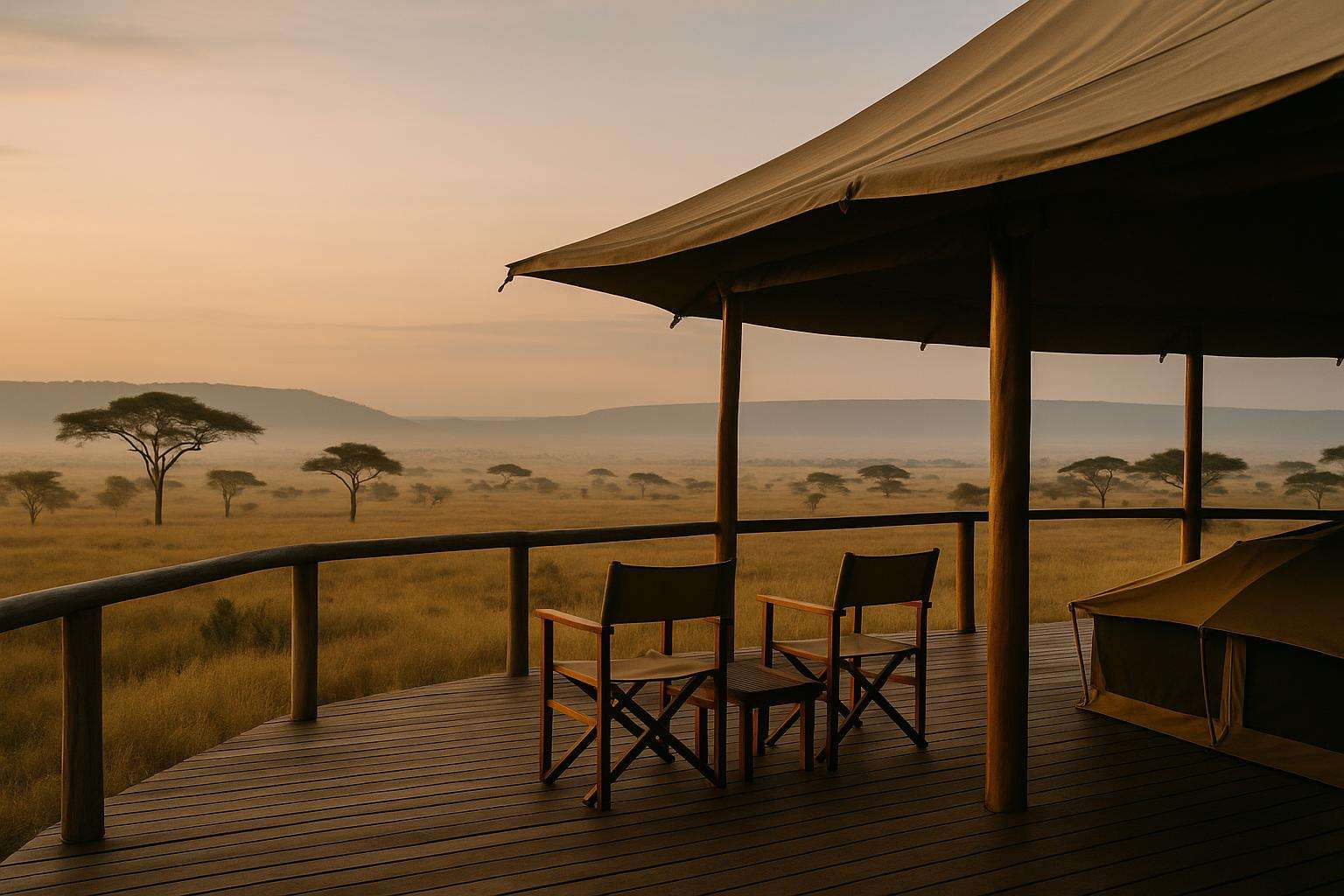
Maasai MaraSerengetiAmboseliHoneymoon safariLuxury camps
The quick verdict
The Maasai Mara, Serengeti and Amboseli camps that do romance, privacy and wildlife best — ranked for honeymooners.
- Best overall
- Angama Mara — The most-reviewed honeymoon lodge in Kenya — a dramatic escarpment perch over the Mara triangle, private bush dinners and a dedicated honeymoon concierge, with migration crossings visible below in peak season.
- Best value
- Little Governors' Camp — Boat-access-only isolation and complete privacy at a fraction of the ultra-luxury tier's rate, with candlelit dinners standard and front-row Mara River wildlife off the tent deck.
- Best for Couples who want scenery and elephants over migration spectacle
- Elewana Tortilis Camp — Amboseli's Kilimanjaro backdrop is unrivaled and its elephant herds walk within meters of vehicles, at rates below the Mara and Serengeti ultra-luxury peers.
How we evaluated
We ranked East Africa honeymoon camps on the three variables couples care about most: romance (how intentionally the camp is designed for two — private dinners, honeymoon suites, plunge pools, concierge), privacy (camp size, private-conservancy access, vehicle exclusivity), and wildlife access (ecosystem position, guide quality, camp-to-game ratio). Rates are 2026 per-person-per-night ranges at peak season from operator and specialist sources; we note honeymoon promotions and shoulder-season savings where they apply.
- Romance. Intentional design for couples — private bush dinners, standalone honeymoon suites, plunge pools, spa, dedicated honeymoon concierge and ceremonial touches.
- Privacy. Camp size, private-conservancy access where no other vehicles are permitted at sightings, and the option of a private vehicle so game drives aren't shared.
- Wildlife access. Location within a productive part of the ecosystem, guide quality, and the camp-to-game ratio that determines how much you see and how uncrowded it feels.
- Value in context. Rate relative to what's delivered, including inclusions, conservancy fees, and applicable honeymoon or seasonal discounts.
Rating scale: Ratings are 1–5 editorial judgments of suitability for a honeymoon, weighing romance, privacy, wildlife access and value in context. They are not affiliations.
Last verified .
At a glance
| # | Name | Rating | Best for | Pricing |
|---|---|---|---|---|
| 1 | Angama Mara | 5.0 | First-time safari honeymooners who want iconic scenery, romance and dependable wildlife in one place | ~$1,800–$2,200 pp/night at peak (2026) |
| 2 | Singita Sasakwa Lodge | 5.0 | Couples who want the Serengeti's finest lodge with guaranteed exclusivity and are willing to splurge | ~$2,455–$3,525 pp/night by season (2026) |
| 3 | Cottar's 1920s Safari Camp | 4.5 | Couples who value intimacy, privacy and safari's romantic heritage over migration-doorstep positioning | ~$1,500–$2,400 pp/night by season (2026) |
| 4 | Little Governors' Camp | 4.5 | Couples who want immersion, isolation and value over five-star lodge polish | ~$800–$1,400 pp/night (2026) |
| 5 | Elewana Tortilis Camp | 4.0 | Couples who prioritize scenery and elephants over migration spectacle, or want a distinctive second-leg camp | ~$800–$1,300 pp/night (2026) |
Angama Mara
The escarpment perch that defines the Kenyan honeymoon lodge
Editor's pick
Angama Mara is the most-reviewed honeymoon lodge in Kenya, and its position explains why: it is perched on the Oloololo Escarpment — the precise ridge featured in the opening of Out of Africa — overlooking the full 1,500-square-kilometer Mara triangle below. Thirty suites split across two camps deliver scale without the crowding of a large lodge, and glass-fronted tents frame the plains from bed. For romance, Angama runs private bush dinners, a spa, and a dedicated honeymoon concierge; for privacy, a private-vehicle upgrade is available so couples aren't sharing game drives. Wildlife access is outstanding — in peak season (July–October) the Great Migration's river crossings are visible from the escarpment itself, a vantage no valley-floor camp can match. Rates run roughly $1,800–$2,200 per person per night at peak. The honest tradeoff is that Angama sits above the reserve rather than in a private conservancy, so some game drives descend into the shared Mara Triangle; couples who want total vehicle exclusivity at every sighting should pair it with a conservancy stay or hire a private vehicle. For a first safari honeymoon that balances iconic scenery, romance and dependable game, it is the safest choice in East Africa.
Strengths
- Iconic Out of Africa escarpment views over the entire Mara triangle
- Dedicated honeymoon concierge, private bush dinners and spa
- Migration river crossings visible from the escarpment in peak season
- Private-vehicle upgrade available for game-drive exclusivity
Weaknesses
- Sits above the reserve, so some drives share the Mara Triangle rather than a private conservancy
- Peak-season rates and demand require booking 12+ months ahead
- Best for
- First-time safari honeymooners who want iconic scenery, romance and dependable wildlife in one place
- Pricing
- ~$1,800–$2,200 pp/night at peak (2026)
Singita Sasakwa Lodge
The Serengeti's most unambiguous luxury address
Singita Sasakwa Lodge represents the Serengeti's apex. Nine private cottages — each with its own infinity pool — and a four-bedroom villa sit on Sasakwa Hill above the plains, styled as an Edwardian manor with sweeping views. The decisive advantage is the concession: Singita is the only operator of the 350,000-acre Grumeti Reserve, so couples share a vast, wildlife-rich private wilderness with only a handful of other travelers — privacy that is structurally guaranteed rather than merely promised. Romance is exceptional (private-pool cottages, fine dining, spa), and wildlife access is year-round for resident game, with the Migration passing through the Grumeti corridor in July–August without the vehicle congestion of the central Seronera area. Rates run approximately $2,455–$3,525 per person per night depending on season — the top of the East Africa range. The honest tradeoff is exactly that cost: Sasakwa is a splurge, and its manor-house grandeur, while beautiful, is less intimate in feel than a small tented camp. Singita's multi-lodge promotion — twelve nights across two regions earns two complimentary nights — softens the math for couples building a longer itinerary. For those who want the Serengeti's finest with guaranteed exclusivity, nothing surpasses it.
Strengths
- Sole operator of the 350,000-acre Grumeti Reserve — structural privacy
- Private infinity pool in every cottage
- Year-round resident game plus July–August migration without Seronera crowds
- Multi-lodge promotion (12 nights, 2 free) eases the cost
Weaknesses
- Highest rate tier in East Africa (~$2,455–$3,525 pp/night)
- Manor-house grandeur feels less intimate than a small tented camp
- Best for
- Couples who want the Serengeti's finest lodge with guaranteed exclusivity and are willing to splurge
- Pricing
- ~$2,455–$3,525 pp/night by season (2026)
Source: AfricanMecca Safaris — Singita Sasakwa Rates 2026-2027
Cottar's 1920s Safari Camp
Vintage romance on a 6,000-acre private conservancy
Cottar's 1920s Safari Camp trades on heritage and privacy in equal measure. Set on a 6,000-acre private conservancy bordering the southern Maasai Mara, it evokes the golden age of safari with period furnishings, canvas and brass, and service that feels personal rather than institutional. Camp size is deliberately capped at six luxury tents plus two villas — among the most intimate in the Mara — so game drives on the private conservancy are genuinely uncrowded, with no other vehicles permitted at sightings. For honeymooners, the emotional differentiator is the traditional Maasai blessing ceremony the camp's staff facilitate, which draws consistently powerful responses from couples. Wildlife is excellent year-round for resident game — lion, leopard, cheetah and elephant — though its southern-Mara position means migration-season river crossings require coordination and travel to the crossing points rather than being on the doorstep. Rates sit in the roughly $1,500–$2,400 per person per night range depending on season and tent category. The honest tradeoff is that the vintage aesthetic, while romantic, is a stylistic choice — couples who prefer contemporary, glass-and-steel lodge design may find the classic canvas-and-lantern look less to their taste. For couples who want intimacy, privacy and a sense of safari's romantic history, few camps match it.
Strengths
- Only six tents plus two villas — exceptional intimacy
- 6,000-acre private conservancy with vehicle-exclusive sightings
- Traditional Maasai blessing ceremony for honeymooners
- Strong year-round resident predator game
Weaknesses
- Southern-Mara position means migration crossings require coordination
- Vintage aesthetic won't suit couples who prefer contemporary design
- Best for
- Couples who value intimacy, privacy and safari's romantic heritage over migration-doorstep positioning
- Pricing
- ~$1,500–$2,400 pp/night by season (2026)
Little Governors' Camp
Boat-access-only isolation on the Mara River
Best value
Little Governors' Camp engineers privacy through geography: it is accessible only by a small motorboat across the Mara River — no vehicle can reach the camp itself. That structural isolation transforms the atmosphere. Hippos surface below the tent decks, the sound environment is entirely wildlife, and the sense of being sealed inside the bush is complete in a way larger, road-accessible lodges cannot replicate. For honeymooners, candlelit dinners are standard rather than an upcharge, and the camp's position on the Mara River delivers front-row access to river-edge elephants, hippo pods and, in peak season, migration crossing action nearby. At roughly $800–$1,400 per person per night, it is the best value on this list — delivering complete privacy and prime wildlife at a rate well below the ultra-luxury tier. The honest tradeoffs are real: the camp is more classic-tented than opulent, the boat transfer adds a logistical step (and can feel involved with luggage), and it sits within the reserve rather than a private conservancy, so game drives can encounter other vehicles at popular sightings. But for couples who prioritize immersion, isolation and value over five-star polish, Little Governors' delivers a visceral honeymoon that the grander lodges, for all their comfort, cannot buy.
Strengths
- Boat-access-only — complete, structural isolation
- Hippos below the deck; wildlife-only soundscape
- Candlelit dinners standard, not an upcharge
- Best value on this list (~$800–$1,400 pp/night)
Weaknesses
- Classic-tented rather than opulent; not a five-star-polish property
- Inside the reserve (not a private conservancy), so drives can meet other vehicles
- Best for
- Couples who want immersion, isolation and value over five-star lodge polish
- Pricing
- ~$800–$1,400 pp/night (2026)
Elewana Tortilis Camp
Kilimanjaro's backdrop and Amboseli's fearless elephants
Elewana Tortilis Camp is the standard-setter for the Amboseli-Kilimanjaro corridor, and it offers something no Mara or Serengeti camp can: Africa's highest mountain framed directly from wide canvas rooms. Amboseli's elephant herds are among the most studied on the continent and, crucially, among the least habituated to fear — bulls walk within meters of game vehicles, delivering elephant encounters unmatched elsewhere in East Africa. For honeymooners, the mountain backdrop is the romantic centerpiece: sunrise over Kilimanjaro from a private breakfast or a bush dinner with the peak glowing is a signature experience. Rates sit below the Mara ultra-luxury peers — roughly $800–$1,300 per person per night — making Tortilis a strong value for couples who prioritize scenery and elephants over Big Five density. That is the honest tradeoff: Amboseli is elephant-and-scenery country first, and its Big Five sightings (particularly big cats) are less consistent than the Mara or Serengeti. Kilimanjaro also famously hides behind cloud for parts of the day, so the iconic clear-peak view is not guaranteed on any given morning. But for couples who want a distinctive, photogenic and elephant-rich honeymoon at a gentler price, or as the second leg of a two-camp itinerary paired with a Mara stay, Tortilis is the clear choice in this corner of Kenya.
Strengths
- Kilimanjaro framed directly from the rooms — unrivaled backdrop
- Amboseli's famously approachable, unhabituated elephant herds
- Strong value below Mara/Serengeti ultra-luxury peers
- Excellent as a second leg paired with a Mara camp
Weaknesses
- Big Five density (especially big cats) less consistent than Mara/Serengeti
- Kilimanjaro often hides behind cloud — the clear-peak view isn't guaranteed
- Best for
- Couples who prioritize scenery and elephants over migration spectacle, or want a distinctive second-leg camp
- Pricing
- ~$800–$1,300 pp/night (2026)
Which should you choose?
·
Goal:
—
·
Goal:
—
·
Goal:
—
Frequently asked
How much does an East Africa safari honeymoon cost?
East Africa honeymoon camp rates span roughly $800 to $3,525 per person per night at peak season, depending on the property and location. Kenya packages start around $6,997 per person for a complete trip; Tanzania private-reserve safaris begin near $7,997 per person. At the top end, Singita Sasakwa Lodge in Tanzania's Grumeti Reserve runs about $2,455–$3,525 per person per night by season, while Kenyan Mara camps like Angama Mara sit around $1,800–$2,200 per person at peak. Conservancy fees of $100–$150 per person per day and private-vehicle hire of $250–$400 per day are common add-ons. Shoulder-season travel (April–May in East Africa) can cut rates 20–50% at the same properties, materially lowering the total.
When is the best time for a safari honeymoon in East Africa?
For the Great Migration river crossings — the region's benchmark spectacle — target July through October in the Maasai Mara and northern Serengeti, when wildebeest herds cross the Mara River. This is peak season with the highest rates and earliest sell-outs. For excellent resident game at lower prices and greener, quieter landscapes, the April–May shoulder season cuts rates 20–50% at many camps, though some smaller camps close for the heaviest rains. Amboseli is strong year-round for its famous elephant herds and Kilimanjaro views, best in the drier months. Book small camps of 8–15 tents twelve to eighteen months ahead for peak dates; Singita's most-requested cottages are blocked by returning guests even further out.
Is a safari honeymoon safe, and what health preparation is needed?
A well-planned East Africa safari is safe, but health preparation matters more than for a Caribbean or European trip. See a travel-medicine specialist six to eight weeks before departure. All of sub-Saharan East Africa carries malaria, so prophylaxis is essential — atovaquone-proguanil (Malarone) is the best-tolerated regimen with the shortest post-travel tail and is the functional-medicine-aligned first choice, especially for women on hormonal birth control or with gut-dysbiosis history; discuss all options with your physician and never stop prescribed medication without guidance. A yellow fever certificate may be required depending on your routing. Pair prophylaxis with permethrin-treated clothing, DEET or picaridin repellent at dawn and dusk, and treated bed nets (standard at reputable camps). Couples who cannot take prophylaxis should consider South Africa's malaria-free reserves instead. This is editorial information, not medical advice.
What makes a safari camp good for a honeymoon specifically?
Three things separate a honeymoon-grade camp from a standard safari lodge. First, romance by design: private bush dinners, standalone honeymoon suites with plunge pools, spa treatments and dedicated honeymoon concierges. Second, privacy: small camps of six to twelve tents, private conservancy access where no other vehicles are permitted at sightings, and the option to hire a private vehicle so you are not sharing game drives with strangers. Third, wildlife access: a location inside a productive part of the ecosystem, top guides, and a low camp-to-game ratio. Camps like Saruni's Love Shack (a suite for one couple at a time) or Little Governors' (reachable only by boat across the Mara River) engineer intimacy structurally, which is what elevates them for couples over a larger, more institutional lodge.
Should we choose the Maasai Mara or the Serengeti for our honeymoon?
They are two halves of the same ecosystem, separated by the Kenya–Tanzania border, and the migration moves between them seasonally. Choose the Maasai Mara (Kenya) for easier logistics — a short flight from Nairobi — and for the private conservancies (Olare Motorogi, Naboisho) bordering the reserve, where conservancy fees buy uncrowded, vehicle-exclusive game drives. Choose the Serengeti (Tanzania) for scale and the world's densest lion populations, with exclusive private concessions like Singita's Grumeti offering hundreds of thousands of acres shared with only a handful of guests. Many couples split the trip: a few nights in each, following the herds. If you want river-crossing drama, match your dates to where the migration will be — July–October favors the Mara and northern Serengeti.
Are there honeymoon discounts on East Africa safaris?
Yes, and they materially change the economics. &Beyond runs a standing safari honeymoon promotion offering 50% off one partner's accommodation rate for the duration of the stay — effectively a quarter off the couple's lodging. Singita offers a multi-lodge promotion: book twelve nights across two regions and receive two complimentary nights, valid across much of 2026. Individual camps run seasonal savings too — Sala's Camp and &Beyond Kichwa Tembo have offered Savings Season and stay-four-pay-three deals in the November–December window. Because these promotions stack with shoulder-season pricing, a couple willing to travel in April–May or the green season can combine a 20–50% seasonal rate cut with a honeymoon discount for substantial total savings. Always ask your advisor to apply current honeymoon offers when booking.