Resorts & Stays
How to Choose an Overwater Bungalow: Orientation, Glass Floors & Lagoon Access
The category name hides enormous variation. Here are the five variables — house reef, row position, sunrise vs. sunset, glass panels, and true lagoon access — that decide whether your overwater villa lives up to the photographs.
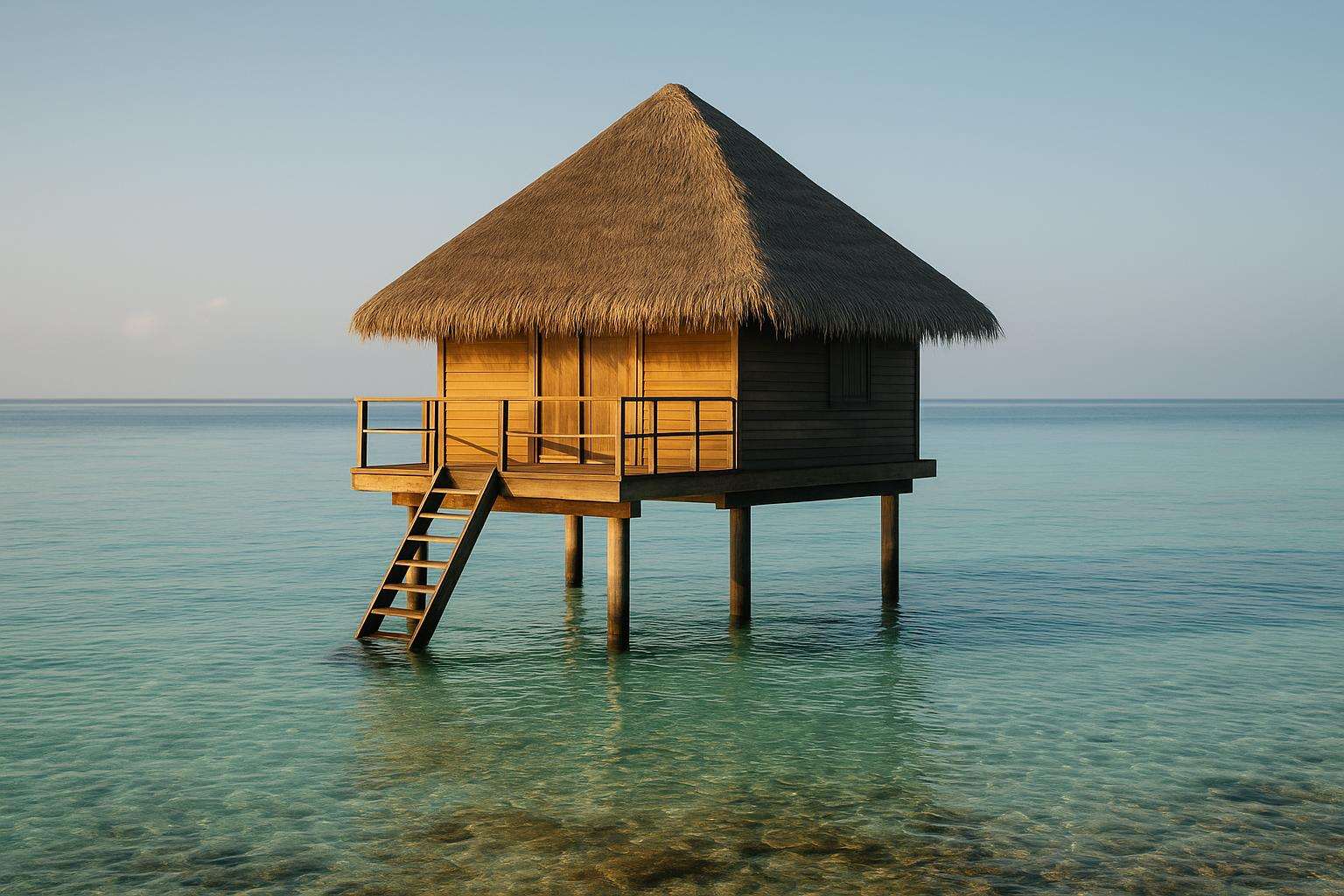
The overwater bungalow is the most aspirational accommodation product in honeymoon travel, and the category name conceals enormous variation. Two villas sold under the identical label — "overwater villa" — can deliver wildly different daily experiences: one over a live house reef teeming with fish, the other on sand at low tide facing the back of another bungalow. Choosing well means evaluating five specific variables before you book, not after you arrive. This is the honest, ranked checklist we use.
How much does villa orientation change your day?
Sunrise versus sunset is the most personal decision and has real scheduling consequences. West-facing (sunset) villas are the most requested category at the majority of Indian Ocean resorts and book out first during peak season — they deliver the golden-hour view most couples picture. East-facing (sunrise) villas produce the sharpest golden-morning light for photography and face less direct afternoon heat, an advantage where decks are used throughout the day. Couples who sleep late often prefer west-facing units simply to avoid early sun flooding the bedroom. Many resorts offer a mix, so when booking directly or through a specialist, request the cardinal orientation explicitly — generic online-travel-agency systems frequently assign the room category without noting directional position, as travel-points analysts repeatedly warn in their breakdown of Maldives overwater booking pitfalls.
Why does the house reef decide the whole experience?
Water clarity and house reef quality is arguably the single most important variable for couples who plan to snorkel or swim from their deck. The Maldives consistently offers 30 to 40 meters of underwater visibility, and most resort islands have a house reef directly accessible via the villa steps. Bora Bora's lagoon averages 20 to 30 meters of visibility and is predominantly sandy-bottomed near the hotels — snorkeling of note typically requires a boat excursion rather than being a deck-step experience, a difference laid out clearly in this Maldives-versus-Bora-Bora comparison. Within the Maldives, atoll position matters: South Ari Atoll properties sit on the migration path of manta rays and whale sharks, while North Malé Atoll resorts offer faster airport transfers but less spectacular reef diversity. If marine life is your dream, choose the destination and atoll for the reef first.
What does 'lagoon access' actually deliver?
Direct lagoon access sounds universal but is not. At properties where overwater villas are arranged in two parallel rows along a single boardwalk, second-row villas face the backs of first-row villas, not open ocean — a layout common at busier resorts. Second-row placements are priced 10 to 20 percent lower and are the single most common disappointment reported by first-time guests who booked through a generic OTA without confirming row position. Separately, some resorts described as having overwater villas actually position a portion of units on sand at low tide rather than continuously over open water; Constance Moofushi reviewers specifically flag this, recommending the middle portion of the villa block, per this detailed property review. Current depth beneath the deck also varies — lagoon villas over shallow, sandy bottoms allow wading access, while ocean or reef-edge villas over deeper water require steps and a ladder, meaningful for guests with limited swimming ability.
How to read glass floor panels and villa size
Glass floor panels are standard at four- and five-star overwater properties but vary in placement and illumination. The most productive viewing window is the 9 to 11 a.m. slot, when the sun angle is low enough to penetrate the water without the midday surface reflection that reduces clarity; polarized sunglasses eliminate surface glare entirely. Properties offering illuminated panels — lit from below at night — attract nocturnal sea creatures and create a distinctive ambient feature. Some resorts place the panel in the living room rather than the bedroom or bathroom, which affects how naturally you encounter it.
Villa size ranges from roughly 65 square meters at entry Maldivian water villas to 140-plus square meters in Bora Bora and premium Maldivian units. Larger villas include separate living areas, outdoor showers, and extended deck space — meaningful for seven-night stays but less important for two- or three-night segments. Constance Moofushi's Senior Water Villa, for instance, is 94 square meters versus 66 for the standard Water Villa, with extended terraces optimized for sunset views. A private plunge pool matters most for couples who prefer controlled swimming over open-water immersion and adds $200 to $600 per night where optional.
The ranked checklist
| Rank | Variable | Why it matters | What to confirm before booking |
|---|---|---|---|
| 1 | House reef / marine life from the deck | Decides whether you snorkel off your steps or need a boat | Destination and atoll; live house reef accessibility |
| 2 | Row / position within the resort | Front row = open ocean; second row = backs of other villas | "First row," "front row," or "ocean-facing" in writing |
| 3 | Sunrise vs. sunset orientation | Afternoon heat, morning light, cocktail-hour view | Cardinal direction of the villa, explicitly |
| 4 | Glass floor panel size and illumination | Best viewing 9–11 a.m.; night lighting extends the feature | Panel location (bedroom/living room) and whether lit |
| 5 | Deck area and plunge pool inclusion | Living space for longer stays; controlled swimming | Square meters; whether a private pool is included |
The presence of a private pool is a preference, not a quality tier; a villa without one is simply suited to a couple who would rather immerse in the reef. Put the variables in this order, confirm each in writing before you pay, and the overwater bungalow you book will be the one the photographs promised — not the second-row unit facing the back of someone else's deck.
Frequently asked
Is a sunrise or a sunset overwater villa better?
It comes down to your sleep habits and how you plan to use the deck. Sunset (west-facing) villas are the most requested category at most Indian Ocean resorts and book out first — they deliver the golden-hour cocktail-hour view honeymooners picture. But they also flood with direct afternoon heat, and some couples find that appealing rather than a drawback. Sunrise (east-facing) villas produce the sharpest early golden light for photography, face less harsh afternoon sun, and are usually priced slightly lower and easier to secure. If you sleep late, a sunset villa spares you early sun in the bedroom; if you rise early and shoot photos, sunrise wins. Whichever you choose, request the cardinal orientation explicitly when booking — generic booking systems often assign the room category without noting which way it faces.
What does 'direct lagoon access' really mean?
It sounds universal but is not. At resorts where overwater villas run in two parallel rows along one boardwalk, the second-row villas face the backs of the first-row villas rather than open water — a common layout at busier properties. Those second-row units are typically priced 10 to 20 percent lower and are the single most frequent disappointment reported by first-time guests who booked through a generic online travel agency without confirming their position. Separately, some 'overwater' villas actually sit on sand at low tide rather than continuously over open water. Always confirm in writing: ask for 'first row,' 'front row,' or 'ocean-facing,' and ask whether there is water beneath the deck at low tide. That one email prevents the most expensive booking mistake in this category.
When are glass floor panels actually useful?
Glass floor panels are now standard at four- and five-star overwater properties, but their value depends on placement, illumination, and timing. The most productive viewing window is roughly 9 to 11 a.m., when the sun angle is low enough to penetrate the water column without creating the midday surface reflection that washes out clarity. Polarized sunglasses used while looking through the panel eliminate surface glare almost entirely. Properties that light their panels from below at night extend the experience dramatically, attracting nocturnal sea creatures and creating an ambient room feature. One practical caveat: some resorts place the panel in the living room rather than the bedroom or bathroom, which changes how naturally you encounter it during a stay. Confirm the panel's location and whether it is illuminated before you assume it will be a highlight.
Does the house reef matter more than the villa itself?
For couples who plan to snorkel or swim from their deck, yes — house reef quality is arguably the single most important variable, and it varies enormously by destination and atoll. The Maldives consistently offers 30 to 40 meters of underwater visibility, with most resort islands offering a live house reef reachable directly by the villa steps. Bora Bora's lagoon averages 20 to 30 meters of visibility and is predominantly sandy-bottomed near the hotels, so notable snorkeling usually requires a boat excursion rather than a deck-step swim. Within the Maldives, South Ari Atoll properties sit on the migration path of manta rays and whale sharks, while North Malé Atoll resorts trade some reef diversity for faster airport transfers. If marine life from your deck is the dream, choose the destination and atoll for the reef first and the villa second.
Do I need a villa with a private plunge pool?
A private plunge pool matters most for couples who prefer controlled, intimate swimming over open-water immersion, or who want a place to cool off without stairs down into the lagoon. It typically adds $200 to $600 per night at resorts where it is optional. If your priority is snorkeling off the deck and immersing in the reef, the plunge pool is largely redundant and the money is better spent on a front-row position or a larger villa. If you value privacy, want to swim after dark, or are traveling with limited confidence in deep open water, the plunge pool earns its cost. It is a preference decision, not a quality one — a villa without a pool is not lesser, just differently suited.
How large should an overwater villa be for a week-long stay?
Entry-level Maldivian water villas start around 65 square meters; premium Maldivian units and most Bora Bora bungalows run 90 to 140-plus square meters. For a two- or three-night segment, the smaller footprint is perfectly comfortable — you are outside on the deck or in the water most of the day. For a full seven-night stay, the extra size becomes meaningful: separate living areas, outdoor showers, and extended deck space change how the villa feels when you are actually living in it. As a benchmark, Constance Moofushi's standard Water Villa is 66 square meters, while its Senior Water Villa is 94 square meters with extended, sunset-optimized terraces. Match the size to the length of stay, not to the marketing photos.