Travel Smart
Adventure & Safari Honeymoon Packing List: DEET vs. Picaridin & Essential Gear
The weight-limited, malaria-aware packing discipline a safari honeymoon demands, plus an evidence-based look at DEET, picaridin, and essential-oil repellents.
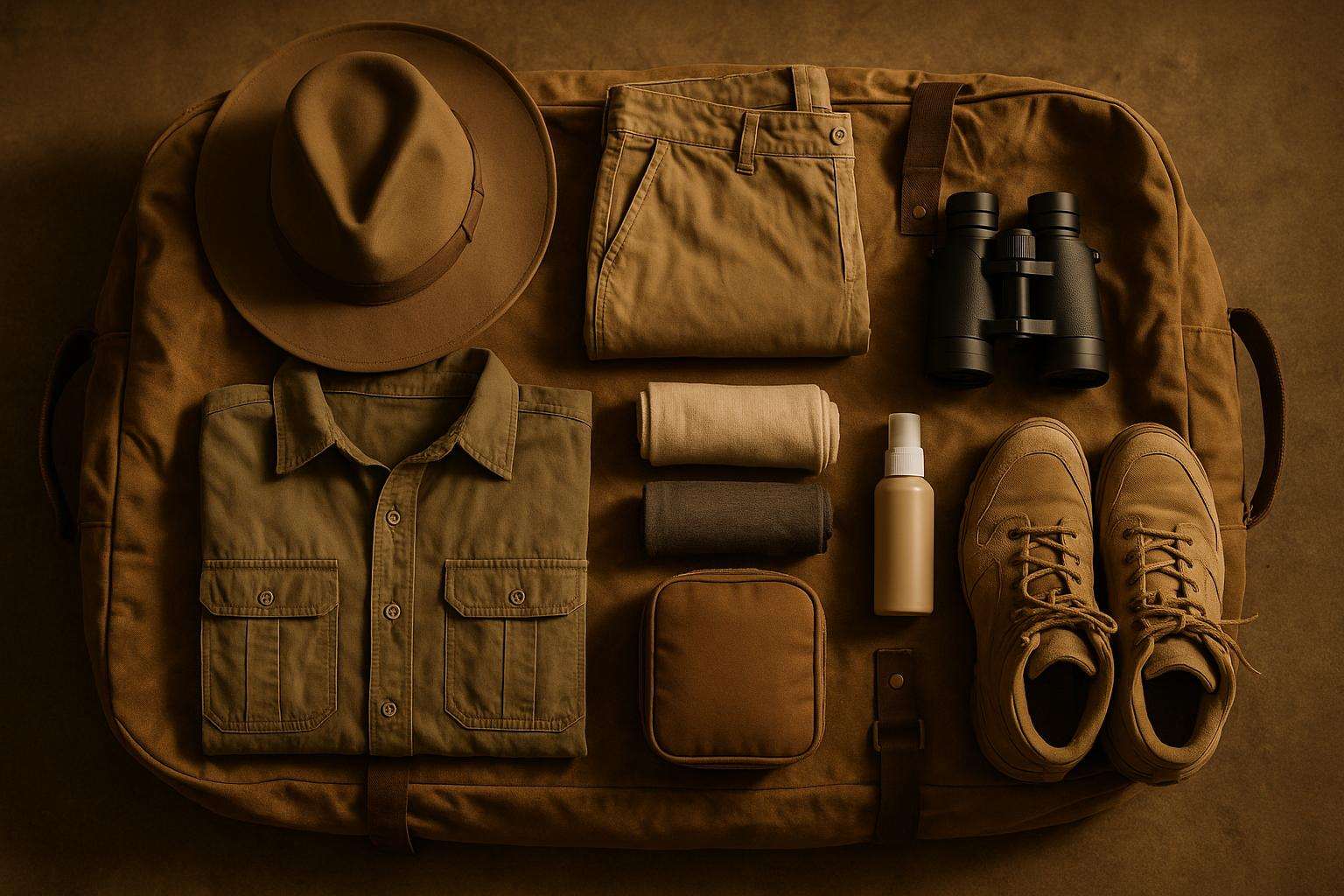
Adventure honeymoons, African safaris above all, impose stricter packing discipline than resort travel. The defining constraint arrives before you even choose a shirt: many bush flights on Eastern African safari circuits enforce a 33-pound total luggage limit, including carry-on, per U.S. News's safari packing guidance, and light-aircraft holds usually require soft-sided duffels rather than hard cases. Weight management is a first-order concern, not a preference, and it shapes every decision below.
Clothing: a three-layer system in neutral tones
The functional layering system for safari and hiking follows a three-layer logic: a moisture-wicking base layer, a mid-layer (fleece or lightweight down), and a windproof outer shell. This beats packing many single-purpose garments because the layers combine to cover cold dawn game drives and hot midday hours from the same small kit.
- Base: Merino wool (Smartwool, Icebreaker) resists odor and regulates temperature across a wide range, so it re-wears cleanly and cuts total volume, exactly what a 33-pound limit demands.
- Travel-utility: ExOfficio's Give-N-Go pieces and BugsAway shirts (pre-treated with 0.52% permethrin bonded to the fabric) add an insect-protection layer without extra weight.
- Versatile mid/outer: Patagonia Capilene Cool Daily shirts (recycled polyester, 50+ UPF) and a lightweight down hoodie cover the range.
On color, neutral tones, khaki, olive, beige, sage, are universal guidance. Dark colors attract tsetse flies, and wildlife is least spooked by earth tones. Avoid camouflage patterns, which are restricted for civilians in several African countries.
Insect repellent: DEET vs. picaridin vs. essential oils, honestly
The CDC and EPA jointly recommend DEET, picaridin, and IR3535 as the three evidence-backed topical repellents. Here is how they actually compare:
| Repellent | Effective concentration | Protection duration | Notes |
|---|---|---|---|
| DEET | 20–30% | 5–8 hours | >30% adds no protection but degrades skin/plastics |
| Picaridin | 20% | 8–14 hours | No odor, no residue, safe on synthetics/plastics |
| Permethrin (clothing only) | 0.5% | ~6 washes / 6 weeks | Applied to fabric, not skin; complementary layer |
| Essential oils | Varies | <60 min (retail) | Not EPA-registered; inadequate for malaria zones |
Per REI's repellent guide and Vector Disease Control International, picaridin at 20% is near-equivalent to DEET in efficacy while lasting longer and sparing your camera gear, binoculars, and synthetic clothing, which is why many safari travelers prefer it. DEET remains fully valid; the choice is duration and material compatibility, not one being categorically better.
The functional-lens caveat on essential oils
Couples drawn to natural products deserve an honest answer rather than dismissal. Essential oils, citronella, lemongrass, peppermint, provide under 60 minutes of protection at retail concentrations and are not EPA-registered as repellents, so they are inadequate for a malaria-endemic safari. But the underlying botany is not worthless: an NCBI study found specific water-soluble formulations of lemongrass and eucalyptus achieved 93.3 to 100 percent repellent effect for up to 180 minutes at high concentrations. That is promising for future products but not yet replicated in what stores sell today. The root-cause conclusion: use DEET or picaridin as your primary defense and treat essential oils as a supplement, never a substitute, in a genuine disease zone.
Repellent does not replace malaria prevention
This cannot be overstated: insect repellent reduces bites but does not replace malaria prophylaxis. For East African safaris (Kenya, Tanzania, Uganda) and eco-lodge trips in Southeast Asia, consult a travel medicine clinic at least six weeks before departure for appropriate antimalarial medication (atovaquone-proguanil, doxycycline, or mefloquine) chosen for your specific itinerary and health profile. Work with a qualified physician; do not alter prescribed medication on your own. Layer your protection: prophylaxis, topical repellent, permethrin-treated clothing, and a bed net where lodges do not provide one.
The medical kit: conventional core, functional additions
At minimum, pack a physician-prescribed broad-spectrum antibiotic, loperamide (anti-diarrheal), an antihistamine (cetirizine or loratadine), oral rehydration salts, ibuprofen, adhesive bandages and blister treatment (Compeed), and a digital thermometer. A compact water-purification solution (a squeeze filter or purification tablets) is essential for off-grid trekking.
Through a functional, root-cause lens, and alongside, never instead of, the conventional items, consider electrolyte replacement beyond plain rehydration salts to hold hydration in equatorial heat, and a shelf-stable probiotic to support gut resilience against travel-related dysbiosis. These are supportive additions; the prescription components and the malaria plan remain the medical foundation, built with your physician well before you fly.
Two practical customs notes
Kenya, Tanzania, and Rwanda all prohibit single-use plastic bags at entry as of 2026, replace Ziploc bags with reusable silicone pouches (Stasher) or cloth bags to avoid fines at customs. And confirm your 33-pound bush-flight allowance in writing with your operator, since it includes carry-on and is enforced on the tarmac.
Packing a mixed itinerary rather than a pure safari? Our carry-on-only packing strategy covers the beach-and-city version of this same weight discipline, and for the coverage side, see our guide to adventure honeymoon travel insurance.
Frequently asked
How much luggage can I bring on a safari honeymoon?
Weight management is a first-order concern, not a preference, because many bush flights on Eastern African safari circuits enforce a 33-pound total luggage limit, including your carry-on. Soft-sided duffels are usually required over hard cases so bags can be stowed in the small holds of light aircraft. This constraint drives every other packing decision: it is why Merino base layers that re-wear without odor are valuable, why you wear your bulkiest items on travel days, and why a functional three-layer system beats packing many single-purpose garments. Confirm the exact limit with your specific operator and any internal flights, since limits vary by aircraft and route, and overages may simply be refused rather than charged.
Should I wear specific colors on safari?
Yes. Neutral tones, khaki, olive, beige, and sage, are the universal guidance for safari clothing. Dark colors, particularly dark blue and black, attract tsetse flies, whose bites are painful and in some regions carry disease risk. Bright white and vivid colors can spook wildlife and make you conspicuous, reducing the quality of game viewing. Earth tones let you blend into the environment so animals behave naturally and are least likely to be startled. Avoid camouflage patterns, which are restricted or illegal for civilians in several African countries and can cause problems at borders. Build a small palette of neutral, breathable, lightweight pieces that layer together and re-wear cleanly.
Is DEET or picaridin better for a safari?
Both are evidence-backed and effective; the choice comes down to duration and material compatibility. The CDC and EPA jointly recommend DEET, picaridin, and IR3535 as the three proven topical repellents. DEET at 20 to 30 percent provides 5 to 8 hours of protection against mosquitoes and ticks; concentrations above 30 percent add no meaningful protection but increase skin and plastic degradation. Picaridin at 20 percent is considered near-equivalent to DEET in efficacy, with EPA data indicating 8 to 14 hours of protection, no odor, no greasy residue, and no damage to synthetic fabrics or plastics. For a safari where you handle cameras, binoculars, and synthetic gear all day, picaridin's material-friendliness often makes it the more practical choice, though DEET remains a fully valid option.
Do natural essential-oil repellents work for safari?
Not reliably enough for a malaria-endemic destination. Essential oils such as citronella, lemongrass, and peppermint provide protection measured in under 60 minutes at commercial retail concentrations and are not EPA-registered as repellents. They are appropriate for low-risk environments but inadequate for safari. That said, the science is nuanced: an NCBI study found specific water-soluble formulations of lemongrass (Cymbopogon citratus) and eucalyptus (Eucalyptus globulus) achieved 93.3 to 100 percent repellent effect for up to 180 minutes at high concentrations. This is promising for future products, but those results are not replicated at the concentrations sold in stores today. For a safari honeymoon, use DEET or picaridin as your primary protection and treat essential oils as a supplement, not a substitute.
Does insect repellent replace malaria prevention?
No, and this is critical. Insect repellent reduces bites but does not replace malaria prophylaxis. For East African safaris in Kenya, Tanzania, and Uganda, and for eco-lodge trips in parts of Southeast Asia, consult a travel medicine clinic at least six weeks before departure for appropriate antimalarial medication, options include atovaquone-proguanil, doxycycline, or mefloquine, chosen based on your specific itinerary and individual health profile. Work with a qualified physician or travel medicine specialist and do not alter prescribed malaria medication without medical guidance. Layer your protection: prescribed prophylaxis, a proven topical repellent on skin, permethrin-treated clothing, and a bed net where lodges do not provide one. No single measure is sufficient on its own.
What belongs in a safari honeymoon medical kit?
At minimum: a broad-spectrum antibiotic prescribed by your physician, loperamide for diarrhea, an antihistamine such as cetirizine or loratadine, oral rehydration salts, ibuprofen, adhesive bandages and blister treatment, and a digital thermometer. A compact water-purification solution, a squeeze filter or purification tablets, is essential for any off-grid trekking. From a functional, root-cause perspective, also consider electrolyte replacement beyond plain rehydration salts and a probiotic to support gut resilience against travel-related dysbiosis, alongside, never instead of, the conventional items. Some East Africa outfitters provide partial kit items in-lodge, so verify with your specific operator. Build the kit with your physician, especially the prescription components, well before departure.