Travel Smart
Functional Health Tips for Honeymooners: Jet-Lag, Gut Health & Sleep at Unfamiliar Hotels
A root-cause playbook for arriving rested and well: how to reset your circadian rhythm, protect your gut across borders, and sleep through the first-night effect in a strange bed.
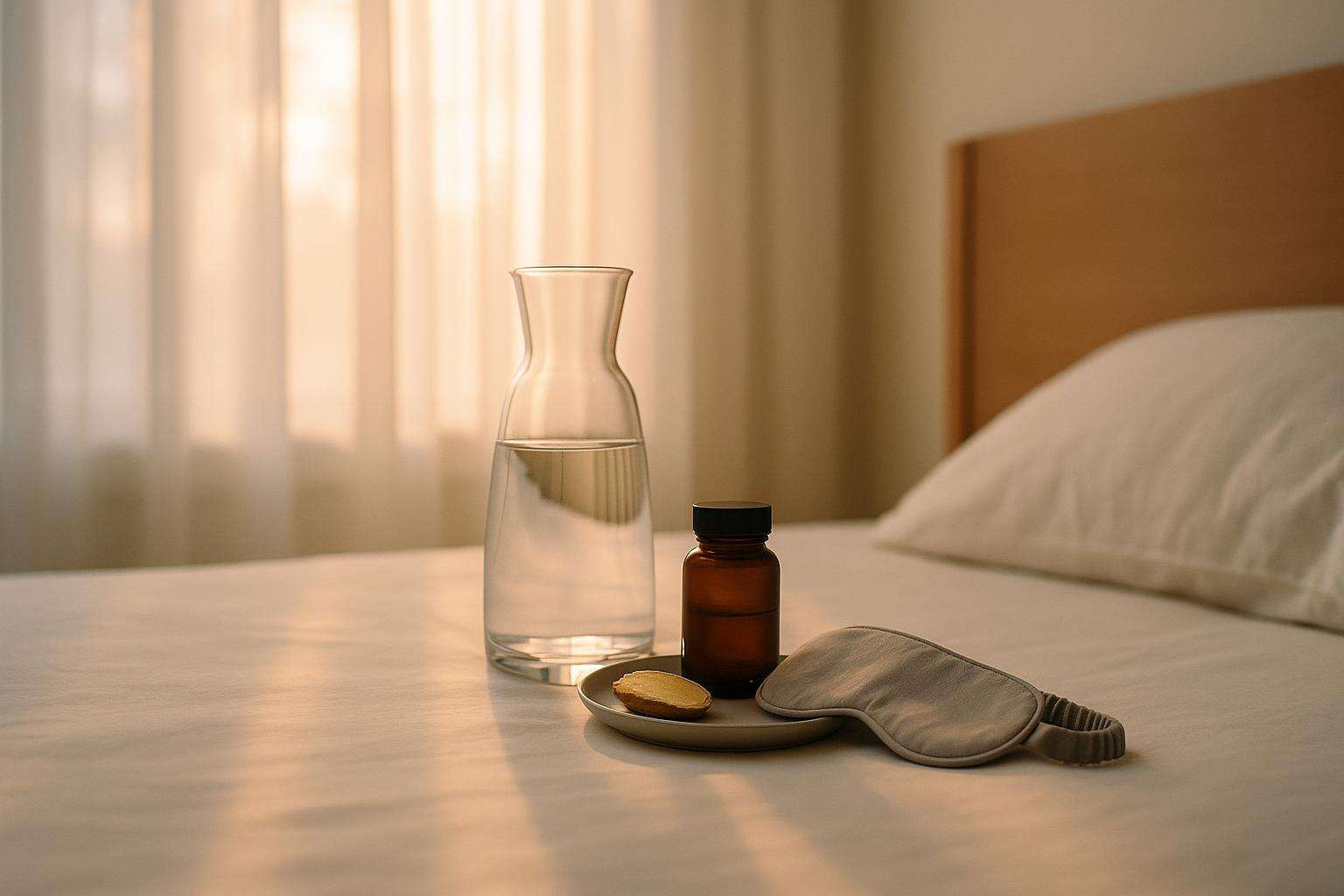
The honeymoon is among the highest-stakes trips most couples will ever take, and also among the most physiologically disruptive. It routinely stacks a long-haul flight, a radical time-zone change, an unfamiliar food environment, and a mountain of emotional expectation into the same 48 hours. A functional-health approach reframes these disruptions: they are not inevitable inconveniences to be endured, but addressable biological challenges with structured, evidence-based protocols. What follows is a root-cause playbook, drawn from CDC guidance, peer-reviewed research, and integrative practice, for arriving rested and staying well.
Reset your circadian rhythm before you take off
Jet lag is not simple tiredness. It is a circadian dysrhythmia: your internal clock remains set to the departure time zone while your surroundings demand rapid synchronization to the destination. The U.S. Centers for Disease Control and Prevention classifies jet lag disorder as a distinct condition whose effects extend well beyond fatigue to cognitive impairment, mood disruption, daytime sleepiness, and gastrointestinal upset, all of which can quietly diminish a honeymoon's first days. A systematic review in Chronobiology International found that personalized combinations of melatonin, timed light exposure, and chrono-modulation significantly improve sleep quality and reduce symptoms.
The protocol begins before departure. Three days out, shift your bedtime by roughly one hour per night toward the destination time zone, going earlier for eastbound flights and later for westbound. Stanford sleep physician Cheri D. Mah recommends adjusting meal timing alongside sleep timing, since the digestive clock responds to food cues as well as light. In flight, defend your hydration aggressively: cabin humidity typically runs a parched 10 to 20 percent, and dehydration compounds fatigue. Avoid alcohol, which fragments sleep architecture and delays adaptation, and reserve caffeine for strategic morning use after arrival.
On landing, deploy two tools together. Melatonin at the destination bedtime, in a modest 0.5 to 3 mg dose, supports the phase shift; higher doses do not speed adaptation and tend to cause grogginess. The CDC notes that bright daylight exposure at the destination is comparably powerful and should accompany, not replace, melatonin. From a functional perspective, adaptogens add a distinct mechanism: ashwagandha (Withania somnifera) taken nightly for two to three days pre-travel supports cortisol regulation via the HPA axis, while morning Rhodiola rosea supports daytime clarity without disrupting sleep. Consult a qualified integrative practitioner before beginning any adaptogen protocol, particularly if either partner takes prescription medication.
Protect your gut across borders
Between 30 and 70 percent of international travelers experience traveler's diarrhea, with risk highest in South Asia, Sub-Saharan Africa, and parts of Southeast Asia, all popular honeymoon regions. The functional approach addresses this at the level of the gut microbiome rather than treating symptoms after the fact. A 2025 meta-analysis in Gut Microbes examined probiotic supplementation for traveler's illness prevention and found statistically significant protective effects for specific strains: both Lactobacillus rhamnosus GG and Saccharomyces boulardii reduced incidence when initiated at least one week before travel and continued throughout the trip.
Begin a multi-strain probiotic delivering at least 10 billion CFU, ideally including those validated strains, seven to ten days before departure. In the two weeks prior, increase fermented foods (kefir, live-culture yogurt, kimchi, raw sauerkraut) and dietary fiber, both of which diversify the microbiome and improve colonization resistance to pathogens. During travel, the behavioral basics still matter most, because a large enough dose of contaminated water or food will overwhelm even a well-prepared gut: avoid tap water, ice from tap water, raw produce washed in tap water, and street food from unverified vendors. Keep electrolytes and oral rehydration salts within reach; coconut water is a natural electrolyte source in tropical destinations. Ginger tea has a long traditional and evidentiary track record for nausea and motility. Wash hands with soap and water rather than sanitizer alone, which strips beneficial skin and gut microbiota alongside pathogens.
Sleep well in an unfamiliar bed
The first-night effect is a documented phenomenon: in an unfamiliar environment, the brain's left hemisphere maintains heightened vigilance, producing reduced slow-wave and REM sleep. For honeymooners arriving jet-lagged into an expensive resort, the first two nights frequently underperform physiologically, which is a cruel irony given the setting. The fix is to seize control of the sleep environment. Request a room on an upper floor away from street and common-area noise, set the temperature to 65 to 68 degrees Fahrenheit (18 to 20 Celsius), the range most consistent with human thermoregulatory sleep onset, and ensure genuine blackout coverage, carrying a portable eye mask as backup if the curtains are thin.
Add steady white noise from the hotel system or a phone app if the ambient sound is irregular. Avoid screens for at least 60 minutes before sleep, since blue light at 450 to 495 nanometers directly suppresses melatonin secretion. Johns Hopkins sleep expert Charlene Gamaldo recommends a brief warm shower before bed: the post-shower cooling triggers sleep-onset signaling through peripheral vasodilation. Finally, treat resort selection itself as a sleep variable. Leading wellness properties increasingly engineer rooms around rest, with motorized blackout curtains, circadian lighting, temperature-regulating duvets, and pillow menus, so a little research before booking can pay off in your most valuable nights.
Putting it together: a honeymoon wellness timeline
Two weeks out, begin the fermented-food and fiber build and, with clinician guidance, any adaptogen protocol. Ten days out, start your validated probiotic. Three days out, begin the one-hour-per-night sleep shift and adjust meal timing to match. On the flight, hydrate hard, skip alcohol, and stay off screens as you approach destination bedtime. On arrival, take low-dose melatonin at local bedtime, get into daylight promptly, and set your first hotel room up for deep sleep. None of these steps is exotic, and none replaces medical advice for existing conditions, but together they convert the honeymoon's built-in physiological chaos into something you can manage, so the trip's early days feel like the celebration you planned rather than a recovery from the journey.
Frequently asked
How much melatonin should I take for honeymoon jet lag?
The functional and clinical consensus points to a low dose: typically 0.5 to 3 mg taken at the destination bedtime, not the higher 5 to 10 mg doses commonly sold. Higher doses do not accelerate circadian adaptation and often cause next-day grogginess, which is precisely what you do not want on your first morning abroad. The CDC stresses that melatonin works best when paired with bright-light exposure during destination daylight hours, which is the stronger of the two signals for resetting your internal clock. Treat melatonin as a nudge that supports the phase shift, not a sleeping pill, and consult a clinician if either partner takes prescription medication.
When should we start taking probiotics before the trip?
Begin at least seven to ten days before departure and continue throughout the trip. A 2025 meta-analysis in Gut Microbes found that Lactobacillus rhamnosus GG and Saccharomyces boulardii both measurably reduced traveler's diarrhea incidence when started roughly a week ahead. Starting the morning of your flight gives the strains no time to establish colonization resistance in your gut. Look for a multi-strain product delivering at least 10 billion CFU that ideally includes those two validated strains, and pair it with fermented foods (kefir, live-culture yogurt, kimchi, raw sauerkraut) and added fiber in the two weeks beforehand to diversify your microbiome.
What is the 'first-night effect' and how do we beat it in a hotel?
The first-night effect is a documented sleep-science phenomenon in which the brain's left hemisphere stays partly vigilant in an unfamiliar environment, cutting your slow-wave and REM sleep on the first night or two. For jet-lagged honeymooners arriving at an expensive resort, those early nights frequently underperform. Counter it with control over the room: request an upper floor away from noise, set the temperature to 65 to 68 degrees Fahrenheit, use blackout coverage (carry a backup eye mask), and add steady white noise. Johns Hopkins sleep expert Charlene Gamaldo recommends a warm shower before bed, because the post-shower cooling triggers sleep-onset signaling through peripheral vasodilation.
Do adaptogens like ashwagandha actually help with travel fatigue?
From a functional-medicine perspective, adaptogens work on a different pathway than melatonin. Ashwagandha (Withania somnifera) taken nightly for two to three days before travel and continuing at the destination is used to support cortisol regulation and sleep onset by modulating the HPA stress axis, rather than melatonin's direct light-entrainment route. Rhodiola rosea is taken in the morning to support daytime energy and cognitive clarity without disturbing sleep. The evidence base is promising but individual, and adaptogens can interact with medications, so consult a qualified integrative practitioner before starting any protocol, especially if either partner takes prescription drugs.
How do we avoid traveler's diarrhea on a tropical honeymoon?
Between 30 and 70 percent of international travelers experience traveler's diarrhea, with the highest risk in South Asia, Sub-Saharan Africa and parts of Southeast Asia, which are common honeymoon regions. Behavioral precautions remain the primary defense: avoid tap water, ice made from tap water, raw produce washed in tap water, and unverified street vendors. Layer a validated probiotic on top, keep electrolytes and oral rehydration salts on hand, and use ginger tea for nausea. Wash hands with soap and water rather than relying on sanitizer alone, which strips beneficial microbiota alongside pathogens. If symptoms are severe or bloody, seek medical care rather than self-treating.
How far ahead should we start shifting our sleep schedule?
Start about three days before departure, shifting bedtime by roughly one hour per night in the direction of your destination time zone. If you are flying east, go to bed earlier; if west, later. Stanford sleep physician Cheri D. Mah recommends adjusting meal timing alongside sleep timing, because the digestive circadian clock responds to food cues, not just light. On the flight, prioritize hydration (cabin humidity runs a dry 10 to 20 percent), avoid alcohol because it fragments sleep architecture, and save caffeine for strategic morning use after you arrive rather than in-flight. On arrival, get outside into daylight promptly to anchor the new rhythm.