Travel Smart
Honeymoon Travel Safety Essentials: The 15-Point Pre-Trip Checklist
The once-in-a-lifetime trip deserves once-in-a-lifetime preparation. This is the 15-point safety checklist — STEP enrollment, the right insurance, a real medical kit, document copies — to complete before you leave.
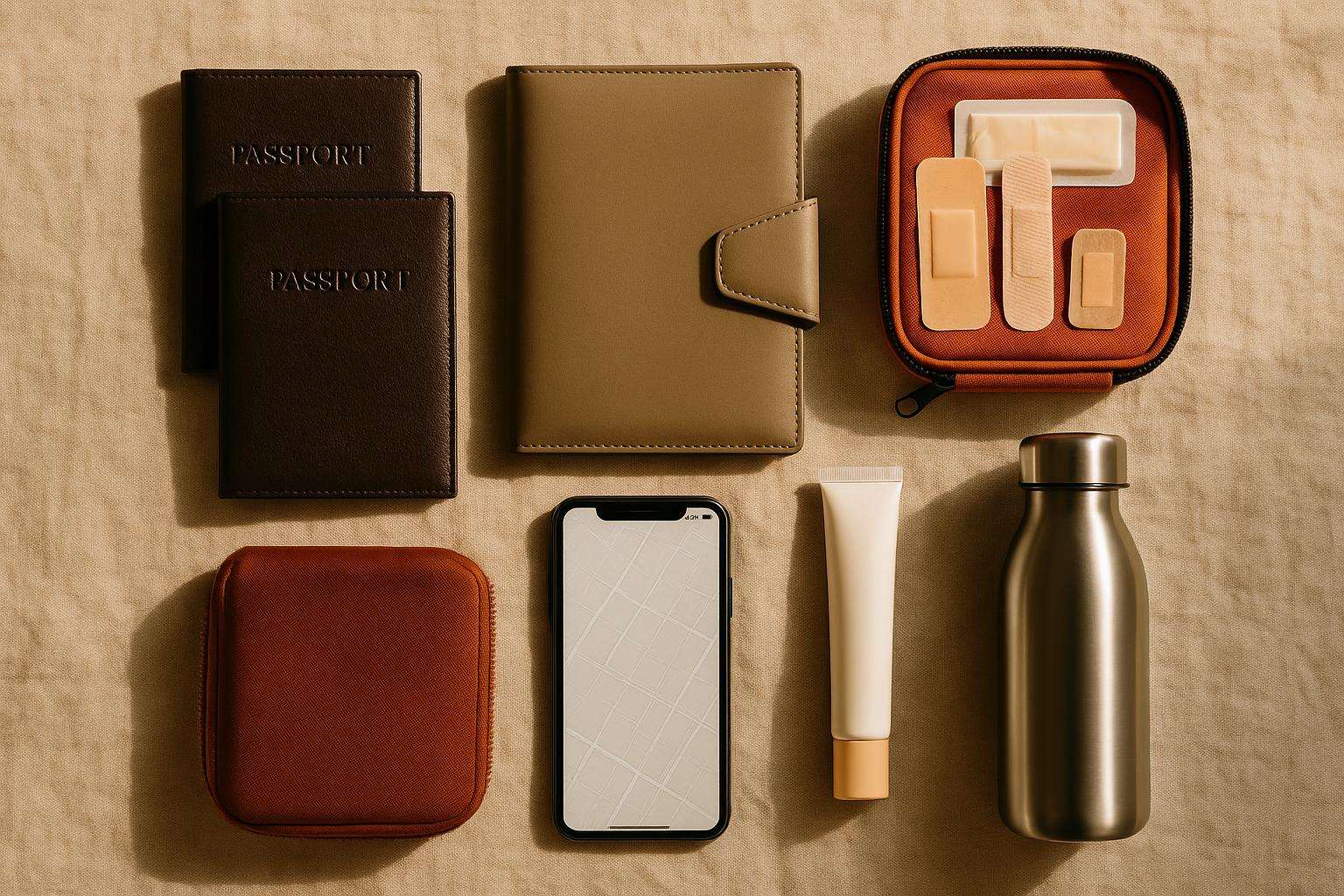
honeymoon safety checklistSTEP enrollmenttravel insurancemedical kitdocument copies
The quick verdict
Fifteen concrete safeguards — STEP enrollment, the right insurance bought in time, a real medical kit, document copies and more — to complete before you leave for the trip that matters most.
- Best overall
- STEP enrollment — Free, five minutes, and it registers your trip with the nearest U.S. embassy for real-time security updates and emergency contact — the highest-leverage item on the list.
- Best value
- Comprehensive travel insurance bought within the window — At 5–10% of trip cost it protects deposits, medical bills and evacuation — but only if bought within 14–21 days of your first payment to preserve the pre-existing waiver and CFAR.
- Best for Remote or long-haul destinations
- A MedJet or Global Rescue membership — Standard insurance evacuates you only to the nearest facility; a membership guarantees transport home, against evacuation costs that can reach $300,000.
How we evaluated
We built this checklist from U.S. State Department travel guidance, CDC travel-health recommendations, TSA rules and travel-insurance industry standards, ordering the fifteen items by how much protection each delivers relative to the effort and cost it takes. Items pair a specific action — an enrollment, a purchase window, a packing standard, a distance threshold — with the reason it matters and the exact question to answer. The intent is to let any couple move through the whole list in the weeks before departure and know, concretely, that their once-in-a-lifetime trip is protected against the failures that most often turn a great honeymoon into an expensive one.
- Protection value. How much financial, medical or personal-safety protection the item delivers if something goes wrong.
- Time sensitivity. Whether the item has a hard deadline — like the insurance purchase window or vaccine lead time — that passes silently if missed.
- Effort and cost. How much time or money the safeguard requires relative to the protection it provides.
- Verifiability. Whether the item resolves to a specific answer — a policy limit, a facility distance, a document copy — rather than a vague reassurance.
Rating scale: 1 to 5, where a 5 is a high-protection, time-sensitive item to complete before booking or well before departure, and a lower score is a valuable refinement that improves safety but is less critical or more destination-dependent.
Last verified .
At a glance
| # | Name | Rating | Best for | Pricing |
|---|---|---|---|---|
| 1 | Enroll in STEP | 5.0 | Every international honeymoon, without exception | Free — U.S. government service |
| 2 | Read the current travel advisory and local laws | 5.0 | Every couple, before booking and again before departure | Free — U.S. government service |
| 3 | Verify passport and visa validity | 5.0 | Every international traveler, checked early | Free to verify; renewal/visa fees vary |
| 4 | Make redundant document copies | 4.5 | Every couple traveling internationally | Free — an evening of preparation |
| 5 | Buy comprehensive travel insurance in the window | 5.0 | Every honeymoon with meaningful non-refundable cost | ~5–10% of total trip cost |
| 6 | Know your emergency-medical and evacuation limits | 4.5 | Every insured traveler, especially to higher-cost medical regions | Free — reading your existing policy |
| 7 | Add medical-evacuation membership for remote trips | 4.5 | Remote, island, safari or long-haul honeymoons far from major hospitals | Annual memberships commonly ~$315–$670 depending on tier |
| 8 | Pack a real travel medical kit | 4.5 | Every honeymoon; expanded for remote or malaria-endemic destinations | One-time build; typically well under $100 for the basics |
| 9 | Carry prescriptions correctly | 4.0 | Any traveler on prescription or controlled medications | Free — pharmacy refill plus a doctor's letter if needed |
| 10 | Visit a travel clinic 4-6 weeks out | 4.5 | Any honeymoon to a region with vaccine or malaria considerations | Clinic fee plus vaccine/medication costs vary by region |
| 11 | Plan for water and food safety | 4.0 | Destinations without reliably potable tap water | Free discipline; bottled water and purification are low-cost |
| 12 | Set up a money and cards strategy | 4.0 | Every international honeymoon | Free setup; no-fee cards save money over the trip |
| 13 | Arrange reliable connectivity | 4.0 | Every couple, especially those exploring independently | eSIM/local SIM data plans are typically low-cost; roaming varies |
| 14 | Learn the common local scams | 3.5 | Destinations with known tourist-targeted scams or high foot-traffic areas | Free — a few minutes of research |
| 15 | Set a home check-in plan | 3.5 | Every couple, and essential for remote or low-connectivity trips | Free — one conversation before departure |
Enroll in STEP
Free, five minutes, and the highest-leverage item on the list
Editor's pick
The U.S. State Department's Smart Traveler Enrollment Program (STEP) is a free service that registers your international trip with the nearest U.S. embassy or consulate. It does two things that matter enormously if the unexpected happens: it delivers real-time security updates, health alerts and weather warnings specific to your destination, and it gives U.S. authorities a way to locate and contact you during an emergency — a natural disaster, civil unrest, or a family emergency at home. For honeymooners, the value is that the effort is trivial and the payoff scales with how far off the beaten path the trip goes. Enroll as soon as your dates and destinations are confirmed, entering both your itinerary and emergency contacts, and update the record if plans change. It is particularly worthwhile for destinations with any political volatility or limited infrastructure, and it costs nothing. No other item on this checklist delivers as much protection for as little effort, which is exactly why it ranks first.
Strengths
- Completely free
- Takes only a few minutes to complete
- Delivers real-time, destination-specific security alerts and an emergency lifeline
Weaknesses
- Applies to U.S. citizens; other nationals should use their own government's equivalent registration
- Best for
- Every international honeymoon, without exception
- Pricing
- Free — U.S. government service
Source: U.S. Department of State — STEP
Read the current travel advisory and local laws
Know the risk level and the customs before you commit
Before finalizing any non-refundable booking, read the State Department's current travel advisory for your destination, rated on a four-level scale from Level 1 (Exercise Normal Precautions) to Level 4 (Do Not Travel). Advisories update as conditions change — regional hostilities, health situations, crime patterns — so a level that was fine when you dreamed up the trip may have shifted. Equally important is each country page's Local Laws & Customs subsection, which flags legal and cultural issues that can catch travelers off guard, from medication restrictions to conduct norms. This step is not about fear; it is about making an informed choice and adjusting plans where warranted rather than discovering a Level 3 advisory after your deposits are locked. Check the advisory again roughly two weeks before departure, since conditions can move quickly and a fresh read ensures your STEP alerts and your own awareness are aligned. It costs nothing and takes minutes.
Strengths
- Free and quick to check
- Reveals risk-level changes before deposits are locked
- Local Laws & Customs flags issues that surprise travelers
Weaknesses
- Advisory levels are broad; regional variation within a country requires deeper reading
- Best for
- Every couple, before booking and again before departure
- Pricing
- Free — U.S. government service
Verify passport and visa validity
The six-month rule that strands unprepared travelers
Confirm each passport is valid for at least six months beyond your intended return date. Many countries enforce this six-month validity rule and will deny boarding or entry to a traveler whose passport expires sooner, even by a few weeks — a failure that can end a honeymoon at the airport before it begins. Check both passports early, because renewal can take weeks and expediting adds cost and stress you do not want in the final run-up. Separately, confirm the specific visa or electronic travel authorization requirements for your destination and any connecting countries, since these vary widely and some (like electronic authorizations) must be secured days in advance. Note the required number of blank passport pages, which some destinations also enforce. For couples visiting multiple countries, check each one's rules independently rather than assuming the itinerary is uniform. This is a pure due-diligence item: it costs nothing but attention, and overlooking it is one of the few mistakes on this list that can cancel the entire trip on the spot.
Strengths
- Prevents the trip-ending airport denial
- Costs only attention and lead time
- Surfaces visa and blank-page requirements before they become emergencies
Weaknesses
- Passport renewal has lead time — must be checked well in advance
- Best for
- Every international traveler, checked early
- Pricing
- Free to verify; renewal/visa fees vary
Make redundant document copies
So a lost wallet never means lost access
Make redundant copies of every critical document and store them across multiple locations. That means a physical photocopy of the passport photo page carried separately from the passport itself, plus copies of the insurance policy and its emergency-assistance numbers, hotel and flight confirmations, and any visas. Store digital versions in a secure cloud folder or password manager that both partners can access from any device, and email a set to a trusted person at home as a final backup. Photograph the fronts and backs of your credit cards and record the international collect-call numbers to report them lost — a stolen wallet abroad is far less disruptive when you can freeze and replace cards within the hour. If you are traveling as a married couple, carry a copy of your marriage certificate, which can matter for medical decision-making authority in a hospital abroad. The organizing principle is redundancy: no single lost bag, phone or wallet should ever cut you off from the information you need to recover. Building this packet takes an evening and repays it many times over if anything goes missing.
Strengths
- Turns a lost wallet or bag into an inconvenience, not a crisis
- Redundant physical + cloud + emailed copies survive any single loss
- Marriage-certificate copy supports medical decision authority abroad
Weaknesses
- Requires disciplined secure storage so copies don't themselves become a risk
- Best for
- Every couple traveling internationally
- Pricing
- Free — an evening of preparation
Buy comprehensive travel insurance in the window
The most time-sensitive purchase on the list
Comprehensive travel insurance is the financial backbone of honeymoon safety, protecting your non-refundable deposits, covering emergency medical bills abroad, and funding evacuation to a local facility. It typically runs 5 to 10 percent of total trip cost. The critical detail is timing: buy within roughly 14 to 21 days of your first trip deposit, because two of the most valuable features are only available inside that window. The pre-existing medical condition waiver ensures a flare-up of an existing condition is covered rather than excluded, and it requires purchase early and insuring 100 percent of prepaid costs. Cancel for Any Reason (CFAR) eligibility has the same early-purchase requirement. Match the provider to the trip: providers vary in medical and evacuation ceilings, claims-service reputation and wedding-specific add-ons, so compare emergency-medical limits, medical-evacuation limits and trip-interruption percentages rather than buying on price alone. Read the policy's covered-reasons list so you know what standard cancellation actually protects. Missing the purchase window does not make insurance more expensive — it makes the best protections unavailable at any price, which is why this ranks among the highest-stakes items.
Strengths
- Protects large non-refundable deposits and medical bills
- Preserves the pre-existing waiver and CFAR if bought in the window
- Providers scale medical and evacuation ceilings to trip risk
Weaknesses
- The purchase window is easy to miss; standard policies exclude many reasons without CFAR
- Best for
- Every honeymoon with meaningful non-refundable cost
- Pricing
- ~5–10% of total trip cost
Know your emergency-medical and evacuation limits
"We have insurance" is not enough — know the numbers
Having a policy is not the same as knowing what it covers, and the gap surfaces at the worst possible moment. Before departure, confirm three specific numbers in your policy: the emergency-medical coverage limit (the ceiling on hospital and treatment bills abroad), the medical-evacuation limit (the ceiling on transport to an adequate facility), and the trip-interruption percentage (often 100 to 150 percent of trip cost on better plans). Emergency-medical limits commonly range from about $15,000 on basic plans to $50,000, $100,000 or more on comprehensive ones; evacuation limits often reach $500,000 to $1,000,000, which matters because international evacuations are extraordinarily expensive. Also confirm whether your medical coverage is primary (pays before your domestic health insurance) or secondary, and whether it includes a pre-existing-condition waiver. Write these figures down alongside the 24-hour emergency-assistance phone number and carry them with your document copies. The point is that in a genuine emergency, you or your partner should be able to state your coverage and call for help immediately, not spend an hour reading policy fine print while a situation worsens.
Strengths
- Turns an abstract policy into actionable numbers
- Reveals gaps like secondary-only coverage or a low evacuation ceiling
- Pairs the limits with the emergency-assistance number for instant use
Weaknesses
- Requires reading the policy carefully — an underappreciated task
- Best for
- Every insured traveler, especially to higher-cost medical regions
- Pricing
- Free — reading your existing policy
Add medical-evacuation membership for remote trips
Standard insurance gets you to a local hospital — not home
Standard travel insurance includes medical evacuation, but with a limitation most policyholders never discover until they are hospitalized abroad: it evacuates you only to the nearest adequate facility, and once you are stabilized there, its obligation is satisfied. Getting home for continued treatment under your own physicians is either uncovered or a case-by-case negotiation. Membership programs fill that gap. MedJet Assist guarantees bedside-to-bedside air medical transport to your home-country hospital of choice if you are hospitalized as an inpatient more than 150 miles from home, with no requirement to prove the local facility is inadequate — no claim forms, no deductibles, no cap on transport cost. Global Rescue adds field-rescue capability, dispatching trained personnel to the point of injury before transport, which matters for trekking, remote diving or extended safari where reaching a hospital is itself the challenge. An unplanned international evacuation can cost $30,000 to $300,000, so for honeymoons to the Maldives, Bali, East Africa or Patagonia, a membership layered on comprehensive insurance completes the coverage architecture. For a resort or cruise honeymoon near good hospitals, standard insurance may be enough — this is a destination-dependent add-on, not a universal one.
Strengths
- Guarantees transport all the way home, which standard insurance does not
- Global Rescue adds field extraction for genuinely remote destinations
- Modest cost against $30,000–$300,000 evacuation bills
Weaknesses
- An added cost that is only worthwhile for remote or long-haul trips
- Evacuation must be arranged through the provider, not self-arranged
- Best for
- Remote, island, safari or long-haul honeymoons far from major hospitals
- Pricing
- Annual memberships commonly ~$315–$670 depending on tier
Pack a real travel medical kit
The small bag that resolves most incidents on the spot
Most travel-health incidents are minor and self-resolving with the right supplies on hand — and miserable without them, since a foreign pharmacy at midnight is no one's idea of a honeymoon activity. Build a kit around the CDC's Pack Smart guidance. At minimum: any personal prescriptions in their original labeled containers with a supply buffer; loperamide for travelers' diarrhea; an antihistamine (cetirizine or loratadine); oral rehydration salts; ibuprofen or acetaminophen; adhesive bandages and blister treatment such as Compeed; and a digital thermometer. Add motion-sickness medication if boats or winding mountain roads feature in the itinerary, and reef-safe sunscreen plus after-sun aloe for beach destinations. For remote or off-grid trekking, include a compact water-purification solution such as a Sawyer Squeeze filter or Aquatabs tablets. For malaria-endemic regions, insect repellent (DEET 20–30% or picaridin 20%) and prescribed antimalarials are additions, not substitutes — repellent does not replace prophylaxis. Confirm what your resort or safari operator already supplies so you do not pack redundantly, and keep the kit in your carry-on so a delayed checked bag never separates you from your medications.
Strengths
- Resolves the majority of minor incidents without a foreign pharmacy run
- CDC Pack Smart provides an authoritative baseline
- Keeping it in carry-on protects against delayed luggage
Weaknesses
- Liquid medications and repellents must respect TSA carry-on limits
- Prescriptions need original labeling and sometimes a doctor's letter for customs
- Best for
- Every honeymoon; expanded for remote or malaria-endemic destinations
- Pricing
- One-time build; typically well under $100 for the basics
Carry prescriptions correctly
Original labels, a supply buffer, and a doctor's letter
Prescription medications need specific handling for international travel that goes beyond simply bringing them. Keep every medication in its original labeled container rather than a pill organizer, because customs and security officials may require the label to match the traveler and the prescription. Pack enough for the full trip plus a several-day buffer against delays, and split the supply between carry-on and a backup location so a lost bag never leaves you without essential medication — with the primary supply always in your carry-on, never checked. For controlled substances, injectables, or medications requiring syringes, carry a signed letter from your prescribing physician describing the condition and the medication, since some countries restrict or prohibit drugs that are routine at home. Check your destination's rules in advance, because a handful of countries ban common medications outright, and being caught unaware can mean confiscation or worse. Liquid medications are exempt from the standard TSA carry-on liquid limits but should be declared at the checkpoint and kept in original labeled containers. This item ranks slightly lower only because it applies most acutely to travelers on regular or controlled medications, but for them it is as high-stakes as anything on the list.
Strengths
- Prevents confiscation and customs problems
- The supply buffer covers delays and lost bags
- A physician's letter clears controlled or injectable medications
Weaknesses
- Some countries ban common medications — requires destination-specific checking
- Applies most to travelers on regular prescriptions
- Best for
- Any traveler on prescription or controlled medications
- Pricing
- Free — pharmacy refill plus a doctor's letter if needed
Visit a travel clinic 4-6 weeks out
Vaccines and prophylaxis need lead time to work
Book a travel-medicine clinic appointment at least four to six weeks before departure, and earlier if your destination requires multi-dose vaccines. The lead time is not bureaucratic: some vaccines need multiple doses spaced over weeks to confer protection, and antimalarial regimens differ in when they must begin relative to arrival — some days before, some the week of. The clinic reviews your itinerary against current CDC destination guidance and recommends vaccinations (which may include hepatitis A, typhoid, or others by region), any required yellow-fever certification (mandatory for entry to some countries), and appropriate malaria prophylaxis for endemic areas — atovaquone-proguanil, doxycycline or mefloquine, selected for your route and health profile. Use the visit to discuss any personal conditions and to obtain documentation for medications you will carry. From a functional-health perspective, it is also a sensible moment to support your immune resilience in the weeks before travel — consistent sleep, hydration and nutrition — but that complements rather than replaces evidence-based vaccination and prophylaxis, which you should never skip or self-modify without medical guidance. Six weeks is the floor; go earlier if multi-dose schedules are involved.
Strengths
- Ensures multi-dose vaccines and prophylaxis have time to work
- Matches recommendations to your specific itinerary and health profile
- Covers required certifications like yellow fever for entry
Weaknesses
- Requires planning weeks ahead; last-minute travelers may miss full protection
- Best for
- Any honeymoon to a region with vaccine or malaria considerations
- Pricing
- Clinic fee plus vaccine/medication costs vary by region
Plan for water and food safety
The most common thing that goes wrong abroad
Travelers' diarrhea is the single most common travel-health complaint, and a honeymoon is a poor place to lose two days to it. In destinations where tap water is not reliably potable, the discipline is straightforward: drink bottled or purified water only, avoid ice unless you know it is made from safe water, use bottled water even for brushing teeth, and be cautious with raw produce that may have been washed in local water and with food from stalls where preparation conditions are unclear. The reliable heuristic is "boil it, cook it, peel it, or forget it." This is not a reason to avoid local cuisine — often the whole point of a honeymoon — but to be deliberate about where and how you eat during the first days, when your system is adjusting. Pack loperamide and oral rehydration salts in your medical kit for when prevention nonetheless fails, and know that persistent symptoms with fever or blood warrant medical attention rather than waiting it out. For remote trekking away from reliable bottled supply, a water filter or purification tablets are essential. It is a lower-stakes item than medical evacuation, but it is the one most couples will actually encounter, which earns it a solid place on the list.
Strengths
- Addresses the most common travel-health issue by far
- Simple rules prevent most cases
- Rehydration and loperamide in the kit handle the rest
Weaknesses
- Region-dependent — irrelevant where tap water is safe, essential where it isn't
- Best for
- Destinations without reliably potable tap water
- Pricing
- Free discipline; bottled water and purification are low-cost
Set up a money and cards strategy
Redundant payment methods and no card surprises
A honeymoon derailed by a frozen card or a missing wallet is entirely preventable with a little setup. Notify your banks and card issuers of your travel dates and destinations so legitimate foreign charges are not flagged as fraud and blocked mid-trip. Carry at least two different payment methods stored in separate places — for example, a primary card in your wallet and a backup card plus some local currency secured in the hotel safe — so a single loss never leaves you stranded. Prefer cards with no foreign-transaction fees, which quietly add up over a long trip, and confirm whether your cards work on the chip-and-PIN systems common abroad. Bring a modest amount of local currency for arrival needs like transport and tips before you can reach an ATM, and use bank ATMs rather than standalone machines to reduce skimming risk and get better rates than airport currency counters. Photograph the fronts and backs of your cards and note the international collect-call numbers to report them lost, filed with your document copies. None of this is glamorous, but it converts the most common everyday travel mishaps into minor inconveniences rather than trip-disrupting problems.
Strengths
- Prevents fraud-block card freezes mid-trip
- Redundant payment methods survive a lost wallet
- No-foreign-fee cards and bank ATMs save real money
Weaknesses
- Requires notifying issuers in advance and some card research
- Best for
- Every international honeymoon
- Pricing
- Free setup; no-fee cards save money over the trip
Arrange reliable connectivity
A working phone is a safety tool, not just a convenience
Reliable connectivity is a genuine safety asset abroad, not merely a way to post photos: it lets you receive STEP and embassy alerts, call for medical help, reach your insurer's emergency line, navigate unfamiliar areas, and stay reachable to each other and to family at home. Arrange it before you go rather than scrambling at the airport. The main options are an international roaming plan from your home carrier (simple but often expensive), a local SIM purchased at the destination (cheap but requires an unlocked phone and setup time), or an eSIM you can activate before departure (increasingly the most convenient for modern phones). Whichever you choose, confirm your phone is unlocked if using a local SIM or eSIM, download offline maps of your destination in advance, and save critical numbers — your insurer's 24-hour assistance line, the local emergency number, the nearest U.S. embassy, and each other's international-format numbers — so they work even without data. Consider a portable battery pack, since a dead phone in an unfamiliar place is a real vulnerability. Both partners should have working connectivity independently, so that if you are separated or one phone fails, the other can still call for help.
Strengths
- Enables emergency calls, alerts and navigation
- eSIMs let you set up before departure
- Redundant across both partners' phones
Weaknesses
- Roaming can be costly; local SIMs require an unlocked phone
- Best for
- Every couple, especially those exploring independently
- Pricing
- eSIM/local SIM data plans are typically low-cost; roaming varies
Source: U.S. Department of State — STEP
Learn the common local scams
Ten minutes of reading prevents most tourist scams
Tourists, and honeymooners in particular, are targeted by opportunistic scams and petty crime in many destinations, and a short amount of preparation defuses most of them. Spend ten minutes before the trip reading about the common scams at your specific destination — recent traveler reviews and forums are a practical source alongside official guidance — because they tend to be local and repetitive: the taxi that runs a rigged meter or refuses to use one, the too-friendly stranger steering you to a particular shop, the fake petition or spilled-drink distraction that masks pickpocketing, or the ATM with a skimming attachment. Practical defenses are consistent across destinations: use registered or app-based transport rather than unmarked taxis, agree on fares in advance where meters are not standard, keep valuables in a front pocket or an anti-theft bag in crowded areas, stay alert in tourist-dense spots where pickpocketing concentrates, and be politely skeptical of unsolicited help or offers that seem too convenient. Being visibly a honeymoon couple — relaxed, distracted, carrying nice luggage — can attract attention, so a baseline of awareness matters. This ranks lower because the stakes are usually financial and minor rather than safety-critical, but the effort-to-payoff ratio is excellent.
Strengths
- Ten minutes of reading neutralizes most common scams
- Defenses are simple and consistent across destinations
- Reduces the financial and stress cost of petty crime
Weaknesses
- Scams evolve and vary by location — no list is exhaustive
- Best for
- Destinations with known tourist-targeted scams or high foot-traffic areas
- Pricing
- Free — a few minutes of research
Set a home check-in plan
Someone at home should know where you are
The final item is the simplest and most human: leave a copy of your full itinerary — flights, hotels, dates, confirmation numbers — with a trusted family member or friend at home, along with your STEP registration confirmation and your insurance emergency-contact details. Agree on a loose check-in rhythm, such as a message on arrival and every few days after, so that a prolonged silence would prompt someone to make inquiries rather than assuming all is well. This is not about surveillance or interrupting the romance of a honeymoon; it is about ensuring that if something serious happens — a medical emergency, a natural disaster, a communications outage — there is a person at home who knows where you are supposed to be and can act as a coordination point with authorities, your insurer, or the embassy. It costs nothing and takes one conversation before you leave. For couples heading somewhere remote or with limited connectivity, agree in advance on what a missed check-in should trigger, so a genuine gap is not mistaken for a routine one. It ranks last only because its stakes are contingent on rarer events, but in those events it is exactly the safeguard that turns a frightening situation into a coordinated response.
Strengths
- Ensures someone can act if you go silent
- Costs nothing but one conversation
- Especially valuable for remote or low-connectivity destinations
Weaknesses
- Depends on a reliable contact and an agreed rhythm to be useful
- Best for
- Every couple, and essential for remote or low-connectivity trips
- Pricing
- Free — one conversation before departure
Source: U.S. Department of State — STEP
Which should you choose?
First-time international honeymooner · Long-haul destination
Goal:Complete the essential pre-trip safety prep
Enroll in STEP — Free, fast, and it registers the trip with the embassy for alerts and emergency contact.
Couple with large non-refundable deposits · Luxury or multi-vendor trip
Goal:Protect the financial investment
Buy comprehensive travel insurance in the window — The 14–21-day window preserves the pre-existing waiver and CFAR — miss it and they're gone.
Adventure or remote-destination couple · Safari, island or trekking honeymoon
Goal:Ensure they can get home if hospitalized
Add medical-evacuation membership for remote trips — Standard insurance only reaches the nearest facility; evacuation home can cost up to $300,000.
Frequently asked
What is STEP and why should honeymooners enroll?
STEP is the U.S. State Department's free Smart Traveler Enrollment Program, which registers your international trip with the nearest U.S. embassy or consulate. Enrollment does two things: it lets the embassy send you real-time security updates, health alerts and weather warnings specific to your destination, and it gives U.S. authorities a way to locate and contact you in an emergency — a natural disaster, civil unrest, or a family emergency back home. For honeymooners, the appeal is that it costs nothing, takes a few minutes, and provides a safety net that scales with how far off the beaten path you go. It is especially valuable for destinations with any political volatility or limited infrastructure. Enroll as soon as your dates and destinations are confirmed, and update the entry if your itinerary changes. It is the single highest-leverage free item on this checklist.
When exactly do we need to buy travel insurance?
Within roughly 14 to 21 days of your first trip deposit, and this deadline is the most commonly missed on the entire list. Two of the most valuable protections are only available inside that window: the pre-existing medical condition waiver, which ensures a flare-up of an existing condition is covered rather than excluded, and Cancel for Any Reason (CFAR) eligibility, which lets you recover a portion of your costs for reasons outside the standard covered list. The exact window varies by carrier — some allow 15 days, others 20 or 21 — so buy early rather than testing the limit. You must also insure 100 percent of your prepaid, non-refundable costs to qualify for CFAR. Comprehensive travel insurance typically runs 5 to 10 percent of total trip cost, and adding CFAR increases the base premium by roughly 40 to 60 percent.
What should go in a honeymoon travel medical kit?
At minimum: any personal prescription medications in their original labeled containers with enough supply plus a buffer; loperamide for travelers' diarrhea; an antihistamine (cetirizine or loratadine); oral rehydration salts; ibuprofen or acetaminophen; adhesive bandages and blister treatment such as Compeed; and a digital thermometer. Add motion-sickness medication if boats or winding roads are involved, and reef-safe sunscreen and after-sun aloe for beach destinations. For remote or off-grid trips, include a compact water-purification solution such as a Sawyer Squeeze filter or Aquatabs tablets. The CDC's Pack Smart guidance is the authoritative reference for building a travel health kit. If you are heading to a malaria-endemic region, insect repellent and prescribed antimalarial medication are additions, not substitutes — repellent does not replace prophylaxis. Confirm what your specific resort or safari operator already supplies to avoid packing redundantly.
Do we need medical evacuation coverage beyond regular travel insurance?
For remote destinations, yes. Standard travel insurance includes medical evacuation, but with a critical limitation: it evacuates you only to the nearest adequate medical facility, and once you are stabilized there, its obligation is satisfied. Getting home for continued care under your own physicians is either not covered or becomes a case-by-case negotiation. A membership program like MedJet Assist fills that gap by guaranteeing bedside-to-bedside air medical transport to your home-country hospital of choice if you are hospitalized as an inpatient more than 150 miles from home, with no medical-necessity test. Global Rescue adds field-rescue capability, extracting a patient from the point of injury before transport — relevant for trekking, remote diving or extended safari. An unplanned international evacuation can cost $30,000 to $300,000, so for honeymoons to the Maldives, Bali, East Africa or Patagonia, layering a membership on top of comprehensive insurance is prudent. For a resort or cruise honeymoon where reaching a hospital is not the challenge, standard insurance may suffice.
How far in advance should we handle health preparation and vaccinations?
Book a travel-medicine clinic appointment at least four to six weeks before departure. That lead time matters because some vaccines require multiple doses spaced over weeks, and antimalarial regimens differ in when they must start relative to your arrival. The clinic will review your itinerary against current CDC destination guidance and recommend vaccinations (which may include hepatitis A, typhoid, or others depending on the region), any required yellow-fever certification, and appropriate malaria prophylaxis for endemic areas — atovaquone-proguanil, doxycycline or mefloquine, chosen for your specific route and health profile. Never alter prescribed malaria medication without medical guidance. Beyond vaccines, use the visit to discuss any personal conditions, pack an adequate prescription supply, and get a signed letter for controlled or injectable medications you will carry through customs. Six weeks is the floor; earlier is better if multi-dose vaccines are involved.
What document copies should we make before leaving?
Confirm first that each passport is valid for at least six months beyond your return date, since many countries deny entry otherwise, and check specific visa requirements for your destination. Then make redundant copies of everything: a physical photocopy of the passport photo page, the insurance policy and emergency-assistance numbers, hotel and flight confirmations, and any visas, carried separately from the originals. Store digital copies in a secure cloud folder or password manager that both partners can access, and email a set to a trusted person at home. If you are traveling as a married couple, carry a copy of your marriage certificate — it can matter for medical decision-making authority abroad. Photograph the fronts and backs of your credit cards and note the international collect-call numbers to report them lost. The goal is that losing a wallet or bag never means losing access to the information you need to recover.