Travel Smart
Safari Honeymoon Health: Vaccinations & Malaria Prophylaxis Explained
The one honeymoon where the medical prep is as consequential as the packing list. Here is the real 2026 guidance on required vaccines, yellow fever certificates, and how to choose between Malarone, doxycycline and mefloquine — conventional and functional lenses together.
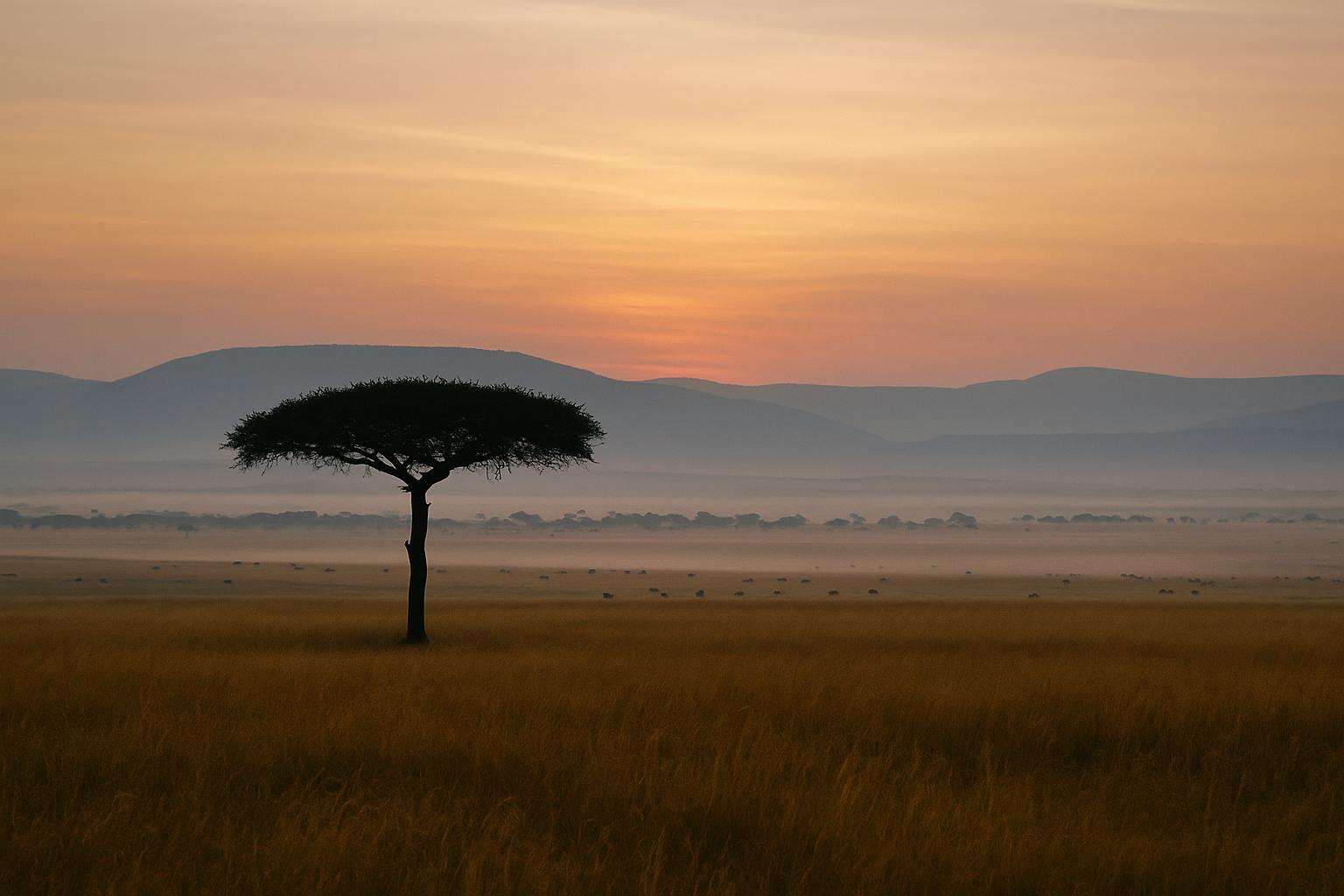
A safari honeymoon is the rare trip where the medical preparation is as consequential as the itinerary. A European city break or a Caribbean beach week asks almost nothing of you on the health front; a two-week trip through the Maasai Mara or the Serengeti asks you to make real decisions — about vaccines, about yellow fever certificates, and above all about malaria prophylaxis, where the tradeoffs are genuine and the wrong choice can shadow an otherwise perfect trip. This guide sets out the current framework clearly, drawing on the CDC Yellow Book 2026, and presents the pharmaceutical and non-pharmaceutical options fairly, with a functional-medicine lens layered onto — never replacing — the conventional standard of care.
One overarching rule frames everything below: see a travel medicine specialist six to eight weeks before departure. Some vaccines need that window to reach full effectiveness, and starting early lets you trial an unfamiliar malaria drug at home rather than discovering a side effect in the bush.
Vaccinations: required versus recommended
The distinction that matters is between what a country legally requires for entry and what medicine recommends for your protection. On the required side, yellow fever is the pivot, and it turns on your routing rather than your destination alone. Kenya, Tanzania, Botswana and South Africa impose no universal yellow fever requirement on travelers arriving directly from Western countries — but a valid International Certificate of Vaccination or Prophylaxis (ICVP) is required if you arrive from or transit through a WHO-listed risk country. A Nairobi layover of 12 or more hours en route to Tanzania is the classic trap: it can trigger Tanzania's requirement even though your origin is safe. The WHO made yellow fever certificates valid for life in 2016, so the old 10-year renewal no longer applies. It must, however, be administered at least 10 days before entry to be valid.
On the recommended side, the CDC advises for essentially all safari destinations: hepatitis A (food- and water-borne, highly recommended), hepatitis B (especially for longer stays), typhoid (for rural travel and street-food exposure), and an MMR update per international-travel guidelines. Rabies pre-exposure prophylaxis deserves special emphasis: in remote safari areas, post-exposure biologics are frequently unavailable, and rabies is 100% fatal once symptomatic — the pre-exposure series buys you critical time and simplifies post-exposure treatment.
Malaria: the decision that actually requires thought
All of sub-Saharan Africa carries chloroquine-resistant Plasmodium falciparum — the most dangerous malaria species, responsible for roughly 99% of regional cases. Without prophylaxis, the estimated risk of contracting malaria on a two-week East Africa trip runs 1.5% to 3.5%. Prophylaxis is not optional in these zones. Four FDA-approved regimens are effective, and they differ in ways that should drive your choice.
| Drug | Dosing | Post-travel duration | Key tolerability notes | Cost |
|---|---|---|---|---|
| Atovaquone-proguanil (Malarone) | Daily | 7 days after return | Best tolerated; fewest neuropsychiatric events | Highest |
| Doxycycline | Daily | 28 days after return | GI upset, photosensitivity, yeast-overgrowth risk in women | Lowest |
| Mefloquine (Lariam) | Weekly | 28 days after return | Anxiety, depression, sleep disturbance; contraindicated with psychiatric history | Moderate |
| Tafenoquine | Weekly | Single post-travel dose | Requires G6PD testing first; newer | Moderate-high |
The evidence is consistent. A Cochrane review confirms that atovaquone-proguanil and doxycycline are the best-tolerated regimens, while mefloquine carries a significantly higher neuropsychiatric adverse-event rate (a relative risk of about 1.39 for any adverse effect versus atovaquone-proguanil). For a short honeymoon under three weeks, Malarone's 7-day post-travel tail is a real convenience next to the 28 days required by doxycycline or mefloquine — nobody wants to be taking pills a month into married life. The CDC's malaria guidance should anchor the conversation with your physician.
The functional-medicine perspective — honestly stated
Here is where an integrative lens earns its place precisely by not overpromising: there is no validated natural or herbal substitute for pharmaceutical prophylaxis in high-transmission Africa, and pretending otherwise is dangerous. The functional-medicine contribution is real but narrower — it lives in drug selection and in the non-pharmacological prevention layer. For a traveler with gut dysbiosis, a history of yeast infections, a history of neuropsychiatric sensitivity, or one on hormonal birth control (which may reduce doxycycline absorption and carries its own documented nutrient-depletion profile), atovaquone-proguanil is the aligned first choice rather than defaulting to whichever drug is cheapest. And bite prevention is non-negotiable alongside any regimen: permethrin-treated clothing, 30-to-50% DEET or picaridin on exposed skin especially at dusk and dawn (peak Anopheles feeding hours), and insecticide-treated bed nets, which are standard at reputable camps.
The zero-medication option: malaria-free reserves
Couples who are pregnant, cannot take prophylaxis, or simply prefer to avoid it have an excellent alternative: a malaria-free reserve. South Africa leads — Madikwe Game Reserve, the Waterberg Biosphere Reserve and Welgevonden carry full Big Five wildlife with no malaria risk, and they combine naturally with malaria-free Cape Town and its wine country. The honest tradeoff is that Big Five density and leopard-sighting consistency run below the malaria-risk Sabi Sand or Serengeti — but the wildlife remains genuinely world-class, and for a honeymoon where one partner is pregnant, the choice makes itself.
Insurance: a three-layer structure, not one policy
Safari health insurance is architectural. Layer one is regional air evacuation: AMREF Flying Doctors costs about $40 per person for 30 days and covers unlimited air ambulance transfers within East Africa (Kenya, Tanzania, Uganda, Rwanda, Burundi), with critical-case hospitalization in Nairobi — but it does not cover Southern Africa and does not repatriate you home. Layer two is a comprehensive policy with at least $100,000 medical and $250,000 evacuation/repatriation, because repatriation from Nairobi to North America alone runs $50,000 to $100,000. Layer three is trip cancellation, which matters more here than almost anywhere: luxury camps carry 60-day-plus non-refundable windows, and a $20,000 lodge booking is unrecoverable without it.
After you return
Vigilance does not end at the airport. Malaria symptoms can appear up to 12 months after travel, and any fever within a year of an African trip is a medical emergency requiring immediate evaluation — tell the clinician your travel history first. Finish the full post-travel course of your prophylaxis; stopping early is a common and dangerous mistake. Prepared properly, a safari honeymoon is one of the safest extraordinary trips a couple can take. The preparation is the price of admission to the most memorable two weeks of your married life. This article is editorial information, not personal medical advice; consult a qualified travel medicine physician for your itinerary and health history.
Frequently asked
When should we start preparing our health plan before a safari honeymoon?
See a travel medicine specialist six to eight weeks before departure. Some vaccines — hepatitis A and typhoid in particular — need that window to reach full effectiveness, and a yellow fever vaccination must be administered at least 10 days before entry into an endemic-risk country to be valid under international regulations. Starting early also leaves room to trial a malaria prophylaxis you have never taken, so you can identify tolerability problems at home rather than on the trip. This guidance reflects the CDC Yellow Book 2026 framework, but it is not personal medical advice: your specialist will tailor recommendations to your health history, the exact countries on your itinerary, and any medications you already take. Do not start, stop or change any prescribed medication without medical guidance.
Do we need a yellow fever certificate for an African safari?
It depends on your routing, not just your destination. For Kenya, Tanzania, Botswana and South Africa, there is no universal yellow fever requirement for travelers arriving directly from Western countries — but a valid International Certificate of Vaccination or Prophylaxis is required if you arrive from, or transit through, a WHO-listed yellow-fever-risk country. This catches many honeymooners: a Nairobi layover of 12 or more hours en route to Tanzania can trigger Tanzania's requirement. The WHO made yellow fever certificates valid for life in 2016, so the old 10-year renewal rule no longer applies. Because yellow fever risk-country lists and transit rules change, confirm your specific routing with a travel medicine clinic and the destination's official entry requirements before you travel.
Which malaria prophylaxis is best for a safari honeymoon?
For most short safari trips, atovaquone-proguanil (Malarone) is the best-tolerated choice and the functional-medicine-aligned first pick. All of sub-Saharan Africa carries chloroquine-resistant Plasmodium falciparum, so prophylaxis is essential. The four FDA-approved regimens differ meaningfully: Malarone is taken daily with only a 7-day post-travel tail and the fewest neuropsychiatric events, but is the most expensive; doxycycline is the cheapest but requires 28 days of post-travel dosing and carries GI upset, photosensitivity and yeast-overgrowth risk in women; mefloquine is weekly but is associated with anxiety, depression and sleep disturbance and is contraindicated in anyone with a psychiatric history; tafenoquine is weekly with a single post-travel dose but requires G6PD testing first. Cochrane review evidence confirms Malarone and doxycycline are best tolerated, with mefloquine carrying a significantly higher adverse-event rate. Choose with a travel medicine physician.
Is there a natural or herbal alternative to malaria prophylaxis?
No. There is no validated natural or herbal substitute for pharmaceutical malaria prophylaxis in high-transmission sub-Saharan Africa, and relying on one is dangerous — falciparum malaria can be fatal. This is where a functional-medicine lens is most useful precisely because it does not overpromise: its genuine contribution lies in the non-pharmacological prevention layer and in smarter drug selection, not in replacing the drug. That means choosing the best-tolerated regimen for your physiology (for someone with gut dysbiosis, a history of yeast infections, or who is on hormonal birth control that can reduce doxycycline absorption, Malarone is the aligned first choice) and layering rigorous bite prevention on top: permethrin-treated clothing, 30-to-50% DEET or picaridin repellent at dusk and dawn, and insecticide-treated bed nets. Never discontinue prescribed prophylaxis without medical guidance.
Can we do a safari honeymoon without taking malaria medication at all?
Yes — by choosing a malaria-free reserve, which is the responsible option for couples who are pregnant, cannot take prophylaxis, or simply prefer to avoid it. South Africa is the standout: Madikwe Game Reserve, the Waterberg Biosphere Reserve and Welgevonden carry full Big Five wildlife with no malaria risk, and they pair naturally with malaria-free Cape Town and its wine country for a varied itinerary. Madikwe in particular offers strong African wild dog populations and prohibits day visitors, keeping game drives uncrowded. The tradeoff is that Big Five density and leopard-sighting consistency are generally lower than in the malaria-risk Sabi Sand or Serengeti. For a honeymoon where one partner is pregnant or medication-sensitive, that tradeoff is well worth making — the wildlife is still genuinely world-class.
What travel health insurance do we need for a safari?
Experts recommend a three-layer structure. First, AMREF Flying Doctors for in-region East Africa air evacuation — about $40 per person for 30 days, covering unlimited air ambulance transfers within Kenya, Tanzania, Uganda, Rwanda and Burundi, with critical-case hospitalization in Nairobi. Crucially, AMREF does not cover Southern Africa (Botswana, Zimbabwe, South Africa) and does not repatriate you home, so it is a regional layer, not a complete solution. Second, a comprehensive travel policy with at least $100,000 in medical expenses and $250,000 in evacuation and repatriation. Third, trip cancellation and interruption insurance — materially important given that luxury safari camps often have 60-day or longer non-refundable cancellation windows, and a $20,000 lodge booking is unrecoverable without it. Repatriation from Nairobi to North America alone can cost $50,000 to $100,000, so the medical and evacuation layers are not optional for a remote safari.