Travel Smart
Travel Insurance for Adventure Honeymoons: Scuba, Safari & Zip-Line Exclusions
Standard policies quietly exclude the exact activities adventure honeymooners book. Here is what the fine print denies, and which specialized insurers actually cover it.
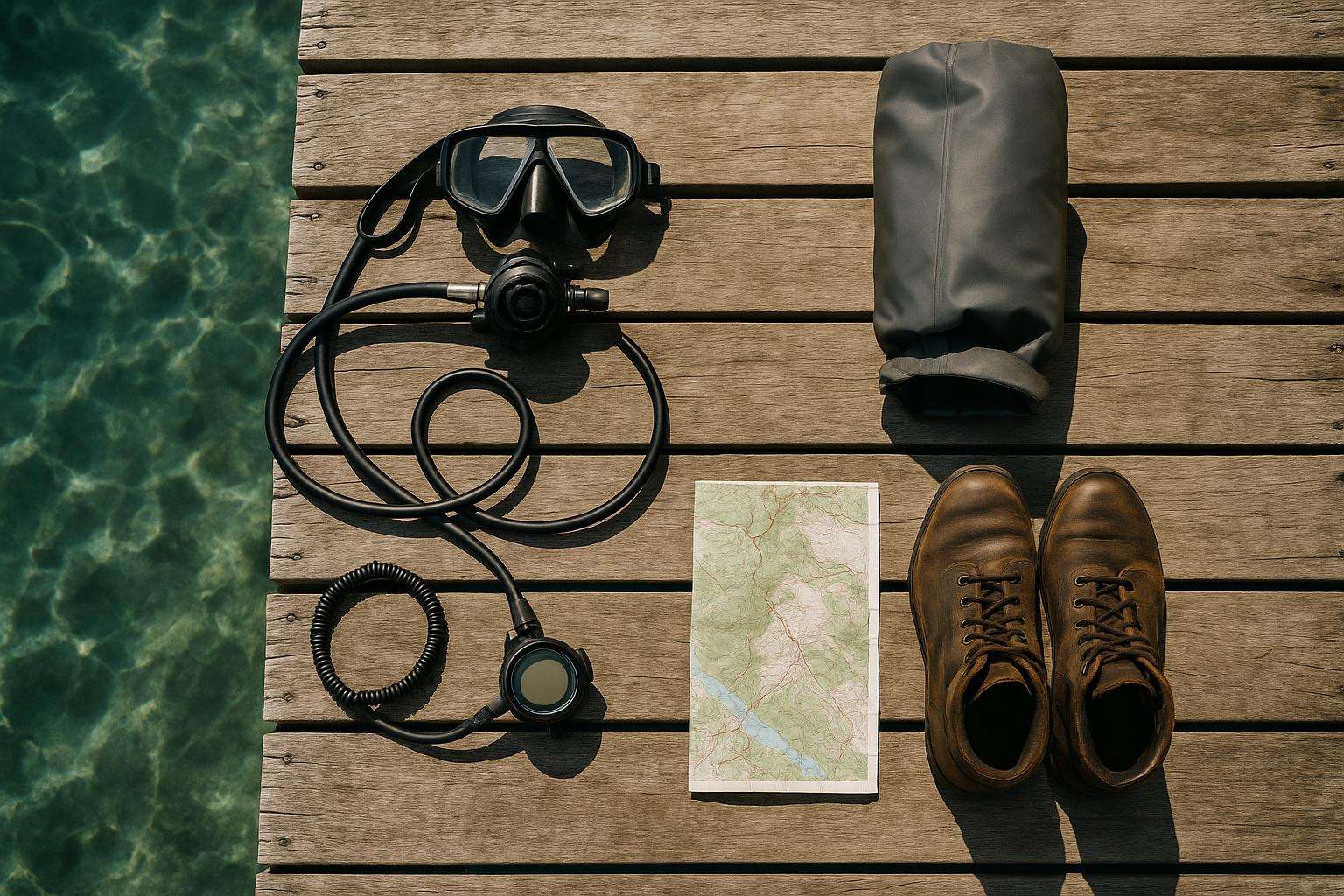
Adventure honeymoons are one of the fastest-growing categories in the market: scuba liveaboards in the Maldives, gorilla trekking in Uganda, heli-skiing in British Columbia, zip-line circuits through Costa Rica's cloud forests. The problem is that a standard comprehensive travel policy, the kind most couples buy by default, is quietly dangerous for these trips. The language that denies claims for adventure activities is buried in the policy exclusions, and most buyers never read it until after an incident.
The scuba exclusion is the most expensive trap
Most standard policies either exclude scuba diving outright or restrict coverage to shallow recreational snorkeling, typically capping the covered depth at 18 meters (about 60 feet). Recreational Open Water certification permits dives to 18 meters; advanced certification allows 30 meters; beyond 40 meters is technical diving territory. Per Squaremouth's analysis of scuba coverage, if you hold Open Water certification, dive to 25 meters, and suffer decompression sickness (DCS), most standard policies deny the claim because you exceeded the depth your certification authorizes.
The financial exposure is severe. Hyperbaric chamber treatment for DCS runs $3,000 to $10,000 per session, and air evacuation from a remote dive site can exceed $50,000. Worse, uncertified divers, including those on introductory Discover Scuba courses, are frequently excluded entirely, even for shallow, instructor-supervised dives, exactly the kind of first-time experience many honeymooners book on impulse.
Zip-lines, safari drives, and the fine print
Whether zip-lining is covered depends entirely on the insurer and the specific plan. Standard policies often classify it alongside riskier activities and exclude it by name or category; some mid-tier plans include it as a recreational activity. There is no universal rule, which is precisely why assumptions are dangerous.
Safari game drives in open vehicles are largely treated as low-risk and are more often covered, but some policies carve out exclusions for self-guided drives, night drives, or off-road routes. And coverage for any activity can be voided if you are in violation of a local law, an operator instruction, or a park regulation at the time of an incident, a broad clause that hands insurers grounds to deny claims even when the nominal activity is covered.
World Nomads: built for the adventure itinerary
World Nomads covers more than 250 named activities, sports, and experiences across all three of its U.S. tiers, Standard, Explorer, and Epic. Per World Nomads' own coverage documentation:
- Scuba diving to 50 meters (165 feet) is covered on all plans; Explorer adds cave and cavern diving, free diving to 60 meters, and shark cage diving; Epic extends cave and cavern diving to 60 meters and adds cliff diving and commercial scuba.
- Zip-lining, bungee jumping, parasailing, parascending, aerial safari, gliding, microflight, and indoor skydiving are included on all plans with no upgrade.
- Safari and jungle trekking are standard inclusions.
CFAR is available as an optional add-on for U.S. residents in most states (New York excluded), useful for adventure couples booking months ahead. The trade-off is pricing: World Nomads runs above average for equivalent trip cost, which is the cost of the breadth of coverage.
Battleface: pay only for what you need
The Battleface Discovery Plan operates on a build-your-own model rather than pre-packaged tiers. Per a 2026 review by RatesChaser, adventure sports coverage, including scuba diving, whitewater rafting, mountain biking, and skiing, is included automatically in the base plan at no additional premium, and medical coverage for sports injuries reaches $100,000, higher than many plans charging far more.
The critical caveat: medical evacuation is not included by default. It can be added for up to $500,000, but it must be explicitly selected, a make-or-break point for couples heading into remote territory. Average premiums run about $119, often half of comparable bundled plans, and policies are underwritten by Spinnaker Insurance Company, which holds an A- (Excellent) AM Best rating. The firm limitation is a $20,000 trip-cost cap per traveling party, which can be insufficient for luxury adventure honeymoons combining expensive lodges, liveaboards, and business-class flights.
How to compare the two
| Feature | World Nomads | Battleface Discovery |
|---|---|---|
| Structure | Three fixed tiers | Build-your-own |
| Scuba depth covered | 50m all plans (60m Explorer/Epic) | Recreational scuba included |
| Sports injury medical | Scales by tier | $100,000 |
| Medical evacuation | Included | Add-on (up to $500,000) |
| Trip cost cap | Higher on top tiers | $20,000 per party |
| Relative premium | Above average | Often ~50% less |
The one rule that never fails
Never assume coverage. Request written confirmation from the insurer that each planned activity, with its specific depth, operator model, or vehicle type, is named as covered, and keep that confirmation with your policy. Both World Nomads and Battleface are purpose-built for adventure travel, where general insurers routinely fail. And because remote adventure destinations are exactly where getting home matters most, pair either policy with dedicated evacuation coverage; our comparison of MedJet Assist versus Global Rescue explains the final-leg gap that even adventure policies leave open.
Frequently asked
Why would standard travel insurance deny a scuba diving claim?
Most standard travel insurance policies either exclude scuba diving outright or restrict coverage to shallow recreational snorkeling, typically capping the covered depth at 18 meters, about 60 feet. Recreational Open Water certification permits dives to 18 meters, advanced certification to 30 meters, and beyond 40 meters is technical diving. If you hold Open Water certification, dive to 25 meters, and suffer decompression sickness, most standard policies deny the claim because you exceeded the depth your certification authorizes. Uncertified divers, including those on introductory Discover Scuba courses, are frequently excluded entirely, even for shallow, instructor-supervised dives. The claim denial hinges on the mismatch between the depth you dove and the depth your policy and certification permit, not on whether an accident occurred.
Is zip-lining covered by travel insurance?
It depends entirely on the insurer and the specific plan language. Standard policies often classify zip-lining alongside riskier activities and exclude it by name or by category, while some mid-tier plans include it as a covered recreational activity. World Nomads covers zip-lining across all three of its U.S. plan tiers with no upgrade required, alongside bungee jumping, parasailing, and aerial safari. The safest approach is never to assume: request written confirmation from your insurer that zip-lining is a named covered activity before you book. Coverage can also be voided if you violate an operator instruction or local regulation during the activity, which gives insurers grounds to deny even a nominally covered claim.
Are safari game drives covered by standard travel insurance?
Safari game drives in open vehicles are largely treated as low-risk by most insurers and are more often covered than scuba or zip-lining. However, some policies carve out exclusions for self-guided drives, night drives, or off-road routes, so an itinerary that includes any of these should be verified in writing. As with any activity, coverage can be voided if you are in violation of a park regulation, an operator instruction, or a local law at the time of an incident. World Nomads covers safari and jungle trekking as standard inclusions across its plans, which removes the ambiguity for couples booking a wildlife-focused honeymoon.
What does World Nomads cover that standard policies do not?
World Nomads covers more than 250 named activities, sports, and experiences across its Standard, Explorer, and Epic U.S. tiers. Scuba diving to 50 meters, about 165 feet, is covered on all plans; the Explorer plan adds cave diving, cavern diving, free diving to 60 meters, and shark cage diving; the Epic plan extends cave and cavern diving to 60 meters and adds cliff diving and commercial scuba. Zip-lining, bungee jumping, parasailing, gliding, and indoor skydiving are all included on every plan with no upgrade. Safari and jungle trekking are standard inclusions, and CFAR is available as an add-on in most states, New York excepted. The trade-off is that premiums run above average for equivalent trip cost.
How is Battleface different from World Nomads?
Battleface's Discovery Plan uses a build-your-own model rather than pre-packaged tiers, so you select and pay for only the coverages you need. Adventure sports coverage, including scuba diving, whitewater rafting, mountain biking, and skiing, is included automatically in the base plan at no extra premium, and medical coverage for sports injuries reaches $100,000. The critical caveat is that medical evacuation is not included by default; it must be explicitly added, up to $500,000, which matters enormously for remote destinations. Average premiums run around $119, often half of comparable bundled plans, and policies are underwritten by Spinnaker Insurance Company (A- rating). The firm limit is that trip cost coverage caps at $20,000 per traveling party, which can be too low for luxury adventure honeymoons.
How do I make sure my specific activity is covered before I book?
Never assume coverage based on a plan's marketing summary. Request written confirmation from the insurer that each planned activity is named as covered, and be specific: state the exact scuba depth you intend to reach and your certification level, whether a safari includes night or off-road drives, and whether a zip-line operator is licensed. For diving, confirm the covered depth ceiling matches or exceeds your planned depth and your certification. For remote destinations, separately confirm that medical evacuation is included rather than an optional add-on. Keep the written confirmation with your policy documents, because at claim time the burden of proving the activity was covered often falls on you.